
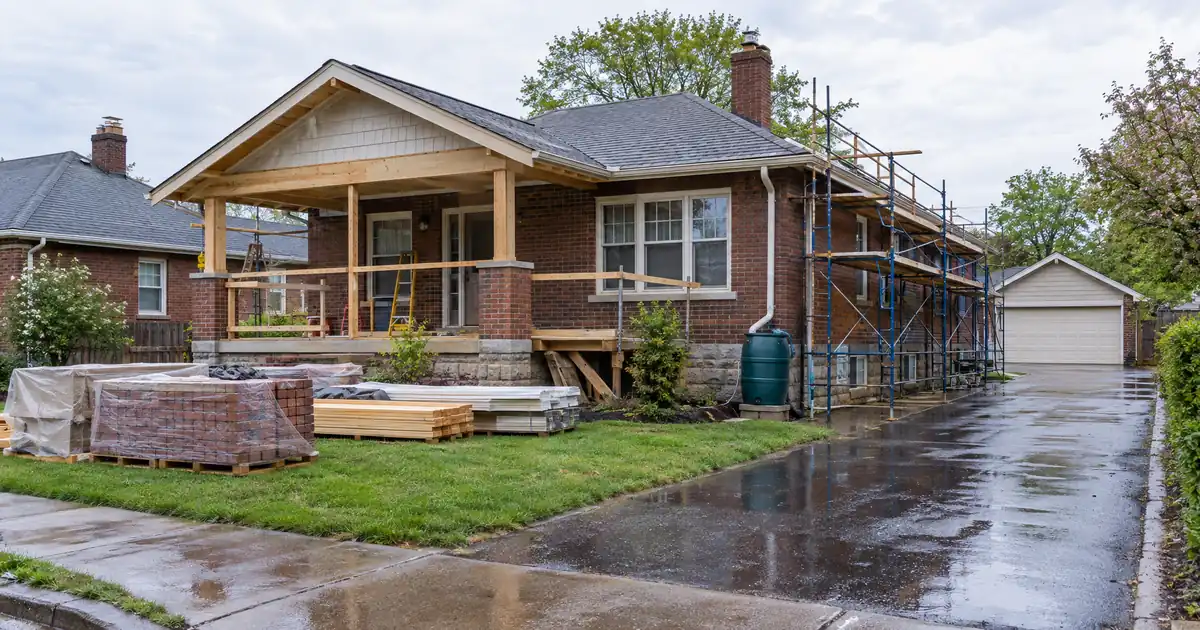
The Quick Read: Compare the two exits on three tests: whether a sale nets more after costs and tax than a refinance returns, whether the appraisal and rent support a DSCR loan big enough to pay off the hard money balance, and whether the maturity date leaves room for the seasoning period.
- A sale returns your full capital and ends the risk. A refinance keeps the asset, but it returns only the cash the new loan allows.
- Hard money underwrites your plan. A DSCR loan underwrites the finished property, its appraised value, and its rent.
- Clearing the coverage test is not the same as positive cash flow, because repairs, vacancy, and management sit outside the ratio.
- Thin margins usually favor selling. Wide margins and solid rent usually favor refinancing.
- Set the exit before the bridge loan closes, because the maturity date does not move for you.
This is how the choice looks from the broker’s chair. Lendmire is a mortgage broker that arranges DSCR investor loans through select lenders in its wholesale network, across 41 markets including Washington, D.C. The mechanics below come from that day-to-day file work. Every program figure varies by lender, property, and experience, and none of it is a commitment to lend.
DSCR Cash-Out Calculator
Run the cash-out numbers in your market
Rate source: Freddie Mac 30-yr average via FRED® — Federal Reserve Bank of St. Louis · effective Oct 15, 2026
Prefilled with starting assumptions — enter your property’s value, balance, taxes, and insurance for a more accurate picture.
Program parameters update from Lendmire’s centralized guideline source. Taxes and insurance are editable estimates.
As of Oct 15, 2026 · General Freddie Mac market benchmark, not a Lendmire loan offer. Property value, balance, taxes, and insurance are editable estimates. Maximum loan-to-value varies by lender, program, property type, and seasoning. Not a Loan Estimate, approval, or commitment to lend. Program availability and eligibility are subject to lender guidelines, credit approval, property review, and underwriting.
Key Terms Defined
DSCR (debt service coverage ratio): A ratio that compares the property’s rent to its full monthly obligation. The obligation is principal, interest, taxes, insurance, and any HOA dues, known together as PITIA.
ARV (after-repair value): Your estimate of what the property is worth once the rehab is done. The appraiser’s number, not yours, sets the new loan.
Seasoning: The ownership time a lender wants before it will lend against appraised value. It usually runs from the date the deed was recorded.
Maturity: The date the hard money loan comes due. Hard money terms commonly run 6 to 18 months, interest-only, depending on the lender.
Payoff-only vs. cash-out refinance: A payoff-only refinance replaces the old loan and returns no cash. A cash-out refinance pays off the old loan and returns the leftover equity.
Loan-to-cost and LTV: Loan-to-cost compares the loan to what you spent. LTV compares the loan to the appraised value.
What You Are Actually Comparing
You are comparing two exits that treat the same house very differently. One turns the profit into cash today. The other turns the house into a long-term rental and pulls out whatever equity the new loan allows.
| Factor | Sell | DSCR refinance and hold |
|---|---|---|
| Capital | Returned in full | Only the cash-out amount |
| Asset | Gone | You keep it, plus rent and appreciation |
| Main risk | Price cuts, extra time on market | Low appraisal, thin rent coverage |
| Key test | Net proceeds after costs and tax | Value, rent, and seasoning |
| Ongoing duties | None | Tenant, upkeep, reserves |
Hard money and DSCR loans do different jobs. Hard money looks at the property, the rehab budget, and the exit plan. Fix-and-flip leverage on the hard money side typically runs 85% to 93% of project cost, depending on the borrower’s completed projects, and every tier is capped at 75% of after-repair value. These figures vary by lender, property, and experience.
A DSCR loan looks at the finished asset. It asks what the property appraises for, what it rents for, and whether you hold the reserves. Many investors refinance out of hard money into long-term DSCR financing once the property is stabilized, and Lendmire brokers that path through its hard money exit refinance program. The leverage and seasoning figures below describe the DSCR loan on the way out, not the hard money loan.
Test 1: Does the Appraisal Support a Big Enough Loan?
The appraiser’s value sets your refinance, not your ARV. The formula is plain. The maximum new loan equals the appraised value times the program’s cash-out LTV cap. Cash needed at closing equals the hard money payoff plus closing costs plus any required reserves, minus that new loan.
Across the network, a DSCR cash-out refinance on a standard rental tops out at 75% LTV. For a short-term-rental property the cash-out ceiling is 70%. A DSCR rate-and-term refinance, which returns no cash, can reach a higher ceiling on the program sheet, up to 85% LTV, subject to lender guidelines, credit, and reserves.
Run three modeled cases. These are assumptions, not market data, and they use percentages of appraised value so the logic is easy to see.
Case 1, wide margin. All-in cost (purchase, rehab, and carry) equals about 62% of appraised value. A DSCR cash-out refinance at the 75% ceiling pays off the hard money balance and leaves room for closing costs and reserves. Cash back is possible, and the refinance may be the stronger play.
Case 2, thin margin. All-in cost equals about 74% of appraised value. The DSCR loan at 75% LTV barely clears the payoff. After closing costs and reserves, the refinance returns little or nothing. Selling often wins here, because you recycle the full capital instead of tying it up for a sliver of cash back.
Case 3, low appraisal. You expected to be at 70% of value, but the appraiser lands lower, and your all-in cost now sits near 80% of value. A DSCR loan capped at 75% cannot cover the payoff. You would bring cash to closing, sell, or find more time.
A low appraisal is the most common way this exit fails. Set your ARV from closed sales, not active listings. A strong preliminary appraisal opinion from the lender’s side is worth more than any price you saw advertised.
Test 2: Does the Rent Cover the New Payment?
A DSCR loan clears two separate tests: value and rent. The appraisal report carries a market-rent opinion too. It uses a rent schedule form for single-family homes (Form 1007) and an operating income form for two-to-four-unit properties (Form 1025). A property can appraise well and still miss on rent.
The ratio is monthly rent divided by the full monthly obligation. Your hard money loan was interest-only. The new loan is larger than your cash outlay and usually amortizes, so the payment steps up. Rent has to cover that bigger payment.
Coverage of 1.00 is where many select programs start. A separate select-lender path goes below 1.00, with leverage and terms adjusted. Stronger ratios generally open better pricing and leverage. Credit matters too: a 620 floor exists in parts of the network, most programs want around 660, and 700 or higher unlocks the strongest leverage tiers.
Here is the part flippers miss. Clearing the coverage test is not positive cash flow. The ratio compares rent to PITIA only. Repairs, vacancy, management fees, utilities, and capital expenses sit outside it. A property that clears 1.05x on paper can still lose money in a month with a vacancy and a water heater.
So stress your own number. Cut the rent a little, add a vacancy month, and see whether you would still want to own the house. If you would not, the DSCR loan is the wrong exit, even if a lender would approve it.
Reserves belong in this test as well. They commonly run around 6 months of PITIA on DSCR files, and they step up to about 9 months on loans above $1,500,000. They vary by lender, leverage, loan size, and transaction type. Reserves come out of your cash back, so they shrink the benefit of the refinance.
Test 3: Does the Clock Work?
Work backward from maturity. A hard money term runs 6 to 18 months. Subtract the rehab, the lease-up, the seasoning period, the appraisal, and underwriting. What is left is your cushion, and it is usually smaller than investors expect.
Seasoning is lender policy, not law. On a DSCR cash-out refinance, about 6 months of ownership is the common expectation across the network, measured from the recorded deed. Finishing the rehab or signing a lease does not restart or start that clock. Inside the window, lenders often size the loan on your cost basis instead of the appraisal. After it, they size on appraised value.
The trap is a seasoning period that runs longer than your remaining loan term. A 6-month hard money loan and a 6-month seasoning requirement leave no room for the rehab at all. If the refinance falls through, you need time left to sell or find another loan. Build that buffer on day one.
Paperwork is the quiet stall. Expect the lender to ask for:
- the recorded deed and settlement statement;
- the hard money payoff letter;
- a signed lease, with the deposit and first month’s rent documented;
- the appraisal with its rent schedule;
- entity documents and reserve statements, where required.
Title and borrower must also line up. Many hard money lenders want an LLC as the borrower, and the DSCR loan has to match the vesting on the deed, subject to lender program eligibility. A mismatch found late costs more than the paperwork itself.
What the Tax Side Adds
Tax can flip the answer, so it belongs in the comparison. Under IRS Topic 409, a capital asset held one year or less is short-term, and one held longer is long-term. Net long-term capital gain can be treated differently from ordinary income.
A true flip often is not a capital asset at all. The IRS Schedule D instructions place inventory and property held primarily for sale to customers outside capital-asset treatment. That is why flip profit is often taxed as ordinary income.
A flip also generally cannot go into a 1031 exchange, because First Exchange explains that flips are generally treated as inventory or business activity. A refinance is not a sale, so it typically triggers no gain by itself. The deferred tax, plus any depreciation recapture, comes due on a later sale. Tax treatment varies by investor and by how the property is held, so consult a qualified professional before relying on any of this.
DSCR vs. conventional financing
There are two common ways to finance an investment property, and they qualify you differently — here’s how investors weigh them.
Why investors choose it
- Qualifies on the property’s rental income — no personal tax returns, W-2s, or pay stubs needed to document income.
- No personal debt-to-income ceiling to clear, so existing mortgages and obligations don’t cap your borrowing the same way.
- Can be closed in an LLC, keeping the property inside a business entity.
- Built for scaling — not held to the limit on number of financed properties that conventional financing applies.
- Underwriting centers on the deal: generally qualifies when the rent covers the payment, a 1.00x coverage ratio being a common baseline (confirmed in underwriting).
- Designed specifically for investment property, including long-term and, where the program allows, short-term rentals.
Where it’s strong
- Often the lowest ongoing financing cost for a buyer who fully qualifies on personal income — a fit for a first property or a cost-first purchase.
Trade-offs for investors
- Requires full personal income documentation and must fit within a debt-to-income limit — salary, existing debts, and other mortgages all count.
- Typically held in your personal name rather than a business entity.
- Caps how many financed properties you can carry, which can become a ceiling as a portfolio grows.
- Evaluates you as a borrower as much as the property, which usually means more paperwork.
How investors usually choose: a first or single property often optimizes for the lowest financing cost; portfolio builders often optimize for leverage, vesting in an LLC, and scaling past conventional caps. The right answer depends on your goals, the property, and current guidelines — both paths run through select lenders in Lendmire’s wholesale network, with eligibility and terms confirmed in underwriting.
Where the General Rule Breaks
Delayed financing usually does not apply. Agency-style delayed financing is an exception to the six-month title wait. It requires a cash purchase with no mortgage financing, and a hard money lien fails that test. It is also not a DSCR product, and even where a lender mirrors it, it returns documented cost, not appraised value.
Thin margin. When all-in cost sits near the 75% DSCR cash-out ceiling, a refinance recycles almost no cash. Selling usually wins.
Strong value, weak rent. Some markets appraise well but rent poorly. When rent coverage lands under 1.00x, a select-lender path exists with leverage and terms adjusted, but the cash back shrinks. In those cases a sale is often the cleaner exit.
The rental conversion before a sale. Some investors consider renting a flip briefly, then selling with tax deferral in mind. A tax advisor’s analysis notes that a brief rental period just before a sale may not withstand scrutiny. Do not build the plan on that idea without professional advice.
Heavy rehab. DSCR loans generally do not fund rehab. A project that still needs major work needs the bridge loan to finish first.
Property type. Manufactured homes, log homes, and barndominiums are not offered through the network’s DSCR programs. If your flip is one of those, the refinance exit is not available, and you should plan on a sale.
How the Choice Plays Out in Practice
Work the decision in four steps.
1. Build an as-sold net sheet. Take a realistic sale price, subtract agent and closing costs, subtract the hard money payoff, then estimate tax with your professional. That number is what a sale puts in your pocket.
2. Build a refinance sheet using a conservative appraisal. Apply the cash-out cap to a value a little below your hopes. Subtract the payoff, closing costs, reserves, and any prepayment penalty. That number is your cash back, or your cash in.
3. Test the rent. Run the coverage ratio, then run it again with a haircut. Decide whether you would hold the property at that number.
4. Compare after-tax outcomes and trapped capital. A refinance that nets little costs more than it returns, because the capital stays locked up and the property keeps asking for attention.
Then apply a simple read. Refinance when the margin is wide, rent covers the payment with room to spare, and you do not need every dollar for the next deal. Sell when the margin is thin, rent is weak, or your next project needs the whole stack of capital.
Hybrid paths exist. You can refinance, hold for a defined period, and sell later. Many DSCR loans carry a prepayment penalty, depending on the lender and structure, so ask about it before you plan a short hold. You can also keep the strongest-rent property and sell the others from a multi-flip pipeline.
The related decision on a smaller property type is covered in Lendmire’s piece Selling a Duplex Flip vs DSCR Refinance After Hard Money. For the full picture of how these loans work, see the complete DSCR loans guide.
One practitioner pattern deserves a mention here. The files that go smoothly settled the exit before the purchase, ran the appraisal as a worst case, and kept a sale as the fallback. The files that stall treated the refinance as automatic. Planning two exits is cheaper than rescuing one.
Frequently Asked Questions
Can a hard money flip be refinanced into a DSCR loan?
Yes, with conditions. The property must appraise high enough, the rent must cover the new obligation, and the ownership clock must satisfy the lender’s seasoning rule, typically about 6 months on a DSCR cash-out refinance. Credit, reserves, and property type also have to fit, subject to lender guidelines and underwriting.
When does selling beat refinancing?
Selling wins when the margin is thin, when rent coverage is weak, or when you need all your capital for the next project. It also wins when the maturity date leaves no room for seasoning. A sale ends the carry risk, while a refinance keeps it.
What happens if the appraisal comes in low?
The new loan shrinks, because the DSCR loan is sized on appraised value. A refinance that was meant to return cash may become payoff-only, or it may require cash at closing. You can contest the appraisal, bring cash, extend the hard money loan if the lender allows it, or sell.
Does a DSCR loan have a prepayment penalty?
Many do, depending on the lender and the structure. If you might sell within a few years of refinancing, ask for the penalty terms before you commit.
Can a first-time flipper qualify for the DSCR exit?
Often yes, if the file clears credit, reserves, value, and rent. A 620 score floor exists in parts of the network, though most programs want around 660, and 700 or higher unlocks the strongest leverage. Eligibility is decided lender by lender and file by file.
If you are buying, rehabbing, or refinancing an investment property on a short timeline and want to see how the numbers work, Lendmire can help you compare hard money options based on the project, the exit plan, leverage, and your goals. You can reach the team at 828-256-2183 or request a quote through Lendmire’s quote page.
A flip that clears the sale test today can still be a rental that clears the coverage test tomorrow, so run both numbers before the first draw.
About Lendmire
Lendmire, NMLS# 2371349, is a mortgage brokerage focused on investor financing, arranging DSCR loans in 40 states plus Washington, D.C. — 41 markets total. Qualification is based on the property’s income rather than personal income documentation, subject to lender guidelines, making it a fit for LLC-held rentals and scaling portfolios. Scotsman Guide named Lendmire a Top Mortgage Workplace in both 2025 and 2026.
Get Started
Ready to find the right loan for you?
In about 30 seconds you can review financing options available for your investment property. No commitment required.
Informational only. Not a Loan Estimate, approval, or commitment to lend. Program availability and eligibility are subject to lender guidelines, credit approval, property review, and underwriting.
References
1. IRS Topic 409 — Capital Gains and Losses
2. IRS Schedule D Instructions
3. First Exchange — Can You 1031 a Flip?
4. AE Tax Advisors — 1031 Exchange on a Short-Term Rental
This article is part of Lendmire’s hard money loan program — full qualification details, guidelines, and scenarios live on the program page.
Related reading: Is a DSCR Loan Smarter Than Hard Money for a Rental Investor? · Is There a Seasoning Period Before Refinancing Hard Money Into DSCR? · Can You Refinance Hard Money Into a DSCR Loan After a Rehab?
Brandon Miller
Founder & CEO, Mortgage Loan Originator, Lendmire LLC
- Mortgage Loan Originator · NMLS# 1129696 · Verify on NMLS Consumer Access
- North Carolina Real Estate Broker · License# 343312 · Verify on NCREC
- North Carolina Insurance Producer · License# 19053198 · Property, Casualty, Life, Health · Verify on NAIC SBS
- Lendmire LLC · Firm NMLS# 2371349 · Verify firm licensure
Disclosure information. Lendmire is a state-licensed mortgage brokerage under NMLS# 2371349. Lendmire is not a depository institution, direct lender, or financial advisor — all loans referenced are placed through wholesale lender partners and are subject to each lender's underwriting standards. This article is provided for general informational purposes and is not a commitment to lend, nor does it constitute financial, legal, or tax advice. Loan programs, terms, rates, and qualification standards change without notice and depend on borrower profile, property type, and the state in which the subject property is located. Equal Housing Opportunity provider. NMLS Consumer Access: nmlsconsumeraccess.org.