
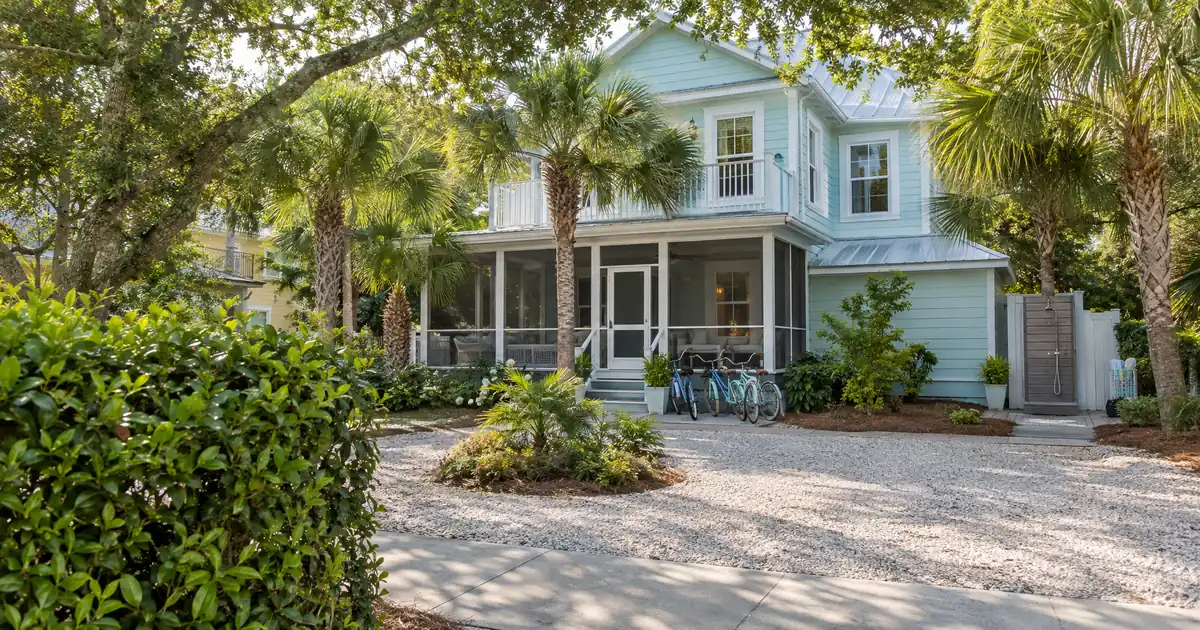
The Quick Read: Airbnb income inside a portfolio cash-out or package purchase is counted by the lender’s program guidelines, not by the appraisal form: each property’s income is documented its own way, reduced by a lender-set factor, divided by full PITIA, and tested on the pool, subject to lender guidelines and credit approval. The same Airbnb can clear or miss the coverage floor depending on which income method the lender applies.
- Short-term-rental collateral generally carries lower leverage ceilings than standard rentals: up to 75% on a purchase and up to 70% on a cash-out.
- A package purchase usually leans on a market projection or an appraiser’s rental analysis. A seasoned refinance leans on actual booking history.
- On the 30-year portfolio DSCR loan, coverage is measured on the pool, so stronger properties can offset weaker ones.
- Cash-out is sized by the tighter of two tests: the equity limit or the coverage limit.
- Clearing 1.00 is not the same as positive cash flow.
Key Terms Defined
Portfolio (blanket) DSCR loan: one note secured by several rentals. Here “portfolio DSCR loan,” “blanket loan,” and “cross-collateralized loan” all mean this same thing.
Cross-collateralization: every property in the pool secures the whole debt, not just its own share.
Release clause: the loan-document term that lets one property leave the pool. The release price runs above that property’s allocated balance.
Haircut (income factor): the lender-set reduction applied to platform revenue before it counts as qualifying income.
PITIA: principal, interest, taxes, insurance, and any HOA dues. It is the bottom of the coverage fraction.
Trailing twelve months: the most recent year of actual booking income, shown by platform export, manager statement, or bank deposits.
Pooled coverage: total rent used for lender review divided by total PITIA across every property in the pool.
Seasoning: the ownership period a lender expects before cash-out is sized on appraised value alone.
One more term. A bank’s own “portfolio loan” is a different thing: a loan the bank keeps on its books. It is a use of the word, not a structure Lendmire’s wholesale network of DSCR lenders places.
What a Portfolio Cash-Out Means in a Package Purchase
A package purchase buys several rentals at once. A portfolio cash-out pulls equity from several rentals under one note. The two can be linked: buy the package, then pool it and refinance once seasoning allows. Or finance the package purchase directly on a pooled note. The income rules differ at each step.
Here is the sequence that matters. At purchase, the properties have no history under the new owner. Income is documented by lease, market rent, or a projection. At a later cash-out, history exists. Lenders on most files lean on it. That split between projection and history is the most common source of surprises in a package file.
The network’s 30-year portfolio DSCR loan covers two to twenty properties under one note. Loan sizes run from $300,000 to $5,000,000, with larger balances on review. Leverage goes up to 80% of value on a purchase or a rate-and-term refinance. Property types are single-family, 2-4 unit, condo, and townhome. Coverage is measured on the pool, with a 1.00 floor on the pooled figure. Interest-only periods are available. These are program ceilings and floors, subject to lender guidelines.
The second structure is the rental portfolio term loan, for five or more rental properties or units under one loan. Loan sizes run from $500,000 to $50,000,000, and leverage goes up to 75% of value. Terms are fixed at 3, 5, 7, or 10 years with a balloon at maturity. Recourse and non-recourse versions exist, and non-recourse loans look to the real estate with carve-outs such as fraud and bankruptcy. Prepayment is yield maintenance, with protected periods of 54 months on the 5-year note and 114 months on the 10-year note. Reserves are held for taxes, insurance, and capital expenditures. Properties in several markets can sit under one loan. Small multifamily of five or more units is eligible only on this term loan, not on the 30-year portfolio structure.
Manufactured and mobile homes are not reviewable on any of these programs. Owner-occupied property, co-ops, mixed-use property, and commercial property are also out of the pool.
Credit minimums start at 640 for the pool, with 680 or 720 on some portfolio structures. Some structures require a special-purpose entity, typically an LLC. Recourse loans carry a personal guarantee. Short-term-rental collateral generally expects about 12 months of hosting experience from the borrower.
One Pooled Note or Separate Loans?
Separate loans give each property its own test, its own payoff, and its own sale. A pooled note gives one closing and a blended test. The price is shared collateral and a negotiated way out.
| Factor | Pooled note | Separate loans |
|---|---|---|
| Closings | One set of documents | One set per property |
| Collateral | Every property secures the whole | Each property secures its own loan |
| Coverage test | Pool total (30-year structure) | Property by property |
| Selling one property | Release terms apply | Pay off that loan only |
| Effect of a weak rental | Can be absorbed by the pool | Tested alone |
Lendmire’s piece Portfolio Cash-Out Refinance vs Single Loans to Buy the Next Package takes the cost side of that choice in more depth.
How Is Airbnb Income Counted, Property by Property?
Each property is sorted by income type first, then tested. Leased long-term rentals use the lease or an appraiser-supported market rent. Operating Airbnbs use trailing booking history. Vacant or newly bought Airbnbs use a market projection or an appraiser’s short-term-rental analysis.
Start with what the appraisal form does and does not do. The Form 1007 is the single-family comparable rent schedule. Fannie Mae’s appraiser newsletter describes it as documenting estimated monthly market rent, and says the agency’s own guide is silent on short-term-rental income. That is agency material, used here only for the form name. It does not set DSCR rules.
McKissock’s appraiser-education article makes the same point from the appraiser’s side. The form documents monthly rent, not nightly rates or business income. The appraiser values the real property only. Which income counts is the lender’s call. HousingWire reports that the form was not built to support short-term-rental income and can produce artificially low coverage figures on non-QM files. It also notes that the UAD 3.6 appraisal standard will retire legacy forms, including the 1007.
The form for 2-4 unit properties is the 1025. Both are borrowed appraisal tools. Neither is a DSCR rule.
Now the haircut. A lender takes platform revenue and applies a factor before it counts. Factors are lender-specific. The factor trims the top of the fraction only. PITIA is never reduced.
Run the numbers on a hypothetical property that shows 1.50 coverage on gross platform revenue. After a haircut of one-fifth, qualifying income falls to 1.20 coverage. Same property, same payment, lower number. That is a modeled assumption, not a market figure.
Evidence types, from strongest to weakest on a refinance: a platform export, a manager statement, and bank deposits that reconcile to both. Reconciliation matters. A payout that does not match the export, or deposits that do not match the payout, is the quiet reason files get re-asked for documents.
How the Pool Gets Tested
On the 30-year portfolio DSCR loan, underwriting adds all rent used for lender review and divides by all PITIA. Strong properties can offset weak ones. A rental below 1.00 can sit in the pool, and underwriting tests the pooled coverage, the leverage and the terms. The pooled floor of 1.00 still has to clear.
Consider a hypothetical four-property package. Assume equal debt service on each, so the math averages cleanly. Coverage after haircuts is 1.35, 1.20, 1.05, and 0.90. The pooled figure is 1.125. The pool clears 1.00, even though one property would not clear alone.
Now stress it. Say the strongest property is released or sold. The remaining three average 1.05. Still clears, with little room. Say instead the 1.20 property loses its short-term-rental permit and its income drops to long-term rent. The pool re-tests at a lower number, and the remaining portfolio must still cover its debt service.
The 0.90 property helps the borrower. It also hides inside the average. A lender may look at it separately, or cap how much short-term-rental collateral can count toward leverage. Practitioner view: the blend is a convenience for getting a package done, not a reason to buy a weak asset.
Separate loans win in a clear case. Say two of the four properties carry strong equity and clean coverage, and two are marginal. Pooled, the strong pair subsidizes the marginal pair, and the borrower accepts shared collateral to do it. Financed alone, the strong pair may qualify on better terms, and the marginal pair can be financed or sold on their own.
Which Limit Binds: Equity or Coverage?
Cash-out is sized by the lower of two tests. The equity test is leverage against pooled appraised value. The coverage test is whether the larger new payment still clears the floor on the pool.
On a cash-out, the pooled ceiling never exceeds 75% of pooled value on standard rentals. Short-term-rental collateral carries a 70% ceiling on a cash-out. Existing payoffs come off the top. So the proceeds depend on the gap between current debt and the ceiling.
Say a pool of standard rentals carries existing debt at 60% of value. Under a 75% ceiling, there are fifteen points of value to draw on. Swap in short-term-rental collateral under a 70% ceiling, and there are ten. The mix of property types changes the answer, and the lowest-leverage collateral can pull down the whole figure.
The coverage test works the other way. A larger loan means a larger PITIA. A pool that clears comfortably at the existing balance can slip toward the floor once cash-out lifts the debt. When coverage binds, the investor takes less cash. When equity binds, more rent does not help. Leverage caps do not move for strong coverage.
Seasoning adds a third constraint. Inside the first six months of ownership, the loan is also capped at 90% of total cost, meaning purchase price plus documented improvements. From six to twelve months the cap is 100% of total cost. The leverage ceiling still applies, and the loan is the lower of the two. After twelve months, the appraised value alone is the basis. A rate-and-term refinance is not subject to the cost-basis cap.
For package buyers, this is the timing trap. A pool cannot pull equity based on a new appraisal that is far above what was paid, until the seasoning window passes.
Cash-out proceeds can fund the next purchase.
Mixed Histories Inside One Package
Packages rarely arrive uniform. One Airbnb has a year of bookings. One was bought recently. One was a long-term rental last season. The lender treats each differently.
| Property situation | Typical evidence | Common friction |
|---|---|---|
| Full year of hosting | Platform export, manager statement, deposits | Payouts that do not reconcile |
| Partial history | Actual months plus projection | Seasonal gaps skew the average |
| Newly acquired | Projection or appraiser analysis | No booking proof yet |
| Converted from long-term | Lease history plus market analysis | Rent schedule form fits, STR proof does not |
| Leased long-term | Lease or appraiser market rent | Lease expiry during review |
A package purchase makes the second and third rows common. A new Airbnb cannot show bookings yet. So the lender relies on a projection or an appraiser’s short-term-rental analysis, and the file lives or dies on how that analysis was built. A refinance is different. Lenders on most files want booking history, and the typical expectation is about 12 months of hosting experience.
Seasonality distorts this. A beach or ski property can show a weak trailing year even when its annual income is sound. In a pool, averaging across properties and months can smooth the swing or hide a weak property. It is worth asking the lender how the average is built before choosing the structure.
Where the General Rule Breaks
Appraiser declines or struggles. HousingWire reports that appraisers are encouraged to decline assignments that would require repurposing the 1007. A slow or missing short-term-rental analysis can stall a whole package. Order early and order the right form.
Legality of the use. Short-term rental rules can vary by city, county, HOA, and property type, so investors should confirm local rules before relying on projected rental income. If the use is not allowed, the income may not count at all.
Cross-default. A problem on one asset can reach the others. A missed payment is a pool problem.
Adding a property later. The pool is fixed at underwriting. A new property usually means a modification, a pool refinance, or a separate loan.
Release. A sale or release re-tests the remaining pool. The release price runs above the property’s allocated balance, so plan the exit before signing. Partial releases, substitutions, and the sale of one property follow the loan documents and the lender’s release terms.
A mismatch between coverage and cash flow. DSCR compares rent to PITIA only. Clearing 1.00 is not positive cash flow. Cleaning, utilities, repairs, vacancy, management, and capital expenses all sit outside the calculation. An Airbnb pool can clear comfortably and still run thin after real operating costs.
BRRRR batches. A package that includes rehab changes the cost basis.
Pooled or Separate: The Decision
Run it as a short set of questions.
1. How is equity spread? If it is lopsided, pooling lets strong properties carry weak ones. If it is even, the pool adds little.
2. How long will you hold? A pool favors long holds. Frequent sales make release terms expensive.
3. How much of the pool is short-term rental? A heavy share can lower the leverage ceiling and add documentation risk.
4. What is the exit? Selling one asset out of a pool is a negotiation. Selling one asset out of separate loans is a payoff.
5. How many properties? Two to twenty fits the 30-year portfolio DSCR loan. Five or more fits the term loan, along with small multifamily.
Pooling is not without risk. It can concentrate default exposure, since a problem with one property may affect the whole pool. It also typically suits investors with several seasoned properties better than first-time buyers or owners of thin-margin rentals.
Pre-Application Document Pack
Gather these before the file goes to a lender. This is where files lose time to preventable gaps.
- Entity documents for each owning entity, and the guarantor information if the loan is recourse.
- Appraisal access for every property, with the right rent schedule per property.
- Lease copies for long-term rentals.
- Platform exports, manager statements, and bank deposits for each operating Airbnb, reconciled month by month.
- Insurance quotes that match each property’s use.
- Title information and the existing loan payoffs.
- A written list of local short-term-rental permits or rules per property.
- Reserves documentation: asset statements that show the funds.
The work of arranging this across a pool is where Lendmire’s role as a broker applies. It places files with select lenders in a wholesale network of DSCR lenders, across 41 markets including Washington, D.C. Each file is underwritten individually, and programs change. The complete DSCR loans guide covers the full set of requirements.
Frequently Asked Questions
Can one portfolio loan hold both Airbnbs and long-term rentals?
Yes, on the structures that allow it. Each property is documented by its own income type, and the pool is tested on total rent used for lender review over total PITIA. Short-term-rental collateral may carry a lower leverage ceiling, which can govern the pool. Subject to lender guidelines.
What if a new Airbnb in the package has no booking history?
A purchase file typically uses a market projection or an appraiser’s short-term-rental analysis. A refinance leans on actual history, and about 12 months of hosting experience is the usual expectation. If neither fits, separate financing for that property may be cleaner.
What happens if one property loses its short-term-rental permit?
Its income is re-tested, often at long-term rent. The pool’s coverage is recalculated, and the remaining properties must still cover the debt service. Check local rules before relying on projected income.
Does a higher Airbnb income always mean more cash-out?
No. Cash-out is the lower of the equity test and the coverage test. Strong rent does not raise a leverage ceiling, and a 70% ceiling on short-term-rental cash-out applies regardless of coverage. Seasoning caps can also apply in the first twelve months.
Can I sell one property out of the pool?
Yes, under the loan’s release terms. The release price runs above the property’s allocated balance, and the remaining pool must still cover its debt service.
Next Step
If you are buying or refinancing a rental property and want to see how the numbers work, Lendmire can help you compare DSCR loan options based on the property income, credit profile, leverage, and investor goals.
Investors weighing their equity options can start with Lendmire’s guide to cash-out refinance on an investment property.
About Lendmire
Lendmire (NMLS# 2371349) is a mortgage brokerage built around DSCR investor lending, with programs available in 41 markets, including Washington, D.C. DSCR lenders commonly evaluate rental-income coverage instead of personal income paperwork — a practical fit for LLC-owned and multi-property investors. Terms vary by lender, property, leverage, and program. Scotsman Guide named Lendmire a Top Mortgage Workplace in both 2025 and 2026.
Get Started
Ready to find the right loan for you?
In about 30 seconds you can review financing options available for your investment property. No commitment required.
Informational only. Not a Loan Estimate, approval, or commitment to lend. Program availability and eligibility are subject to lender guidelines, credit approval, property review, and underwriting.
References
1. Fannie Mae Appraiser Update, June 2024
2. McKissock: Form 1007 and short-term rental appraisals
3. HousingWire: Short-term rentals are breaking the appraisal playbook
This article is part of Lendmire’s investment property cash-out refinance program — full qualification details, guidelines, and scenarios live on the program page.
Related reading: Can a Rental Cash-Out Refinance Use Appraised Value With No Seasoning? · Can You Use an Investor Cash-Out Refinance to Pay Off Personal Debt? · Can a Cash-Out Refinance Buy Out a Rental Co-Owner?
Brandon Miller
Founder & CEO, Mortgage Loan Originator, Lendmire LLC
- Mortgage Loan Originator · NMLS# 1129696 · Verify on NMLS Consumer Access
- North Carolina Real Estate Broker · License# 343312 · Verify on NCREC
- North Carolina Insurance Producer · License# 19053198 · Property, Casualty, Life, Health · Verify on NAIC SBS
- Lendmire LLC · Firm NMLS# 2371349 · Verify firm licensure
Legal disclosures. Lendmire (NMLS# 2371349) is a state-licensed mortgage brokerage that arranges financing through wholesale lender relationships. Lendmire is not a direct lender, depository institution, or registered financial advisor. The discussion above is general informational content about real estate financing — it is not financial, legal, or tax advice, and readers should consult licensed professionals for guidance on their individual circumstances. Loan inquiries are subject to lender underwriting; this article does not represent a commitment to lend. Loan terms, rates, and qualification standards vary by borrower, property, and state, and are subject to change at any time. Equal Housing Opportunity. NMLS Consumer Access: nmlsconsumeraccess.org.