
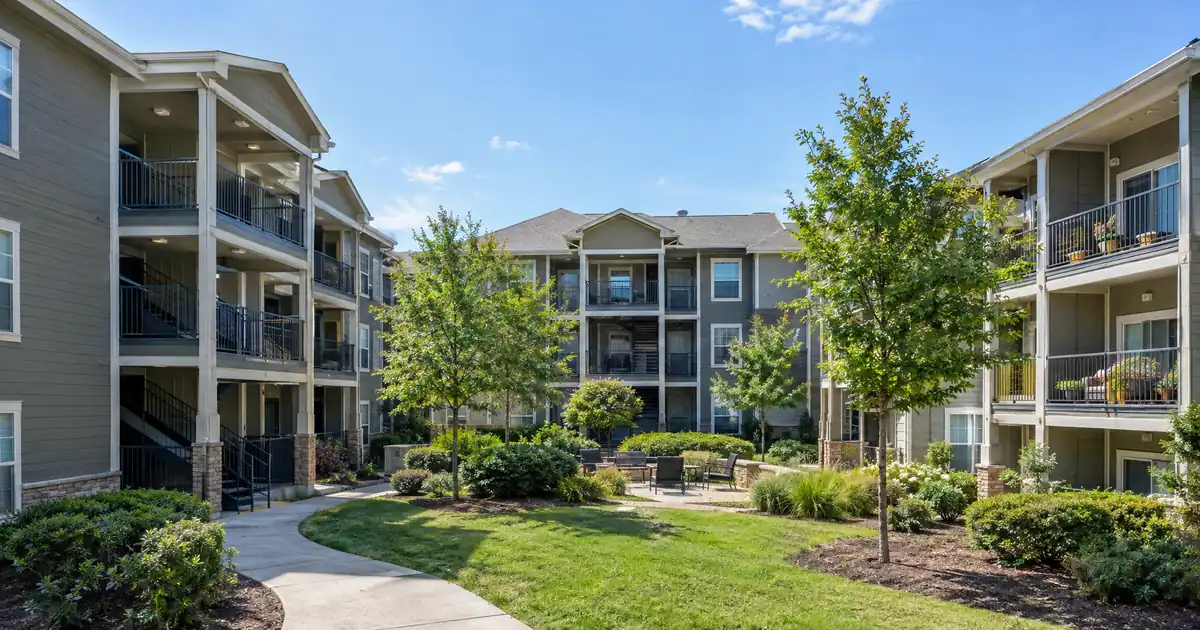
The Quick Read: Hard money sizes a rehab by the lower of two tests. One is a percentage of project cost. The other is a cap on after-repair value (ARV, what the building is worth once the work is done). Across the wholesale network Lendmire places files with, fix-and-flip leverage runs 85%, 90% or 93% of project cost depending on experience, with every tier capped at 75% of ARV. Those figures belong to one-to-four-unit properties. A six-unit building sits on the commercial side, and an existing six-unit rehab is not offered on that hard money sheet.
- The loan is the lesser of the cost test and the ARV cap. Both always apply.
- Up to 100% of the rehab budget can fund, but only in draws after work is done. That is not purchase leverage.
- The usual cash gap at closing runs about 7% to 15% of project cost, before fees and reserves. It varies by lender, property, and experience.
- Terms run 6 to 18 months, interest-only. There is no true 100% purchase program.
- Six units changes how the building is valued, appraised, and exited.
Everything below is subject to lender guidelines. None of it is a commitment to lend.
What this loan actually costs to carry.
Hard money is sized against the project and priced by time. Enter the deal and see how much the program will lend, the cash required at closing, the carry while you hold it, and what is left at the exit.
Leverage tiers on the current program: 85% with fewer than 2, 90% with 2 or more, 93% with 5 or more completed projects — every tier capped at 75% of after-repair value. Loan amounts up to $5,000,000, larger by exception; terms of 6 to 18 months, interest-only, no prepayment penalty. The rehab portion funds in draws against completed work, not at closing.
Program parameters shown update from Lendmire’s centralized guideline source. Rate, points, and months are editable assumptions, not quoted terms.
Cost cap sets the loan · positive spread
Illustrative estimate only — not a quote, Loan Estimate, approval, or commitment to lend. Rate, points, and months are editable assumptions. Hard money is business-purpose financing for real estate investors, not a consumer mortgage. Leverage on the current program tops out at 93% of project cost for investors with a documented track record, capped at 75% of after-repair value, with rehab funding up to 100% of the documented budget released in draws; actual terms vary by lender, borrower experience, property, and exit. Lendmire is a mortgage broker, not a lender.
Why a Six-Unit Rehab Is Its Own Animal
A six-unit building is not a big fourplex. It crosses a line. LoopNet explains that two to four units can use residential financing, while five or more units require commercial loans. The same page calls five to twenty units a gray zone that blends both worlds.
Here is why that matters for hard money sizing. A duplex through fourplex is valued mostly on comparable sales. A larger building is valued on income, meaning net operating income (NOI) and a cap rate. So the ARV on a six-unit is usually an income number. Your rent and expense assumptions move it far more than they would on a fourplex.
| Factor | 2-4 units | 5+ units |
|---|---|---|
| Financing path | Residential | Commercial |
| Value basis | Comparable sales | NOI and cap rate |
| ARV sensitivity | Moderate | High to rent and expenses |
| Borrower terms | Often entity or personal | Entity, sometimes recourse |
Commercial multifamily also tends to carry stricter terms. LoopNet reports that commercial multifamily typically requires upward of 25% down. That is a market-wide figure, not a network figure. In Lendmire’s network, hard money fix-and-flip leverage is tiered by experience, as the next section shows.
The scope point deserves plain words. The hard money sheet in the network covers non-owner-occupied residential property of one to four units. Ground-up construction runs to ten units. An existing six-unit rehab is not offered there. Lendmire’s piece Can a Hard Money Loan Fund a Six-Unit Rehab? covers that question directly. This article explains the sizing mechanics, so you know how any lender thinks about the number.
Key Terms Defined
Loan-to-cost (LTC): the loan as a percentage of purchase price plus rehab budget.
After-repair value (ARV): what the lender expects the property to be worth once the renovation is finished.
Draw: a release of rehab money after work is completed and checked.
Holdback: the rehab money the lender holds in reserve instead of paying at closing.
Rent roll: a unit-by-unit list of tenants, rents, and lease terms.
NOI: net operating income, meaning rent minus operating expenses before debt service.
How the Loan Gets Sized: Two Tests, Lower One Wins
The loan is the lesser of two numbers. This is the core of the whole topic.
Test one is the cost test. The lender multiplies project cost (purchase plus rehab budget) by a tier percentage. In the network, that tier depends on documented completed projects:
- 85% of project cost with fewer than two completed projects.
- 90% of project cost with two or more.
- 93% of project cost with five or more.
Test two is the value test. Every tier is capped at 75% of ARV. No experience level gets around it.
Hard money is underwritten on the property and the plan. The borrower’s income is not the focus. Credit still matters. A 620 score is the usual floor, with added conditions below 660. Experience, liquidity, and your exit plan all count as well.
Think about what this means for a thin deal. When the margin between cost and ARV is slim, the 75% cap binds first. The loan shrinks, and the cash you bring grows. When the margin is wide, the cost tier governs. So the best way to raise your funded percentage is a better deal, not a better pitch.
Worked Example: Which Test Binds
Run the numbers in index form, as points of ARV. That keeps the math clean. These inputs are modeled assumptions, not market data. Two deals follow.
Deal One: The Cost Test Governs
- Purchase: 60 points of ARV.
- Rehab budget: 20 points of ARV.
- Project cost: 80 points of ARV.
At the 85% tier, the cost test gives 68 points of ARV. The cap sits at 75. The cost test is lower, so it governs.
Cash gap at closing: 12 points of ARV, or 15% of project cost, before fees and reserves.
Deal Two: The ARV Cap Governs
- Purchase: 70 points of ARV.
- Rehab budget: 20 points of ARV.
- Project cost: 90 points of ARV.
At the 90% tier, the cost test gives 81 points. The 75-point cap is lower, so it binds.
Cash gap: 15 points of ARV, which is about 17% of project cost. That is above the usual 7% to 15% range.
Notice what happened. The borrower in Deal Two had a better experience tier than the borrower in Deal One and still brought more cash. The cap did that.
Now add the six-unit wrinkle. In Deal Two, imagine the lender’s income-based ARV comes in lower than your projection because rents or expenses were assumed too optimistically. Every point of ARV you lose cuts the cap by 0.75 points. That is why a six-unit investor should stress the income side before signing.
How Rehab Money Actually Moves
“Up to 100% of the rehab budget” is a true statement, and it is easy to misread. Here is the real sequence:
1. Package the deal. You submit the purchase contract, a line-item scope of work, contractor bids, and an ARV estimate. On a larger building, add the rent roll and expenses.
2. The lender values the property. It orders an as-is value and a projected ARV from renovated comparables or, on larger buildings, income support.
3. Both tests run. The lender takes the lesser number.
4. Closing funds the purchase. The rehab portion is held back.
5. You front the work. The first stretch of construction usually comes out of your pocket.
6. A draw request follows. You submit invoices, an updated budget, progress photos, and lien waivers. Every lender writes its own draw rules.
7. An inspector confirms the work. The lender then releases the draw. Many lenders charge a fee per draw.
8. The final draw ties to a final inspection. After that, you sell or refinance.
Two points deserve emphasis. First, draws reimburse work already done. They are not advances. Second, an inspection confirms that work exists. It is not a code or permit sign-off.
Six units means more work to draw against. More units usually mean more inspections, more invoices, and more lien waivers. Some lenders release by unit or by building system. A phased rehab raises the cash you must float between draws.
Occupied or Vacant? (The Quiet Cash Drain)
Tenants in place change the math. Occupied units slow the rehab schedule, since you work around leases. Vacant units pay no rent while the crew works. Lenders may also value a partially vacant building differently on an as-is basis.
Picture a six-unit with four units rented and two vacant. You renovate the two vacant units first, then lease them up, then move to the others. That keeps rent flowing, but it stretches the project. A stretched project means more months of interest-only carry. The term is 6 to 18 months, so the full cycle of rehab, lease-up, and exit has to fit inside it.
The income side matters twice. It supports the ARV on the way in, and it supports the refinance on the way out.
The Appraisal Question
Residential appraisals use standard forms. Fannie Mae’s Selling Guide identifies Form 1025 as the report for two-to-four-unit properties. A six-unit falls outside that form. Expect a commercial-style appraisal built on income, which is a practical inference from where the form stops.
This is where a low appraisal hurts. If the appraiser’s number lands below your projection, the cap drops with it. Ask yourself early how sure you are about the stabilized rents.
The Cash You Need Beyond the Down Payment
The equity gap is only one line. A realistic cash plan on a six-unit includes:
- The closing gap, usually about 7% to 15% of project cost before fees and reserves.
- Closing costs and lender fees.
- The first draw float.
- Interest carry during inspection waits.
- A contingency for surprises. Many investors budget 5% to 10% of the rehab.
- Reserves the lender wants to see.
Skip any of these and the project stalls mid-rehab. That is the expensive way to learn.
Where the General Rule Breaks
Most of what you read above holds for standard one-to-four-unit fix-and-flips. Several edge cases bend it.
Property type and unit count. Six units is commercial territory. The network’s hard money sheet does not offer an existing six-unit rehab. Commercial lenders handle that file, usually with entity borrowers and sometimes recourse.
Ground-up construction. Building new is a different product. In the network, ground-up runs up to 90% of cost and 75% of completed value at three or more completed projects, up to ten units. That is new construction, not a rehab.
Specific experience. Some lenders want proof you have done the same type of work, such as adding square footage or structural repairs. Generic flip experience may not count.
Draw cadence. Some lenders inspect every draw. Others inspect once and accept photos. Interest on funded balances and inspection cadence change your real carry.
Weak rent roll at exit. Here is the catch. A rehab that leaves rents thin can strand the exit, even if the hard money closed cleanly.
Misconceptions That Cost Investors Cash
“Hard money funds 100%.” It does not. One hundred percent is a rehab-budget figure paid in draws. There is no true 100% purchase program.
“Lenders go to 70% of ARV.” Not in the network, where every tier is capped at 75% of ARV. The 70% number comes from somewhere else. It is an investor screening formula, not a lender cap.
“Hard money ignores the borrower.” Underwriting stays asset-based. Credit, experience, liquidity, and entity structure still count.
“Draws arrive when I need them.” They arrive after verified work and clean lien paperwork.
Getting Out: Sale or Refinance
Hard money is a bridge. You exit by selling or by refinancing into longer-term debt. Many investors on one-to-four-unit projects refinance into long-term DSCR financing once the property is stabilized, and Lendmire brokers that path. Lendmire’s piece How to Finance a Six-Unit Rehab With Hard Money and Exit to DSCR walks through that step.
On a six-unit, check eligibility before you start. Many DSCR programs are written for one-to-four units, and a five-plus building often goes down a commercial path. Confirm the exit before you close the bridge. Rent covering the payment is also not the same as profit. Repairs, vacancy, management, and capex all sit outside the coverage ratio. Lendmire’s complete DSCR loans guide explains how the ratio is built.
Tax treatment varies, so keep clear records and consult a qualified tax professional before relying on any deduction.
What Shrinks or Kills the Funding
- Projecting an ARV the income cannot support.
- Budgets that skip contingency.
- Starting with too little cash to float the first draw.
- A scope of work with no line items.
- No documented exit.
- Experience claims you cannot document.
- A term too short for rehab plus lease-up.
Frequently Asked Questions
Does hard money fund 100% of a six-unit rehab?
Not in the way the phrase sounds. Up to 100% of the documented rehab budget can fund in the network, but only in draws against completed work. The purchase is sized by loan-to-cost tiers of 85%, 90% or 93% of project cost, capped at 75% of ARV. All of it varies by lender, property, and experience.
Is a six-unit building commercial?
Yes, for financing purposes. LoopNet notes that five or more units require commercial loans. That shifts valuation to income and changes the appraisal.
How much cash do I need to bring?
On one-to-four-unit projects in the network, the closing gap is usually about 7% to 15% of project cost before fees and reserves. Add the first draw float, contingency, and carry. A thin margin pushes the number up because the ARV cap binds.
Can I rehab with tenants in place?
Often yes, but it complicates the schedule and the valuation. Phasing the work unit by unit keeps rent coming in. It also lengthens the project inside a 6-to-18-month term.
Does Lendmire offer hard money on an existing six-unit?
No. The network’s hard money sheet covers one-to-four-unit residential, with ground-up construction up to ten units. Lendmire is a broker, so it arranges what the network offers and does not lend directly.
Next Step
If you are buying, rehabbing or refinancing an investment property on a bridge-length project and want to see how the numbers work, Lendmire can help you compare hard money options based on the project, the exit plan, leverage, and your goals. It arranges financing through select lenders across 41 markets, including Washington, D.C. Program terms change, and every file is underwritten individually.
About Lendmire
Lendmire — NMLS# 2371349 — is a mortgage brokerage specializing in DSCR investor loans, helping arrange financing across 41 markets, including Washington, D.C., through wholesale and investor-lending channels. The model centers on property-level rental income reviewed by the lender rather than W-2 documentation, subject to lender guidelines, suiting entity-owned and multi-property investors. Lendmire holds Scotsman Guide Top Mortgage Workplace recognition for 2025 and 2026.
Get Started
Ready to find the right loan for you?
In about 30 seconds you can review financing options available for your investment property. No commitment required.
Informational only. Not a Loan Estimate, approval, or commitment to lend. Program availability and eligibility are subject to lender guidelines, credit approval, property review, and underwriting.
References
1. LoopNet: Small vs. Large Multifamily
2. LoopNet: Is Multifamily Commercial?
This article is part of Lendmire’s hard money loan program — full qualification details, guidelines, and scenarios live on the program page.
Related reading: How Hard Money Lenders Count Rehab Funds Toward Your Minimum Down · How ADU Builders Draw Funds on a Hard Money Construction Loan · How Much a DSCR Lender Lends on a Rehabber’s Hard Money Payoff
Brandon Miller
Founder & CEO, Mortgage Loan Originator, Lendmire LLC
- Mortgage Loan Originator · NMLS# 1129696 · Verify on NMLS Consumer Access
- North Carolina Real Estate Broker · License# 343312 · Verify on NCREC
- North Carolina Insurance Producer · License# 19053198 · Property, Casualty, Life, Health · Verify on NAIC SBS
- Lendmire LLC · Firm NMLS# 2371349 · Verify firm licensure
Important disclosures. Lendmire (NMLS# 2371349) is a licensed mortgage brokerage. Lendmire is not a direct lender, depository institution, or financial advisor. All loan inquiries are subject to lender underwriting; this article does not constitute a commitment to lend. Rates, terms, and program guidelines are subject to change without notice and vary by borrower profile, property type, and state. Information in this article is general in nature and is not financial, legal, or tax advice. Equal Housing Opportunity. NMLS Consumer Access: nmlsconsumeraccess.org.