
The Quick Read: The same rural parcel can be underwritten as a nightly-rate business or as a lease-based rental, and the choice decides how much cash you can pull and whether the rental coverage test passes. The short-term path suits owners with documented hosting history and a property that earns more than a lease would. The long-term path suits owners who want the simpler file, the higher leverage ceiling, or who lack the history.
- A short-term rental (STR) cash-out typically tops out at 70% loan-to-value (LTV), the loan as a share of appraised value. A standard long-term rental cash-out typically reaches about 75%.
- DSCR means debt service coverage ratio: rent used for lender review divided by the full monthly housing payment. STR files usually expect about 12 months of hosting history.
- Rural land adds its own gate: acreage limits, property type, and thin comparable sales apply to both paths.
- A passing coverage ratio is not positive cash flow. Repairs, vacancy, utilities, and management sit outside the formula.
- Everything here is a typical range from select lenders in Lendmire’s wholesale network, subject to lender guidelines and not a commitment to lend.
Side-by-Side
These are typical ranges across the lenders Lendmire places files with. Every file is underwritten individually.
DSCR Cash-Out Calculator
Run the cash-out numbers in your market
Rate source: Freddie Mac 30-yr average via FRED® — Federal Reserve Bank of St. Louis · effective Nov 5, 2026
Prefilled with starting assumptions — enter your property’s value, balance, taxes, and insurance for a more accurate picture.
Program parameters update from Lendmire’s centralized guideline source. Taxes and insurance are editable estimates.
As of Nov 5, 2026 · General Freddie Mac market benchmark, not a Lendmire loan offer. Property value, balance, taxes, and insurance are editable estimates. Maximum loan-to-value varies by lender, program, property type, and seasoning. Not a Loan Estimate, approval, or commitment to lend. Program availability and eligibility are subject to lender guidelines, credit approval, property review, and underwriting.
| Factor | STR Cash-Out | Long-Term Rental Loan |
|---|---|---|
| Income basis | Hosting history or STR income analysis | Lease or appraiser market rent |
| Documentation | Platform records, STR appraisal analysis | Lease, rent schedule |
| Cash-out LTV | Up to 70% on STR collateral | About 75% on standard rentals |
| Credit score | 640+ expected | 620 floor in parts; most want about 660 |
| Coverage | 1.00 floor on refinance | 1.00 on select programs; sub-1.00 via select lenders, leverage adjusted |
| History expected | About 12 months hosting | Seasoning of about 6 months common |
| Entity vesting | LLC possible, guaranty typical | Same |
Both paths share the same property exclusions. Manufactured homes, log homes, and barndominiums are not offered through these DSCR programs on either side. Loan sizes run up to $3,000,000 on standard programs, and amounts above $2,500,000 generally stay in 30-year fixed structures.
Key Terms Defined
PITIA is principal, interest, taxes, insurance, and association dues added together. It is the full monthly obligation the rent must cover.
Cash-out refinance replaces your current loan with a larger one and pays you the difference. A bigger balance means a bigger PITIA, so the same rent produces a lower coverage ratio.
Seasoning is the waiting period a lender wants after you buy or last refinance. About six months is the common expectation on standard rentals.
Rent schedule is the appraiser’s opinion of long-term monthly market rent. Appraisers document it on a form called the 1007.
Rural overlay is a lender’s extra limits on rural collateral, such as acreage caps or property-type screens. They vary by lender.
Rural Land Comes First
Start with the land, because acreage affects both options equally. Lenders in the network look at how much acreage sits under the home, whether the property reads as a residence or as working land, and whether comparable sales exist nearby. Acreage limits and rural overlays are lender-specific, so the same parcel can fit one program and miss another.
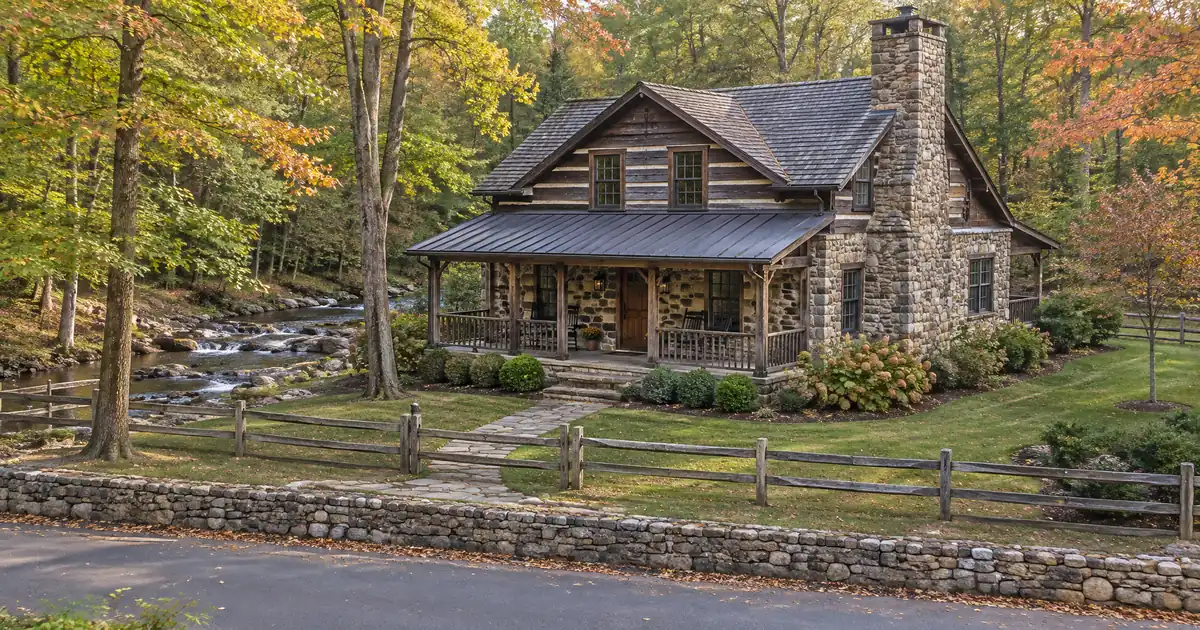
Property type is a hard filter. Log homes, barndominiums, and manufactured homes fall outside these programs, so a log cabin or a converted barn can fail before income is even discussed. A mountain cabin built of logs is a common example of that screen.
Comparable sales are the quieter problem. A rural appraisal may have to reach far for comps, and the value drives LTV on both paths. Income is also harder to support on both. Trade coverage notes that HousingWire explains that appraisers may decline assignments that ask them to stretch a rent form into STR analysis. A parcel with few STR comps is the likeliest to hit that.
Short-term rental rules can vary by city, county, HOA, and property type, so investors should confirm local rules before relying on projected rental income.
How Each Path Counts Income
A long-term loan counts a lease or the appraiser’s rent schedule. McKissock notes that the 1007 form collects data from comparable one-unit rentals to document estimated monthly rent. That is a clean, familiar number. A lender divides it by PITIA and reads the result.
An STR file needs a different number. The same McKissock piece says the 1007 cannot be used to document short-term rental rates, because business income is out of its scope. HousingWire adds that forcing STR income through that form tends to produce artificially low ratios.
For context, agency rules require the 1007 only when rental income is used to qualify. DSCR loans are not agency products, so lenders borrow the form names and apply their own guidelines. Form names themselves may change, since HousingWire reports a coming appraisal data standard that retires legacy forms. The underlying split between lease rent and nightly income stays.
In practice, STR income comes from one of three places. Some lenders want about 12 months of documented platform history. Others lean on a projection from market data or an STR appraisal analysis. A third group qualifies the property as if it were a long-term rental. Across the network, many lenders apply an expense factor that trims gross STR income before the ratio is run, and the size of that trim varies by program.
Cash-Out Math: Two Tests, and the Lower Number Wins
A cash-out has two gates. The equity test caps the new loan at a percentage of value. The coverage test asks whether rent covers PITIA on that new balance. You get the smaller of the two answers.
Run the numbers on one parcel using modeled assumptions, not market data. Say the appraisal supports a value of 100 units and your current loan is 45% of that value.
Path one, STR cash-out. The ceiling is 70% LTV on STR collateral, which leaves 25 units of room (70% minus 45%) before costs. Assume the STR income analysis, after the lender’s expense factor, supports coverage of about 1.15x at that full balance. Both tests pass, so the equity test binds. Exact terms depend on the lender’s guidelines, property type, leverage, and a full review of the borrower’s file.
Path two, long-term loan. The ceiling is about 75% LTV on a standard rental cash-out, which leaves 30 units of room (75% minus 45%). Assume the appraiser’s market rent supports coverage of only about 0.90x at that balance. The coverage test now binds. The loan would have to shrink until the ratio reaches the lender’s floor, and the cash drops with it. A separate path through select lenders in the network takes coverage below 1.00, with leverage and terms adjusted. Every figure here varies by lender and program, and guidelines, property type, leverage, and credit profile all apply.
Notice the irony. The long-term path has the higher leverage ceiling, yet in this model the STR path pulled more cash, because the long-term loan had to shrink to meet the coverage floor. That can happen when a lease on remote land brings in far less than nightly bookings would.
Now flip the second example. Say the same owner has hosted for five months. The STR history is short of the roughly 12 months typically expected. Assume a documented lease supports about 1.20x at the long-term ceiling. The long-term loan passes both tests, and with seasoning of about six months commonly expected on standard rentals, it becomes the practical route. Because coverage no longer constrains it, the equity test binds and the owner reaches the higher 75% ceiling.
One more point on leverage. A larger down payment on a purchase lowers the payment and can lift the ratio, but it never erases leverage caps, credit floors, reserve rules, or property eligibility. The strongest files clear both tests: enough equity and enough rental coverage.
When a Short-Term Rental Cash-Out Is the Better Fit
Choose the STR path when nightly income clearly beats lease rent and you can prove it. That usually means a property with a hosting record of about 12 months and a credit score of 640 or better. It also helps when the parcel’s appeal, such as acreage, views, or privacy, is the reason guests pay up.
It fits when the long-term number would fail the coverage test at the loan size you want. In the first example above, the long-term rent supported only about 0.90x, while the STR income analysis supported about 1.15x, so STR evidence is what cleared the coverage test. This path also fits owners who plan to keep hosting and want financing that matches the real business.
The tradeoffs are real:
- The leverage ceiling is lower, at up to 70% on STR cash-out collateral against about 75% on standard rental cash-out.
- The file carries more paperwork.
- Seasonal swings and local rules can undercut the income you are counting on.
When a Long-Term Rental Loan Is the Better Fit
Choose the long-term path when the file needs to be simple or the STR evidence is thin. A signed lease and a rent schedule are easier to document than a platform history. If you have under a year of hosting, the long-term route may be the only one open.
It also fits when the parcel earns decent lease rent and you want the higher ceiling, about 75% LTV on a standard rental cash-out. The credit bar is also a bit gentler in parts of the network, where a 620 floor exists, though most programs want about 660 and 700 or better unlocks the strongest leverage.
This path suits owners who plan to rent long term anyway, and owners who want to convert a former STR into a stable lease. It also protects against a market where STR rules might change. Conversion has a catch: the lender will use lease rent, not the old nightly income, so the ratio may look lower than the STR numbers suggested.
For the rehab-and-refinance version of this same decision, see Lendmire’s piece Short-Term vs. Long-Term Rental Cash-Out Refinance on a BRRRR Rental After Rehab.
Pitfalls on Both Paths
The ratio is not cash flow. DSCR compares rent to PITIA only. Clearing 1.00 says nothing about repairs, vacancy, management, utilities, or capital spending. On rural land, with well and septic upkeep and long driveways, those costs can be meaningful.
Off-season dips. A trailing 12-month STR record averages good and bad months. A cabin that books heavily in one season can still produce a thin ratio if the lender weights the slow months.
Appraiser availability. Rural STR appraisals may need an appraiser willing to produce a projected income analysis. Scarce comps can slow that analysis or push a lender toward lease rent.
Entity assumptions. A limited liability company (LLC) can hold title, subject to lender program eligibility. A personal guaranty from the owner typically stands behind the entity on both paths, so an LLC does not make the loan non-recourse. Deeding a mortgaged property into an LLC ahead of a refinance can raise due-on-sale questions, so sequence it with the lender.
Term structure. The spine of the network is the 30-year fixed. Extended terms such as 40-year and interest-only periods are available through select lenders, and adjustable structures exist for investors who want them.
The Verdict
Neither path wins on every parcel. The long-term loan wins on simplicity, leverage ceiling, and eligibility for owners with little hosting history. The STR cash-out wins when documented nightly income lifts coverage enough to pull more cash than a lease ever could.
Use this quick sorting guide:
- Under about 12 months of hosting: start with the long-term path.
- Long-term rent fails coverage, STR evidence passes: start with the STR path.
- Thin rural comps and uncertain local rules: price both and let the lender’s review decide.
- Property is a log home, barndominium, or manufactured home: neither path is open through these programs.
The best answer comes from running the same parcel through both tests before ordering an appraisal. Lendmire brokers both kinds of files through lenders in its wholesale network, across DSCR programs in 41 markets, including Washington, D.C. For background on how the loan works, the complete DSCR loans guide covers qualification, documents, and structure.
Frequently Asked Questions
Can the same rural parcel be underwritten both ways?
Yes, in many cases. The lender picks the income basis, so you can request a review on lease rent, STR evidence, or both. The two paths produce different ratios and different leverage ceilings, so the stronger file is the one that clears both the equity test and the coverage test.
Do I need 12 months of hosting history for an STR cash-out?
STR files usually expect about 12 months of host experience. Some lenders will instead rely on a projection or an appraiser’s STR analysis, and some will fall back to long-term rent. Terms vary by lender and loan scenario.
Does a big acreage parcel limit my options?
It can. Acreage limits and rural overlays are lender-specific, and comps may be thin. Lenders also look at property type, since log homes, barndominiums, and manufactured homes are not offered. A parcel that fits one program can miss another.
Does clearing 1.00 mean the property cash flows?
No. The ratio compares rent to PITIA only. Repairs, vacancy, utilities, management, and capital costs are outside the calculation. Rural properties often carry extra upkeep, so run a separate operating budget before you decide how much cash to pull.
Can I close either loan in an LLC?
Often yes, subject to lender program eligibility. You will usually provide formation documents and an operating agreement. A personal guaranty typically stands behind the entity, so the LLC does not remove the owner’s responsibility for the loan.
Next Step
If you are buying or refinancing a rental property and want to see how the numbers work, Lendmire can help you compare DSCR loan options based on the property income, credit profile, leverage, and investor goals. Reach the team at 828-256-2183 or request a quote.
Rural parcels reward the owner who knows which income story the property can actually prove.
For how equity extraction works on an investment property, see Lendmire’s guide to cash-out refinance on an investment property.
For current guidelines and terms, see Lendmire’s DSCR loan programs page.
About Lendmire
Lendmire (NMLS# 2371349) is a mortgage brokerage built around DSCR investor lending, with programs available in 41 markets, including Washington, D.C. DSCR lenders commonly evaluate rental-income coverage instead of personal income paperwork — a practical fit for LLC-owned and multi-property investors. Terms vary by lender, property, leverage, and program. Scotsman Guide named Lendmire a Top Mortgage Workplace in both 2025 and 2026.
Get Started
Ready to find the right loan for you?
See your offer in seconds. No credit pull, no obligation.
Informational only. Not a Loan Estimate, approval, or commitment to lend. Program availability and eligibility are subject to lender guidelines, credit approval, property review, and underwriting.
References
1. HousingWire: Short-term rentals are breaking the appraisal playbook
2. McKissock
This article is part of Lendmire’s investment property cash-out refinance program — full qualification details, guidelines, and scenarios live on the program page.
Related reading: Short-Term Rental Cash-Out Refinance Checklist When a Spouse Is Not on the Loan or Title · Where to Get a Short-Term Rental Cash-Out Refinance With Limited Airbnb Rental History · Can You Get Approved for a Short-Term Rental Cash-Out Refinance Paying Off Debt?
Brandon Miller
Founder & CEO, Mortgage Loan Originator, Lendmire LLC
- Mortgage Loan Originator · NMLS# 1129696 · Verify on NMLS Consumer Access
- North Carolina Real Estate Broker · License# 343312 · Verify on NCREC
- North Carolina Insurance Producer · License# 19053198 · Property, Casualty, Life, Health · Verify on NAIC SBS
- Lendmire LLC · Firm NMLS# 2371349 · Verify firm licensure
Disclosure information. Lendmire is a state-licensed mortgage brokerage under NMLS# 2371349. Lendmire is not a depository institution, direct lender, or financial advisor — all loans referenced are placed through wholesale lender partners and are subject to each lender's underwriting standards. This article is provided for general informational purposes and is not a commitment to lend, nor does it constitute financial, legal, or tax advice. Loan programs, terms, rates, and qualification standards change without notice and depend on borrower profile, property type, and the state in which the subject property is located. Equal Housing Opportunity provider. NMLS Consumer Access: nmlsconsumeraccess.org.