
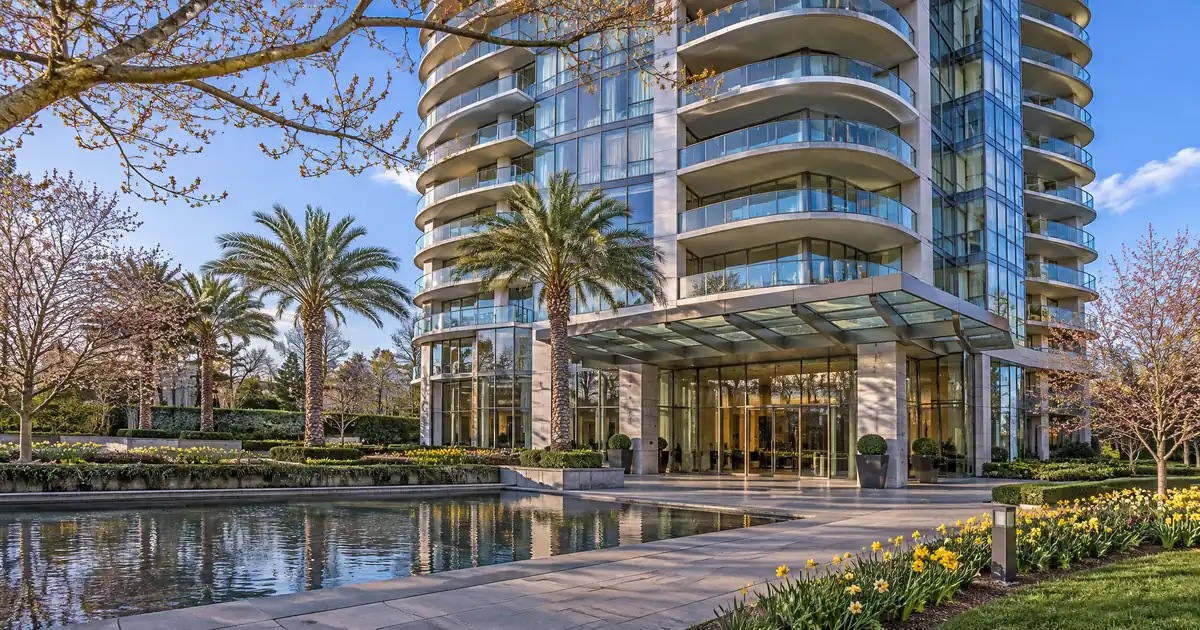
The Quick Read: A super jumbo cash-out refinance fits an investor who wants equity out of one high-value condo. A portfolio DSCR loan fits an investor who wants several rentals, the condo among them, under one note with one pooled coverage test. Neither path erases the building review. On a non-warrantable condo, the building’s overlay and the loan-size band both cap the deal, and the tighter cap wins.
- DSCR (debt service coverage ratio) is monthly rent divided by the full monthly obligation, including association dues.
- Both options qualify primarily on property-level rental income covering the payment, subject to lender guidelines.
- Across our wholesale network, a non-warrantable condo on a single-property loan is typically capped at 75% leverage and a $1,500,000 loan, subject to underwriting.
- A portfolio loan tests coverage on the pool, so stronger rentals can carry a weaker one.
- Cash-out is the piece that shrinks fastest as balances grow.
The honest answer on who each option is for: if the condo is your only large asset and you want cash from it, you are shopping the size ladder. If the condo is one of several rentals and you want simpler structure, you are shopping the pool. A non-warrantable condo is a financing label for a building that fails the standards used by big agency-backed loans. It does not mean the building is unsafe, and it does not mean a DSCR lender will say no.
Side-by-Side
The table below shows how the two structures differ on the points that matter most for a non-warrantable condo. Every figure is a ceiling or floor through select wholesale programs, subject to underwriting. None is a quote or a commitment to lend.
| Factor | Super jumbo cash-out (one condo) | Portfolio DSCR loan (several rentals) |
|---|---|---|
| Collateral | One property | 2 to 20 properties, one note |
| Review basis | The condo’s own rent vs. its obligation | Pooled rent vs. pooled debt service |
| Documentation | Property income, not personal tax returns | Property income across the pool |
| Loan size | $150,000 to $10,000,000 on the ladder; a non-warrantable condo is capped at $1,500,000 by the overlay | $300,000 to $5,000,000 (30-year); $500,000 to $10,000,000 (term) |
| Cash-out | Steps down with size; none above $3,000,000 | Never above 75% of pooled value |
| Non-warrantable condo | Overlay: $1,500,000 loan cap | Condo is an eligible type; building is reviewed |
| Entity vesting | Entities welcome; no layered entities | Special-purpose entity required on some structures |
| Reserves | 6 months on the subject; 12 for first-time investors | Term loan: reserves held for taxes, insurance, capex |
Read the table across, not down. The right column is not a bigger version of the left. It changes what the lender tests (the pool, not the unit) and how releases and exits work. The left column keeps the condo on its own, which is cleaner if you plan to sell it first.
Key Terms Defined
Non-warrantable condo. A condo in a project that fails the standards big agency-backed loans use. Fannie Mae’s Selling Guide lists characteristics such as hotel or motel operation, split ownership, live-work design, critical repairs, and single-entity ownership. Single-entity ownership means one owner holds more than 2 units in a 5-to-20-unit project, or more than 20% of a project with 21 or more units. The rule applies to the whole project, so no single unit can be exempted.
Super jumbo. An industry label for very large loan balances. No regulator defines it. Here it means the upper bands of our size ladder, where leverage steps down and cash-out narrows.
Portfolio DSCR loan. One note secured by several rentals, also called a blanket or cross-collateralized loan. Coverage is measured on the pooled rents and pooled debt service. A bank’s portfolio loan is a different thing: a loan the bank keeps on its own books and underwrites to its own condo rules, as Scotsman Guide describes. This article is about the pooled structure.
Overlay. An extra rule a program adds on top of its normal limits. For a non-warrantable condo, the overlay lowers the leverage and loan-size ceiling.
Why the Building Changes the Math
A DSCR loan was never built for the agencies, so a failed agency test does not end eligibility. It changes which lender sets the building rules. Scotsman Guide reports that non-QM programs finance non-warrantable condos and condotels that conforming lenders typically avoid, and that DSCR loans qualify on rental income rather than personal income.
The triggers matter, though. Scotsman Guide’s condo coverage points to reserves below a 10% budget allocation, unresolved litigation, and thin insurance or an open claim as common problems. Those are different from a hotel-style rental program or a ban on renting. A lender can price or cap for some of these reasons. A true rental prohibition cannot be fixed by any loan structure.
The practical effect: both options still start with a condo questionnaire, the association budget, the master insurance certificate, and the governing documents. Get those early. Then size the request to the tighter of the building limit and the size band, before an appraisal gets ordered.
When the Super Jumbo Cash-Out Is the Better Fit
The super jumbo cash-out fits when one condo holds the equity you want and you do not need to bundle other rentals. Coverage is tested on that unit alone. That keeps your other properties out of the file and makes a later sale of the condo simple.
Cash-out leverage steps down as the loan grows: 75% on a standard-rental cash-out up to $1,000,000, then lower steps through $3,000,000, and no cash-out above $3,000,000. Proceeds run unlimited at or below 60% leverage, with a $1,500,000 cap on proceeds above 60%. Credit of 660 is the floor on loans to $3,000,000. The top cell in each band needs a higher score than the floor, so a lower score takes a lower cell inside the same band. The exact numbers vary by lender and program and follow a full review of property, leverage, and credit.
The size bands and the building overlay stack. A non-warrantable condo typically tops out at a 75% leverage ceiling and a $1,500,000 loan, subject to underwriting. That sits well below the $3,000,000 line where cash-out ends. In practice, a non-warrantable condo cannot ride the true super jumbo cash-out ladder. If your balance sits above the overlay cap, the real choices are a smaller request, a paydown, or a different collateral mix.
Other points favor this route:
- Interest-only runway. A 120-month interest-only period is available on 30- and 40-year terms, up to 75% leverage, with coverage of 0.75 or better and qualification on interest, taxes, insurance and dues.
- Lower coverage paths. Coverage from 0.75 to 0.99 is a real path through select programs to $2,000,000, though LTV and terms adjust, subject to underwriting.
- Entity vesting. Holding title in an LLC works, subject to program terms, as long as entities are not layered.
- Reserves. Six months on the subject property (twelve for first-time investors), and cash-out proceeds typically do not count toward them.
The tradeoff is concentration. One building, one appraisal outcome, one coverage test. Above $2,000,000 a second appraisal is required, which adds one more way for value or market rent to land short.
When the Portfolio DSCR Loan Is the Better Fit
The portfolio DSCR loan fits when the condo is one of several rentals and you would rather refinance them together. You get one note, one pooled coverage test, and room for a weaker property to sit beside stronger ones. Underwriting tests the pooled coverage, the leverage and the terms, so one property that sits below 1.00 on its own can ride in a pool that clears the floor as a whole.
There are two structures, and they are different.
The 30-year portfolio DSCR loan covers 2 to 20 properties under one note. Loan size runs $300,000 to $5,000,000, with larger balances on review. Leverage runs up to 80% on a purchase and on a rate-and-term refinance. The pooled coverage floor is 1.00, the term is 30 years, and an interest-only period is available. SFR, 2-4 unit, condo and townhome are the property types.
The rental portfolio term loan covers five or more properties or units. Terms are fixed at 3, 5, 7 or 10 years with a balloon at maturity. Non-recourse structures exist, with recourse limited to carve-outs such as fraud and bankruptcy, and recourse loans carry a personal guarantee. Prepayment runs on yield maintenance, and reserves are held for taxes, insurance and capital expenditures. Small multifamily of five or more units is eligible only inside this term loan.
Cash-out on a portfolio loan never exceeds 75% of pooled value, and never exceeds the structure’s own ceiling. Inside the first six months of ownership the loan is also capped at 90% of total cost (purchase price plus documented improvements), and at 100% of total cost from six to twelve months. The leverage ceiling still applies, so the loan is the lower of the two. After twelve months the appraised value alone is the basis. A rate-and-term refinance is not subject to the cost-basis cap.
The credit floor on these programs is 640, and some structures ask for 680 or 720. Some structures require a special-purpose entity, typically an LLC, depending on program guidelines. Owner-occupied property, co-ops, mixed-use and commercial property are out of the pool.
Now the catches. First, the condo is an eligible property type, but a non-warrantable building still gets reviewed on its own reason for failing, and acceptance is decided per file. Second, exits are less clean. A partial release, a substitution or the sale of one property follows the loan documents and the lender’s release terms. The release price runs above the property’s allocated balance, and the remaining portfolio must still cover its debt service. If you plan to sell the condo soon, that matters.
A Worked Example
Run the numbers on one condo under both paths. These are modeled ratios, not market data.
Say the condo’s rent covers its full obligation, dues included, at roughly 1.35x before any cash-out. Dues sit in the obligation. They are not subtracted from rent.
Path A. You request cash-out on the condo alone. The new, larger balance raises the obligation, so coverage drops, perhaps to the low 1.0s. If the rent figure also comes in lower on the appraisal, the number gets tighter. The appraiser’s market-rent opinion can sit below your lease, and when that happens lenders can work from the lower number. The size band, the building overlay and the coverage test all run against the same unit.
Path B. You pool the condo with two other rentals. Say the condo alone lands near 0.95x, while the pool tests around 1.08x. Underwriting tests the pooled coverage, the leverage and the terms. The pool clears the 1.00 floor even though one property does not on its own. That is the pooled structure doing its job. It also ties all three properties to one note, so you accept the release terms as the price of the flexibility.
This is the stronger play for an owner of several rentals, though an investor with one trophy condo and no other assets would find the pool has nothing to pool. Either way, a weaker rent opinion hits cash-out hardest, because proceeds depend on both value and coverage.
What Most Investors Get Wrong Here
Jumbo means flexible on condos. Jumbo describes size, not condo tolerance. The overlay still applies to a non-warrantable building.
DSCR ignores the building. The qualification test is the property’s rent. The condo review still happens, and the building’s status affects leverage and loan size.
Pooling hides a bad building. Pooling spreads coverage. It does not waive the building review, and it does not cure a rental ban.
Cash-out proceeds can go anywhere. DSCR loans are designed for non-owner-occupied investment properties. Because they are business-purpose investor loans, they are reviewed differently from a standard owner-occupied mortgage, and you should document how the proceeds will be used in your investing business.
Short-term rental income is a free upgrade. Short-term rental files need coverage of 1.00 or higher and loan amounts to $2,000,000. Income counts at 80% of gross on documented operating history or the appraisal’s short-term-rent analysis, and the investor must have experience. Short-term rental rules can vary by city, county, HOA, and property type, so investors should confirm local rules before relying on projected rental income.
A Decision Sequence
1. Count the properties. One condo points to Path A. Several rentals point toward the pool.
2. Find out why the building is non-warrantable. Ask for the questionnaire, budget, insurance certificate and governing documents. A structural reason, such as hotel-style operation, narrows options more than a fixable one.
3. Find the tighter cap. Compare the building overlay with the size band for the loan you want. Whichever is lower sets the request.
4. Test coverage before you ask. Rent over the full obligation, dues included, for one property or for the pool.
5. Decide how long you will hold. A planned sale of one property favors a single-property loan or a structure with clear release terms.
6. Check reserves. Six months on the subject for Path A. Taxes, insurance and capital reserves on the term loan.
Lendmire’s comparison of bank statement and asset-based cash-outs on a non-warrantable condo looks at how income documentation changes the same building problem. For programs that qualify on personal bank deposits, there is also a piece Best Super Jumbo Bank Statement Cash-Out Refinance Program on a Non-Warrantable Condo. For the basics behind all of this, the complete DSCR loans guide walks through how coverage works.
The Verdict
This is a close call, and the property count usually settles it. Choose the super jumbo cash-out ladder when you own one high-value condo and want to pull equity, knowing the non-warrantable overlay caps the loan well below the true super jumbo bands. Choose the portfolio DSCR loan when several rentals share a story and you would rather have one pooled test, accepting tighter exit mechanics.
The building decides more than the loan name does. Learn why the condo fails the agency test, size the request to the lower of the two caps, and let the right structure follow from that. Every figure here is a ceiling through select wholesale programs, subject to underwriting.
Frequently Asked Questions
Can a non-warrantable condo sit inside a portfolio DSCR loan?
Often it can be reviewed, since condo is an eligible property type in both portfolio structures. Acceptance depends on why the building is non-warrantable and on the lender’s building review. A hotel-style rental program or a rental ban is a different problem from low reserves or an open insurance claim.
Does a DSCR loan skip the condo review?
No. A DSCR loan is reviewed for the property on rent, but the lender still reviews the questionnaire, budget, insurance and governing documents. The building’s status sets leverage and loan-size caps on top of the coverage test.
Why does cash-out lower my coverage?
A bigger balance raises the monthly obligation, while rent stays the same. Association dues stay inside the obligation. So a condo that clears comfortably before cash-out can land near 1.0x afterward, and a lower market-rent opinion makes it tighter.
What if my loan lands above the non-warrantable cap?
The cap applies to the loan, so the options are a smaller request, a paydown, or a different collateral mix. A true super jumbo balance generally will not fit a non-warrantable condo’s overlay, because cash-out also ends above $3,000,000.
Can the condo run as a short-term rental?
Sometimes, through the short-term-rental path, with limits. Income counts at 80% of gross, coverage must be 1.00 or higher, and the investor needs experience. Municipal permission must be documented for the specific property, and association rules matter as well.
Next Step
If you are buying or refinancing a high-balance rental property and want to see how the numbers work, Lendmire can help you compare super jumbo DSCR loan options based on the property income, the loan balance, credit profile, leverage, and investor goals. Lendmire is a broker arranging business-purpose financing through select lenders in its wholesale network, across 41 markets including Washington, D.C. You can reach the team at 828-256-2183.
For how equity extraction works on an investment property, see Lendmire’s guide to cash-out refinance on an investment property.
Lendmire’s self-employed mortgages page presents both super jumbo programs, bank statement and DSCR, side by side.
About Lendmire
Lendmire (NMLS# 2371349), a non-QM mortgage broker serving investors in 41 markets including Washington, D.C., helps structure DSCR scenarios commonly evaluated around a property’s rental income rather than personal income paperwork, subject to lender guidelines. A Scotsman Guide Top Mortgage Workplace in 2025 and 2026, Lendmire places loans through wholesale investor lenders and is not a direct lender.
Get Started
Ready to find the right loan for you?
See your offer in seconds. No credit pull, no obligation.
Informational only. Not a Loan Estimate, approval, or commitment to lend. Program availability and eligibility are subject to lender guidelines, credit approval, property review, and underwriting.
References
1. Fannie Mae Selling Guide B4-2.1-03, Ineligible Projects
2. Scotsman Guide, Condominium Expertise Can Pay Dividends
3. Scotsman Guide, One Out of 20 Mortgages Are Non-QM
This article is part of Lendmire’s super jumbo DSCR loan program — full qualification details, guidelines, and scenarios live on the program page.
Related reading: When a Super Jumbo DSCR Cash-Out Refinance Makes Sense on a Loan Above 2.5 Million Dollars · Super Jumbo DSCR Cash-Out Refinance vs Portfolio DSCR Loan to Buy Out a Partner · Best Super Jumbo DSCR Cash-Out Refinance Program on a Condo or Townhouse
Brandon Miller
Founder & CEO, Mortgage Loan Originator, Lendmire LLC
- Mortgage Loan Originator · NMLS# 1129696 · Verify on NMLS Consumer Access
- North Carolina Real Estate Broker · License# 343312 · Verify on NCREC
- North Carolina Insurance Producer · License# 19053198 · Property, Casualty, Life, Health · Verify on NAIC SBS
- Lendmire LLC · Firm NMLS# 2371349 · Verify firm licensure
Compliance and disclosures. Lendmire (NMLS# 2371349) is a licensed mortgage broker and is not a direct lender, depository institution, financial advisor, or tax professional. Content in this article is general market analysis and educational information — not financial, legal, or tax advice for any specific situation. Lendmire does not guarantee loan approval; every transaction is subject to underwriting by the funding lender. Mortgage pricing and loan program guidelines are subject to change at any time without notice and vary by borrower characteristics, property type, and state regulations. Lendmire complies with Equal Housing Opportunity. Licensure verification: NMLS Consumer Access.