Complete Guide to Condo 40-Year DSCR Loans

– A condo DSCR loan qualifies primarily on the property’s rental income covering the payment, subject to lender guidelines — not W-2s or tax returns.

DSCR Loans articles from Lendmire: how-to guides, requirements and eligibility checklists, cost and timeline questions, and side-by-side comparisons for borrowers and investors. Start with the DSCR Loans program page or browse the DSCR Loans Guide Library.
– A condo DSCR loan qualifies primarily on the property’s rental income covering the payment, subject to lender guidelines — not W-2s or tax returns.
It’s typically a 40-year note structured with a 10-year interest-only period up front, then a switch to a fully amortizing payment for the remaining term.

No Qualified Mortgage category permits 40-year amortization, so this structure lives exclusively in the non-QM space.

Cross into a five-unit building and almost none of that holds.

It works because DSCR loans are underwritten as business-purpose loans, reviewed on what the property earns rather than what the borrower earns.

Condo status (warrantable, non-warrantable, or condotel) doesn’t block this structure; it just changes leverage and pricing tiers.

Complete Guide For A Interest-Only DSCR Loan On Single-Family Properties — An interest-only DSCR loan lets an investor pay only interest

Complete Guide For A No-Ratio DSCR Loan On Short-Term Rental Properties — A no-ratio loan skips the rent-to-payment test.

No-ratio means exactly what it sounds like: the lender doesn’t calculate rent against the payment at all. Not a lower bar. No bar.

A ratio of 1.00 means the rent covers the payment exactly; above 1.00 means there’s cushion.

Rent divided by the payment produces the ratio; clear it, and the file moves forward on the strength of the property.

The rest of this guide walks through the mechanics, the variations, and the places where the general rule breaks.

Getting the distinction right before applying saves a file from stalling mid-underwrite.
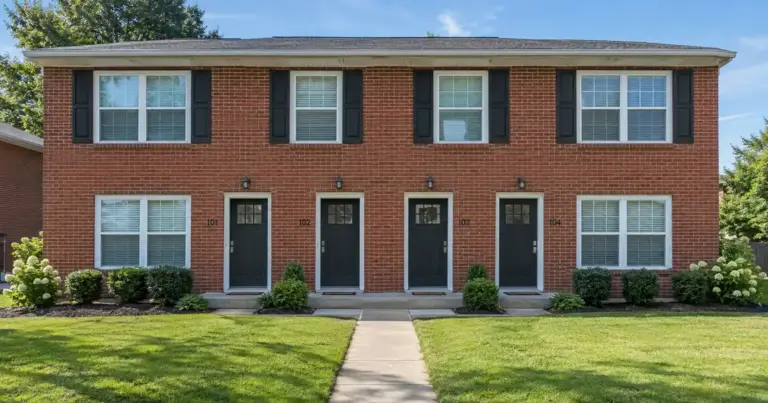
– 2-4 unit properties use a different appraisal form than single-family rentals — one that combines valuation and rental income into a single report.

It’s a real, select-lender path, not a marketing term, and it exists alongside standard DSCR programs that still require rent to cover the payment.