
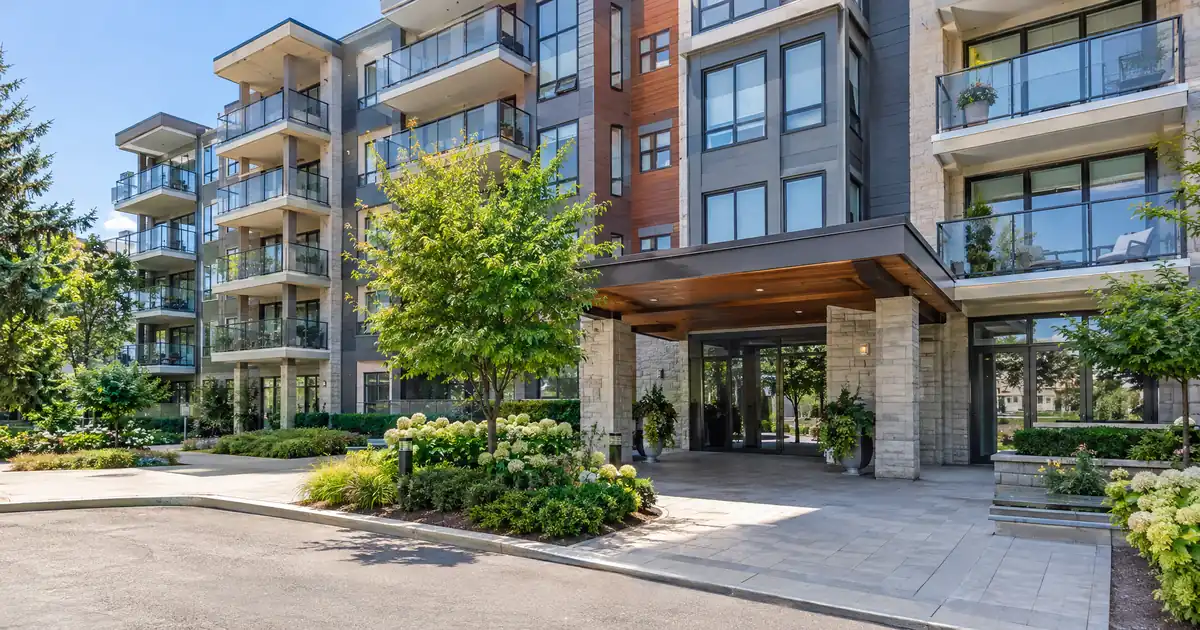
The Quick Read: On a condotel, the building’s questionnaire often decides whether a DSCR cash-out refinance moves forward at all. Lenders read the answers on hotel-style operations, rental pooling, litigation, reserves, and ownership concentration before they weigh the unit’s rent. Across our wholesale network, cash-out on a standard investment rental tops out around 75% LTV, and condotel files frequently land below that ceiling. Which lender fits depends on how the building answers.
- The form describes the building, not you. A strong credit score and strong rent do not fix a weak answer.
- The homeowners association (HOA) or its management company fills it out, so you depend on someone else’s cooperation.
- Hotel operations, mandatory rental pools, litigation, and thin reserves draw the most scrutiny.
- Dues and special assessments flow into the payment, so building answers move your coverage ratio.
- Request the form before you pay for an appraisal.
Key Terms Defined
Condotel: a condo building run partly like a hotel, usually with a front desk, housekeeping, and a rental program for owners’ units.
Condo questionnaire: a form the HOA or management company completes about the building’s finances, legal status, ownership mix, and operations.
Warrantable condo: a condo building that meets the standard project tests lenders use for conventional loans. A non-warrantable building misses one or more of them.
DSCR (debt service coverage ratio): the property’s monthly rent divided by its monthly PITIA. A result of 1.00 means rent equals the payment.
PITIA: principal, interest, taxes, insurance, and association dues, the full monthly housing obligation.
Rental pool: an arrangement where owners’ units are rented together and income is shared, either by requirement or by choice.
Seasoning: the ownership period a lender wants before a cash-out refinance. Many programs in the network look for about 6 months, measured from title recording.
Limited review: a lighter project review some lenders use on favorable loans, which can reduce the paperwork.
DSCR Cash-Out Calculator
Run the cash-out numbers in your market
Rate source: Freddie Mac 30-yr average via FRED® — Federal Reserve Bank of St. Louis · effective Oct 8, 2026
Prefilled with starting assumptions — enter your property’s value, balance, taxes, and insurance for a more accurate picture.
Program parameters update from Lendmire’s centralized guideline source. Taxes and insurance are editable estimates.
As of Oct 8, 2026 · General Freddie Mac market benchmark, not a Lendmire loan offer. Property value, balance, taxes, and insurance are editable estimates. Maximum loan-to-value varies by lender, program, property type, and seasoning. Not a Loan Estimate, approval, or commitment to lend. Program availability and eligibility are subject to lender guidelines, credit approval, property review, and underwriting.
Why the Questionnaire Matters More on a Condotel Cash-Out
A condotel cash-out gets more scrutiny than a purchase because the lender is lending against a building it cannot easily value or resell like an ordinary condo. The questionnaire is where that risk shows up first.
DSCR loans are designed for non-owner-occupied investment properties. Because they are business-purpose investor loans, they are reviewed differently from a standard owner-occupied mortgage. That helps you on income, since the file qualifies primarily on property-level rental income covering the payment, subject to lender guidelines. It does nothing for the building. The lender still wants to know who runs it, who owns it, whether it is being sued, and whether it can pay its own bills.
A condotel adds a second layer. Many files here lean on short-term or rental-program income rather than a signed lease. That income depends on the operator, the season, and the management split. On a cash-out, the lender can see your actual operating history, so the statements count for more than an appraiser’s estimate.
Leverage works the same way. Most programs we place files with cap cash-out at about 75% LTV on a standard investment rental. Short-term-rental collateral is lower, around 70% on a cash-out. Condotel files can price and size below those caps, depending on the lender and the questionnaire. Proceeds are never a fixed number. They depend on rent used for lender review, the full payment, reserves, and the LTV ceiling.
The rest of this article goes line by line through the form.
The Questionnaire Items, Grouped
Most questionnaires cover the same core themes: ownership concentration, litigation, insurance, finances, and use of the building. Each row below shows what the form probes and how lenders usually react. Treat the last column as a general pattern, because every lender sets its own overlay.
| Topic | What the form asks | Usually | Who answers |
|---|---|---|---|
| Ownership concentration | Units held by investors or one owner | Not readily fixable | HOA/manager |
| Litigation | Pending suits against the HOA | Often a hard stop | HOA attorney |
| Master insurance | Coverage type and limits | Fixable | HOA/insurer |
| Reserves and delinquencies | Reserve funding, unpaid dues, foreclosures | Depends on severity | HOA/manager |
| Deferred maintenance | Unsafe conditions, critical repairs | Often a hard stop | Board/manager |
Here is what lenders are really testing in each row.
Ownership concentration. A building where one entity or a handful of investors hold many units is more fragile. If they stop paying dues, everyone else carries the shortfall. Some lenders accept a high investor share when the rest of the file is clean. Others do not.
Litigation. An active lawsuit against the association can mean a large future assessment or a freeze on lending. A routine collections case is different from a construction-defect claim. Expect the lender to ask for details on the second kind.
Master insurance. The lender wants proof that the building’s policy covers the structure and liability. Gaps here can often be cured by the association, but you will wait on the insurer and the board.
Reserves and delinquencies. A building with thin reserves and many unpaid owners leans on special assessments. Lenders read that as payment risk for you. The same applies to units in foreclosure.
Deferred maintenance. Questions about unsafe conditions and critical repairs were added to the standard form in recent years, according to Dickler Law’s overview of the condo association forms. Lenders now read this section closely. A building with open safety repairs can be hard to finance, though other lenders may read the same answers differently.
Other items round out the form: commercial or non-residential space in the building, developer control and turnover status, and master budget adequacy. A hotel-style amenity package can touch several of these at once.
Condotel-Only Items a Standard Condo Form Misses
A standard condo form barely probes how the building operates. A condotel file needs those answers because they decide whether you can use your own unit freely and whether income is real.
- Front desk and daily housekeeping. Services like these signal hotel operation. Lenders ask whether they exist and who runs them.
- On-site rental desk. A desk that books owners’ units can make the building a condotel even when the legal name is ordinary.
- Mandatory or voluntary rental pooling. Mandatory pooling usually raises the biggest concern, because you cannot control your own unit.
- Owner-use limits. Caps on how often you can stay in your unit matter, because they show how much control you have.
- Hotel management agreement terms. Lenders look at the revenue split, the term, and whether you can opt out.
- Name of the project. A legal name containing hotel, motel, or resort is a common flag, per Fannie Mae’s condo FAQ.
A useful working test is control of the unit. If you can rent, occupy, or sell your unit on your own terms, lenders tend to treat the building more like a condo with amenities. If an operator controls bookings and income, the file reads as a hotel investment.
Short-term rental rules can vary by city, county, HOA, and property type, so investors should confirm local rules before relying on projected rental income. A building that passes the project review can still prohibit short-term stays in its governing documents. The two checks are separate.
How the Answers Move the Coverage Math
Building answers reach your DSCR through the payment. Dues and any assessment sit inside PITIA, so a higher dues line lowers coverage even when rent stays flat.
Run the numbers this way, using modeled assumptions rather than market data. Say a unit’s documented rent covers the full payment at about 1.25x. The questionnaire then shows a dues increase planned for next year. If that bump lowers coverage to roughly 1.10x, the file still clears 1.00 but with less room. Add a pending special assessment, and coverage can slip toward 1.00 or below.
Cash-out adds a second pressure. A larger loan balance raises debt service, so coverage drops compared with the same unit unleveraged. The coverage test and the 75% LTV ceiling both have to work together. The strongest files have enough equity and enough rental coverage. Exact terms depend on the lender’s guidelines, property type, leverage, and a full review of the borrower’s file.
1.00 is where many select programs start. A separate select-lender path takes coverage below 1.00, with leverage and terms adjusted. Stronger ratios open better pricing and leverage.
Remember what DSCR measures. It compares rent to PITIA only. A ratio above 1.00 is not positive cash flow. Repairs, vacancy, management fees, utilities, and capital expenses sit outside the calculation, and on a condotel those costs can be heavy.
Tax treatment can depend on how the funds are used and how the property is held; investors should keep clear records and speak with a qualified tax professional before relying on any deduction.
Programs in the network commonly want a credit score of around 660. A 620 floor exists in parts of the network, and 700+ opens the strongest leverage tiers. Short-term-rental collateral typically calls for a 640+ score and about 12 months of hosting history, with a 1.00 coverage floor on refinances. Reserves are commonly around 6 months of PITIA, and loans above $1,500,000 typically step up to about 9 months. These are typical ranges, not promises. Loan amounts run up to $3,000,000 on standard programs. Every file is underwritten individually.
DSCR vs. conventional financing
There are two common ways to finance an investment property, and they qualify you differently — here’s how investors weigh them.
Why investors choose it
- Qualifies on the property’s rental income — no personal tax returns, W-2s, or pay stubs needed to document income.
- No personal debt-to-income ceiling to clear, so existing mortgages and obligations don’t cap your borrowing the same way.
- Can be closed in an LLC, keeping the property inside a business entity.
- Built for scaling — not held to the limit on number of financed properties that conventional financing applies.
- Underwriting centers on the deal: generally qualifies when the rent covers the payment, a 1.00x coverage ratio being a common baseline (confirmed in underwriting).
- Designed specifically for investment property, including long-term and, where the program allows, short-term rentals.
Where it’s strong
- Often the lowest ongoing financing cost for a buyer who fully qualifies on personal income — a fit for a first property or a cost-first purchase.
Trade-offs for investors
- Requires full personal income documentation and must fit within a debt-to-income limit — salary, existing debts, and other mortgages all count.
- Typically held in your personal name rather than a business entity.
- Caps how many financed properties you can carry, which can become a ceiling as a portfolio grows.
- Evaluates you as a borrower as much as the property, which usually means more paperwork.
How investors usually choose: a first or single property often optimizes for the lowest financing cost; portfolio builders often optimize for leverage, vesting in an LLC, and scaling past conventional caps. The right answer depends on your goals, the property, and current guidelines — both paths run through select lenders in Lendmire’s wholesale network, with eligibility and terms confirmed in underwriting.
Where the Agency Form Fits
Lendmire’s network does not use the agency condo rules to decide DSCR files. They matter as background, because most lender questionnaires are modeled on the agency form.
The short-form questionnaire from Freddie Mac asks directly about hotel, motel, or resort activity, rental-pooling arrangements, and limits on owner occupancy. Checking those boxes closes the door on agency-backed loans. It does not close the door on DSCR financing. It moves the file to a lender’s own project review. The agency form is also optional, and lenders often use their own forms, per Fannie Mae’s FAQ cited above. So you may see a different layout and a different question order than the agency version.
TheHOAGuide, an association-education site, describes the hotel and rental-pooling box as the condotel question and a common route to rejection. It also notes that the questionnaire is not the same document as an estoppel or resale package, so do not assume one stands in for the other.
What Happens When an Answer Comes Back Bad?
A bad answer does not always end the file. The right move depends on whether the problem can be cured, explained, or avoided by changing lenders.
| Problem | Likely outcome | Options |
|---|---|---|
| High investor share | Tighter leverage | Compare lender overlays |
| Open litigation | Often a pause | Get case details from counsel |
| Thin reserves | Pricing or leverage hit | Ask for the budget and reserve study |
| Unknown or N/A answers | Follow-up request | Ask the HOA to answer in writing |
| Mandatory rental pool | Narrow lender set | Review the pool terms |
When the HOA leaves critical questions as unknown, lenders typically ask for supporting documents rather than accepting the blank. Go back to the manager and ask for a corrected form, plus the budget, reserve study, and insurance declarations.
If the management company is slow, escalate to the board. The board president can often get the form completed. A questionnaire that sat for a while may also need an update, since lenders want current answers.
Some lenders waive the full questionnaire on favorable loans. Do not plan on a waiver for a condotel. The more likely path is a full review with detailed answers.
If one lender rejects the building, a different lender in the network may still read the same answers differently. That is the value of comparing programs rather than going to a single source.
Consistency matters too. The questionnaire, appraisal, HOA budget, insurance declarations, and rental statements must agree. A mismatch, such as a rental pool disclosed on one document but missing from another, triggers follow-up questions and slows the review.
Order of Operations
Place the questionnaire first, before you spend money on an appraisal. The steps below follow that order.
1. Confirm the property type and whether the building runs a rental program or front desk. 2. Gather your ownership date and make sure you are near the seasoning window, about 6 months from title recording on most programs. 3. Request the questionnaire and supporting HOA package from the management company. 4. Collect your rental history, including operating statements and rental-program revenue reports. 5. Share the completed form with your broker so the file can be matched to a lender whose overlay fits. 6. Order the appraisal with the rent schedule only after the building looks workable. 7. Document reserves and insurance for the unit.
The questionnaire is often a fee-based document, so budget for it as part of your prep.
Borrower Prep Checklist
- Governing documents, including any rental-pool terms and owner-use limits.
- Current HOA budget and reserve study.
- Master insurance declarations.
- Litigation disclosure from the association.
- Rental-program statements or hosting history for the unit.
- Proof of reserves for the unit.
- A note on any special assessments, past or planned.
- Contact information for the manager and a board member.
Frequently Asked Questions
Who fills out the condo questionnaire on a condotel?
The HOA or its management company completes it, not you. You request it, pay any fee, and follow up. On a condotel, the hotel operator may also need to supply operating details, so more than one party can be involved.
Can a DSCR cash-out work if the building is a condotel?
It can, through lenders that review condotel buildings under their own overlays. The agency path is closed for hotel-operated projects, but DSCR financing stays open. Expect tighter leverage than a standard condo and more attention to your rental income documentation. Terms are subject to lender guidelines and property review.
Does a strong credit score override a weak questionnaire answer?
No. The questionnaire describes the building, so your credit does not change those answers. A higher score can open stronger leverage tiers, but it will not cure litigation, reserves, or hotel-operation concerns.
Does warrantable status mean short-term rentals are allowed?
No. A building can pass project tests and still prohibit short-term stays in its governing documents. Lenders check the two separately, and local rules apply on top of them. Confirm both before you rely on projected rental income.
Can the questionnaire be skipped?
Some lenders use a limited review on favorable loans, but condotels rarely fit that mold. Plan for the full form, and treat any waiver as a bonus rather than the strategy.
Next Step
If you are buying or refinancing a rental property and want to see how the numbers work, Lendmire can help you compare DSCR loan options based on the property income, credit profile, leverage, and investor goals. As a broker with a 41-market footprint including Washington, D.C., Lendmire arranges financing through select lenders in its wholesale network. The complete DSCR loans guide explains how the program works from the ground up. This article is informational and not a commitment to lend.
For the mechanics of pulling equity out of a rental property, see Lendmire’s guide to cash-out refinance on an investment property.
About Lendmire
A non-QM mortgage broker (NMLS# 2371349), Lendmire arranges DSCR financing for real estate investors in 41 markets — 40 states plus Washington, D.C. Because deals are underwritten primarily on property cash flow rather than personal income documentation, the structure suits self-employed buyers and entity-owned portfolios. Lendmire places loans through wholesale investor lenders; it is not a direct lender. Scotsman Guide named Lendmire a Top Mortgage Workplace in both 2025 and 2026.
Get Started
Ready to find the right loan for you?
In about 30 seconds you can review financing options available for your investment property. No commitment required.
Informational only. Not a Loan Estimate, approval, or commitment to lend. Program availability and eligibility are subject to lender guidelines, credit approval, property review, and underwriting.
References
1. Dickler Law, Fannie Mae and Freddie Mac forms for condo associations
3. Freddie Mac short-form condo questionnaire
4. TheHOAGuide, condo questionnaire explainer
This article is part of Lendmire’s investment property cash-out refinance program — full qualification details, guidelines, and scenarios live on the program page.
Related reading: Cash-Out Refinance Title Requirements on an Inherited Tenanted Rental · Probate and Title Requirements for an LLC-Held Inherited Rental Refinance · How to Stress-Test DSCR on a Short-Term Rental Cash-Out Refinance
Brandon Miller
Founder & CEO, Mortgage Loan Originator, Lendmire LLC
- Mortgage Loan Originator · NMLS# 1129696 · Verify on NMLS Consumer Access
- North Carolina Real Estate Broker · License# 343312 · Verify on NCREC
- North Carolina Insurance Producer · License# 19053198 · Property, Casualty, Life, Health · Verify on NAIC SBS
- Lendmire LLC · Firm NMLS# 2371349 · Verify firm licensure
Required disclosures. Lendmire (NMLS# 2371349) operates as a licensed mortgage broker, not a direct lender or depository. The discussion in this article is general in nature and should not be relied upon as financial, legal, or tax advice — every investment scenario is unique and should be reviewed by a qualified professional. Any loan inquiry is subject to lender underwriting, and this article is not a commitment to lend or a guarantee of approval. Mortgage rates, loan terms, and program guidelines vary by borrower, property, and state, and may change without notice. Equal Housing Opportunity. Verify licensure at NMLS Consumer Access.