
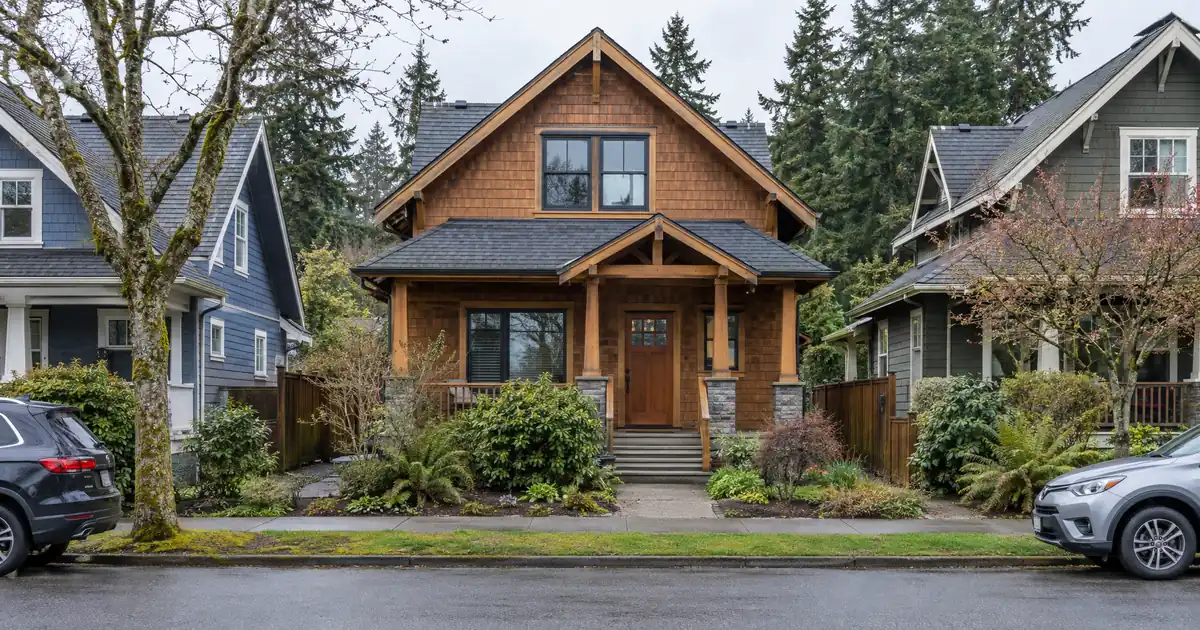
Uptown is where a Port Townsend cash-out refinance starts to make sense on paper and gets complicated in the appraisal. The Homes.com local guide lists Uptown, along with Morgan Hill, among the city’s most sought-after neighborhoods. The stock there is older single-family: cottages, Victorians and the occasional lot with a second small dwelling out back. That second structure is the whole story for a cash-out refinance investment property in this town. A lone three-bedroom house barely carries itself at high leverage, while a house plus a cottage might. Any DSCR cash out refinance in Port Townsend starts by deciding which of those two files you’re bringing to the table.
TL;DR: A DSCR cash-out refinance in Port Townsend, Washington State fits investors who already own a house with an added unit or a rare small multifamily, because the loan is underwritten primarily on the property’s rental income measured against its full monthly obligation, and single-family rents alone run thin against local prices at the 75% leverage ceiling. Exact terms depend on the lender’s guidelines, property type, leverage, and a full review of the borrower’s file.
DSCR Cash-Out Calculator
Run the cash-out numbers in Port Townsend, WA
Rate source: Freddie Mac 30-yr average via FRED® — Federal Reserve Bank of St. Louis · effective Sep 24, 2026
Prefilled with starting assumptions — enter your property’s value, balance, taxes, and insurance for a more accurate picture.
Program parameters update from Lendmire’s centralized guideline source. Taxes and insurance are editable estimates.
As of Sep 24, 2026 · General Freddie Mac market benchmark, not a Lendmire loan offer. Property value, balance, taxes, and insurance are editable estimates. Maximum loan-to-value varies by lender, program, property type, and seasoning. Not a Loan Estimate, approval, or commitment to lend. Program availability and eligibility are subject to lender guidelines, credit approval, property review, and underwriting.
- Redfin puts the median sale price at $525K, down 17.0% year over year.
- Single-family detached is 74.23% of housing; small multifamily is 6.11% (NeighborhoodScout).
- The Port Townsend Leader reports rental vacancy between 0% and 1%.
- Cash-out typically tops out at 75% LTV after roughly 6 months of seasoning.
Lendmire (NMLS# 2371349) is a DSCR-focused mortgage broker, and Port Townsend, Washington State rental property investors can tap DSCR programs that Lendmire arranges, available across 41 markets, including Washington, D.C. The brokerage sees this city as a structure-first market. The financing is the easy part, and the collateral is where files get tested.
Port Townsend Market Snapshot
A quick read on the Port Townsend investor landscape — figures come from the cited sources below. Confirm current property-level numbers before underwriting.
| Metric | Detail |
|---|---|
| Home prices | 56 sales (Redfin Port Townsend housing) |
| Typical rents | $1,550 (PT Leader “Let’s do the math”) |
| Population | 10,438 population (Census Reporter, Port Townsend) |
| Employment | 966 employees (Port Townsend Leader, hospital) |
| Vacancy | 0–1% (Port Townsend Leader, housing) |
Uptown, Downtown and the Corridors Between
Uptown and Morgan Hill carry the best cash-out collateral in Port Townsend: walkable, older single-family stock with lots that can hold a main house plus a cottage. Downtown has commercial upside but a different underwriting story, and the corridors lean workforce. Public data doesn’t break prices or rents out by neighborhood, so structure matters more than zip-level pricing.
Start with Uptown. The older cottages and Victorians sometimes sit on lots with a second dwelling, and that is the configuration a lender can count twice. Morgan Hill shares the same sought-after reputation. Both are single-family residential areas, though, and a plain single-family rental will not clear the coverage math at 75% leverage. More on that below. Every figure here varies by lender and program — guidelines, property type, leverage, and credit profile all apply.
Downtown and the historic district form the waterfront retail and tourism core, with a National Historic Landmark District and the most mixed-use potential in town. Mixed-use and commercial-heavy buildings usually sit in a different box from a residential DSCR file, so a purely residential owner here should check how the property is classified before assuming anything about proceeds.
The Fort Worden area draws demand from arts and events, with hiking and venues a short stroll away. It’s a lifestyle pocket. Lease-term tenants exist, but this is not where the workforce rental base lives.
The Kah Tai and Sims Way corridor, the entry road near the lagoon, Boat Haven and the courthouse, is likely the most workforce-oriented rental territory in the city. Rent surveys such as BestNeighborhood point to higher rents in central areas and lower rents toward the east side. Use that directionally and nothing more.
Skip Glen Cove as a cash-out target. It is the industrial and light-commercial area near the mill, and no verified rent or value data supports pricing it as a rental neighborhood. Port Hadlock-Irondale, just outside city limits, offers older lower-priced homes through high-end waterfront. It may become the growth area for denser rentals, but sewer status is unconfirmed. And one point is not negotiable: the manufactured homes concentrated in Irondale and Port Hadlock fall outside these DSCR programs entirely, so don’t build a plan around them.
Which Median Do You Trust?
Use the appraisal, not a portal median. Redfin shows a $525K median sale price, down 17.0% from a year earlier, while Zillow’s smoother index reads $642,884, up 1.4%. A 17% drop in one measure and a gain in another means cash-out proceeds belong in a planned range, not a single figure.
The gap is a methods problem. Redfin’s median sale price is a small-sample figure and volatile in a town this size. It also shows homes selling after 15 days on market versus 7 a year earlier, with 56 sales in the latest month against 33 the year before. Zillow’s value index is smoother by design. Honestly, neither is wrong. Both are measuring a thin market from different angles.
Now add new construction. Redfin’s new-homes page showed five new homes at a median list price of $749K. That is a wide gap above the resale median, and it matters because an appraiser working a thin comp pool may stretch to out-of-area sales or lean hard on a market-rent schedule. Owners who bought at the top of the range and expect the appraisal to match the purchase price are the ones most likely to hit a surprise.
Run the Numbers at 75% (Single-Family Struggles)
Single-family rents in Port Townsend do not clear 1.00x coverage at the 75% LTV cap on a median-priced house. Modeled coverage lands in the 0.7x to 0.8x range, reaches roughly 1.0x only with leverage pulled back to about 60%, and gets above 1.1x only when a second rent stream is counted. Final terms depend on lender guidelines, property type, leverage, and the borrower’s complete credit picture.
Run the numbers on a hypothetical house valued at $525K, the Redfin median. Rent inputs are modeled assumptions drawn from conflicting sources. Prop:Metrics, citing Rentcast, listed median rents of $2,280 for two-bedrooms and $2,620 for three-bedrooms. A Leader classified ad listed one three-bedroom, 1.5-bath house at $2,100, a single anecdotal data point. The rent-to-value ratio across those inputs is roughly 0.40% to 0.50% monthly. That is arithmetic across two different sources, not a published figure.
Coverage below is rent divided by full PITIA, meaning principal, interest, taxes and insurance, on a 30-year structure with Washington-average taxes and insurance:
| Structure | Modeled rent | LTV | Coverage (full PITIA) |
|---|---|---|---|
| 3BR house, low rent | $2,100 | 75% | under 0.7x |
| 3BR house, high rent | $2,620 | 75% | around 0.8x |
| 3BR house, high rent | $2,620 | 60% | about 1.0x |
| House plus modeled $1,500 ADU | $3,600 to $4,120 | 75% | roughly 1.1x to 1.3x |
The ADU row assumes an appraiser counts the unit’s rent on the same $525K value, with $1,500 chosen because the Leader reports one-bedroom apartments averaging above that. That assumption does a lot of work, and the next section covers why.
The stronger play for most single-family owners might be a smaller pull at lower leverage. Take less cash out and clear 1.00x, or wait until the second unit is leased and documented. Investors who need maximum proceeds could argue the other way, but a sub-1.00 file narrows the field of lenders, and the options shrink to reduced leverage, stronger credit and compensating factors, all subject to lender guidelines and review. Standard programs use 1.00x as the benchmark because the rent covers the obligation at that level. Some lenders will review lower, usually with more cash in the deal.
DSCR files in markets like this one typically look the same on arrival: strong tenant demand, a thin comp pool, and coverage that depends on whether one unit or two gets credited. The files that move cleanly tend to carry executed leases for every unit, a rent schedule the appraiser can support, and leverage sized to the lower of the appraisal-based value and the documented rent. The files that stall usually assumed the portal median would hold up.
Duplexes: Scarce, and That Cuts Both Ways
Small multifamily is the best collateral type for stacking rent in Port Townsend, but there is almost none of it. Duplexes, converted homes and small apartment buildings make up 6.11% of housing units while single-family detached makes up 74.23%, per NeighborhoodScout. Scarcity means few comps and appraisals that lean on market-rent schedules.
Homes.com’s multifamily page showed just two multifamily listings, priced from $550,000 to $935,000, with multifamily homes averaging 51 days listed before selling. That is a point-in-time snapshot, not a sales dataset. Still, it captures the problem. An owner of an existing duplex holds scarce collateral, but the value is harder to pin down than a standard three-bedroom, so proceeds are less predictable.
Don’t count on new-build fourplexes to fix the math either. A Leader opinion column modeled affordable rents at $1,550 a month, 30% of a roughly $62,000 household income, against a new-build fourplex selling around $650,000 per unit. Treat it as opinion, not market data. The takeaway is that DSCR multi-unit deals here are realistic as existing duplexes or single-family homes with added units, and underwriting runs on actual leases, not column assumptions. The urban-area median household income is $62,271 per Census Bureau QuickFacts.
ADUs and the Appraisal Problem
An ADU is the most plausible way to build a second income line on a Port Townsend lot, and also the shakiest to appraise. Housing Solutions Network says the city now allows two ADUs on single-family lots, but the Leader reports that the expansion hasn’t necessarily produced growing supply. Verify current local rental rules, taxes and insurance with qualified local professionals before you build a plan around it.
Comp support is the issue. The county’s draft housing plan, which covers unincorporated areas only, shows no ADUs in the decade before and only 11 in a recent three-year stretch, per the Jefferson County housing element. City numbers may differ, but the pattern is clear: ADU rental comps are close to nonexistent, so an appraiser has little to hang an ADU rent figure on. Appraisal treatment of ADU income varies by lender and by appraiser.
A few practical moves help. Keep a separate lease for each unit. Make sure the second dwelling is a complete, separately accessible unit. Ask early whether the lender will count the ADU rent in coverage or only the main house. If ADU income gets excluded, the file reverts to the single-family rows in the table above.
Seasoning, Reserves and the Paper Trail
Most of the friction in a Port Townsend cash-out file is operational: title seasoning, reserves, lease documentation and the appraisal. Typical program guidance runs about 6 months of ownership measured from title recording, 6 months of PITIA in reserves (about 9 above $1,500,000) and a 75% LTV ceiling on cash-out. Credit tiers run from a 620 floor up through 660, 680 and 700, with better terms at higher tiers. These specifics are subject to lender guidelines and a full review of property, leverage, and credit.
Program details change, so confirm current guidelines before you plan around any of this. Equity available depends on rent used for lender review, PITIA, reserves and the 75% cap, so it is never a guaranteed figure. The DSCR fundamentals page covers how the ratio is built, and the guide “Where DSCR and Conventional Diverge” explains why self-employed owners and portfolio investors tend to choose this route.
Owners who hold title in an LLC should confirm entity treatment, subject to lender program eligibility. The paper stack for a typical file is short but unforgiving:
- Recorded title date, to confirm seasoning
- Executed leases for each unit, plus deposit records
- A rent schedule or comparable rent evidence when comps are thin
- Reserve statements showing seasoned funds
- Entity documents, if the property is in an LLC
Think of it as plumbing. Gaps in any of those lines are what turn a clean file into a conditions list. Lendmire’s guide to refinancing investor properties walks through the file mechanics, and the equity recycle pathway covers how proceeds typically get redeployed. Owners with a file in progress can reach the brokerage at 828-256-2183 or get a DSCR quote. Washington investors can also start with Lendmire’s Washington State DSCR platform.
Anchors: Hospital Yes, Mill With an Asterisk
Jefferson Healthcare is Port Townsend’s dependable rental demand anchor, while the paper mill is a smaller direct tenant source than its reputation suggests. Demand in this market comes from healthcare, mill, maritime-trade and arts-nonprofit workers, not from a college. City population is 10,438 per Census Bureau QuickFacts, and renters compete for very little inventory.
Jefferson Healthcare employed 866 people, then 903, then 966 in successive annual counts, according to the Port Townsend Leader. It employs more people than the mill and the school system combined and is the county’s largest employer. That growth supports steady long-term tenant demand near the hospital.
The mill is where I’d attach the asterisk. Port Townsend Paper reports around 300 employees. A mill-commissioned Econsult study reported by the Jefferson County Beacon counted 310 jobs, only 96 held by Port Townsend residents, at an average salary of $92,600 that the article says may be skewed upward by management pay. The mill also supplies roughly 40% of the region’s manufacturing jobs. Direct rental exposure is small. The bigger risk is indirect, through family-wage jobs and hospital volume, and the Beacon’s own headline asks what the town looks like without the mill. Don’t underwrite it as a permanent anchor.
Naval Magazine Indian Island adds roughly 200 military and civilian personnel, per the Leader. Peninsula College has closed its Fort Worden campus, and Goddard College runs only a low-residency site. Student rentals are not the thesis.
On supply, the Leader cites multiple reports of rental vacancy between 0% and 1%, a news report and not an official statistic. Housing Solutions Network cites 16.4% of Jefferson County housing units as vacant, which likely reflects seasonal use rather than available rentals, and it cites a state projection of 3,985 new homes needed in the county. Tight rentals and tight inventory are good for hold-and-refi investors. They are also why comps are scarce.
Frequently Asked Questions
How do you qualify for a DSCR cash-out refinance in Port Townsend?
Qualification centers on the property’s rent compared with its full monthly obligation, typically a 1.00x benchmark, plus about 6 months of ownership from title recording, credit starting around 620 and reserves of about 6 months PITIA. Leverage tops out at 75% LTV on cash-out. Single-family files in town often need lower leverage or a second rent stream to reach 1.00x. All of it is subject to lender guidelines, credit approval and property review.
DSCR vs. conventional financing
There are two common ways to finance an investment property in Port Townsend, WA, and they qualify you differently — here’s how investors weigh them.
Why investors choose it
- Qualifies on the property’s rental income — no personal tax returns, W-2s, or pay stubs needed to document income.
- No personal debt-to-income ceiling to clear, so existing mortgages and obligations don’t cap your borrowing the same way.
- Can be closed in an LLC, keeping the property inside a business entity.
- Built for scaling — not held to the limit on number of financed properties that conventional financing applies.
- Underwriting centers on the deal: generally qualifies when the rent covers the payment, a 1.00x coverage ratio being a common baseline (confirmed in underwriting).
- Designed specifically for investment property, including long-term and, where the program allows, short-term rentals.
Where it’s strong
- Often the lowest ongoing financing cost for a buyer who fully qualifies on personal income — a fit for a first property or a cost-first purchase.
Trade-offs for investors
- Requires full personal income documentation and must fit within a debt-to-income limit — salary, existing debts, and other mortgages all count.
- Typically held in your personal name rather than a business entity.
- Caps how many financed properties you can carry, which can become a ceiling as a portfolio grows.
- Evaluates you as a borrower as much as the property, which usually means more paperwork.
How investors usually choose: a first or single property often optimizes for the lowest financing cost; portfolio builders often optimize for leverage, vesting in an LLC, and scaling past conventional caps. The right answer depends on your goals, the property, and current guidelines — both paths run through select lenders in Lendmire’s wholesale network, with eligibility and terms confirmed in underwriting.
What are the requirements for an investment property loan in Port Townsend, Washington?
Lenders typically look at the lease or market-rent evidence, credit score tier, reserves, the appraisal and property type. Manufactured homes, log homes and barndominiums fall outside these DSCR programs. Because comps are thin, the appraisal and rent schedule carry more weight here than in a larger metro. Terms vary by borrower, property and loan scenario.
Will a duplex raise my cash-out proceeds in Port Townsend?
It improves the coverage ratio, but the value is harder to support. Small multifamily is only 6.11% of local housing, so appraisers may lean on market-rent schedules and out-of-area sales. A duplex clears 1.00x more easily than a single-family house, yet proceeds stay less predictable until the appraisal comes back.
Does the paper mill’s uncertain future affect a Port Townsend DSCR file?
Not directly. DSCR underwriting reviews property rent, not tenant employers, and only 96 mill workers live in the city per the Beacon study. The risk is indirect, through family-wage jobs and local demand. Hospital employment is the stronger tenant anchor.
What DSCR terms may lenders review for investors in Washington State?
A key program feature is that eligibility is reviewed primarily around the property’s rental income, with a 1.00x coverage benchmark and a 75% LTV ceiling on cash-out refinances, subject to lender guidelines.
What to Do Before You Pull Equity
Cash-out proceeds only matter if they fund the next purchase, so size the pull around the appraisal and the documented rent, not around a portal median. A house with a leased second unit, a duplex that holds up against thin comps, or a lower-leverage pull that clears 1.00x all work. A maximum pull on a lone single-family rental is the file that stalls.
The investors who document the second unit and size the cash-out off the appraisal instead of a portal median will come out ahead.
For current guidelines and terms, see Lendmire’s DSCR loan programs page.
About Lendmire
Lendmire (NMLS# 2371349) is a DSCR-focused mortgage broker that helps arrange investor financing across 41 markets, including Washington, D.C., through wholesale and investor-lending channels. DSCR eligibility is generally reviewed by the lender on the property’s rental income rather than personal income documentation, subject to lender guidelines. That structure works for self-employed investors, LLC operators and portfolios above four financed properties. Scotsman Guide named Lendmire a Top Mortgage Workplace in both 2025 and 2026.
Get Started
Ready to find the right loan for you?
In about 30 seconds you can review financing options available for your investment property. No commitment required.
Informational only. Not a Loan Estimate, approval, or commitment to lend. Program availability and eligibility are subject to lender guidelines, credit approval, property review, and underwriting.
References
2. Redfin, Port Townsend housing market
3. NeighborhoodScout, Port Townsend real estate
4. Port Townsend Leader, housing crisis
6. Census Reporter, Port Townsend
7. Port Townsend Leader, Jefferson Healthcare growth
9. Zillow, Port Townsend home values
11. Prop:Metrics
12. Homes.com’s multifamily page
13. Census Reporter, Port Townsend
14. Housing Solutions Network, ADUs
17. Jefferson County Beacon, paper mill study
18. Leader
19. closed its Fort Worden campus
21. 2025
22. 2026
This article is part of Lendmire’s investment property cash-out refinance program — full qualification details, guidelines, and scenarios live on the program page.
Related reading: Cash Out Refinance Investment Property in Port Townsend, Washington State · DSCR Cash Out Refinance in Port Angeles, Washington State: Equity in a Flat Market · DSCR Cash Out Refinance in Townsend, Tennessee: The DSCR Guide to Refinancing a Townsend Rental in 2026
Guides: Investment Property Cash-Out Refinance in Washington
Brandon Miller
Founder & CEO, Mortgage Loan Originator, Lendmire LLC
- Mortgage Loan Originator · NMLS# 1129696 · Verify on NMLS Consumer Access
- North Carolina Real Estate Broker · License# 343312 · Verify on NCREC
- North Carolina Insurance Producer · License# 19053198 · Property, Casualty, Life, Health · Verify on NAIC SBS
- Lendmire LLC · Firm NMLS# 2371349 · Verify firm licensure
Important disclosures. Lendmire (NMLS# 2371349) is a licensed mortgage brokerage. Lendmire is not a direct lender, depository institution, or financial advisor. All loan inquiries are subject to lender underwriting; this article does not constitute a commitment to lend. Rates, terms, and program guidelines are subject to change without notice and vary by borrower profile, property type, and state. Information in this article is general in nature and is not financial, legal, or tax advice. Equal Housing Opportunity. NMLS Consumer Access: nmlsconsumeraccess.org.