
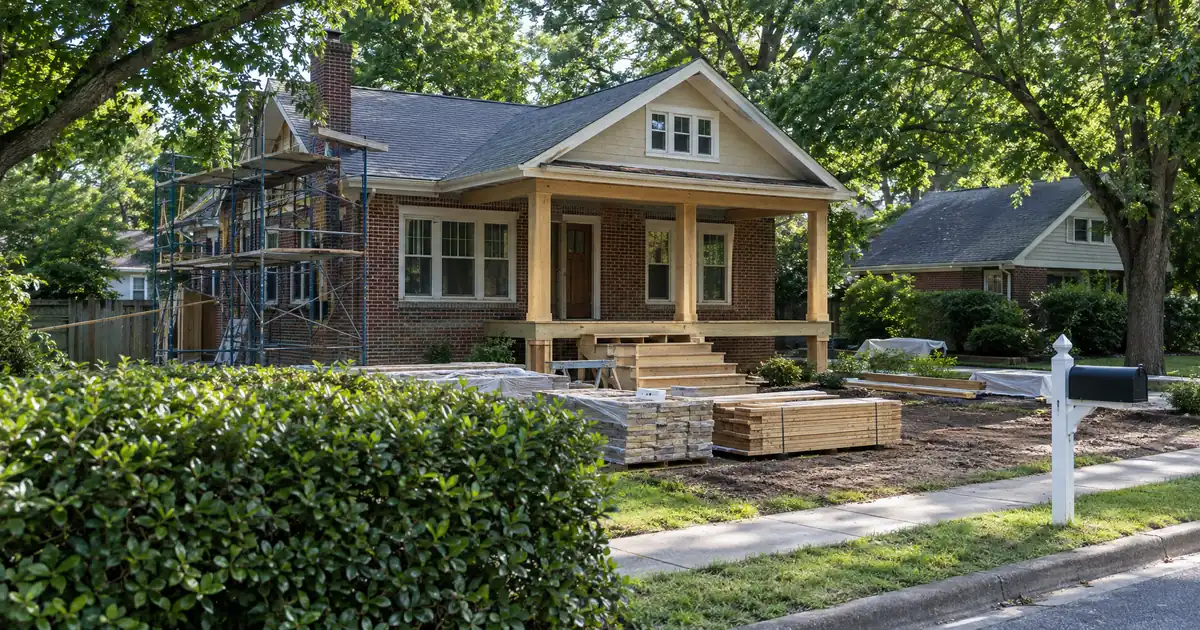
The Quick Read: Hard money is the usual tool when a rental needs heavy repairs, and a DSCR loan is the usual tool once the property is rentable. A DSCR loan is reviewed primarily on property-level rental income covering the payment, subject to lender guidelines. A house with no roof, dead systems, or a gutted kitchen has no rent to measure yet.
- Hard money underwrites the plan, the budget, the after-repair value, and the exit. Terms typically run 6-18 months, interest-only.
- DSCR underwrites rent against the full monthly obligation on a property that is generally rentable at closing.
- Hard money rehab funds release in draws against completed work, and the investor fronts early costs.
- Many investors buy and rehab with hard money, then refinance into long-term DSCR financing once the property is leased.
- Every figure below varies by lender, property, and experience, and nothing here is a commitment to lend.
Which loan fits depends on one question: can the property be rented today? If yes, DSCR can work. If no, the repair budget needs its own funding first. This piece explains why, and where the handoff between the two loans tends to break.
What this loan actually costs to carry.
Hard money is sized against the project and priced by time. Enter the deal and see how much the program will lend, the cash required at closing, the carry while you hold it, and what is left at the exit.
Leverage tiers on the current program: 85% with fewer than 2, 90% with 2 or more, 93% with 5 or more completed projects — every tier capped at 75% of after-repair value. Loan amounts up to $5,000,000, larger by exception; terms of 6 to 18 months, interest-only, no prepayment penalty. The rehab portion funds in draws against completed work, not at closing.
Program parameters shown update from Lendmire’s centralized guideline source. Rate, points, and months are editable assumptions, not quoted terms.
Cost cap sets the loan · positive spread
Illustrative estimate only — not a quote, Loan Estimate, approval, or commitment to lend. Rate, points, and months are editable assumptions. Hard money is business-purpose financing for real estate investors, not a consumer mortgage. Leverage on the current program tops out at 93% of project cost for investors with a documented track record, capped at 75% of after-repair value, with rehab funding up to 100% of the documented budget released in draws; actual terms vary by lender, borrower experience, property, and exit. Lendmire is a mortgage broker, not a lender.
Side-by-Side
The DSCR column reflects the wholesale network’s programs. The hard money column reflects published industry norms, with Lendmire’s brokered parameters noted where they apply. Pricing is left out on purpose and lives in the calculator only.
| Factor | DSCR Loan | Hard Money |
|---|---|---|
| Review basis | Rent coverage of the payment | Asset, plan, and exit |
| Property condition | Generally rentable at closing | Distressed or unfinished is fine |
| Funds the repairs? | No | Yes, in draws against completed work |
| Documentation | Leases or rent opinion, appraisal, assets | Contract, rehab budget, entity docs, ID |
| Term structure | Long-term, 30-year fixed spine | 6-18 months, interest-only |
| Borrower profile | Credit and assets matter | Experience and liquidity matter |
| Entity vesting | Common, subject to program terms | Common |
| Reserves | Commonly around 6 months of PITIA | Liquidity for the first draw |
Hard money leverage is usually sized on cost and after-repair value. On brokered files, fix-and-flip loans run 85% to 93% of project cost depending on completed projects, always capped at 75% of after-repair value. Bridge purchases without rehab go up to 80% of purchase price. Up to 100% of the rehab budget can fund in draws. These vary by lender, property, and experience.
Why Heavy Repairs Break the DSCR Fit
DSCR is a ratio of rent to the monthly obligation (principal, interest, taxes, insurance, and any HOA dues). A property that cannot be occupied produces no rent. The appraiser can estimate market rent, but the lender still has to finance a house it can insure and a tenant can live in.
Across the wholesale network, condition standards are lender-set. There is no universal line for “too much repair.” The practical test is simple: could a tenant move in with a signed lease next month? Paint, flooring, fixtures, and landscaping usually pass. A failed roof, missing kitchen, open walls, or non-working systems usually do not.
A DSCR loan sized to a non-rentable house also leaves the repair budget unfunded. The loan pays the seller. It does not pay the contractor.
When a DSCR Loan Is the Better Fit
Choose DSCR when the work is cosmetic or modest and the property can be leased as is, or soon after a light refresh.
- Rentable on day one. The house shows rent and passes a lender’s condition review.
- Long hold. Fixed-rate structures on a 30-year spine suit buy-and-hold. Extended terms and interest-only periods exist through select lenders.
- No repair draws needed. The investor can pay for light work out of pocket.
- Refinance after rehab. Cash-out tops out around 75% LTV across most of the network on standard rentals, with roughly 6 months of seasoning as the common expectation. Every figure here varies by lender and program — guidelines, property type, leverage, and credit profile all apply.
Purchase leverage on most files lands at 75%-80% LTV, with select high-leverage programs reaching 85% LTV with roughly a 700+ score. Credit typically runs around 660, with a 620 floor in parts of the network.
One caution. Clearing 1.00 coverage is not the same as positive cash flow. DSCR compares rent to PITIA only. Repairs, vacancy, management, utilities, and capex sit outside the calculation. On a house that just came out of a rehab, those costs are real. For files below 1.00, select lenders in the network offer paths with leverage and terms adjusted.
When Hard Money Is the Better Fit
Choose hard money when the repair scope is large and the plan is to fix first, hold second.
- Heavy scope. Roof, structure, systems, full interior gut. The loan has to fund work, not just the purchase.
- A written budget. Lenders want an itemized rehab budget and a credible contractor plan. A detailed budget matters most when the lender holds rehab funds back and releases them in draws as work is completed.
- Cash for the first draw. Rehab money usually reimburses finished work. Even on programs advertised as covering 100% of rehab, the borrower typically floats the first phase.
- An exit. Either a sale or a refinance into long-term financing.
On brokered hard money files, minimum credit runs 620, with additional conditions below 660. First-time investors qualify at the lower leverage tiers. The top tier is reserved for experienced investors. Collateral is non-owner-occupied residential, 1-4 units. Loan amounts go up to $5,000,000, larger by exception.
There is no true 100% purchase program. The figure people quote refers to the rehab budget, funded in draws, not the purchase.
The tradeoff is the maturity. A 6-18 month interest-only note runs on a clock. If repairs slip, the clock does not.
How Rehab Draws Work
1. Package the file. Executed purchase contract, entity documents, ID, and a line-item rehab budget.
2. Appraisal on the plan. The lender values the property as is and after repairs. Leverage is capped against both.
3. Close and fund the purchase. The rehab portion is held back by the lender or escrow agent.
4. Complete a phase. The contractor finishes work, usually after the borrower fronts the first cost.
5. Inspection. The lender or its inspector confirms completion.
6. Reimbursement. Funds release against the finished work. Change requests and inspections can carry fees.
7. Finish and exit. Final draw, final inspection, then sale or refinance.
Cash timing is where investors get hurt. Contractors often want a deposit and progress payments before the lender reimburses. Working capital, not just the down payment, decides whether the schedule holds.
The Two-Loan Sequence
Most heavy-repair rentals end up using both loans. Buy and rehab with hard money. Lease it. Then refinance into long-term DSCR financing. Lendmire brokers that path, and many investors use it.
Where does it stall? Usually at one of these gates:
- Seasoning mismatch. The short note matures before the refinance lender’s ownership clock clears. Market surveys report 3 to 6 months of lender seasoning on BRRRR-style refinances. Across the wholesale network, cash-out typically expects about 6 months. Seasoning rules differ between rate-and-term and cash-out paths.
- No lease. The exit generally needs an executed lease, proof of the deposit, and rent evidence. Schedule the tenant before the bridge matures.
- No improvement list. The refinance appraiser should see an itemized record of the work done.
- Thin coverage on the larger payment. The new loan may be bigger than the old one. Run the ratio before the rehab starts, not after.
- Cost-based sizing. On an early refinance, the lender may size the loan on cost rather than the new after-repair value. Plan for it.
The old note, not the new appraisal, sets the deadline. Keep a fallback: an extension, a sale, or a smaller refinance.
For related scenarios, Lendmire’s piece DSCR Loan vs. Hard Money for a Rental Needing Storm Repairs covers insurance-driven damage, and the DSCR loan vs hard money for a rental that needs repair covers lighter scopes.
Documentation Friction on Each Side
On the hard money file, the usual gaps are a vague rehab budget, missing entity documents, and no proof of liquidity. On the DSCR file, they are a missing lease, no rent evidence, unclear vesting, and an insurance quote that does not match the property’s actual condition.
Entity vesting works on both sides, subject to lender program eligibility. Business-purpose loans to entities are generally treated differently from consumer credit. Hunton Andrews Kurth’s analysis of business-purpose lending notes loans to non-natural persons are exempt from TILA, but it also warns that business purpose does not mean compliance exempt. That paper is older, so treat it as background, not current guidance.
Worked Scenario
Picture an investor buying a dated single-family rental with a failing roof and gutted bathrooms. The plan is to hold it long term.
- Path A: DSCR only. The lender is unlikely to fund a house that cannot be leased, and even if it did, the repair budget stays unfunded. Not workable.
- Path B: hard money, then DSCR. The investor buys with a loan sized on project cost, capped at 75% of after-repair value. Rehab funds release in draws. After repairs, the investor signs a lease and refinances into long-term DSCR financing. Whether the ratio clears depends on rent against the new full obligation, plus the lender’s seasoning and appraisal review.
- Path C: cash and light work. If the issues are cosmetic, DSCR may work on its own.
Run the coverage ratio on the exit loan before committing to the entry loan. If the ratio only clears with optimistic rent, the plan has a hole in it.
Key Terms Defined
After-repair value (ARV): The estimated value of the property once repairs are finished.
Draw: A release of rehab funds after completed work is inspected.
Seasoning: The minimum ownership period before a lender allows certain refinances.
DSCR: Rental income divided by the property’s monthly obligation, including principal, interest, taxes, insurance, and HOA dues.
Loan-to-cost: A loan amount measured against total project cost, not just value.
The Verdict
Use hard money when the house needs work before it can be rented. Use a DSCR loan when the house can be rented now. For a heavy-repair rental held long term, plan on both: hard money to buy and rebuild, a DSCR loan to hold. The mistake is picking one loan and hoping it does the other’s job.
Read the complete DSCR loans guide for the long-term side of that plan. If you are buying, rehabbing or refinancing an investment property on a short timeline and want to see how the numbers work, Lendmire can help you compare hard money options based on the project, the exit plan, leverage, and your goals.
Frequently Asked Questions
Can a DSCR loan fund repairs at all?
Generally no. DSCR loans finance the purchase or refinance of a property that already produces rent. Repair money usually comes from cash, a hard money rehab holdback, or a later cash-out refinance, subject to lender guidelines.
Can I buy a house that needs a new roof with a DSCR loan?
Rarely. Condition standards are lender-set, but a failed roof usually affects insurability and habitability. Select lenders may look at lighter issues. A major roof replacement typically pushes the file toward short-term financing first.
Is hard money funded at 100% of the purchase?
No. Brokered fix-and-flip leverage runs 85% to 93% of project cost depending on completed projects, capped at 75% of after-repair value. Terms vary by lender, property, and experience.
What if the property will not appraise or rent after rehab?
The exit loan shrinks or fails. Plan for an extension, a sale, or a smaller refinance. Hard money terms run 6-18 months, so the margin for error is thin.
Does a business-purpose rehab loan follow the same rules as purchase financing?
Not always. Under the Federal Reserve’s Regulation Z manual, credit to acquire or improve a non-owner-occupied rental is generally treated as business purpose. Doss Law’s guide describes different unit-count thresholds for acquisition and improvement on small properties.
Tax treatment varies; consult a qualified professional.
About Lendmire
Lendmire (NMLS# 2371349), a non-QM mortgage broker serving investors in 41 markets including Washington, D.C., helps structure DSCR scenarios commonly evaluated around a property’s rental income rather than personal income paperwork, subject to lender guidelines. A Scotsman Guide Top Mortgage Workplace in 2025 and 2026, Lendmire places loans through wholesale investor lenders and is not a direct lender.
Get Started
Ready to find the right loan for you?
See your offer in seconds. No credit pull, no obligation.
Informational only. Not a Loan Estimate, approval, or commitment to lend. Program availability and eligibility are subject to lender guidelines, credit approval, property review, and underwriting.
References
1. Hunton Andrews Kurth – Beware of “Business Purpose”
2. Federal Reserve – Regulation Z manual
3. Doss Law – Business Purpose Exemption Simplified
This article is part of Lendmire’s hard money loan program — full qualification details, guidelines, and scenarios live on the program page.
Related reading: Can You Get a DSCR Loan on a Wrightsville Beach Rental? · How to Close a DSCR Loan on a Carolina Beach Rental · DSCR Loan vs Hard Money for a Douglas Lake Cabin Buyer
Brandon Miller
Founder & CEO, Mortgage Loan Originator, Lendmire LLC
- Mortgage Loan Originator · NMLS# 1129696 · Verify on NMLS Consumer Access
- North Carolina Real Estate Broker · License# 343312 · Verify on NCREC
- North Carolina Insurance Producer · License# 19053198 · Property, Casualty, Life, Health · Verify on NAIC SBS
- Lendmire LLC · Firm NMLS# 2371349 · Verify firm licensure
Legal disclosures. Lendmire (NMLS# 2371349) is a state-licensed mortgage brokerage that arranges financing through wholesale lender relationships. Lendmire is not a direct lender, depository institution, or registered financial advisor. The discussion above is general informational content about real estate financing — it is not financial, legal, or tax advice, and readers should consult licensed professionals for guidance on their individual circumstances. Loan inquiries are subject to lender underwriting; this article does not represent a commitment to lend. Loan terms, rates, and qualification standards vary by borrower, property, and state, and are subject to change at any time. Equal Housing Opportunity. NMLS Consumer Access: nmlsconsumeraccess.org.