
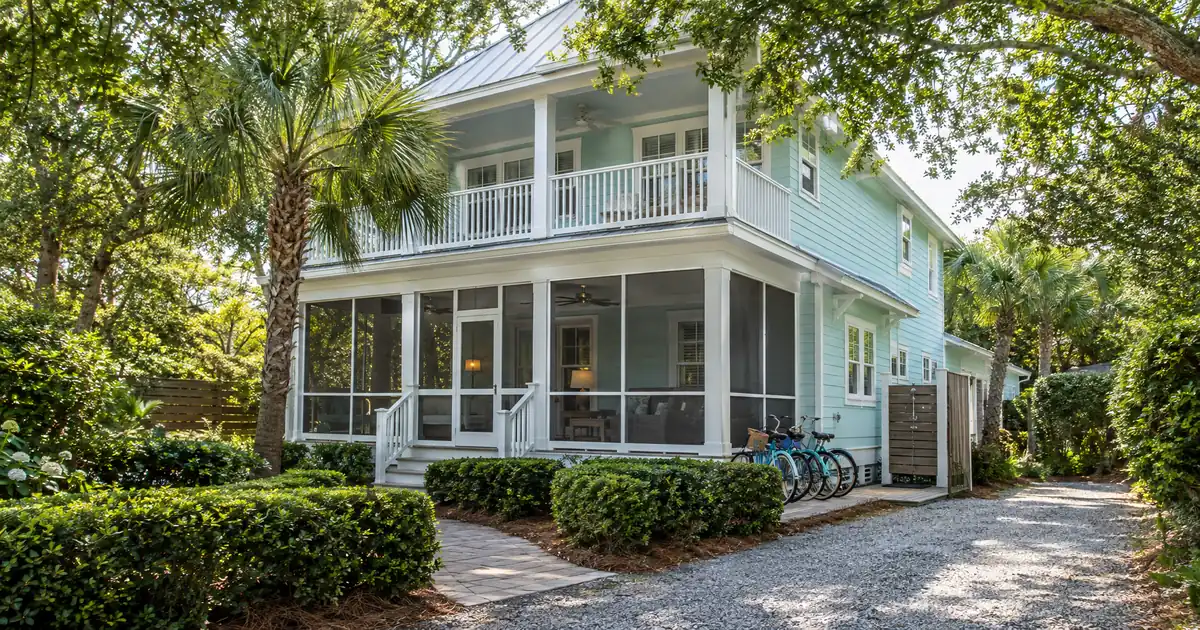
The Quick Read: A coastal rental with storm history qualifies primarily on property-level rental income covering the payment, subject to lender guidelines, but the file must also prove what the storm did, what was repaired, and what insurance covers today before that rent counts for anything.
- Lenders in the network want three things in order: the loss, the repair, and the current coverage.
- A property with open, unrepaired damage usually gets screened out before an appraisal is ordered.
- Insurance is the channel that reaches the ratio. A new flood policy or a higher wind deductible changes the payment, and the same rent then covers less.
- Clean records of photos, claim paperwork, invoices, permits and a completion sign-off do more for the file than any cover letter.
- Passing the coverage test does not make the property profitable. Repairs, vacancy and management sit outside it.
Why Storm Damage Reaches a DSCR File
A DSCR loan compares the monthly rent to the full housing payment: principal, interest, taxes, insurance and any association dues. That full payment is called PITIA. The ratio has no line for a torn roof or a gutted kitchen, so storm damage reaches the file through three other doors.
DSCR Cash-Out Calculator
Run the cash-out numbers in your market
Rate source: Freddie Mac 30-yr average via FRED® — Federal Reserve Bank of St. Louis · effective Oct 15, 2026
Prefilled with starting assumptions — enter your property’s value, balance, taxes, and insurance for a more accurate picture.
Program parameters update from Lendmire’s centralized guideline source. Taxes and insurance are editable estimates.
As of Oct 15, 2026 · General Freddie Mac market benchmark, not a Lendmire loan offer. Property value, balance, taxes, and insurance are editable estimates. Maximum loan-to-value varies by lender, program, property type, and seasoning. Not a Loan Estimate, approval, or commitment to lend. Program availability and eligibility are subject to lender guidelines, credit approval, property review, and underwriting.
The first door is the condition of the collateral, which the appraisal and the lender’s property review both check. The second is the insurance premium inside PITIA. The third is the rent the property can actually support once it is leasable again.
Think of it this way. The ratio is a simple division problem, but the numbers feeding it have to be real. After a storm, the rent might be unproven, the insurance might be changing, and the building might not be livable yet. Documentation is how you make those inputs believable.
Across the wholesale network, DSCR purchase loans typically land at 75%–80% LTV. LTV, or loan-to-value, is the loan balance divided by the property’s value. Cash-out refinances top out around 75% LTV on standard rentals. Those caps stay in place no matter how good your storm file looks. The file only decides whether you get to the starting line. For the full program picture, see Lendmire’s complete DSCR loans guide.
Key Terms Defined
DSCR (debt service coverage ratio): The monthly rent divided by the monthly PITIA. A result of 1.00 means rent equals the payment.
PITIA: Principal, interest, taxes, insurance and association dues. It is the full monthly housing obligation the lender tests.
Proof of loss: A sworn claim statement that tells an insurer what was damaged and what you say it is worth. Flood policies carry a filing window, so check yours right after the storm.
Adjuster estimate: The insurer’s written scope and price for repairs. It is the baseline your contractor’s invoices get compared against.
Loss of rents: Coverage that pays rent you cannot collect while covered damage makes the unit unrentable. It is usually limited by amount, time or both.
Named-storm or percentage deductible: A deductible set as a share of the insured value instead of a flat amount. It can be much larger than a standard deductible.
Completion certificate: A signed statement from an inspector, appraiser or licensed contractor that repairs are finished to the agreed scope.
Elevation certificate: A surveyor’s record of a building’s height relative to flood levels. It helps price flood insurance and confirm the flood-zone picture.
Rent-ready: Repaired, inspected, clean and able to be leased today.
The Three Questions Every Underwriter Asks
Every storm-affected file reduces to three questions. What happened? What was repaired? What insurance is in force now?
What happened. The reviewer wants the cause, the date and the scope. Was it wind, flood or both? A claim file that separates the two causes is far easier to read than one that blurs them. Insurance practitioners advise owners with both wind and flood damage to record which damage came from which cause and when, as Ackley Insurance Florida lays out in its loss-of-rent guidance.
What was repaired. Photos of a finished room prove nothing about what is behind the drywall. Permits, licensed-contractor invoices and a sign-off tell the story. Repairs that cannot be traced to paperwork are treated as unverified.
What insurance exists today. The lender underwrites the policy you hold at the time of the refinance, not the one you held before the storm. If the insurer raised the premium, added a deductible or declined to renew, that new reality is what enters PITIA.
Is the Property Eligible Right Now?
Eligibility depends on condition. A property with obvious open damage is generally not refinance-ready, and many files with major visible damage are screened out before an appraisal is ordered. The usual path for a damaged house is short-term rehab financing first, then a DSCR refinance once it is repaired and leasable. Every file is underwritten individually, so treat the table as a general map.
| Condition | Typical treatment | Next step |
|---|---|---|
| Open, unrepaired damage | Usually screened out | Finish repairs first |
| Repairs underway | Usually waits for completion | Document scope, permits, draws |
| Repairs done, papered | Reviewed on condition and coverage | Assemble the full file |
| Cosmetic only | Reviewed case by case | Photos and invoices |
| Claim still open | Depends on what is unresolved | Get settlement status in writing |
Seasoning also matters. Seasoning is the waiting period a lender wants between buying or finishing work on a property and refinancing it. On a cash-out, about six months is the common expectation across the network. Completed-repair history can help show that the property has stabilized.
What Goes in the Storm File?
Build the file in three phases: during the storm, during the claim, and after repair. For each item, ask who produces it, what the reviewer checks, and what to do if it is missing.
| Document | What the reviewer checks | If it is missing |
|---|---|---|
| Dated photos and video | Cause and extent of loss | Ask tenant, manager, contractor |
| Adjuster estimate | Scope versus invoices | Request from insurer |
| Proof of loss, settlement letters | Claim status, amount paid | Get insurer status letter |
| Contractor scope and invoices | Work matches the claim | Ask contractor to reissue |
| Permits and closeouts | Repairs were legitimate | Contact the permit office |
| Completion sign-off | Repairs finished | Order an inspection |
| Current declarations page | Coverage in force today | Request from agent |
| Leases, rent roll, bank records | Rent before and after | Rebuild from deposits |
A few habits make this file much stronger. Photograph damage before cleanup, once access is safe. Keep appliance serial numbers and material samples if the adjuster may want them. Insurance practitioners also recommend a pre-storm claims folder holding the policy declarations, leases, rent rolls, receipts, management agreements and contractor contacts, as Obie describes in its landlord guide.
Keep personal and entity records separate. If the property sits in an LLC, the claim payments, contractor bills and rent deposits should run through that entity’s accounts. LLC-titled borrowers are accepted subject to lender program eligibility.
From Storm to Refinance, Step by Step
1. Secure the property and document the loss. Photograph everything before cleanup. Prevent further damage and notify the insurer.
2. Separate wind from flood. Report each cause under the policy that covers it.
3. Collect the adjuster estimate and keep every claim letter. Note any dispute or supplement in writing.
4. Hire licensed contractors and pull permits. Match the scope to the claim.
5. Close out permits and get a completion sign-off. This is your proof that repairs are done.
6. Make the unit rent-ready and lease it. A signed lease at market rent supports the income side.
7. Refresh the insurance. Get the current declarations page and a fresh premium before the file goes to the lender.
8. Season the property as needed and apply. A new refinance is a fresh transaction with its own appraisal and review.
What Happens to Claim Money and Open Claims?
Claim proceeds should be traceable to repairs. Reviewers like to see a payment from the insurer and invoices that roughly match it. When the numbers do not line up, expect questions.
An open claim or a pending supplement is not automatically disqualifying, but it adds uncertainty. The question becomes whether the property is repaired and whether the unresolved amount could change that. A written insurer status letter helps. So does a clear note on any hidden damage found during repairs, which is a common reason owners keep a claim open.
A prior claim does not by itself make a property ineligible. The practical issue is verification: can you show what happened, prove the fix, and show the coverage you hold now? Tax treatment varies; consult a qualified professional.
If you want to fund the work through the refinance instead, Lendmire’s piece How to Use a DSCR Cash-Out for Storm Repairs on a Coastal Rental covers that route. This article stays focused on the paperwork.
DSCR vs. conventional financing
There are two common ways to finance an investment property, and they qualify you differently — here’s how investors weigh them.
Why investors choose it
- Qualifies on the property’s rental income — no personal tax returns, W-2s, or pay stubs needed to document income.
- No personal debt-to-income ceiling to clear, so existing mortgages and obligations don’t cap your borrowing the same way.
- Can be closed in an LLC, keeping the property inside a business entity.
- Built for scaling — not held to the limit on number of financed properties that conventional financing applies.
- Underwriting centers on the deal: generally qualifies when the rent covers the payment, a 1.00x coverage ratio being a common baseline (confirmed in underwriting).
- Designed specifically for investment property, including long-term and, where the program allows, short-term rentals.
Where it’s strong
- Often the lowest ongoing financing cost for a buyer who fully qualifies on personal income — a fit for a first property or a cost-first purchase.
Trade-offs for investors
- Requires full personal income documentation and must fit within a debt-to-income limit — salary, existing debts, and other mortgages all count.
- Typically held in your personal name rather than a business entity.
- Caps how many financed properties you can carry, which can become a ceiling as a portfolio grows.
- Evaluates you as a borrower as much as the property, which usually means more paperwork.
How investors usually choose: a first or single property often optimizes for the lowest financing cost; portfolio builders often optimize for leverage, vesting in an LLC, and scaling past conventional caps. The right answer depends on your goals, the property, and current guidelines — both paths run through select lenders in Lendmire’s wholesale network, with eligibility and terms confirmed in underwriting.
How a Post-Storm Insurance Change Moves the Coverage Number
Insurance is the fastest path from a storm to a weaker ratio. Run the numbers on a modeled rental that clears about 1.25x before the storm. These are illustrative assumptions, not market data.
After the storm, the insurer renews with a higher wind premium, and you add a separate flood policy. Together they push the full payment up by roughly 14%. The rent has not changed. The coverage number drops to about 1.10x.
That is still above 1.00, but it is a different file. Pricing and leverage tiers on DSCR loans respond to stronger coverage, so a thinner ratio can narrow your options. Here are the levers worth knowing:
- Larger down payment or lower leverage. A smaller loan means a smaller payment and a higher ratio. It never overrides leverage caps, credit floors, reserve rules or property eligibility. The strongest files clear both tests: enough equity and enough rental coverage.
- Interest-only periods. Select lenders in the network offer interest-only structures that lower the qualifying payment during the period.
- Different term structures. The 30-year fixed is the spine of most programs, and select lenders offer extended terms.
- Sub-1.00 coverage. Coverage of 1.00 is where many select programs start. A separate select-lender path goes below 1.00 with leverage and terms adjusted. Both are subject to lender guidelines and property review.
Clearing 1.00 also does not mean the property makes money. Repairs, vacancy, management, utilities and capex all sit outside the ratio. A coastal owner with a high wind deductible should budget for that deductible separately, because it is cash out of your pocket before insurance pays anything.
Reserves matter too. Lenders want cash on hand after closing, commonly around six months of PITIA, with the requirement varying by lender, loan size, leverage and transaction type. Larger loans typically step up to about nine months. Those reserves also protect you if the next storm hits.
Appraisal and Rent Support After a Storm
The appraiser looks at condition, marketability and comparable properties. A repaired property with permits and invoices is easier to value than one with unexplained patches. Any improvement may support a higher appraised value, depending on comps and underwriter review.
Rent evidence works differently for each rental type. For a long-term rental, a signed lease at market rent after repairs is the cleanest proof. If the unit sat empty during repairs, the file should explain that gap with dated work records rather than leave it unexplained.
Loss-of-rents coverage has limits worth understanding. It generally depends on covered physical damage, so an evacuation order or a utility outage with no damage may not qualify. Steadily describes the three policies that work together for a landlord: the dwelling policy covering the structure and lost rent, the tenant’s renters policy for belongings, and a separate flood policy for rising water. Rent-loss payments are not a substitute for a signed lease, and they do not guarantee the ratio clears.
Short-term rentals add a wrinkle. Programs typically look for about 12 months of hosting history and a 640+ credit score. A storm outage can leave a hole in that history, so keep booking records and repair dates side by side. A cash-out tops out around 75% LTV on standard long-term rentals and around 70% on short-term-rental collateral. For more on income proof, see Lendmire’s explanation of short-term rental cash-out refinance income documentation. Short-term rental rules can vary by city, county, HOA and property type, so investors should confirm local rules before relying on projected rental income.
Coastal Specifics: Wind, Flood and Moisture
Wind and flood are different risks with different policies. Most standard landlord policies exclude flood. Steadily also notes that policy forms differ: the DP3 form covers hurricane wind on an open-peril basis, while DP1 and DP2 cover only named perils. Know which one you hold.
Flood coverage rests on federal maps. The Congressional Research Service explains that FEMA runs the National Flood Insurance Program, and its maps mark special flood hazard areas where the annual flood risk is high. Coverage is optional outside those areas, even with a federally backed mortgage. Whether a DSCR program applies the federal standard varies, but lenders generally want flood coverage in force when a property sits in a mapped high-risk zone.
A mapped zone is not the whole story. The Government Accountability Office reports that the purchase mandate is the main reason people carry flood coverage and that FEMA maps generally miss some flood risk, especially heavy rainfall. It also reports that most high-risk properties lack NFIP coverage. Many coastal investors may be underinsured, which is a risk to you as well as to the lender.
Here are the coastal records that tend to matter most:
- Flood-zone determination. Do not rely on a listing-site label. Use a formal determination.
- Elevation certificate. It supports flood pricing and the zone picture.
- Moisture and mold evidence. Remediation reports and clearance records show water damage was fully resolved.
- Deductible terms. Percentage hurricane deductibles can be far larger than flat ones, so check the actual amount before you budget reserves.
Remember that insurers and lenders review these items separately. A policy in force does not prove the repair was done, and a finished repair does not prove the coverage is adequate.
Which Path Fits Your Situation?
| Where you are | Usual direction |
|---|---|
| Repairs done and documented | Assemble the file and apply |
| Repairs underway | Finish, close permits, then apply |
| Claim still open, work complete | Get insurer status in writing first |
| Damage unrepaired | Use short-term rehab financing first |
Credit also plays a role. A 620 floor exists in parts of the network, most programs want around 660, and 700+ unlocks the strongest leverage tiers. Storm history does not change those tiers, but a thin ratio combined with a lower score can narrow your choices.
Common Mistakes
- Cleaning up before taking photos.
- Mixing personal and entity records.
- Making unpermitted repairs.
- Filing a claim packet that does not match the repair invoices.
- Assuming last year’s insurance quote still applies.
- Treating a ratio above 1.00 as proof of cash flow.
Frequently Asked Questions
Can I refinance a coastal rental while storm repairs are still underway?
Usually the lender waits until the work is finished and the property is leasable. Open damage tends to be screened out before an appraisal. The common path is short-term rehab financing first, then a DSCR refinance with permits closed and a completion sign-off in hand. Every file is underwritten individually.
Does a prior flood claim kill a DSCR refinance?
No, not automatically. The issue is verification. Reviewers want to know what happened, what was repaired and what coverage you hold today. A claim file, repair invoices and a current declarations page answer those questions.
Will loss-of-rents coverage count as rental income?
Do not count on it. Coverage generally requires covered physical damage and may carry dollar or time limits. A signed lease at market rent after repairs is the cleaner proof of income for the ratio.
Why did my coverage ratio drop after the storm?
Usually insurance. A higher wind premium or a new flood policy raises the payment, and the same rent then covers less. Lower leverage, an interest-only period or a different term structure through select lenders may help restore the number.
Do I need a separate flood policy?
Standard landlord policies generally exclude flood, so rising water needs its own policy. Lenders generally want flood coverage when the property sits in a mapped high-risk area. Check the exact requirement with your lender and insurance agent.
Next Steps
Start with the file. Gather your photos, claim letters, invoices, permits, sign-off and current declarations page, and put them in one folder. If you are buying or refinancing a rental property and want to see how the numbers work, Lendmire can help you compare DSCR loan options based on the property income, credit profile, leverage and investor goals. Lendmire is a mortgage broker arranging financing through select lenders in its wholesale network across 41 markets, including Washington, D.C. The next major storm is the best reason to keep the claims folder current all year.
About Lendmire
As a DSCR and non-QM mortgage broker, Lendmire — NMLS# 2371349 — connects investors with wholesale lending channels across 41 markets, including Washington, D.C. The property’s rental income, not the borrower’s tax returns, is central to lender review, which works for self-employed operators and portfolios beyond four financed properties. Scotsman Guide named Lendmire a Top Mortgage Workplace in both 2025 and 2026.
Get Started
Ready to find the right loan for you?
In about 30 seconds you can review financing options available for your investment property. No commitment required.
Informational only. Not a Loan Estimate, approval, or commitment to lend. Program availability and eligibility are subject to lender guidelines, credit approval, property review, and underwriting.
References
1. Ackley Insurance Florida – Loss-of-rent coverage and storm documentation
2. Obie – Hurricane insurance for rental properties: a landlord’s guide
3. Steadily – Hurricane insurance for rental property
4. Congressional Research Service – Introduction to the National Flood Insurance Program
5. Government Accountability Office
This article is part of Lendmire’s DSCR loan program — full qualification details, guidelines, and scenarios live on the program page.
Related reading: How to Close a Rental Cash-Out Refinance in an LLC · Can a DSCR Lender Reconsider the Value of a Rural Rental Appraisal? · Can a Tiny-Home Rental Qualify for a DSCR Loan?
Brandon Miller
Founder & CEO, Mortgage Loan Originator, Lendmire LLC
- Mortgage Loan Originator · NMLS# 1129696 · Verify on NMLS Consumer Access
- North Carolina Real Estate Broker · License# 343312 · Verify on NCREC
- North Carolina Insurance Producer · License# 19053198 · Property, Casualty, Life, Health · Verify on NAIC SBS
- Lendmire LLC · Firm NMLS# 2371349 · Verify firm licensure
Important disclosures. Lendmire (NMLS# 2371349) is a licensed mortgage brokerage. Lendmire is not a direct lender, depository institution, or financial advisor. All loan inquiries are subject to lender underwriting; this article does not constitute a commitment to lend. Rates, terms, and program guidelines are subject to change without notice and vary by borrower profile, property type, and state. Information in this article is general in nature and is not financial, legal, or tax advice. Equal Housing Opportunity. NMLS Consumer Access: nmlsconsumeraccess.org.