
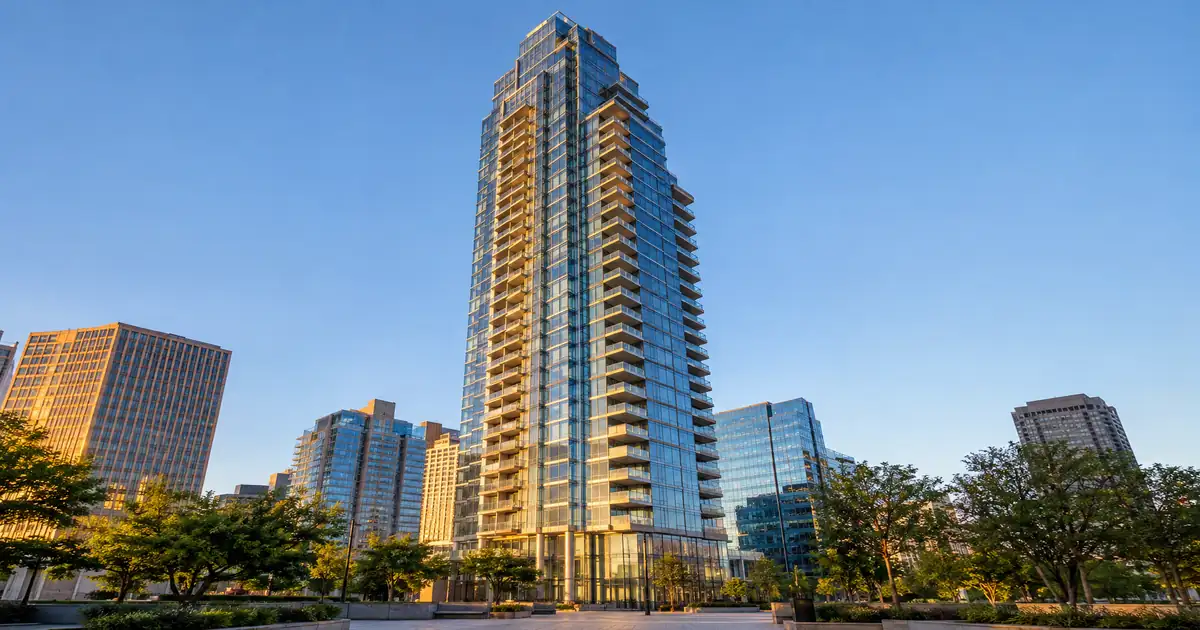
The Quick Read: Usually yes, through select wholesale programs and subject to full underwriting, because the loan is judged on two separate reviews: your bank-statement income and the building itself, and being self-employed is rarely the obstacle. A developer-heavy project is the harder of the two, and it can cut leverage or stop a file at some lenders.
- Income is documented with 12 or 24 months of deposits, assets, or the property’s rent, not with traditional personal-income documentation that understates what the business earns.
- The loan amount sets the leverage, and leverage steps down as the loan gets larger.
- Developer control of the association and active construction are the building issues lenders weigh most.
- Every loan above $4,000,000 is reviewed case by case before submission.
- Treatment of developer-heavy buildings varies by lender, so the answer depends on the program.
What “Developer-Heavy” Means to a Lender
Developer-heavy is not one condition. It means one or more of three things: the developer still controls the association, the developer holds a large block of unsold units, or the project is new and still selling. Lenders treat these differently.
Large investor or developer ownership is mostly a technical label. Developer control and active construction are harder, because they touch ownership, income, and resale risk. Across the wholesale network, some programs decline a unit while construction is active or the developer runs the board. Others accept a building where control has not fully transferred. That spread is why a blanket yes or no is the wrong answer here.
The label that usually follows is non-warrantable. It describes the project, not you. It does not mean the unit is unfinanceable. It usually means a smaller pool of lenders, lower leverage, and a closer file review.
Key Terms Defined
Non-warrantable condo: A unit in a project that fails standard agency eligibility, so it needs a lender with its own rules.
Developer control: The period when the builder or sponsor still holds the board seats and votes on the association’s budget and rules.
Single-entity concentration: One owner, often the developer, holding too large a share of the units in the building.
Condo questionnaire: The project form the association completes about control, ownership mix, litigation, reserves, and insurance.
Bank-statement loan: A mortgage that qualifies a self-employed borrower on deposits over 12 or 24 months after an expense ratio.
Super jumbo: A loan large enough that the lender adds extra credit, reserve, and documentation overlays.
The Two Reviews: You and the Building
The lender runs two files on every tower purchase. One covers the borrower. One covers the project. A weak answer on either can end the file.
| Review | What gets checked | Common stopper |
|---|---|---|
| Borrower | Deposits, assets, credit, reserves, DTI | Thin statements, low credit tier |
| Building | Developer control, ownership mix, litigation, reserves | Active construction, concentrated ownership |
| Unit | Appraised value, market rent, dues | Few luxury rental comps |
Most of the work on these files sits on the building side. The borrower side is routine for a business owner with clean deposits.
How a Business Owner Documents Income at This Size
A self-employed borrower typically is reviewed on 12 or 24 consecutive months of personal or business bank statements through select wholesale programs. A portfolio non-QM bank-statement program carries files to $6,000,000. A separate bank portfolio program takes twelve-month-statement files up to $30,000,000.
Qualifying income is eligible deposits divided by the statement months, after an expense ratio. Business statements need at least 25% ownership. Fixed ratios vary by business profile, with a lower ratio for a service business with no employees and higher ratios for businesses with employees or any product business. An accountant-provided ratio works too. A profit-and-loss method exists, capped at 80%.
Transfers from your own business into your personal account count in full. Statements must be consecutive. Transaction histories do not substitute for them.
Two other paths help owners with lumpy deposits. Asset allowance divides liquid assets by 36, 60, or 84 months, on primary and second homes only. Assets-only qualifies with no DTI when U.S. liquid assets cover the loan amount plus closing costs. Retirement accounts count at 70%, or 80% at age 59.5 and up. Business funds, gifts, and cryptocurrency never count.
Business-owner files that run heavy on expenses face a different set of questions. Lendmire’s piece Does a Business Owner With Heavy Expenses Need a Bank Statement Jumbo? covers that angle.
What Changes at $3M
Leverage is set by loan amount, not purchase price. Move down a band and the ceiling goes up. That matters on a $3M unit, because the down payment decides which band the loan lands in.
Here is the ladder through select wholesale programs, subject to underwriting. Every figure is a ceiling on a purchase.
| Loan size | Primary residence | Investment property |
|---|---|---|
| $2M to $2.5M | 80%, credit 720+ | 80%, credit 720+ |
| $2.5M to $3M | 80%, credit 720+ | 75%, credit 720+ |
| $3M to $3.5M | 75%, credit 720+ | 60%, credit 680+ (bank portfolio program) |
| $3.5M to $4M | 75%, credit 760+ | 60%, credit 680+ (bank portfolio program) |
Second homes have their own ladder. At the $2.5M to $3M band the second-home purchase ceiling is 75%, and in the $3M to $4M bands it is 65% with credit 760+. Above $4,000,000, leverage is reviewed case by case before submission, so no flat figure applies.
Property type then trims the ceiling again. Non-warrantable condos run to 80% through these programs. Warrantable condos run to 85%. Condotels run lower, at 75% on a purchase. A tower with hotel-style operation can fall into that last group.
Extra overlays apply above the super-jumbo line. That line sits at $3,500,000 on a primary residence and $3,000,000 on a second home or investment property. Those overlays include:
- a 700 credit floor,
- a 0x30x24 housing history,
- 48-month seasoning on any credit event,
- U.S. citizens and permanent residents only,
- no non-occupant co-borrowers,
- cash-out proceeds that cannot satisfy reserves.
Pricing and available terms vary by lender, borrower profile, property type, and full underwriting review. DTI runs to 50%. Reserves are 3 months to $500,000, 6 months to $1,500,000, and 9 months above that. First-time investors carry 12 months.
Where DSCR Fits (and Where It Stops)
A DSCR loan is reviewed primarily on property-level rental income covering the full payment, subject to lender guidelines. Coverage is rent used for lender review divided by principal, interest, taxes, insurance, and association dues. Programs below 1.00 coverage exist through select lenders in the network, but LTV and terms adjust. Lendmire’s complete DSCR loans guide walks through the full calculation.
DSCR loans are designed for non-owner-occupied investment properties. Because they are business-purpose investor loans, they are reviewed differently from a standard owner-occupied mortgage.
At $3M, the DSCR product runs into two walls. First, standard investor DSCR programs carry their own loan-size and condo limits, and a developer-heavy tower unit often sits past them. Second, luxury towers produce thin rent coverage. Dues are high. Rental comps are few. The appraiser, not the investor, picks the market-rent number, and lenders generally credit the lower of the in-place lease and the appraised rent.
So the practical split looks like this. If you plan to live in the unit or use it as a second home, bank statements carry the file. If you plan to rent it, a bank-statement loan on the business-purpose side often works better than forcing a thin DSCR ratio. Run both and compare.
A monthly rent appraisal also does not capture nightly projections. For a related case, see Lendmire’s guide How to Finance a Resort Condo You Will Rent Short-Term as a Business Owner.
What the Building Review Actually Asks
The condo questionnaire is the core document. It also asks for units sold and closed, units under contract, and the split between owner-occupants, second homes, and investors. The board must name anyone who owns more than one unit.
In a developer-heavy tower, three answers drive the file:
1. Who controls the board, and when does control turn over? A set turnover date is easier to underwrite than an open-ended one.
2. How many units does the developer still own? One entity holding a large block is the concentration flag.
3. Is construction still active? A unit that is not finished may have nothing to appraise.
Underwriters also read the bylaws. They look for terms that give the developer lasting voting control. Structural or safety litigation matters to any lender, because it hits value and insurability.
An agency contrast helps explain why these towers fail conventional review. Fannie Mae’s project standards review financial stability, limits on owners’ control of project decisions, and project-level litigation. Its LL-2026-03 update retired the 50% investor cap for established projects under full review. The presale rule still applies, though: at least half the units must be conveyed or under contract to primary-residence or second-home buyers. A new tower with heavy developer holdings fails that test. Agency rules do not bind DSCR or bank-statement files, but they show why the buyer pool for the unit is narrower.
Buying From the Developer: Contract-Side Risks
Buying from the sponsor changes the file. There is typically no board interview when you buy a sponsor unit in a new development.
The other risk lands after turnover. Dues increases or special assessments can follow once owners take control. That hits cash flow directly, and it pulls DSCR coverage down on a rented unit.
Before you sign, ask for the budget, the reserve study, and the turnover schedule. Ask what happens to the unsold inventory. A lender will ask the same questions later.
Financing Paths Compared
| Path | Best for | Building-review sensitivity |
|---|---|---|
| Bank-statement jumbo | Self-employed owner, primary or second home | Moderate to high |
| Portfolio jumbo | Larger or unusual files | Case by case |
| DSCR | Rented unit with strong rent coverage | Varies by lender |
| Asset-based | High liquidity, uneven deposits | Moderate |
A short-term bridge can buy time while a building stabilizes. It is a business-purpose tool, and it carries its own cost and exit risk. A DSCR loan, by contrast, qualifies primarily on property-level rental income covering the payment, subject to lender guidelines.
A Composite Example
Picture a founder with two product businesses and low taxable income after depreciation. She wants a $3M tower unit in a building where the developer still holds a large block of units. She plans to use it as a second home.
Her income file is the easy part. She provides 24 months of business statements, and the lender applies a 50% expense ratio because the business sells products. Transfers into her personal account count in full. Her credit sits above 720, and she holds 9 months of reserves. Each figure is subject to lender guidelines and a complete review of property type, leverage, and credit.
The building file is where the work lands. The questionnaire shows developer control with no set turnover date. The lender sorts the building as non-warrantable. A second-home purchase in this size range carries a ceiling set by the loan band, with the non-warrantable cap at 80% on top of it. She puts more down to move into a lower band. The file then goes to underwriting with the questionnaire, a reserve study, and the bylaws.
Another lender in the network would decline the same building outright while construction is active. That is the reason to shop more than one program.
Exit and Refinance Path
A developer-heavy building is not always a permanent condition. As units sell and the developer hands over control, the project can look better on a questionnaire. A later refinance may then reach a wider lender pool, subject to guidelines at that time.
Resale is the quiet risk. A non-warrantable building narrows your buyer pool, because agency-financed buyers cannot buy in it. Price that in when you decide whether to hold.
When the Answer Is No
Some files stop regardless of the borrower. Common stoppers are active construction at the more conservative programs, hotel-style operation where an operator controls occupancy, commercial collateral, structural litigation, and one entity holding too much of the building. A credit score below the tier for the loan band stops a file too. Cash-out follows its own ladder, and above 60% LTV it caps at $1,500,000 cash in hand on the portfolio program. Leverage, reserves, and pricing vary by lender and program; the final terms follow the full file review.
Tax treatment can depend on how the funds are used and how the property is held; investors should keep clear records and speak with a qualified tax professional before relying on any deduction.
Frequently Asked Questions
Can I use an LLC to buy the unit?
Sometimes, depending on the program. Business-purpose files on investment property are more likely to allow an entity than a primary-residence purchase. Entity documents add a layer of review, so confirm eligibility before you choose how to take title.
Does a non-warrantable label hurt me personally?
No. It describes the building. It can still lower your leverage and narrow your lender pool, and it can make resale slower because agency-financed buyers cannot buy in it.
Will a lender finance a unit while the developer controls the association?
Some will and some will not. A few programs in the wholesale network accept a building where control has not fully transferred. Others decline while construction is active or while the developer runs the board.
How much do I need to put down on a $3M unit?
It depends on occupancy, loan band, credit tier, and property type. Primary residence ceilings run higher than second-home and investment ceilings, and non-warrantable condos run to 80%. Loan size sets the band, so a larger down payment can move the file into a band with a higher ceiling.
Does the rent need to cover the payment on a rented unit?
On a DSCR file, yes. Coverage is rent used for lender review divided by the full payment, including association dues. High dues in a luxury tower pull the ratio down, and the appraiser sets the rent figure.
Next Step
If you are financing a high-balance property on business or personal bank statements and want to see how the numbers work, Lendmire can help you compare super jumbo bank statement loan options based on your deposits, the property, credit profile, leverage, and your goals. Consumer mortgage lending is licensed in 16 states: AL, CA, CO, FL, GA, IN, MI, MT, NM, NC, OH, PA, TN, TX, VA, and WA. Programs change, every file is underwritten individually, and nothing here is a commitment to lend.
Lendmire’s self-employed mortgages page presents both super jumbo programs, bank statement and DSCR, side by side.
About Lendmire
Lendmire (NMLS# 2371349) is a mortgage brokerage focused on DSCR investor financing, helping arrange programs through wholesale and investor-lending channels in 41 markets, including Washington, D.C. DSCR loans are evaluated by the lender on property cash flow rather than personal income, subject to lender guidelines, supporting LLC closings and accommodating investors with four or more financed properties. Scotsman Guide Top Mortgage Workplace in both 2025 and 2026.
Get Started
Ready to find the right loan for you?
In about 30 seconds you can review financing options available for your home or investment property. No commitment required.
Informational only. Not a Loan Estimate, approval, or commitment to lend. Program availability and eligibility are subject to lender guidelines, credit approval, property review, and underwriting.
References
1. Fannie Mae Lender Letter LL-2026-03
This article is part of Lendmire’s super jumbo bank statement loan program — full qualification details, guidelines, and scenarios live on the program page.
Related reading: Can a PAL Be Called on a Purchase Before the Mortgage Funds? · Can a Practice Owner Get a 40-Year Super Jumbo Bank Statement Loan? · Super Jumbo Bank Statement vs DSCR When the Property Is a Resort Home
Brandon Miller
Founder & CEO, Mortgage Loan Originator, Lendmire LLC
- Mortgage Loan Originator · NMLS# 1129696 · Verify on NMLS Consumer Access
- North Carolina Real Estate Broker · License# 343312 · Verify on NCREC
- North Carolina Insurance Producer · License# 19053198 · Property, Casualty, Life, Health · Verify on NAIC SBS
- Lendmire LLC · Firm NMLS# 2371349 · Verify firm licensure
Legal disclosures. Lendmire (NMLS# 2371349) is a state-licensed mortgage brokerage that arranges financing through wholesale lender relationships. Lendmire is not a direct lender, depository institution, or registered financial advisor. The discussion above is general informational content about real estate financing — it is not financial, legal, or tax advice, and readers should consult licensed professionals for guidance on their individual circumstances. Loan inquiries are subject to lender underwriting; this article does not represent a commitment to lend. Loan terms, rates, and qualification standards vary by borrower, property, and state, and are subject to change at any time. Equal Housing Opportunity. NMLS Consumer Access: nmlsconsumeraccess.org.