
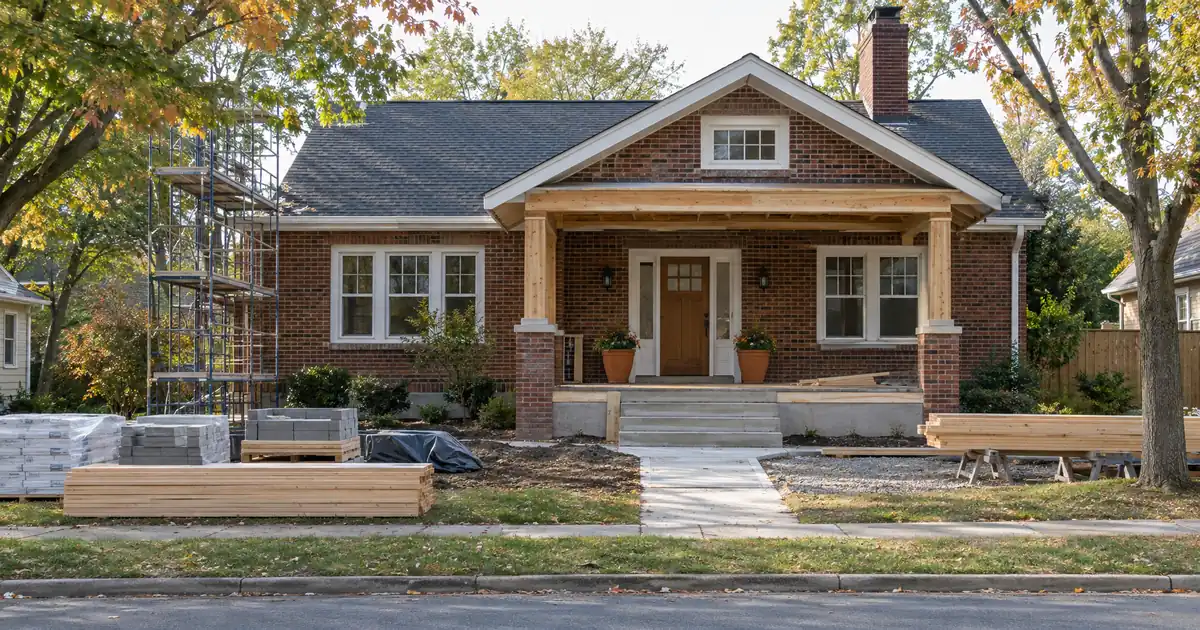
The Quick Read: Hard money is built for a property that cannot support permanent financing yet, and a DSCR loan is built for a property that is leased or rent-ready and will be held. Either one pays off the land contract seller, so either one needs a payoff statement and a deed that can actually be delivered. Neither loan fixes a seller who will not cooperate. The choice comes down to condition, plan, and how long the buyer needs the money.
- A land contract seller does not refinance anything. The buyer takes out a new loan and pays the seller off.
- Hard money fits a property that needs work or cannot be rented yet. It underwrites the asset, the plan, and the exit.
- A DSCR loan fits a property that is leased or rent-ready. It qualifies primarily on property-level rental income covering the payment, subject to lender guidelines.
- Neither loan closes until title can be conveyed, so the seller’s deed is the gate for both.
- A hard money payoff adds a second takeout later, because the exit loan must clear value and rent tests.
Search phrases like “the seller won’t refinance” hide the real problem. The seller is not the one refinancing. Usually one of three things is happening: the seller will not provide a payoff or deliver the deed, the seller will not extend a balloon that is coming due, or the seller wants to stay in the deal while the buyer wants out. The loan choice only matters once the title question has an answer.
What this loan actually costs to carry.
Hard money is sized against the project and priced by time. Enter the deal and see how much the program will lend, the cash required at closing, the carry while you hold it, and what is left at the exit.
Leverage tiers on the current program: 85% with fewer than 2, 90% with 2 or more, 93% with 5 or more completed projects — every tier capped at 75% of after-repair value. Loan amounts up to $5,000,000, larger by exception; terms of 6 to 18 months, interest-only, no prepayment penalty. The rehab portion funds in draws against completed work, not at closing.
Program parameters shown update from Lendmire’s centralized guideline source. Rate, points, and months are editable assumptions, not quoted terms.
Cost cap sets the loan · positive spread
Illustrative estimate only — not a quote, Loan Estimate, approval, or commitment to lend. Rate, points, and months are editable assumptions. Hard money is business-purpose financing for real estate investors, not a consumer mortgage. Leverage on the current program tops out at 93% of project cost for investors with a documented track record, capped at 75% of after-repair value, with rehab funding up to 100% of the documented budget released in draws; actual terms vary by lender, borrower experience, property, and exit. Lendmire is a mortgage broker, not a lender.
Side-by-Side
The DSCR column reflects parameters across Lendmire’s wholesale network, where select lenders vary. The hard money column shows the same network’s published program ranges for business-purpose loans. Both vary by lender, property, and experience, and nothing here is a commitment to lend.
| Factor | Hard Money | DSCR Loan |
|---|---|---|
| Review basis | Asset, plan, and exit | Property rent against the full payment |
| Best property condition | Needs work or not yet rentable | Leased or rent-ready |
| Documentation | Contract, scope, budget, title, exit plan | Leases, appraisal rent schedule, reserves, entity papers, title |
| Property types | Non-owner-occupied 1-4 units | Investment rentals; some types not offered |
| Term shape | 6-18 months, interest-only | Long-term, 30-year fixed as the spine |
| Leverage basis | Tiered by project cost and after-repair value | Purchase 75%-80%, cash-out around 75% |
| Reserves | Varies by lender and experience | Commonly around 6 months of PITIA, varies |
| Entity vesting | Common, per program terms | Common, per program terms |
| Rehab funding | Draws against completed work | Generally not |
| Exit | Refinance or sale before maturity | Long-term hold |
Timelines are left out on purpose. Both loans depend on title and payoff documents, and a clean file matters more than a promised pace.
How the Land Contract Changes the Problem
A land contract leaves legal title with the seller until the buyer finishes paying. The CFPB’s contract-for-deed report notes that legal title does not transfer when the contract is signed, and that the buyer generally cannot sell, add liens, or refinance during the term the way a mortgage borrower can. The CFPB’s description of these contracts adds that they are also called land contracts or installment land contracts, and that the buyer often carries repairs and property taxes.
That is the whole reason the new loan is a payoff. The new lender needs a borrower who can grant a lien. Title moves at the closing where the new lien is recorded. So the sequence on both loan types looks the same:
1. Get the seller’s written payoff statement, with a good-through date and per diem interest.
2. Order a title search to confirm the seller can deliver clean, marketable title with no seller liens or unreleased underlying mortgage.
3. Confirm how the contract was recorded. Recording a memorandum gives public notice of the buyer’s interest. It does not make the buyer the legal owner.
4. Close with the deed delivered to the borrower or the borrower’s entity and the new lien recorded in first position, funded through title.
5. The old contract is paid off, not modified.
On these files, the failure points are rarely the loan product. They are a missing payoff statement, a seller lien nobody found until title work, an unrecorded contract with no verifiable starting point, or an entity that is not on the deed. When the deed goes to the individual and the LLC is supposed to hold the loan, a lender may treat the transaction differently than the borrower expected. Entity vesting is subject to lender program eligibility.
If the Seller Will Not Cooperate
Neither loan gets around a seller who refuses to deliver a deed. A hard money lender and a DSCR lender both need title to convey. If the seller stalls, the options sit outside the loan file: negotiating a documented payoff path, and, if that fails, court action.
Michigan Legal Help describes a seller refusing to transfer title at payoff as a common breach. In Michigan, the buyer can file a quiet title complaint asking a judge to order the transfer, and that is available only after the final payment is made. A Michigan township land contract guide lists specific performance, a court order directing the seller to give the deed, as another remedy. That guide is Michigan-specific and several years old, so treat it as an illustration. Remedies and timelines vary by state, and a real estate attorney or title company should answer the state question.
Title can also be clouded for reasons the buyer never controlled. Even a buyer who makes every payment can be in trouble if the seller lacks clear title. An unreleased underlying mortgage, a seller’s death, or heirs who will not sign all stop a payoff the same way.
The balloon is the deadline. Wisconsin LawHelp notes that land contracts often run five or ten years and that the buyer must then obtain a mortgage for the balloon payment. Time spent clearing title comes straight out of the runway before that date. Start the title search well before the balloon, not after the seller goes quiet.
When Hard Money Is the Better Fit
Think of a land contract house that is vacant, needs rehab before it can be leased, or has a rent figure an appraiser cannot support yet. The loan underwrites the asset, the borrower’s plan, and the exit rather than the property’s current rental income. It is short-term and interest-only, and the program range across the network is 6-18 months with no prepayment penalty, varying by lender, property, and experience.
Leverage depends on what the project is. On a fix-and-flip, leverage runs 85% to 93% of project cost depending on documented completed projects, always capped at 75% of after-repair value. A bridge purchase without rehab goes up to 80% of purchase price. A cash-out or rate-and-term refinance goes up to 65% of value. Up to 100% of the rehab budget funds in draws against completed work, and that is a budget figure, never a purchase LTV. The top tier is reserved for experienced investors. A 620 minimum score applies, with added conditions below 660, and first-time investors qualify at the lower leverage tiers.
The catch is the exit. A hard money payoff of the seller does not repair a missing deed, and it creates a second takeout. When the maturity arrives, the exit loan has to clear value, rent coverage, and title all over again. If the rehab runs over or the appraisal comes in light, the buyer is back in the same pressure spot, only with a lender’s maturity date instead of a seller’s balloon. Many investors refinance out of hard money into long-term DSCR investor loans once the property is stabilized, and Lendmire brokers that path.
Hard money also has limits on what it can finance. It covers non-owner-occupied residential property of 1-4 units, and ground-up construction to 10 units. Commercial, land or lots, and owner-occupied property are not on the sheet.
When a DSCR Loan Is the Better Fit
A DSCR loan is the better fit when the property is leased or rent-ready and the buyer intends to hold it. The loan is reviewed primarily on property-level rental income covering the payment, subject to lender guidelines. DSCR compares monthly rent to the full monthly obligation: principal, interest, taxes, insurance, and any HOA dues. The land contract balloon is a deadline, not an input to the coverage math. The lender values the property, sizes a new first-lien loan against it, and the seller is paid at closing.
That fits the typical land contract investor well. Land contract debt often does not show up the way a mortgage payment history does, and a DSCR file does not turn on personal income documentation. It turns on rent, value, credit, reserves, and title. Across the wholesale network, purchases typically land at 75%-80% LTV, and a cash-out refinance tops out around 75% LTV with about 6 months of seasoning as the common expectation. Seasoning is lender policy, and programs count it from different starting points, which matters when a land contract was signed years before the payoff. A payoff-only refinance covers the seller’s balance and closing costs with no cash to the borrower, and a cash-out is underwritten differently.
Other program points that matter on these files:
- Credit: a 620 floor exists in parts of the network, most programs want around 660, and 700+ unlocks the strongest leverage tiers.
- Coverage: 1.00 is where many select programs start. A separate select-lender path goes below 1.00, with leverage and terms adjusted.
- Reserves: commonly around 6 months of PITIA, though conservative rate-term files at modest leverage under $1,500,000 can see reserves waived, and larger loans typically step up to about 9 months.
- Loan size: up to $3,000,000 on standard programs (smaller balances available through select lenders), with 30-year fixed structures generally required above $2,500,000.
- Property types: manufactured homes, log homes, and barndominiums are not offered.
Clearing 1.00 does not mean the property cash-flows. The ratio ignores repairs, vacancy, management, utilities, and capex. A larger down payment can lower the payment and lift the ratio, but it does not erase leverage caps, credit floors, reserve rules, or property eligibility. The strongest files have enough equity and enough rental coverage.
If several land contract properties were bought together, they may be combined under one portfolio DSCR note, with coverage tested on the whole pool. The broader program picture is in Lendmire’s complete DSCR loans guide.
Scenario Matrix
| Property | Seller | Balloon | Likely fit |
|---|---|---|---|
| Leased or rent-ready | Cooperative | Near | DSCR payoff |
| Needs rehab | Cooperative | Near | Hard money, then DSCR exit |
| Leased or rent-ready | Not cooperating | Near | Title fix first, then DSCR |
| Needs rehab | Not cooperating | Near | Title fix first; neither loan closes without a deed |
| Leased, coverage under 1.00 | Cooperative | Far | Smaller loan, more cash, or a select-lender path |
A DSCR file that comes in under 1.00 has levers. A smaller loan, cash at closing, and stronger rent evidence can all move the ratio. Coverage below 1.00 is available through select lenders in the network, with leverage and terms adjusted. Hard money can become a trap here, because a short-term payoff sized without regard to the DSCR exit can leave the buyer unable to refinance out. Size the first loan around what the second one requires.
Common Mistakes
- Assuming recording the contract makes the buyer the legal owner. Recording gives notice and does not move title.
- Treating a hard money loan as a way around a seller who will not deliver the deed.
- Calling hard money no underwriting. Credit, assets, title, and the exit are all reviewed.
- Assuming a DSCR of 1.00 means approval. It is one input, and lender guidelines, credit, reserves, and property review all apply.
- Letting the deed go to the individual when the file is meant to close in the entity’s name.
- Waiting until the balloon is close to order title work.
Key Terms Defined
Land contract: A purchase agreement where the seller keeps legal title until the buyer pays in full, also called a contract for deed.
Equitable title: The buyer’s right to obtain ownership while legal title stays with the seller.
Balloon payment: The large remaining balance that comes due at the end of the contract term.
Quiet title: A court action asking a judge to declare who holds title or to order the seller to transfer it.
DSCR: Debt service coverage ratio, monthly rent divided by the full monthly obligation of principal, interest, taxes, insurance, and any HOA dues.
Seasoning: The period of ownership a lender requires before a cash-out refinance is available.
The Verdict
Pick the loan by the property, not the seller. If the property is leased or rent-ready and the title is clean, a DSCR loan is the straightforward payoff for a buyer who plans to hold. If it needs work, hard money can bridge, provided the buyer has a realistic exit and sizes the loan to it. If the seller will not deliver a deed, neither loan is the answer yet, and the first call is to a real estate attorney or title company.
Frequently Asked Questions
Can a hard money loan pay off a land contract if the seller will not sign anything?
Not without a deed. The new lender needs the seller to provide a payoff statement and convey title, so a refusing seller blocks both loan types. The fix is outside the loan, through negotiation or a court order, and a real estate attorney can advise on the state’s process.
Does a DSCR loan work on a land contract property?
Yes, when the property is leased or rent-ready and title can be delivered. The lender values the property and sizes a new first-lien loan against it, then pays the seller at closing. Eligibility depends on lender guidelines, credit, reserves, and property review, and not every property type is offered.
Is a DSCR loan a type of hard money loan?
No. Hard money is short-term, interest-only, and asset-based, and often funds rehab in draws. A DSCR loan is long-term and qualifies primarily on rental income covering the payment. They are often used in sequence, with the first sized around what the second requires.
What if the DSCR comes in below 1.00 on the payoff?
Rent does not cover the new payment at that loan size. Options include a smaller loan, more cash at closing, stronger rent evidence, or a select-lender path with leverage and terms adjusted. Subject to lender guidelines.
Do consumer land contract protections apply to the new loan?
Those protections apply to consumer home sales secured by a dwelling, as described in the CFPB’s advisory opinion on contracts for deed. DSCR and hard money loans are business-purpose investor loans for non-owner-occupied property, so they are reviewed differently.
If you are buying, rehabbing or refinancing an investment property on a short timeline and want to see how the numbers work, Lendmire can help you compare hard money options based on the project, the exit plan, leverage, and your goals.
About Lendmire
Lendmire (NMLS# 2371349), a non-QM mortgage broker serving investors in 41 markets including Washington, D.C., helps structure DSCR scenarios commonly evaluated around a property’s rental income rather than personal income paperwork, subject to lender guidelines. A Scotsman Guide Top Mortgage Workplace in 2025 and 2026, Lendmire places loans through wholesale investor lenders and is not a direct lender.
Get Started
Ready to find the right loan for you?
In about 30 seconds you can review financing options available for your investment property. No commitment required.
Informational only. Not a Loan Estimate, approval, or commitment to lend. Program availability and eligibility are subject to lender guidelines, credit approval, property review, and underwriting.
References
1. CFPB: CFPB Contract for Deed Report
2. CFPB press release on contract-for-deed investors
This article is part of Lendmire’s hard money loan program — full qualification details, guidelines, and scenarios live on the program page.
Related reading: How to Refinance a Hard Money Flip Into a DSCR Loan Early · DSCR Takeout Requirements for a BRRRR Exit From Hard Money · How to Line Up Paperwork and Appraisal for an Early DSCR Refinance
Brandon Miller
Founder & CEO, Mortgage Loan Originator, Lendmire LLC
- Mortgage Loan Originator · NMLS# 1129696 · Verify on NMLS Consumer Access
- North Carolina Real Estate Broker · License# 343312 · Verify on NCREC
- North Carolina Insurance Producer · License# 19053198 · Property, Casualty, Life, Health · Verify on NAIC SBS
- Lendmire LLC · Firm NMLS# 2371349 · Verify firm licensure
Required disclosures. Lendmire (NMLS# 2371349) operates as a licensed mortgage broker, not a direct lender or depository. The discussion in this article is general in nature and should not be relied upon as financial, legal, or tax advice — every investment scenario is unique and should be reviewed by a qualified professional. Any loan inquiry is subject to lender underwriting, and this article is not a commitment to lend or a guarantee of approval. Mortgage rates, loan terms, and program guidelines vary by borrower, property, and state, and may change without notice. Equal Housing Opportunity. Verify licensure at NMLS Consumer Access.