
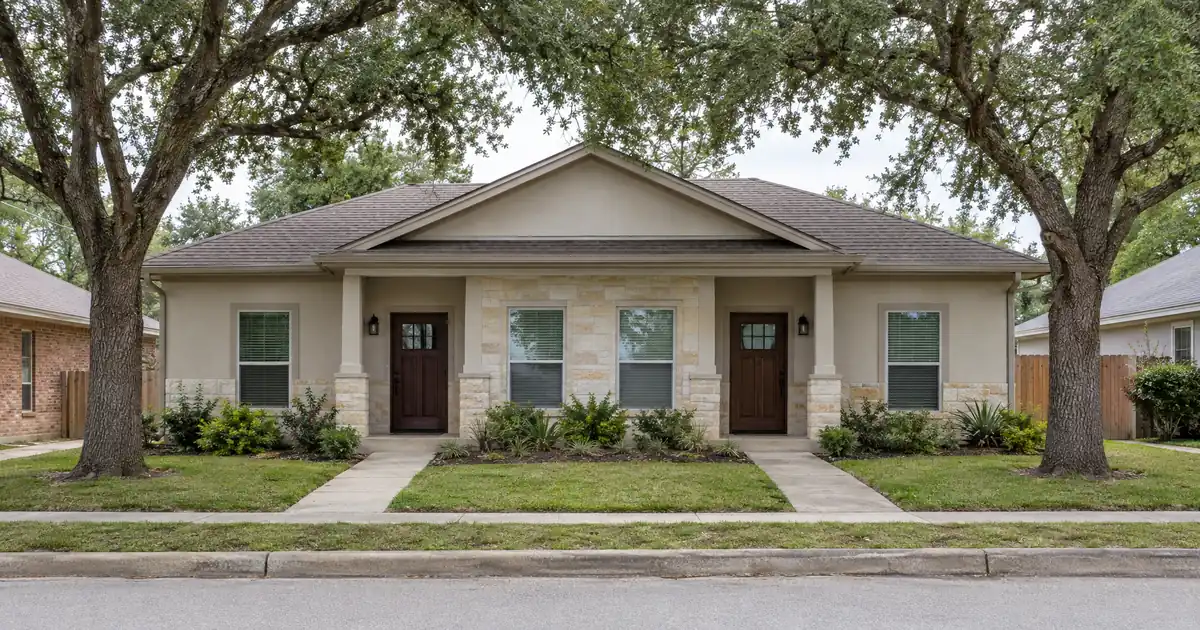
The Quick Read: On a Texas homestead, every owner and every owner’s spouse must consent in writing to a home equity line, even a spouse who is not on title or on the loan, and that consent usually comes through the lien documents rather than a promise to repay the debt. A spouse who signs the lien is not automatically a borrower. The rule attaches to the homestead, not to your rental properties.
- Spouse consent is mandatory on a homestead line. A missing signature can cost the lender its principal and interest.
- The lien and the note are different documents. Many programs only need the non-borrowing spouse on the lien side.
- Texas adds waiting periods. A 12-day notice comes before closing, and a three-day cancellation window follows it.
- A non-owner cannot co-sign to help you qualify. Texas treats that promise as extra collateral.
- A rental is a different path. Non-homestead rentals do not trigger the homestead spouse rules, and a DSCR cash-out refinance sits outside them entirely.
Why Does Texas Require the Spouse’s Consent?
Texas protects the family homestead more strictly than most states. A lien on a homestead is valid only if it is created in writing with the consent of each owner and each owner’s spouse. That language comes from the state constitution’s home equity article, and it covers closed-end home equity loans, cash-out refinances, and lines of credit. Texas A&M’s Real Estate Research Center groups covered loans into those three categories.
How large a line the equity supports in Texas.
An equity line is sized by combined loan-to-value, occupancy, and credit — not by rental coverage. Switch the occupancy or the credit band and the ceiling moves with it.
Investment-property lines require a 700 minimum credit score; second-home lines start at a 640 minimum and primary-residence lines at 600, and the combined-LTV ceiling steps down as the credit band drops on primary-residence and second-home lines and holds on investment-property lines; the line cap steps down on primary-residence lines and holds at every tier on investment-property and second-home lines.
A debt-to-income ratio above 45% requires 680+ credit. Profiles under 640 are limited to single-family homes. At least 75% of the approved line is drawn at closing. Ceilings, floors, and caps update from Lendmire’s centralized guideline source.
Line estimate
Illustrative estimate only — not a quote, Loan Estimate, approval, or commitment to lend. The rate is an editable assumption; equity-line pricing is variable through both the draw and repayment periods and never converts to fixed. Occupancy and credit drive the ceiling together: an investment property tops out at 70% combined LTV (minimum credit 700, line cap $500,000); a second home tops out at 90% combined LTV (minimum credit 640, line cap $500,000), with the ceiling stepping down as the credit band drops (the cap holds at every tier); a primary residence tops out at 80% combined LTV (minimum credit 600), and its $750,000 maximum line is available only at 75% combined LTV or below with a 700-or-better credit profile (720 on the longer-runway program) and a full appraisal. Lines above $500,000 require a full appraisal. Credit, debt-to-income, property type, and full underwriting review all affect the final line.
The penalty for getting it wrong is severe. Under the constitutional text, a lender that did not obtain that consent can forfeit all principal and interest, unless the missing consent is later given. So lenders do not treat the spouse’s signature as a formality. They treat it as the thing that makes the lien valid.
Title does not change the answer. Say you bought the house before you married, and only your name is on the deed. If the home is now your family homestead, your spouse still consents. The homestead right follows the family, not the deed.
Your spouse’s income, credit score, and willingness to borrow are separate questions. Consent is about the lien.
Key Terms Defined
Homestead: the home where you live as your primary residence, which Texas law shields from most forced sales.
HELOC (home equity line of credit): a revolving line secured by your home, where you draw funds as needed up to a limit.
CLTV (combined loan-to-value): all loans secured by the property, added together, divided by its value.
Lien instrument: the document, usually a deed of trust, that pledges the property as security for the loan.
Note: the promise to repay the debt. Only the people who sign it are personally liable.
Non-borrowing spouse: a spouse who consents to the lien but is not a borrower on the note.
Joinder: a spouse formally joining the lien documents so the lien is valid against the homestead.
Seasoning: the waiting period a lender wants before it will lend against a property or refinance a recent loan.
Who Signs What in Common Texas Situations?
Start with the property, not the people. The first question is whether it is a homestead. The second is who the owners and spouses are. Here is how the common situations sort out.
| Situation | Lien documents | The note |
|---|---|---|
| Homestead, title in one spouse | Both spouses sign | Lender program decides |
| Homestead owned before marriage | Both spouses sign | Lender program decides |
| Non-homestead rental, one spouse on title | Usually titled spouse; some title companies want both | Borrower on title |
| Parent or friend offering to co-sign | Cannot help qualify | Generally prohibited |
The note column is where programs differ. One lender’s published guidance says both spouses must sign the mortgage but need not be parties to the promissory note. Another lender’s guideline says a non-titled spouse may not be on the note at all. Both can be true, because each is a private program rule layered on top of the state requirement. Ask the lender which approach its program takes before you assume anything.
A common-law spouse counts too. Underwriters look for every owner and every owner’s spouse, including a spouse by common law.
What Happens, Step by Step?
The sequence matters as much as the signatures. A skipped step can undo a valid-looking closing.
1. The lender identifies every owner and spouse. This comes first, because the whole file depends on who must consent.
2. A written notice goes out ahead of closing. Per Texas A&M’s Real Estate Research Center, the lender must give the borrower a separate notice laid out in the constitution. Lender guidance says a non-borrowing spouse should receive and sign it as well. Timing varies by file and lender.
3. A final itemized disclosure arrives before closing. The owner also gets a copy of the application. Timing varies by file and lender.
4. Closing happens at an allowed location. The constitution limits where a homestead equity closing can occur, and in practice that means a lender’s office, an attorney’s office, or a title company.
5. Everyone signs. The owner and the lender sign a written acknowledgment of the home’s fair market value, per the Texas Constitution. The owner and spouse sign the security instrument, the Texas notice, and receipts for the copies they were given.
6. A cancellation window follows. The owner and any spouse of the owner may cancel without penalty during a period after the credit is extended. The exact timing depends on the file and lender.
Notice that step 6 belongs to the spouse as well. Either of you can cancel, so do not treat the funds as spendable the minute the paperwork is done. If you plan to use line proceeds as a down payment on another purchase, plan around that window.
One caution. The 80% combined-debt ceiling applies to everything secured by the homestead, and the HELOC rules sit on top of the main home equity rules. Details written for closed-end loans do not always carry over to a line. The minimum draw amount is one example, and the figure in older sources has since been amended. Treat any dollar figure from an old page with suspicion.
Does Signing Make Your Spouse Liable for the Debt?
Not necessarily. Signing the lien consents to the pledge of the homestead. Signing the note is what creates personal liability.
Here is the catch for a spouse. If the line goes unpaid and the lien is enforced, the home is what is at risk. Whether the spouse is also personally on the hook depends on whether they signed the note. That is why the note question deserves a direct answer from the lender in writing, not a verbal assurance at the closing table.
Federal law adds a useful limit. Under Regulation B at the CFPB, a lender generally cannot require a spouse’s signature on a credit instrument when the applicant qualifies alone. But the same rule lets a lender require the signatures that state law makes necessary to put the property up as security. The official commentary adds that those signatures generally belong on the security agreement. The eCFR commentary spells out that a creditor’s belief about what state law requires should rest on a thorough review of statute and case law.
So the two rules fit together. Texas requires consent to the lien, and federal law allows the lender to ask for exactly that and not more. A lender that demands the spouse on the note, when you qualify alone and your program lets a non-borrowing spouse sign only the lien, is on shakier ground. Ask for the specific instruments in writing.
One more federal wrinkle. If you rely on your spouse’s separate income to qualify, the lender may require their signature, and in a community property state that signature can be required. That is a qualification question, separate from the homestead consent.
Where the General Rule Bends
A non-homestead rental. The homestead rule applies to the homestead. For a rental titled to one spouse, title company guidance says generally only the titled spouse signs at closing. For community property rentals, the spouse with management rights may be able to encumber the property alone, but title company requirements vary and some still want both spouses. That is practitioner guidance, not law, so confirm it early. Lendmire’s piece Texas Rental HELOC vs Homestead Equity Rules That Apply covers that split in more depth.
A former homestead. Say you moved out and now rent the house. Status is a facts question, and a line against it may carry seasoning terms. Lendmire’s article Texas Rental HELOC Seasoning Terms for a Former Homestead goes through that.
A spouse who cannot or will not sign. For a homestead, there is no clean workaround. Taking the spouse off title does not remove homestead consent. Separation, absence, or incapacity each need legal advice before a lender will proceed. If your spouse refuses, you are looking at a different property or a different product, not a smarter signature plan.
Cures. A lender can fix certain violations under the constitution and the state commissions’ rules, which sit in 7 TAC Chapter 153. Do not count on a cure as a plan. It is a repair option for the lender, not a right for you.
Co-signers. A parent cannot sign the note to help you qualify. Texas treats a non-owner’s promise as prohibited additional collateral, with a narrow exception for people who share one family homestead.
What Does This Mean If You Invest in Rentals?
The homestead line and the rental line are two different transactions with two different rulebooks.
Tapping your own Texas primary residence brings the spouse signature, the waiting periods, and an 80% combined-loan-to-value cap on a primary residence in this state. In the wholesale network Lendmire places files with, a Texas primary-residence line also follows a one-lien-at-a-time rule and 12-month seasoning. After closing, the minimum subsequent draw on a Texas line is $4,000.
Borrowing against a rental is a non-homestead transaction. For an investment property, the network ceiling is 70% CLTV, with a 700 minimum credit profile and a maximum line of $500,000. The line carries a five-year interest-only draw period and a 25-year repayment period. Title must sit with you personally or in a revocable living trust. An LLC, corporation, or land trust cannot hold title on these lines. Eligibility is subject to lender guidelines and a full file review.
For a pure rental play, many investors skip the line and use a DSCR cash-out refinance. DSCR loans are designed for non-owner-occupied investment properties. Because they are business-purpose investor loans, they are reviewed differently from a standard owner-occupied mortgage. The loan is reviewed primarily on property-level rental income covering the payment, subject to lender guidelines. Here is what that looks like across most programs we place files with:
- Cash-out leverage: tops out around 75% LTV on a standard rental, with about six months of seasoning as the common expectation.
- Coverage: 1.00 is where select programs start. A separate select-lender path takes coverage below 1.00, with leverage and terms adjusted.
- Credit: a 620 floor exists in parts of the network, most programs want around 660, and 700 or better unlocks the strongest leverage tiers.
- Entity ownership: an LLC can hold title, subject to lender program eligibility.
Clearing 1.00 does not mean the property is cash-flowing. The calculation compares rent to the full monthly housing obligation only. Repairs, vacancy, management, and utilities sit outside it.
A DSCR cash-out on a rental does not trigger the homestead spouse requirements. Title company practice on community property rentals can still vary, so expect the title company to tell you who signs. Read the complete DSCR loans guide if you want the full picture on how coverage, leverage, and credit work together.
One tax sentence belongs here. Tax treatment can depend on how the funds are used and how the property is held; investors should keep clear records and speak with a qualified tax professional before relying on any deduction.
Your Pre-Application Checklist
Get these settled before you apply, not at the closing table.
- Confirm whether the property is your homestead or a rental.
- List every owner and every owner’s spouse, including any common-law spouse.
- Confirm your spouse is available and willing to sign the lien documents.
- Ask the lender in writing whether the non-borrowing spouse is on the note or only the lien.
- Plan around the 12-day notice and the three-day cancellation window if you need the funds for another purchase.
- If a family member planned to help you qualify, drop that plan. A co-signer is generally prohibited.
Frequently Asked Questions
Does my spouse have to sign a HELOC on a Texas homestead if they are not on title?
Yes. Texas requires consent from each owner and each owner’s spouse, whatever the deed says. Your spouse typically signs the lien documents and the required notices. They may not need to sign the note, depending on the lender’s program.
Is my spouse responsible for the debt if they only sign the lien?
Not personally, unless they also sign the note. Signing the lien pledges the homestead as security. If the line goes unpaid, the home is exposed, so the spouse still has a real stake. Confirm in writing which documents they are signing.
Can I get a HELOC on my Texas homestead without my spouse?
Generally not. A lien created without the spouse’s consent is the situation that exposes the lender to forfeiture of principal and interest. If your spouse will not sign, a homestead line is not the right tool. A rental property or a different financing path may be.
Do these rules apply to a rental property I own?
The homestead consent rule does not. A rental is a non-homestead transaction, and title company guidance says generally only the titled spouse signs, though some title companies still ask for both spouses on community property. On the Lendmire wholesale network, an investment property line caps at 70% CLTV with a 700 minimum credit profile, subject to lender guidelines.
Can a parent co-sign my Texas home equity line?
No, not to help you qualify. Texas generally prohibits a non-owner from signing the note because it counts as additional collateral. A spouse of an owner is the exception to who may sign.
Next Step
If you are considering a home equity line and want to see how the numbers work, Lendmire can help you compare HELOC options based on the property, the equity available, credit profile, combined leverage, and your goals. Lendmire is a mortgage broker that arranges financing through select lenders in its wholesale network. Its HELOC programs cover 16 states, including Texas, and its DSCR investor loans reach 40 states plus Washington, D.C., which makes 41 markets. An editable calculator on the page gives an illustrative estimate only, not a quote.
Texas homestead consent is a short signing, but it decides whether the lien holds up, so settle who signs before you pick the product.
About Lendmire
As a mortgage broker (NMLS# 2371349), Lendmire helps homeowners and real estate investors in its 16 full-service states open home equity lines of credit arranged through wholesale lenders. Lendmire is never the lender; line amounts, ceilings and terms are set by the lender under its guidelines. Scotsman Guide named Lendmire a Top Mortgage Workplace in both 2025 and 2026.
Get Started
Ready to find the right loan for you?
In about 30 seconds you can review financing options available for your home or investment property. No commitment required.
Informational only. Not a Loan Estimate, approval, or commitment to lend. Program availability and eligibility are subject to lender guidelines, credit approval, property review, and underwriting.
References
1. Texas A&M Real Estate Research Center: What to Know About Home Equity Loans in Texas
2. Texas Constitution, Article XVI, Section 50
3. Texas Constitution, Article XVI, Section 50
4. CFPB: Regulation B, 12 CFR 1002.7
5. eCFR: 12 CFR Part 1002 and Supplement I
This article is part of Lendmire’s home equity line of credit program — full qualification details, guidelines, and scenarios live on the program page.
Related reading: HELOC Tiers for a First-Time Equity Borrower on a Primary Home · How a HELOC Funds Four Years of Tuition for a Parent Borrower · How Much Home a First-Lien HELOC Down Payment Supports After DTI
Brandon Miller
Founder & CEO, Mortgage Loan Originator, Lendmire LLC
- Mortgage Loan Originator · NMLS# 1129696 · Verify on NMLS Consumer Access
- North Carolina Real Estate Broker · License# 343312 · Verify on NCREC
- North Carolina Insurance Producer · License# 19053198 · Property, Casualty, Life, Health · Verify on NAIC SBS
- Lendmire LLC · Firm NMLS# 2371349 · Verify firm licensure
Legal disclosures. Lendmire (NMLS# 2371349) is a state-licensed mortgage brokerage that arranges financing through wholesale lender relationships. Lendmire is not a direct lender, depository institution, or registered financial advisor. The discussion above is general informational content about real estate financing — it is not financial, legal, or tax advice, and readers should consult licensed professionals for guidance on their individual circumstances. Loan inquiries are subject to lender underwriting; this article does not represent a commitment to lend. Loan terms, rates, and qualification standards vary by borrower, property, and state, and are subject to change at any time. Equal Housing Opportunity. NMLS Consumer Access: nmlsconsumeraccess.org.