
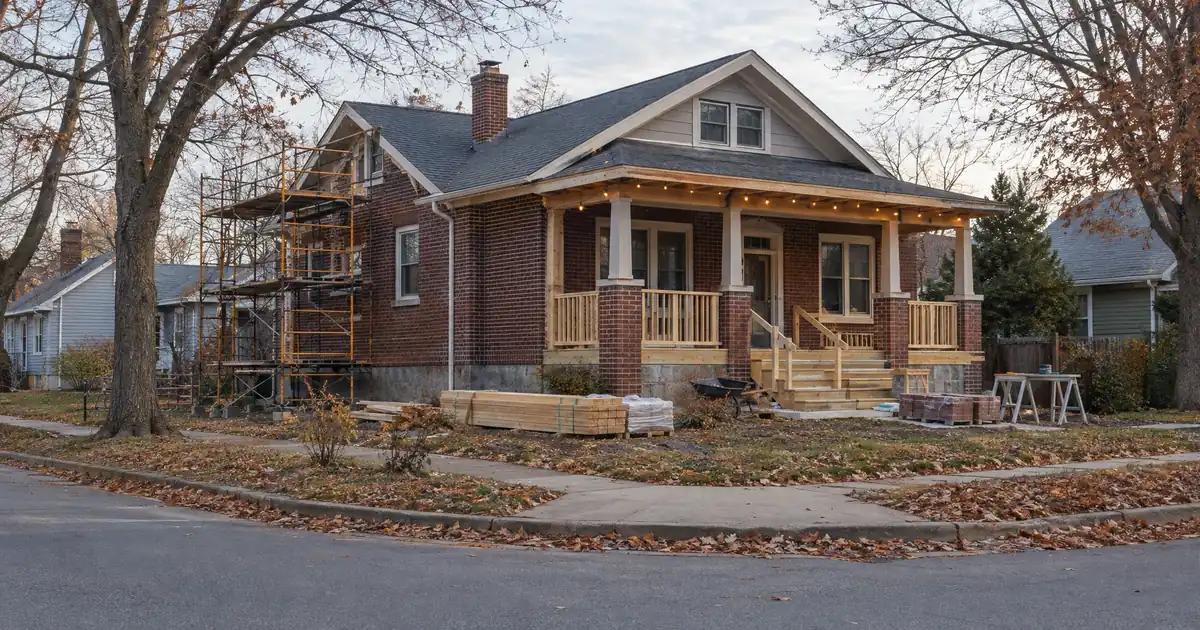
The Quick Read: Lenders run a freshly rehabbed short-term rental through three separate tests. The first is which value sizes the loan: your cost or the appraisal. The second is which income counts: hosting history, a projection, or the appraiser’s rent. The third is whether that income covers the new, larger payment, all subject to lender guidelines.
- The lender’s appraisal sets value. Your own after-repair estimate is not an underwriting input.
- Inside the seasoning window, loans are typically sized on purchase price plus documented rehab, not on post-rehab value.
- A property with no hosting history may have to rely on a lower income figure, such as the appraiser’s rent opinion.
- Across most of our wholesale network, short-term rental cash-out leverage tops out around 70% LTV, and two limits bind at once: equity and coverage.
- The smaller of those two limits sets your loan amount.
Key Terms Defined
Cash-out refinance: a new loan that pays off the old one and hands you the extra equity as cash.
Seasoning: the waiting period a lender wants between buying a property and refinancing it. Most programs count it from the recorded deed, not from the day the rehab ends.
LTV (loan-to-value): the loan amount divided by the property’s value.
DSCR (debt service coverage ratio): the rent the lender counts, divided by the full monthly payment. Above 1.00 means the counted rent covers the payment.
PITIA: principal, interest, taxes, insurance, and any association dues. It is the full monthly payment the DSCR test uses.
Bridge loan: short-term debt, often a hard-money loan, that funds the purchase and rehab before the permanent refinance.
Haircut: a reduction a lender applies to gross rental receipts to account for expenses and vacancy before running the coverage test.
DSCR Cash-Out Calculator
Run the cash-out numbers in your market
Rate source: Freddie Mac 30-yr average via FRED® — Federal Reserve Bank of St. Louis · effective Nov 5, 2026
Prefilled with starting assumptions — enter your property’s value, balance, taxes, and insurance for a more accurate picture.
Program parameters update from Lendmire’s centralized guideline source. Taxes and insurance are editable estimates.
As of Nov 5, 2026 · General Freddie Mac market benchmark, not a Lendmire loan offer. Property value, balance, taxes, and insurance are editable estimates. Maximum loan-to-value varies by lender, program, property type, and seasoning. Not a Loan Estimate, approval, or commitment to lend. Program availability and eligibility are subject to lender guidelines, credit approval, property review, and underwriting.
The Five Gates, in Order
A freshly rehabbed short-term rental has to clear five checkpoints, and a miss at any one of them changes the loan. Underwriters seldom lay these out as a list. They show up as conditions on the file.
1. Ownership clock. The lender checks how long you have held title. About 6 months of seasoning is the common expectation across most of the network.
2. Value basis. Inside that window, the loan typically sizes on purchase price plus documented rehab. After it, the loan sizes on appraised value.
3. Income basis. The lender decides whether the rent comes from hosting history, a projection, or the appraiser’s rent opinion.
4. Coverage after cash-out. Counted income is divided by PITIA on the new, larger loan.
5. Credit, reserves, and property review. For short-term rentals, expect a 640 minimum score on most files. Reserves vary by lender, leverage, and loan size, and about 6 months of PITIA is a common starting point.
DSCR loans are designed for non-owner-occupied investment properties. Because they are business-purpose investor loans, they are reviewed differently from a standard owner-occupied mortgage. The loan is reviewed primarily on property-level rental income covering the payment, subject to lender guidelines. It does not skip the appraisal.
What Does the Lender See on Day One?
On day one, the lender sees a finished renovation, an open bridge loan, and almost no operating record. That combination is the hard case.
A property that was just rehabbed usually has little or no hosting history. Platform payout statements and bank deposits do not exist yet, or cover only a few weeks. The listing may be live, but the underwriter cannot verify a track record from a handful of bookings.
The bridge loan adds pressure. Its maturity date is fixed, while the seasoning clock runs on its own schedule. Investors who finish the rehab on time often discover the refinance is not yet available on the terms they planned.
The lender is also looking forward. Your after-repair value estimate may be correct, but it is only a story until an appraiser confirms it. The lender orders the appraisal, and that report is the value that counts. A strong rehab does not shorten the clock. The deed date starts it.
How Lenders Count Short-Term Rental Income With Little or No History
When history is short, lenders count the lower of the available income figures, or they fall back to the appraiser’s rent opinion. The method depends on the program, so ask which one applies before you order the appraisal.
Three income buckets exist:
- Trailing history: platform payout statements and bank deposits, usually matched to each other.
- Projection: a market-data report estimating occupancy and nightly revenue for comparable listings.
- Appraiser rent: the rent opinion in the appraisal, either a long-term rent schedule or a short-term analysis, depending on the program.
Program requirements for history are lender-specific, not universal. One originator’s guidelines, as reflected in a Morgan Stanley Capital I loan-review exhibit, call for a 12-month look-back from platform statements or bank statements, plus proof of active marketing. The same exhibit describes carve-outs for newly built properties and for seller-occupied conversions. Both require the appraiser to confirm an unrestricted short-term rental market. Treat that as an illustration that rules differ by program, not as a standard.
In our network, the common expectation is about 12 months of hosting history. Programs differ on what happens when you do not have it. The table shows how the situations usually play out.
| Situation | Likely income basis | What to prepare | Weak spot |
|---|---|---|---|
| 12+ months of hosting | Lower of actual or projection | Statements, deposit match | Gaps in records |
| Under 12 months | Appraiser rent or lower figure | Booking data, listing proof | Thin track record |
| No history, just rehabbed | Appraiser rent opinion | Rehab file, listing setup | Low rent opinion |
| 2-4 unit property | Per-unit rent schedule | Unit-by-unit data | Rent missing on a unit |
Some select lenders in the network accept exceptions case by case, with offsetting factors documented. That is a file-level judgment, not a product feature. Do not plan around it.
Coverage is where the income choice shows up. Many lenders apply a haircut to gross receipts before the coverage test. A projection is also usually discounted, and some programs do not accept projections at all. The same property can show strong coverage on one income basis and thin coverage on another.
What the Appraisal Does and Does Not Do
The appraisal sets value and offers a rent opinion. It does not prove what you earn on nightly bookings.
Two appraisal forms matter here. Form 1007 is the rent schedule for single-family properties. Form 1025 is the income report for 2-4 unit properties. Agency guidelines do not govern DSCR loans, so the forms are only the tools the appraiser uses.
Form 1007 has a limit. Class Valuation, an appraisal-industry publisher, states that the form cannot support short-term rental income. It says appraisers who handle short-term rentals use a separate projected-income narrative addendum. Practice therefore varies by program and by appraiser.
This creates two common traps:
- Appraised value is not income. A property appraises the same whether it rents nightly or monthly. Strong Airbnb income does not lift the appraised value.
- A nightly rate times 30 is not market rent. The appraiser compares to similar properties, not to your best month.
Some programs accept only the 1007 rent figure. That figure is often well below what a well-run short-term rental earns. Other programs allow a short-term analysis. This choice can swing qualification, so ask early.
Cost Basis Versus Appraised Value
Inside the seasoning window, the loan typically sizes on what you paid plus what you documented spending. After the window, it sizes on appraised value.
That is why rehab records matter. Keep contracts, receipts, draw schedules, and the final settlement statement. They show the lender what the property actually cost. They do not guarantee an appraised value. An improvement may support a higher appraised value, depending on comps and underwriter review.
Many investors who rehab and refinance count on the appraised value. That works only after seasoning. Before that, the lender is protecting itself against paper profits, so it sizes on cost. Some programs may shorten the wait for cash buyers, but even then the loan does not borrow against post-rehab value until the seasoning requirement is met.
A few seasoning exceptions exist for events such as an inheritance or a divorce award. They are narrow, and they belong to specific programs.
A Worked Example in Percentages
Here is a modeled scenario, not market data. The numbers are assumptions, expressed as shares of appraised value so no dollar amounts are needed.
Assume the property has cleared seasoning and appraises as expected. The bridge loan payoff equals 60% of appraised value. Closing costs and reserve funding consume about 3 points of value. The cash-out program for short-term rentals allows up to 70% LTV. Terms vary by lender guidelines, property type, leverage, credit profile, and full file review.
- Equity cap: 70% of value, minus the 60% payoff, leaves 10 points of value.
- After costs: about 7 points of value reach you as cash.
- Coverage re-test: the cash-out raises the payment. The lender divides counted income by the new PITIA. Say the counted income clears about 1.2x. The 1.00 refinance floor is cleared with room.
Now run the low appraisal variant. The appraisal comes in 10% below your expectation.
- Equity cap: 70% of the lower value is 63% of your original estimate. After the 60% payoff, only 3 points remain.
- After costs: the cash-out is roughly zero.
The rehab was identical. The appraisal alone erased the proceeds. That is why a payoff plan that depends on cash coming out is fragile. Plan for the lower appraisal case before you commit to the bridge loan.
Two Limits, One Winner
Two caps bind at once, and the smaller one controls the loan.
The equity cap is appraised value times the maximum LTV. For short-term rental cash-out, that is up to 70% LTV on the strongest files. On standard long-term rentals, the cash-out ceiling is around 75% LTV. The short-term rental limit is lower because the income is harder to verify. Exact terms depend on the lender’s guidelines, property type, leverage, and a full review of the borrower’s file.
The coverage cap is the largest payment the counted rent supports. If the lender counts a discounted income figure, the coverage cap can sit below the equity cap. Then the rent, not the equity, decides how much you can borrow.
With a discounted income basis, a short-term rental can reach the coverage cap before the equity cap. Clearing 1.00 does not mean positive cash flow, either. The DSCR test compares rent to PITIA only. Repairs, vacancy, management, utilities, and capital expenses sit outside the calculation.
A larger down payment, or a smaller cash-out, lowers the payment and can lift the ratio. It never erases leverage caps, credit floors, reserve rules, or property eligibility. The strongest files clear both tests: enough equity and enough rental coverage. For refinances, a coverage ratio of 1.00 is the minimum on the standard programs. Some select lenders offer a separate path for coverage below 1.00, with leverage and terms adjusted.
Documents to Have Ready
| Document | What it proves | Common failure |
|---|---|---|
| Appraisal and rent schedule | Value and rent opinion | Low appraisal |
| Platform statements, bank deposits | Actual hosting income | Deposits that do not match |
| Rehab contracts and receipts | Cost basis | Missing draw records |
| Bridge loan payoff statement | Debt to retire | Maturity too close |
| Entity documents | Ownership structure | Missing authority papers |
| Reserve proof | Cash after closing | Funds not seasoned |
If the property is held in an LLC, that structure is accepted subject to lender program eligibility. Short-term rental rules can vary by city, county, HOA, and property type, so investors should confirm local rules before relying on projected rental income. Insurance also needs to match short-term use, and listing and furnishing readiness matter for the appraiser’s analysis.
Where the General Rule Breaks
- 1007-only programs. Some programs accept only the 1007 figure. A property with strong nightly income can look weak there. The fix is often a different program, not a different appraisal.
- Short history. A property with under 12 months of hosting typically falls back to the lower figure. Some select lenders allow documented exceptions, with offsetting strengths listed.
- Projection versus actual. Projections are imperfect, and lenders know it. That is why they discount them or limit their use.
- Multi-unit properties. On a 2-4 unit file, the appraiser typically breaks out rent by unit. A schedule that misses one unit can stall the file.
- Payoff-only refinance. If the cash-out math fails, a refinance that only pays off the bridge loan can retire the short-term debt. Cash-out follows later, once seasoning and history exist.
- Ineligible property types. Manufactured homes, log homes, and barndominiums are not offered in the network’s DSCR programs.
Go, Wait, or Switch?
Go when seasoning is done, the appraisal supports your value, and the counted income clears the coverage test on the larger loan. Wait when you have thin history, a tight bridge maturity, or a coverage ratio near the floor.
A few practical moves improve your options:
- Pick the permanent lender before you buy the property.
- Build slack into the bridge loan so the maturity falls after seasoning ends.
- Ask which income method controls before you order the appraisal.
- Keep a smaller cash-out in mind as a fallback.
Conventional financing is a poor fit for most short-term rental investors. It runs on personal income and tax returns, and it does not count property income the way a DSCR loan does. Lendmire’s complete DSCR loans guide covers that comparison. For related questions, Lendmire’s piece Short-Term Rental Cash-Out Refinance Requirements Right After the Rehab Is Finished goes deeper on documentation.
The best program for your situation depends on your property, credit profile, leverage need, and documentation. A broker that shops multiple wholesale lenders can match the scenario to the program, rather than forcing the file into one lender’s box.
Frequently Asked Questions
Can I refinance right after finishing the rehab?
You can usually refinance a bridge loan, but the cash-out depends on seasoning. Across most of our network, about 6 months of ownership is the common expectation. Before that, a payoff-only refinance may be the cleaner path, with cash-out later.
Does my own after-repair estimate count?
No. The lender’s appraisal sets value. Your estimate helps you plan, but the lender orders its own report. Inside the seasoning window, the loan typically sizes on purchase price plus documented rehab instead.
What if I have no hosting history yet?
The lender typically falls back to the appraiser’s rent opinion or the lower of the available figures. Programs differ on this. The common expectation is about 12 months of hosting, so a new rehab often needs a different income basis or more time.
Will the appraisal count my nightly income?
Not directly. Form 1007 cannot support short-term rental income, according to Class Valuation, so appraisers use a separate narrative analysis where the program allows it. Appraised value also does not rise because you earn Airbnb income.
What if the appraisal comes in low?
The cash-out shrinks, sometimes to nearly nothing. Your options are a smaller cash-out, a payoff-only refinance, waiting and re-appraising, or a different program. Planning for a lower appraisal before you commit to the bridge loan avoids a surprise.
Next Step
If you are buying or refinancing a rental property and want to see how the numbers work, Lendmire can help you compare DSCR loan options based on the property income, credit profile, leverage, and investor goals. Lendmire is a mortgage broker arranging DSCR financing through select lenders in its wholesale network, across 41 markets, including Washington, D.C. Programs change, and qualification is subject to lender guidelines. This is not a commitment to lend. Reach the team at 828-256-2183 or request a quote through the site.
A deeper walk-through of investment-property equity extraction lives in Lendmire’s guide to cash-out refinance on an investment property.
About Lendmire
Lendmire, NMLS# 2371349, is a non-QM mortgage broker serving real estate investors in 41 markets, including Washington, D.C., through DSCR investor loan programs. Qualification is generally reviewed around the subject property’s rental income, not the borrower’s W-2 history, which suits LLC-titled portfolios and self-employed investors. All scenarios remain subject to lender review and program guidelines. Two consecutive Scotsman Guide Top Mortgage Workplace recognitions (2025, 2026).
Get Started
Ready to find the right loan for you?
See your offer in seconds. No credit pull, no obligation.
Informational only. Not a Loan Estimate, approval, or commitment to lend. Program availability and eligibility are subject to lender guidelines, credit approval, property review, and underwriting.
References
1. Morgan Stanley Capital I loan-review exhibit
This article is part of Lendmire’s investment property cash-out refinance program — full qualification details, guidelines, and scenarios live on the program page.
Related reading: Top Short-Term Rental Cash-Out Refinance Providers Without Restarting 30 Years · Can You Get Approved for a Short-Term Rental Cash-Out Refinance With Interest-Only Period?
Brandon Miller
Founder & CEO, Mortgage Loan Originator, Lendmire LLC
- Mortgage Loan Originator · NMLS# 1129696 · Verify on NMLS Consumer Access
- North Carolina Real Estate Broker · License# 343312 · Verify on NCREC
- North Carolina Insurance Producer · License# 19053198 · Property, Casualty, Life, Health · Verify on NAIC SBS
- Lendmire LLC · Firm NMLS# 2371349 · Verify firm licensure
Compliance and disclosures. Lendmire (NMLS# 2371349) is a licensed mortgage broker and is not a direct lender, depository institution, financial advisor, or tax professional. Content in this article is general market analysis and educational information — not financial, legal, or tax advice for any specific situation. Lendmire does not guarantee loan approval; every transaction is subject to underwriting by the funding lender. Mortgage pricing and loan program guidelines are subject to change at any time without notice and vary by borrower characteristics, property type, and state regulations. Lendmire complies with Equal Housing Opportunity. Licensure verification: NMLS Consumer Access.