
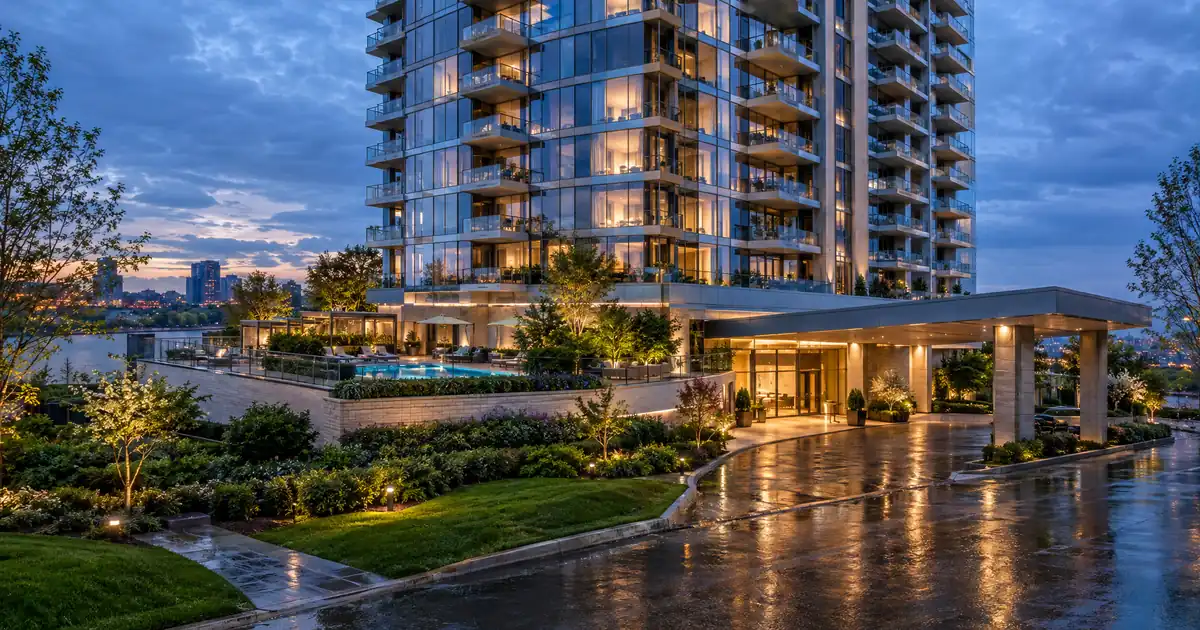
The Quick Read: A non-warrantable luxury condo typically requires at least 25% down through select non-QM programs in Lendmire’s wholesale network, because the leverage cap for that property type is 75% and the program tops out at a $1,500,000 loan amount, so higher-priced units push the effective down payment higher or fall outside the program, subject to underwriting. The building’s condition, not just your credit, decides where a file lands.
- The 75% leverage cap on a non-warrantable condo purchase means about 25% down at the minimum, on an investment property.
- The loan-amount ceiling for this property type is $1,500,000, so price and leverage interact.
- Qualification runs primarily on the property’s rental income covering the payment, subject to lender guidelines.
- Six months of reserves on the subject property is the typical requirement, and two appraisals apply above $2,000,000.
- The reason the building is non-warrantable changes how the file is reviewed, and sometimes whether it can be placed at all.
What Does Non-Warrantable Actually Mean?
Non-warrantable is a label, not a legal status. A building earns it by failing the project tests that conventional lenders apply before they will sell a loan on the secondary market. Homebuyer.com’s education library notes the term is not formally defined in mortgage guidelines. Buildings are non-warrantable by exclusion.
DSCR Calculator
Run the numbers in your market
Rate source: Freddie Mac 30-yr average via FRED® — Federal Reserve Bank of St. Louis · effective Oct 15, 2026
Prefilled with starting assumptions — enter your own rent or nightly figures, taxes, insurance, and HOA for a more accurate picture.
Program parameters update from Lendmire’s centralized guideline source. Taxes and insurance are editable estimates.
As of Oct 15, 2026 · General Freddie Mac market benchmark, not a Lendmire loan offer. Rent, nightly rate, occupancy, taxes, and insurance are editable estimates. Short-term rental figures are estimates only and vary significantly by season, property type, management approach, and local short-term-rental rules — confirm local regulations before relying on them. Qualifying income for short-term rentals varies by program — some use appraisal market rent, others use documented STR history or projections — and is confirmed in underwriting. Not a Loan Estimate, approval, or commitment to lend. Program availability and eligibility are subject to lender guidelines, credit approval, property review, and underwriting.
The lender’s underwriter makes that call, not the seller or the listing agent. That matters for luxury buyers, because high-end buildings trip the tests more often than people expect. Common triggers include heavy investor ownership, one owner holding many units, thin reserves, pending litigation, commercial space on the ground floor, and hotel-style rental programs.
A DSCR loan is not a conventional product. The lenders in a wholesale network set their own condo rules instead of following a single selling guide. That is why non-QM is the usual home for these buildings. It is not a loophole, though. The building still gets reviewed and priced.
How Much Down Does It Take? The Network Numbers
Across the lenders Lendmire places files with, the best available leverage on a non-warrantable condo is 75%, with loan amounts up to $1,500,000. On an investment property, that means a down payment of about 25% or more, subject to underwriting. Business-purpose financing works this way. Owner-occupied ranges you may have seen elsewhere do not carry over. Every figure here varies by lender and program — guidelines, property type, leverage, and credit profile all apply.
Here is how that compares with other property types on the same ladder:
| Property type | Best purchase leverage | Loan ceiling |
|---|---|---|
| Warrantable condo, up to $1M | 80% | $1,000,000 band |
| Warrantable condo, $1M to $3M | 75% | $3,000,000 |
| Non-warrantable condo | 75% | $1,500,000 |
| Condotel | 75% purchase, 65% refinance | $1,500,000 |
Every figure is a ceiling through select wholesale programs. Your file may land lower. Credit is part of that. For the $1,000,000 to $1,500,000 band, the 75% cell typically wants a 700 or higher score. A lower score takes a lower leverage cell inside the same band.
Coverage matters too. A coverage ratio of 1.00 or better earns full leverage. Coverage from 0.75 to 0.99 is a real path through select programs, but LTV and terms adjust, subject to underwriting.
The pattern worth noticing: for a unit under $1,000,000, the non-warrantable label costs about five points of leverage compared with a warrantable condo. In the $1,000,000 to $1,500,000 band, the cap matches the ladder, so the label costs less on the percentage. The price is what starts to hurt.
Why Does Luxury Change the Math?
Luxury does not create its own down-payment tier. Price changes the outcome through the loan-amount ceiling. Because non-warrantable condos stop at $1,500,000 in loan size, a higher purchase price means the ceiling binds before the 75% cap does.
Run the numbers on a purchase priced at $1,200,000. At 75%, the loan sits inside the ceiling, and the 25% down payment is the working number. Now take a purchase priced near $2,000,000. At 75%, the loan lands right at the $1,500,000 limit. Anything priced above that forces a larger down payment percentage, or it falls outside what this program covers for a non-warrantable building. Final terms depend on lender guidelines, property type, leverage, and the borrower’s complete credit picture.
If the building is warrantable, the picture changes. A warrantable luxury condo can follow the full ladder: 75% purchase leverage up to $3,000,000, then 65% to $4,000,000, then 60% on review above that. Two appraisals apply above $2,000,000 either way.
Confirming warrantable or non-warrantable status before contract is the single most useful step for a high-priced unit. It can be the difference between a 75% structure and no structure at all.
This one is a genuine judgment call. A buyer who loves a non-warrantable penthouse priced well above the ceiling has two honest paths. Bring a much larger down payment, or look at comparable units in warrantable buildings that can use the higher rungs. The second path often costs less cash, even if the unit is less distinctive.
How Underwriting Treats a Non-Warrantable Condo, Step by Step
Underwriting here is a sequence. Each step narrows the number.
1. Project review comes first. The lender evaluates the building before the borrower. The standard tests cover reserves, assessment delinquency, single-entity ownership, presale levels, master insurance adequacy, and commercial space. Pending litigation is another common trigger. Failing any one makes every unit in the building non-warrantable.
2. The cause of the label shapes the file. A building that misses only on investor concentration is a simple miss. A building with litigation, a reserve shortfall, or hotel-style operations is treated more cautiously. Heavily investor-owned buildings often have other issues too, so the first question is always whether concentration is the only one.
3. Qualification shifts to the property. DSCR lender review runs primarily on property-level rental income covering the payment, subject to lender guidelines. The ratio is monthly rent divided by the full monthly obligation: principal, interest, taxes, insurance, and HOA dues. Rent evidence is an executed lease, or an appraiser’s market rent schedule if the unit is vacant. In a luxury building, HOA dues and special assessments can be large. They can pull coverage down faster than the loan balance does.
4. Leverage comes from layered inputs. The lender looks at the property-type cap, the loan size, the borrower’s credit, and the coverage ratio. The lowest applicable cap wins. For a non-warrantable condo, the property-type cap is usually the binding one. The down payment is whatever remains.
5. Reserves and documents close the file. Typically that means six months of PITIA on the subject property (twelve for first-time investors), the condo questionnaire and budget, the master insurance certificate, litigation disclosure, the lease or rent schedule, and an appraisal that addresses the project.
Interest-only is available on these structures to 75% leverage, with a 120-month interest-only period on 30- and 40-year terms. Coverage of 0.75 or better is the typical test, qualified on interest and insurance and taxes. Sub-1.00 files carry reduced leverage and adjusted terms, subject to underwriting. These specifics are subject to lender guidelines and a full review of property, leverage, and credit.
Which Building Problems Cost You the Most?
The reason a building is non-warrantable shapes how the file is reviewed. Here is how the common causes tend to rank:
| Building issue | Why lenders care | Effect on your cash |
|---|---|---|
| Investor concentration only | Rental-heavy ownership | Usually the mildest case |
| Single owner holds many units | Concentrated payment risk | Tighter review |
| Thin reserves | Special assessment risk | Tighter review |
| Pending litigation | Unknown liability | May limit placement |
| Hotel-style or rental pool | Operating-business risk | Often condotel terms |
| Structural or life-safety work | Repairs unfunded | Often not reviewable |
Buildings with active structural or life-safety problems generally cannot be financed by anyone until the work is resolved. Most lenders will not make a placement on a building mid-repair, no matter how strong the borrower is.
Condotels deserve their own line. A condotel is a unit in a hotel-style building with a rental program. In the network, condotels run to 75% on a purchase and 65% on a refinance, with a $1,500,000 loan ceiling and $250,000 cash-in-hand required. Lendmire’s piece How Much Down a Condotel Requires Under Non-QM vs a Regional Bank walks through that structure in detail.
Where the General Rule Breaks
The 25% number is a working rule, not a law. Here are the edge cases that move it.
Agency changes can flip a building’s label. Conventional standards have been loosening in one area. Fannie Mae’s lender letter on condominium project standards retired the 50% investment-property concentration limit for established projects reviewed under full review on investor loans. The same letter keeps the separate presale requirement for new projects. The Community Associations Institute summarizes the same changes and adds that limited review is being removed while the waiver of project review expands to projects of up to 10 units.
So an investor-heavy established building may now be conventionally eligible. A building’s label can depend on which standard you apply. A Michigan condo-law blog points out that individual lenders may keep their own investor-concentration rules, and that the change does not apply to new construction.
For a non-QM file, this cuts both ways. A building that used to need non-QM may now qualify for a conventional investor loan, which could change the better path. A building that a non-QM lender still flags for concentration stays non-warrantable under that lender’s rules.
Single-entity ownership is a separate test. Retiring the investor cap did not retire the test on how many units one owner holds. In a small association, one owner holding two units can trip it. This surprises buyers in boutique luxury buildings with a dozen or so units.
Short-term rental income has its own limits. Short-term rentals qualify on documented operating history, at a discount to gross rent. In this network, income is counted at 80% of gross, loans run to $2,000,000, and the borrower must be an experienced investor. Short-term rental rules can vary by city, county, HOA, and property type, so investors should confirm local rules before relying on projected rental income. Many luxury condo buildings restrict rental terms in their governing documents, which can matter more than the city rule.
Occupancy changes everything. Primary-residence and second-home loans on non-warrantable condos follow different rules, and some project issues do not apply to them at all. DSCR financing is business-purpose financing for investment property. Do not carry an owner-occupied range over to a rental purchase.
Above the ceiling, the file is different. The $1,500,000 limit is the published envelope for non-warrantable condos. A purchase that needs more than that on a non-warrantable building is outside the standard structure, and the honest conversation is about the building, not the percentage.
What Else Do You Need Besides the Down Payment?
Cash to close is more than the down payment. Plan for four things.
- Reserves. Six months of PITIA on the subject property typically applies, twelve for first-time investors. Cash-out proceeds do not satisfy reserves above $3,000,000.
- Appraisals. Two appraisals apply above $2,000,000. The appraiser’s rent schedule (Form 1007) supports the rent evidence on a vacant unit.
- Project documents. The condo questionnaire, budget, insurance certificate, and litigation disclosure take time to collect from the association. Ask early.
- Credit. The program floor is 660. Above $3,000,000, the super-jumbo overlay raises it to 700, with a clean mortgage history and other conditions.
A practitioner’s note: across a wholesale network, the files that stall are rarely about the borrower. They stall on association paperwork. A management company that is slow to return the questionnaire, or a litigation disclosure that raises a new question, can reshape the structure late. Requesting the documents before you waive contingencies is cheap insurance.
What About Refinance, Exit, and Resale?
A non-warrantable label follows the building, and it affects every later move.
Refinancing into a conventional loan later depends on the building’s health and on the rules at that time. A building can drift into or out of warrantable status as its reserves, litigation, and ownership mix change. Do not assume today’s label is permanent.
Exit liquidity is the quieter cost. A non-warrantable condo shrinks the buyer pool to cash buyers and specialty-loan buyers, which can lower offers and lengthen time on market, as GoverningDocs explains. For an investor planning a hold, that is a manageable trade. For one planning a quick flip, it is a real risk.
Cash-out on these buildings is more restricted than a purchase. The ladder’s cash-out cells run lower than purchase leverage, and condotel refinances sit at 65%. Lendmire’s piece on how much a super jumbo cash-out releases on a non-warrantable condo covers that side.
For the full structure of DSCR lending, including the size ladder and coverage tiers, see Lendmire’s complete DSCR loans guide.
Key Terms Defined
Non-warrantable condo: A condo in a building that fails conventional project tests, so a conventional lender cannot sell the loan.
DSCR (debt service coverage ratio): Monthly rent divided by the full monthly obligation, including principal, interest, taxes, insurance, and HOA dues.
Single-entity ownership: One owner or related group holding a large share of units in the building.
Condotel: A condo unit in a hotel-style building, usually with a rental program or front desk operation.
Reserves: Liquid funds, counted in months of payment, that the borrower holds after closing the purchase.
Cash-in-hand: Liquid cash the borrower must show beyond the down payment on certain structures, such as condotels.
How to Lower What You Need
You cannot negotiate the ceiling, but you can change the inputs.
- Pick a different building. A warrantable building nearby can use the higher rungs of the ladder.
- Ask about the cause first. If concentration is the only issue, the file is simpler.
- Strengthen credit and coverage. A 700-plus score and coverage of 1.00 or better support the top cell in each band.
- Check HOA dues early. A large monthly dues figure can drag coverage below 1.00 even when rent looks strong.
- Ask for documents before you commit. Litigation, reserves, and insurance are the items most likely to move the structure.
Tax treatment varies; consult a qualified tax professional before relying on any deduction.
Next Step
If you are buying or refinancing a high-balance rental property and want to see how the numbers work, Lendmire can help you compare super jumbo DSCR loan options based on the property income, the loan balance, credit profile, leverage, and investor goals. Lendmire is a broker arranging business-purpose financing through select lenders in its wholesale network across 41 markets, including Washington, D.C. Nothing here is a commitment to lend, and every file is underwritten individually.
Frequently Asked Questions
Is 20% down possible on a non-warrantable luxury condo?
Not through the network’s non-warrantable condo structure, which tops out at 75% leverage on a purchase. That means roughly 25% down at the minimum, subject to underwriting. A warrantable condo under $1,000,000 can reach 80%, so the building’s status matters. Lower leverage cells apply if credit or coverage is weaker. Terms depend on the lender’s guidelines, the property type, the leverage, and a full review of the credit profile.
Does a higher price mean a bigger down-payment percentage?
Not directly, but the loan-amount ceiling makes it behave that way. Non-warrantable condos stop at a $1,500,000 loan amount. A purchase priced well above that cannot use the full 75%, so the down payment percentage rises or the file falls outside the program. Warrantable buildings follow the full ladder instead.
Who decides whether a building is non-warrantable?
The lender’s underwriter decides, based on the project review. The seller and listing agent do not. Different lenders can reach different conclusions on the same building, because each applies its own rules. Buildings can also change status as finances, litigation, or standards change.
Can DSCR financing ignore a problem building?
No. DSCR changes how income is qualified, with the property’s rent as the main test. Structural or life-safety problems generally stop a file until they are resolved.
Can I refinance out of a non-warrantable loan later?
Possibly, if the building’s health improves or conventional standards change in a way that fits it. Nothing about the label is permanent. Cash-out leverage on non-warrantable buildings is lower than purchase leverage, so plan for less equity access than on a warrantable unit.
Lendmire’s self-employed mortgages page presents both super jumbo programs, bank statement and DSCR, side by side.
About Lendmire
A DSCR-focused mortgage broker, Lendmire (NMLS# 2371349) places investor financing across 41 markets — 40 states plus Washington, D.C. — with DSCR eligibility generally reviewed by the lender on property cash flow instead of tax returns, subject to lender guidelines. Scotsman Guide named Lendmire a Top Mortgage Workplace in 2025 and 2026.
Get Started
Ready to find the right loan for you?
In about 30 seconds you can review financing options available for your investment property. No commitment required.
Informational only. Not a Loan Estimate, approval, or commitment to lend. Program availability and eligibility are subject to lender guidelines, credit approval, property review, and underwriting.
References
1. Homebuyer.com on non-warrantable condominiums
2. Fannie Mae lender letter on condominium project standards
3. Community Associations Institute advocacy update on agency condo changes
4. Michigan Community Association Law Blog on agency condominium guidelines
5. GoverningDocs on what non-warrantable means for resale
This article is part of Lendmire’s super jumbo DSCR loan program — full qualification details, guidelines, and scenarios live on the program page.
Related reading: How a Malibu Luxury Rental DSCR Loan Works · How to Qualify for a DSCR Loan for a Luxury Condo Rental · How Much Down Payment Does an Interest-Only Super Jumbo DSCR Loan Need?
Brandon Miller
Founder & CEO, Mortgage Loan Originator, Lendmire LLC
- Mortgage Loan Originator · NMLS# 1129696 · Verify on NMLS Consumer Access
- North Carolina Real Estate Broker · License# 343312 · Verify on NCREC
- North Carolina Insurance Producer · License# 19053198 · Property, Casualty, Life, Health · Verify on NAIC SBS
- Lendmire LLC · Firm NMLS# 2371349 · Verify firm licensure
Compliance and disclosures. Lendmire (NMLS# 2371349) is a licensed mortgage broker and is not a direct lender, depository institution, financial advisor, or tax professional. Content in this article is general market analysis and educational information — not financial, legal, or tax advice for any specific situation. Lendmire does not guarantee loan approval; every transaction is subject to underwriting by the funding lender. Mortgage pricing and loan program guidelines are subject to change at any time without notice and vary by borrower characteristics, property type, and state regulations. Lendmire complies with Equal Housing Opportunity. Licensure verification: NMLS Consumer Access.