
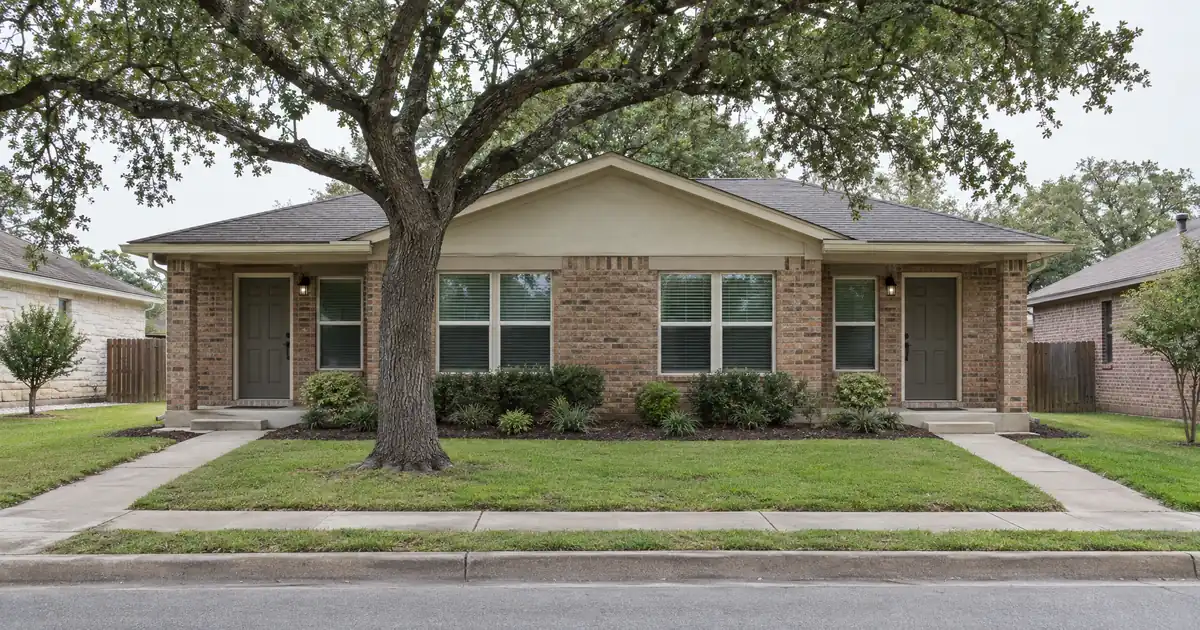
The Quick Read: A Texas homeowner sets up a homestead line of credit on one income by applying as the sole borrower, having the lender underwrite only that earner’s credit, income, and debts, and bringing the other spouse to closing to sign the lien without signing the loan note. The line is also capped by Texas law, so equity is the first thing to check.
- The earner’s credit, income, and debts decide the file. The other spouse’s income and debts stay out of it.
- The other spouse still signs the lien at closing, but not the note, so they take on no repayment duty.
- On a Texas primary residence, combined loans against the home cap at 80% of its value, whatever your credit score.
- Only one Texas home equity lien can sit on the home at a time, which can block a new line.
- Lendmire arranges these lines through select wholesale partners in 16 states, Texas included. Every figure here is subject to lender guidelines and full file review.
Key Terms Defined
HELOC: A home equity line of credit, a revolving line secured by your home that you draw from in stages.
Homestead: The home you live in as your primary residence, which Texas protects with its own set of lending rules.
CLTV (combined loan-to-value): Your first mortgage balance plus the new line, divided by the home’s value.
Lien: The lender’s legal claim on the home if the debt goes unpaid.
Note: The signed promise to repay. Whoever signs the note owes the money.
DTI (debt-to-income): Your monthly debts as a share of your gross monthly income.
Non-borrowing spouse: A spouse who is not on the loan but may still have to sign the lien.
How large a line the equity supports in Texas.
An equity line is sized by combined loan-to-value, occupancy, and credit — not by rental coverage. Switch the occupancy or the credit band and the ceiling moves with it.
Investment-property lines require a 700 minimum credit score; second-home lines start at a 640 minimum and primary-residence lines at 600, and the combined-LTV ceiling steps down as the credit band drops on primary-residence and second-home lines and holds on investment-property lines; the line cap steps down on primary-residence lines and holds at every tier on investment-property and second-home lines.
A debt-to-income ratio above 45% requires 680+ credit. Profiles under 640 are limited to single-family homes. At least 75% of the approved line is drawn at closing. Ceilings, floors, and caps update from Lendmire’s centralized guideline source.
Line estimate
Illustrative estimate only — not a quote, Loan Estimate, approval, or commitment to lend. The rate is an editable assumption; equity-line pricing is variable through both the draw and repayment periods and never converts to fixed. Occupancy and credit drive the ceiling together: an investment property tops out at 70% combined LTV (minimum credit 700, line cap $500,000); a second home tops out at 90% combined LTV (minimum credit 640, line cap $500,000), with the ceiling stepping down as the credit band drops (the cap holds at every tier); a primary residence tops out at 80% combined LTV (minimum credit 600), and its $750,000 maximum line is available only at 75% combined LTV or below with a 700-or-better credit profile (720 on the longer-runway program) and a full appraisal. Lines above $500,000 require a full appraisal. Credit, debt-to-income, property type, and full underwriting review all affect the final line.
What “One Income” Means to an Underwriter
One income means the lender treats the earning spouse as the entire borrower. Their income is counted, their credit score is pulled, and their debts go into the ratio. Nobody else’s numbers help or hurt the file.
That is a real advantage when the other spouse has little income, a thin credit file, or heavy debt. Across the wholesale network Lendmire works with, the credit score is typically a single-bureau score keyed to the primary wage earner. The report can be no more than 90 days old at closing, and programs do not allow rescores.
Three numbers drive most one-income files:
- Credit floor: The programs start at a 600 score, with the best leverage reserved for higher scores.
- DTI ceiling: The maximum is 50%, dropping to 45% for credit profiles from 600 to 679. Going above 45% requires at least a 680.
- Qualifying payment: Lenders review your file on the interest-only payment calculated as if you had drawn the full line.
That third point matters. A $300,000 line is underwritten as though you borrowed all of it, even if you plan to draw half.
Here is how the three roles in a married household compare:
| Role | Income counted | Signs the note | Signs the lien |
|---|---|---|---|
| Borrowing spouse | Yes | Yes | Yes |
| Non-borrowing spouse | No | No | Yes (homestead) |
| Co-borrower | Yes | Yes | Yes |
Adding the spouse as a co-borrower makes sense only when you need their income to qualify. Otherwise it adds their debts and their repayment liability for no gain.
Is Your Equity Slot Open?
Texas allows one home equity lien at a time on a homestead, so check your existing loans before you apply. According to the Texas A&M Real Estate Research Center, an owner may have only one home equity loan at a time, and a Texas cash-out refinance counts as one.
| What you hold today | Can a new line be added? |
|---|---|
| Purchase-money first mortgage only | Yes, as a second lien, within the CLTV cap |
| Existing Texas cash-out or home equity loan | No, until paid off or refinanced |
| Equity loan less than 12 months old | Blocked by seasoning rules |
| Home improvement loan | Depends on how it was documented |
On the seasoning point, the Texas Office of Consumer Credit Commissioner describes a one-year rule before an existing home equity loan can be refinanced, with a narrow exception for declared disasters. The network applies a 12-month seasoning standard to Texas primary residences as well.
The reverse also holds. A line on your primary home can block a later cash-out refinance of that same home.
The Step-by-Step Path
The sequence below runs from eligibility check to funds. Each step belongs to a specific person, and the order matters because the Texas steps cannot be skipped.
1. Confirm the home qualifies. It must be your primary residence and a single-family home, a 2-4 unit property, a PUD, a townhome, or a condo. Manufactured homes, log homes, co-ops, and condotels are not offered. Texas properties are limited to 10 acres, and a home listed for sale within the past 60 days is ineligible.
2. Check how title is held. Title must sit with you individually or in a revocable living trust. A property deeded to an LLC is not eligible under these lines, so a vesting change or a DSCR cash-out comes first, subject to lender guidelines.
3. Run the CLTV math. Add your first mortgage balance to the line you want, then divide by the home’s value. The result cannot exceed 80% on a Texas primary residence. Credit tiers decide how close to that ceiling you get, so a lower score means a lower tier.
4. Apply on the earner’s file. Credit, income, and debts for the one borrower are reviewed against the DTI limits above.
5. Wait out the notice period. Texas law requires a separate written notice and a waiting period before closing, per the Texas A&M Real Estate Research Center. This is a legal waiting period, not a lender preference, so confirm the exact timing with a qualified Texas real estate attorney or title company.
6. Handle valuation. Lines at or below $500,000 ordinarily use an automated valuation with no traditional appraisal. You can request a full appraisal in any case. A full appraisal is required on every line above $500,000.
7. Close at an authorized location with both spouses. Texas limits where these loans can close, and both spouses attend.
8. Draw at closing. At least 75% of the line is drawn at closing, and later advances follow Texas draw rules (see below).
Why the Other Spouse Still Signs
The non-borrowing spouse signs because Texas protects the homestead as a marital unit, not because the lender doubts your income. The same Texas A&M source notes that a home equity lien needs the consent of each owner and each owner’s spouse.
Federal law then draws the line between the lien and the note. Under the CFPB’s Regulation B, a lender generally cannot require your spouse’s signature on the credit instrument if you qualify alone. The same rule lets a lender require a spouse’s signature on whatever instrument state law demands to make the collateral reachable. In Texas, that instrument is the deed of trust.
The commentary also describes a legend placed beside the spouse’s signature. It states that the signature grants a security interest and imposes no personal liability. In practice, your spouse is agreeing that the home can secure your debt, not agreeing to repay it.
One caution follows from the same commentary. If you rely on your spouse’s income to qualify, the spouse effectively becomes a co-borrower. That defeats the one-income structure.
A Modeled One-Income Example
Run the numbers on a household where one spouse earns all the income. These inputs are modeled assumptions, not market data.
Say your first mortgage balance equals 50% of the home’s value. The 80% Texas ceiling leaves room for a line equal to 30% of value, if your credit tier allows that leverage and the line stays within program size limits. If the first mortgage sits at 65% of value, the room shrinks to 15% of value.
Now the income side. The earner’s existing monthly debts, plus the interest-only payment on the full line, must fit under the DTI ceiling for their credit tier. With a score of 680 or better, the ceiling can reach 50%. Below 680, it holds at 45% or lower. The non-borrowing spouse’s car loan or credit cards never enter the ratio.
Equity and income are separate tests, and a strong file clears both. A household with generous equity can still fail on DTI. A household with strong income can still hit the 80% wall.
After Closing: How the Line Behaves
A Texas HELOC works differently from the revolving card-like lines sold in other states. Per Texas A&M’s research center, each advance after closing must be at least $4,000, and credit cards, debit cards, and preprinted checks cannot access the line. Fees can be charged only when the line is established, and the lender cannot change the terms unilaterally.
The practical effect is that the line suits lump-sum uses, such as a down payment, rehab budget, or reserves, better than frequent small draws.
Lendmire arranges two draw structures on primary residences:
- Three-year draw structure: interest-only for 3 years, then 17 years of full repayment.
- Five-year draw structure: interest-only for 5 years, then 25 years of full repayment.
The cost of the line floats and never converts to fixed on either structure. Plan for the payment to change, and plan for it to jump when the repayment period starts and principal begins to amortize.
Where the One-Income Rule Breaks
The one-income structure bends in a few specific situations.
- You need the spouse’s income. The spouse becomes a co-borrower, with their debts, credit, and liability attached.
- The earner does not qualify alone. A lender may ask for a cosigner but cannot insist it be the spouse. Texas also generally keeps outside guarantors off a homestead equity note, so a friend or relative is rarely the fix.
- Title is in only one spouse’s name. The non-titled spouse still signs the lien on a homestead.
- Credit is under 640. Sub-640 profiles are limited to single-family residences with a clean 12-month housing history under the five-year draw structure.
- Past derogatory credit. A bankruptcy needs 4 years of seasoning from discharge or dismissal. Foreclosure history is handled differently by each draw structure, and one declines it regardless of age.
- The home is a rental. Texas homestead rules do not attach to rentals or second homes. Those follow standard non-homestead terms.
A missing spousal signature is the most expensive mistake on this list. Lenders are rigid about the lien and notice steps because Texas treats defects in them seriously, so confirm that both spouses can attend before you apply.
The Investor Decision
For an investor, the homestead line is a funding tool, not a rental loan. It is underwritten on personal income and DTI, so it can supply a down payment or reserves for a rental purchase even when the spouse has no income. Model the 80% ceiling before you plan the purchase, because no credit profile moves it.
A rental purchase itself usually moves to a different product. DSCR loans are designed for non-owner-occupied investment properties. Because they are business-purpose investor loans, they are reviewed differently from a standard owner-occupied mortgage. A DSCR loan is reviewed primarily on property-level rental income covering the payment, subject to lender guidelines. Our complete DSCR loans guide covers how that works.
Clearing a 1.00 coverage ratio is not the same as positive cash flow. The calculation compares rent to the mortgage payment only, so repairs, vacancy, and management sit outside it.
If the equity sits in a rental rather than your home, an investment-property line is a separate path. These lines run up to 70% CLTV with at least a 700 credit profile, cap at $500,000, and use only the five-year draw structure. Texas investment properties are eligible as non-homestead transactions, so the 12-day notice and one-lien rules above do not apply to them.
Tax treatment can depend on how the funds are used and how the property is held; investors should keep clear records and speak with a qualified tax professional before relying on any deduction.
Frequently Asked Questions
Can my spouse stay completely off the loan?
Yes on the note, no on the lien. Your spouse does not sign the repayment promise if you qualify alone, but a Texas homestead lien needs their consent and signature. That signature grants a security interest and does not make them personally liable for the debt.
Does my spouse’s income or debt count if they only sign the lien?
Neither counts. Only the borrower’s income, credit, and debts go into the file. Your spouse’s debts do not raise your DTI, and their income cannot help you qualify.
What is the most I can borrow against a Texas homestead?
Your first mortgage balance plus the line cannot exceed 80% of the home’s value. Within that ceiling, your credit tier sets the exact leverage and line size, which runs from $25,000 up to $750,000 depending on the profile. Lines above $500,000 need at least a 700 score (720 on the five-year draw structure), cap at 75% CLTV, and require a full appraisal.
Can I open a HELOC if I already have a Texas cash-out refinance?
Not until that loan is paid off or refinanced, since Texas allows one home equity lien at a time. A cash-out refinance counts as that lien. Seasoning rules can also delay a new equity product after a recent one.
Can I use the line on a rental property in Texas?
The homestead rules do not apply to rentals, but a separate investment-property line exists. It caps at 70% CLTV and $500,000 and requires at least a 700 credit profile. Property eligibility and title rules still apply, including the exclusion of LLC-held property.
Next Step
If you are considering a home equity line and want to see how the numbers work, Lendmire can help you compare HELOC options based on the property, the equity available, credit profile, combined leverage, and your goals. This is not a commitment to lend, and every file is reviewed individually.
About Lendmire
Lendmire is a mortgage brokerage (NMLS# 2371349) arranging home equity lines of credit — primary-residence, second-home and investment-property lines — through a wholesale lending network in its 16 full-service states. Eligibility is determined by the lender on each file. Scotsman Guide named Lendmire a Top Mortgage Workplace in both 2025 and 2026.
Investors who want the broader program framework can review how DSCR loans work.
Get Started
Ready to find the right loan for you?
In about 30 seconds you can review financing options available for your home or investment property. No commitment required.
Informational only. Not a Loan Estimate, approval, or commitment to lend. Program availability and eligibility are subject to lender guidelines, credit approval, property review, and underwriting.
References
1. Texas A&M Real Estate Research Center: What to Know About Home Equity Loans in Texas
2. Texas Office of Consumer Credit Commissioner: Home Equity COVID-19 Emergency Measures
3. CFPB: Regulation B, Section 1002.7
This article is part of Lendmire’s home equity line of credit program — full qualification details, guidelines, and scenarios live on the program page.
Related reading: HELOC Tiers for a First-Time Equity Borrower on a Primary Home · How a HELOC Funds Four Years of Tuition for a Parent Borrower · How Much Home a First-Lien HELOC Down Payment Supports After DTI
Brandon Miller
Founder & CEO, Mortgage Loan Originator, Lendmire LLC
- Mortgage Loan Originator · NMLS# 1129696 · Verify on NMLS Consumer Access
- North Carolina Real Estate Broker · License# 343312 · Verify on NCREC
- North Carolina Insurance Producer · License# 19053198 · Property, Casualty, Life, Health · Verify on NAIC SBS
- Lendmire LLC · Firm NMLS# 2371349 · Verify firm licensure
Disclosure information. Lendmire is a state-licensed mortgage brokerage under NMLS# 2371349. Lendmire is not a depository institution, direct lender, or financial advisor — all loans referenced are placed through wholesale lender partners and are subject to each lender's underwriting standards. This article is provided for general informational purposes and is not a commitment to lend, nor does it constitute financial, legal, or tax advice. Loan programs, terms, rates, and qualification standards change without notice and depend on borrower profile, property type, and the state in which the subject property is located. Equal Housing Opportunity provider. NMLS Consumer Access: nmlsconsumeraccess.org.