
The Quick Read: Sometimes, but usually only when the property was bought with cash and no purchase-money loan, through a delayed-financing style exception that waives the waiting period and nothing else. The six-month clock is lender policy, not law, and the rent-coverage test, appraisal, reserves, credit and leverage caps all still apply.
- A true cash purchase with a documented funds trail is the fact pattern that can work.
- A hard money or bridge loan paid off early usually does not qualify for the exception.
- Early cash-out is often sized on documented cost, not the new appraised value.
- On short-term rental collateral, cash-out typically tops out around 70% LTV, subject to lender guidelines.
- Ownership seasoning and hosting history are two separate clocks.
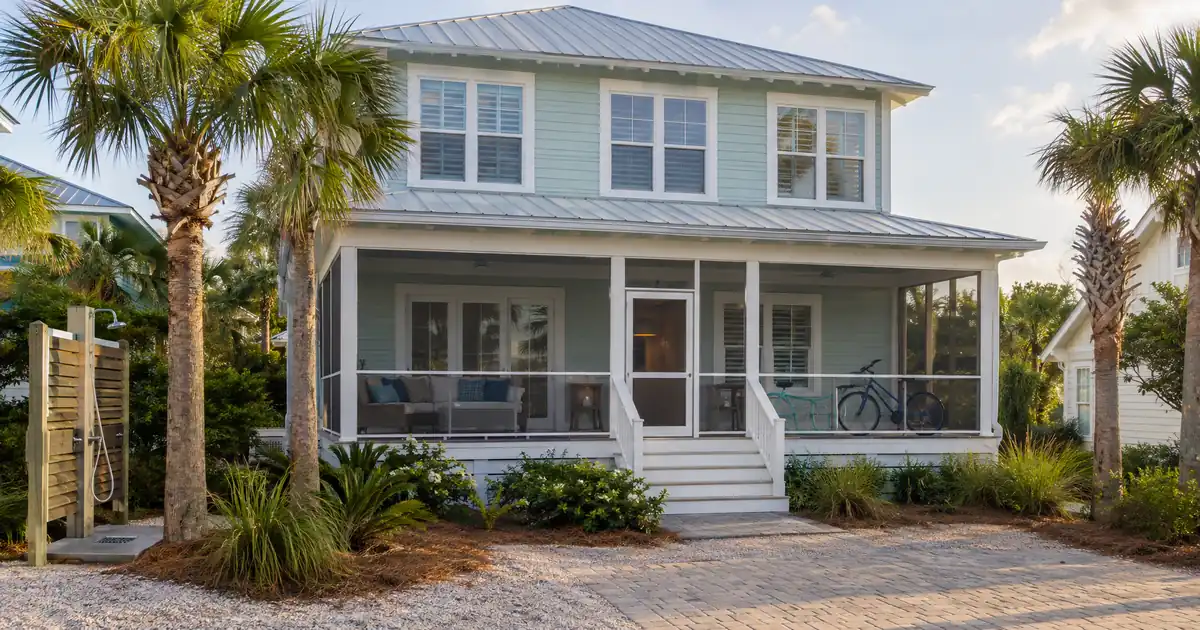
Say you paid cash for a lake-house Airbnb two months ago and want that money back for the next deal. The question is whether “paid-off” means “ready to cash out.” It does not. A free-and-clear property is still a cash-out refinance, and cash-out files get seasoning rules. This piece walks through how those rules work, where the exception fits, and what it leaves untouched.
DSCR Cash-Out Calculator
Run the cash-out numbers in your market
Rate source: Freddie Mac 30-yr average via FRED® — Federal Reserve Bank of St. Louis · effective Oct 8, 2026
Prefilled with starting assumptions — enter your property’s value, balance, taxes, and insurance for a more accurate picture.
Program parameters update from Lendmire’s centralized guideline source. Taxes and insurance are editable estimates.
As of Oct 8, 2026 · General Freddie Mac market benchmark, not a Lendmire loan offer. Property value, balance, taxes, and insurance are editable estimates. Maximum loan-to-value varies by lender, program, property type, and seasoning. Not a Loan Estimate, approval, or commitment to lend. Program availability and eligibility are subject to lender guidelines, credit approval, property review, and underwriting.
Why Doesn’t “Paid-Off” Mean “No Waiting”?
Free-and-clear status does not avoid cash-out treatment. When a lender puts a new loan on a property with no mortgage and hands cash to the owner, that is a cash-out refinance. Cash-out files carry a seasoning rule, and the rule applies whether or not a loan was ever on the property.
Seasoning is the minimum time you must have owned the property before a lender will cash you out against its value. Across the wholesale network Lendmire works through, about six months is the common expectation on cash-out refinances. It is a policy set by each lender, not a statute. Some programs run shorter, some longer, and exceptions exist.
That variation matters. Nothing in federal law fixes a DSCR seasoning period. These are non-agency investor loans, so each program writes its own rule. One lender’s number is not every lender’s number.
How Is the Ownership Clock Measured?
The clock usually runs from the recorded deed or title transfer, not from the first booking, the end of a rehab, or the day you started furnishing the unit. Files get stuck here when an owner counts from the date the listing went live.
Seasoning rules differ by lender, by transaction type and by how the property was acquired. The common-sense approach is to ask any lender three things up front: how seasoning is measured, whether a cash-buyer exception exists, and what the loan is sized on during the exception window.
What Is the Delayed Financing Exception?
The delayed financing exception lets a documented cash buyer refinance before the normal waiting period ends. The idea is borrowed from the agency world. Fannie Mae’s Selling Guide has a section on it, and an earlier version of that guide shows the six-month ownership rule and the exception to it. That is context only. Agency rules do not govern DSCR loans. A DSCR program uses the concept only if its own guidelines say so.
Where programs do offer it, the conditions look similar:
- The purchase was arm’s-length.
- No mortgage financing secured by the property was used to buy it.
- The settlement statement confirms that.
- The source of the purchase funds is documented, such as bank statements or a line of credit on another property.
- Ownership at purchase sits with the borrower, or with an entity the borrower fully owns, subject to program terms.
Non-QM loan files show the same pattern in practice. One due-diligence exhibit filed with the SEC shows a DSCR file cleared under a delayed financing provision. The purchase was all cash, arm’s-length, backed by a settlement statement, and the maximum LTV was the lower of appraised value or purchase price plus documented improvements. Treat it as one snapshot, not a rule for every lender.
What Sizes the Loan During the Exception?
Cost basis sizes the loan, not the new appraisal. During the exception window, the loan generally cannot exceed documented acquisition cost, and then the program’s leverage cap applies on top. After seasoning passes, the cost cap generally drops away and the loan is sized on appraised value.
That is the trade-off. Early access usually means less cash than waiting. If you bought below market and the appraisal comes in well above your price, the exception will not release that gap, while waiting until seasoning passes can.
Rehab money behaves the same way. The exception reimburses what you paid to acquire. Dollars spent fixing or furnishing after closing are generally not recoverable early. Some investors try to route rehab funds through the settlement statement, but results vary by lender, so treat that as unverified until a lender confirms it.
Who Does the Exception Fail?
The exception fails whenever the purchase was not a clean cash purchase. The common cases:
- Hard money or bridge loan, then payoff. If a loan secured by the property was used to buy it, delayed financing generally does not apply. A filed due-diligence exhibit states the rule this way: when financing secured by the subject property was used in the purchase, the loan is treated as cash-out and must meet cash-out seasoning.
- Unsourced funds. Large deposits with no paper trail stall the file.
- Wrong entity. If the refinance is in your own name but the purchase funds sat in a partnership account, the ownership and funds trail do not line up. Entity mismatches are a common reason these files fall apart.
- Non-arm’s-length sale. Purchases from relatives or related entities draw extra scrutiny.
- Inherited, gifted or converted properties. These follow different documentation paths and are lender-specific.
Some lenders grant case-by-case seasoning waivers with compensating factors. One filed exhibit shows a four-month owner flagged against a six-month rule and later cleared by an originator exception. That is an exception, not a plan. Do not build a deal on it.
What Does the Exception Not Waive on an Airbnb?
The exception waives time only. Everything else about a short-term rental file stays in place, and the Airbnb layer adds its own friction.
Coverage. DSCR compares rent to the full monthly obligation, meaning principal, interest, taxes, insurance and any association dues. On short-term rental refinances, 1.00 is the floor for the programs Lendmire places, subject to lender guidelines. The ratio is rerun on the new loan balance, so a bigger early pull can squeeze coverage. A smaller, cost-sized loan leaves more cushion. Clearing the ratio also is not the same as positive cash flow. Repairs, vacancy, management, utilities and capex sit outside the calculation.
Appraisal. The appraisal sets value only. McKissock, an appraisal education provider, explains that Form 1007 documents monthly market rent, not nightly rates or business income. Fannie Mae’s appraiser guidance, hosted by the Nevada Real Estate Division, says multiplying a nightly rate by 30 is incorrect because it ignores furniture, vacancy and business expenses. The lender decides how short-term rental income is treated.
Hosting history. Most short-term rental programs expect about 12 months of host experience. A property you bought two months ago has little or no booking history on its own. Lenders often lean on market projection data or a long-term rent opinion in that case, and the approach is lender-specific. Local short-term rental rules can vary by city, county, HOA and property type, so investors should confirm local rules before relying on projected rental income.
Here is the point many owners miss. Ownership seasoning and hosting history are two different clocks. The exception can solve the first and leave the second untouched.
Two Clocks Compared
| Clock | What it measures | Does the exception help? |
|---|---|---|
| Ownership seasoning | Time since deed or title | Yes, for documented cash buyers |
| Hosting history | Booking and income record | No |
| Coverage test | Rent vs. full monthly obligation | No, rerun on new balance |
| Leverage cap | LTV ceiling for the program | No, still applies |
Program Figures for Short-Term Rental Files
These are typical ranges from select wholesale-network guidelines, subject to lender guidelines and individual underwriting. They are not commitments to lend.
- Cash-out and refinance leverage on short-term rental collateral: up to about 70% LTV. Standard long-term rentals can reach about 75% on cash-out.
- Short-term rental purchase leverage: up to 75% on the strongest files.
- Credit score: a 640 minimum is typical for short-term rental files.
- Coverage: a 1.00 floor on both purchases and refinances. Programs below 1.00 are available through select lenders in the network, with leverage and terms adjusted.
- Loan amounts: up to $3,000,000 on standard programs.
- Reserves: they vary by lender, leverage, loan size and transaction type, commonly around 6 months of PITIA.
- Entity ownership: LLC-titled borrowers are generally accepted, subject to program terms.
The point of the list: more equity in the deal helps coverage, but it never erases leverage caps, credit floors, reserve rules or property eligibility. Manufactured homes, log homes and barndominiums are not offered in these programs. Lendmire’s complete DSCR loans guide covers the baseline program picture.
Exception, Wait, or Another Product?
The right path depends on what you are optimizing for.
| Path | Sizes the loan on | Best when | Main risk |
|---|---|---|---|
| Delayed-financing style exception | Documented cost | Clean cash buyer needing capital now | Less cash than appraisal sizing |
| Wait out seasoning | Appraised value | Bought below market or improved | Capital sits idle |
| Equity line on the property | Equity, up to a cap | Short bridge need | Line caps and variable terms |
Investment-property equity lines cap at $500,000 total. Lendmire’s piece How to Tap a Paid-Off Airbnb With a HELOC or DSCR Cash-Out Refinance compares those routes. For the size of the release itself, see Lendmire’s piece How Much a Paid-Off Rental Releases in a DSCR Cash-Out Before Six Months.
A genuine toss-up for many owners: take the smaller early amount and redeploy it now, or wait for an appraisal-based release. If the property was bought near market and has no rehab upside, the gap between the two is small and the exception looks better. If you bought at a discount or are adding value, waiting usually pays more.
Documentation Checklist for a Recent Cash Buyer
| Item | What it proves | Common pitfall |
|---|---|---|
| Original settlement statement | No purchase-money loan | Missing or incomplete copy |
| Funds trail | Source of purchase cash | Unexplained large deposits |
| Title record | Ownership date and vesting | Entity mismatch |
| Entity documents | Who owns the property | Funds in a different account |
| Booking and platform records | Hosting history | Gaps or no history yet |
| Insurance and permit evidence | Property is rentable as a short-term rental | Policy or permit not in the entity name |
| Reserves statements | Post-close liquidity | Counting funds already used |
Using the Waiting Months
If the exception does not fit, the waiting period is not dead time. Build booking history so the income story is documented. Move the property into the right entity before the refinance, not during it. Gather the settlement statement, funds trail and insurance. Confirm reserves are liquid and sourced. Files that arrive complete have fewer gaps for a lender to chase.
Key Terms Defined
Seasoning: the minimum time you must have owned a property before a lender will cash you out against its value.
Delayed financing: an exception that lets a documented cash buyer refinance before the normal seasoning period ends.
Cost basis: what you documented paying to acquire the property, which can size the loan during the exception.
Hosting history: your record of booking and operating a short-term rental.
PITIA: principal, interest, taxes, insurance and association dues, the full monthly obligation DSCR compares rent against.
Reserves: liquid funds a lender wants you to hold after closing.
Myths vs. Facts
Myth: there is a legal six-month rule. Fact: it is lender policy, and it varies across programs.
Myth: delayed financing lets me borrow against the new appraisal. Fact: it generally caps the loan near documented cost.
Myth: paid off means cash purchase. Fact: a hard money or bridge payoff is not a cash purchase.
Myth: my Airbnb appraisal proves my income. Fact: Form 1007 measures monthly market rent, not nightly revenue.
Myth: agency rules apply to my DSCR loan. Fact: only if a specific program says it defers to them.
Frequently Asked Questions
Can I do this on day one?
Rarely. A documented cash buyer may be able to use a delayed-financing style exception soon after purchase, but the lender still needs the settlement statement, funds trail, title record and appraisal. Whether a given program offers it at all is lender-specific.
Does an LLC change the answer?
Yes, it can. Programs that allow the exception generally want the borrower to own the entity outright, and the funds trail has to match the entity on title. Entity eligibility is subject to program terms.
Do renovations or appreciation shorten the wait?
Not by themselves. Seasoning runs from the deed date, and value gains do not move the clock. Rehab spent after closing is generally not recovered early under the exception.
Does the exception work for government-backed loans?
No. It is an agency-style concept applied by some non-agency programs, and each program’s own guidelines control. Ask the lender whether the exception exists and what it sizes on.
Is the early loan still a cash-out loan?
Yes. Pricing and leverage follow cash-out rules, which on short-term rental collateral means up to about 70% LTV, subject to lender guidelines. The exception changes the waiting period, not the loan type.
Next Step
If you are buying or refinancing a rental property and want to see how the numbers work, Lendmire can help you compare DSCR loan options based on the property income, credit profile, leverage, and investor goals. Tax treatment can depend on how the funds are used and how the property is held; investors should keep clear records and speak with a qualified tax professional before relying on any deduction.
For how equity extraction works on an investment property, see Lendmire’s guide to cash-out refinance on an investment property.
About Lendmire
Lendmire (NMLS# 2371349) is a DSCR-focused mortgage broker that helps arrange investor financing across 41 markets, including Washington, D.C., through wholesale and investor-lending channels. DSCR eligibility is generally reviewed by the lender around the property’s rental income rather than personal income documentation, subject to lender guidelines — which works for self-employed investors, LLC operators, and portfolios above four financed properties. Scotsman Guide named Lendmire a Top Mortgage Workplace in both 2025 and 2026.
Get Started
Ready to find the right loan for you?
In about 30 seconds you can review financing options available for your investment property. No commitment required.
Informational only. Not a Loan Estimate, approval, or commitment to lend. Program availability and eligibility are subject to lender guidelines, credit approval, property review, and underwriting.
References
1. Fannie Mae Selling Guide B2-1.3-03
2. McKissock on Form 1007 and short-term rentals
This article is part of Lendmire’s investment property cash-out refinance program — full qualification details, guidelines, and scenarios live on the program page.
Related reading: How to Refinance Out of Hard Money at Cost and Cash Out Later · How to Cash Out One Short-Term Rental to Buy in Another Market · Rental Cash-Out Refinance Closing and Entity Rules in Several States
Brandon Miller
Founder & CEO, Mortgage Loan Originator, Lendmire LLC
- Mortgage Loan Originator · NMLS# 1129696 · Verify on NMLS Consumer Access
- North Carolina Real Estate Broker · License# 343312 · Verify on NCREC
- North Carolina Insurance Producer · License# 19053198 · Property, Casualty, Life, Health · Verify on NAIC SBS
- Lendmire LLC · Firm NMLS# 2371349 · Verify firm licensure
Required disclosures. Lendmire (NMLS# 2371349) operates as a licensed mortgage broker, not a direct lender or depository. The discussion in this article is general in nature and should not be relied upon as financial, legal, or tax advice — every investment scenario is unique and should be reviewed by a qualified professional. Any loan inquiry is subject to lender underwriting, and this article is not a commitment to lend or a guarantee of approval. Mortgage rates, loan terms, and program guidelines vary by borrower, property, and state, and may change without notice. Equal Housing Opportunity. Verify licensure at NMLS Consumer Access.