
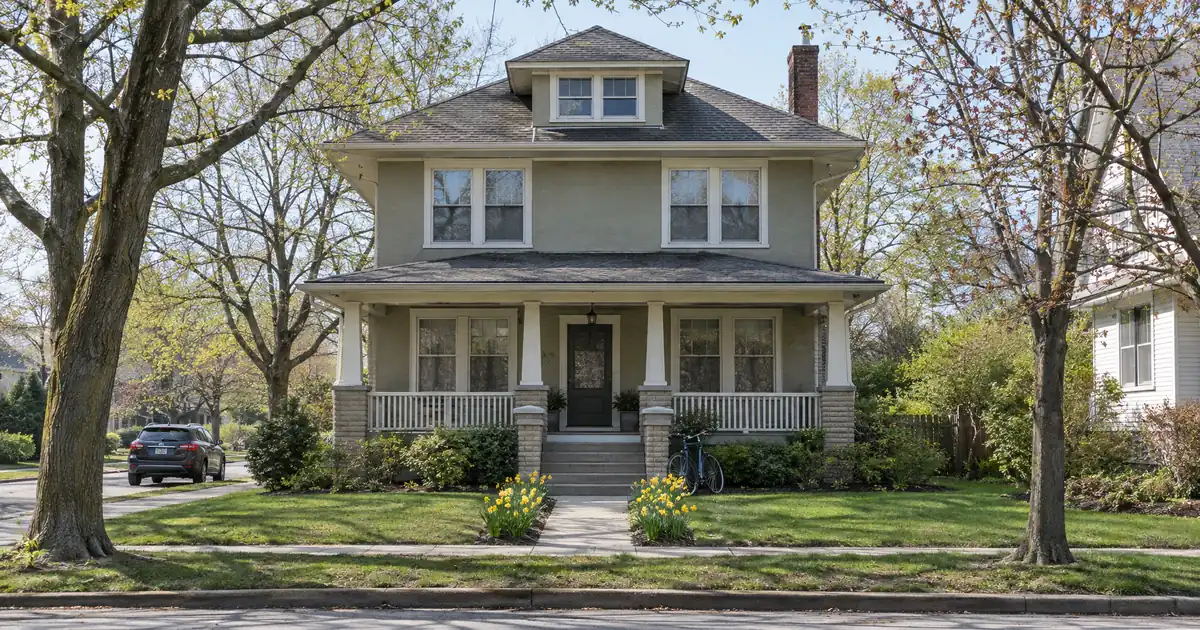
The Quick Read: You add free-and-clear rentals by pledging each one as collateral under a single new loan, which is tested on the combined rent and combined value of the whole group, and returns the equity as cash after any old liens are paid off. Each property still gets its own appraisal and rent opinion.
- A paid-off rental has no lien, so it adds equity to the pool with nothing to deduct.
- Cash-out on a portfolio loan never exceeds 75% of the pooled appraised value, subject to lender guidelines.
- Coverage is measured on the pool: combined rent against combined PITIA, so stronger rentals can offset weaker ones.
- The trade is risk. Every property, including the clean ones, now secures the whole debt.
- Clearing the coverage floor is not the same as the portfolio producing spendable cash.
How Do Paid-Off Rentals Go Into a Portfolio Cash-Out Refinance?
They go in as new collateral. A paid-off rental has no mortgage, so the lender records a lien on it at closing, just like on every other property in the pool. The new loan pays off whatever liens exist on the financed properties. What is left comes back to you as cash.
The loan type is often called a blanket loan. A blanket loan is one note secured by two or more rental properties. A portfolio DSCR loan and a cross-collateralized loan describe that same thing. Cross-collateralization means every property secures the whole debt, not just its own share. Nav describes it as using one asset to secure multiple loans, with a clause that lets the lender take the collateral if payments fall behind.
DSCR loans are designed for non-owner-occupied investment properties. Because they are business-purpose investor loans, they are reviewed differently from a standard owner-occupied mortgage. The file qualifies primarily on property-level rental income covering the payment, subject to lender guidelines.
One more point of clarity: DSCR describes how the loan is underwritten. Blanket describes how the collateral is structured. A single file can be both, and the lender network we work with arranges exactly that.
Key Terms Defined
Free and clear: A property with no mortgage or other lien against it.
Cash-out refinance: A new loan larger than the debt it replaces, with the difference paid to you.
LTV (loan-to-value): The loan amount divided by the appraised value.
DSCR (debt service coverage ratio): Monthly rent divided by the full monthly housing payment.
PITIA: Principal, interest, taxes, insurance, and any HOA dues. It is the full monthly payment on a property.
Seasoning: How long you have owned a property. Lenders use it to decide whether value or cost sets the loan amount.
Release clause: A term that lets you sell one property out of the pool by paying a specified amount toward the loan.
Pooled coverage: Combined rent from all properties divided by combined PITIA.
The Two Portfolio Structures
Across our wholesale network, portfolio loans come in two main shapes. The 30-year portfolio DSCR loan covers two to twenty properties under one note. The rental portfolio term loan is built for five or more rental properties or units. Their features differ in ways that matter for paid-off rentals.
| Feature | 30-year portfolio DSCR loan | Rental portfolio term loan |
|---|---|---|
| Properties | 2 to 20 | 5 or more properties or units |
| Loan size | $300,000 to $5,000,000 | $500,000 to $50,000,000 |
| Max leverage | Up to 80% on purchase and rate-and-term | Up to 75% of value |
| Cash-out ceiling | 75% of pooled value | 75% of pooled value |
| Term | 30-year, interest-only period available | 3, 5, 7, or 10 years, balloon at maturity |
| Property types | SFR, 2-4 unit, condo, townhome | Adds small multifamily (five or more units) |
Larger balances on either structure go on review. Everything here is a program ceiling or floor, not a quote, and it is subject to lender guidelines.
The credit floor across these portfolio programs starts at 640. Some structures want 680 or 720. Some require a special-purpose entity, usually an LLC, subject to lender program eligibility. Recourse loans carry a personal guarantee. Non-recourse structures exist on the term loan, with carve-outs for things like fraud and bankruptcy.
Step by Step: Adding Paid-Off Rentals to the Pool
Here is the order the work usually runs in.
1. Build a property schedule. For each rental, list value, liens (none on paid-off ones), taxes, insurance, HOA dues, and rent.
2. Confirm title and vesting. Every property has to sit under a borrower the single note can accommodate. Paid-off rentals sometimes surprise people here. Old deeds, a prior spouse’s name, or a different LLC can all complicate a pool.
3. Order appraisals. Each property is valued individually. Appraisers use Form 1007 for a single-family market rent schedule and Form 1025 for small multifamily. Every property also needs a lease or appraiser-supported market rent.
4. Test the pooled coverage. Combined rent is divided by combined PITIA on the new loan. The pool has to clear the floor of 1.00 on the 30-year structure.
5. Size the cash-out. The cap is set against pooled appraised value. The loan pays off any liens, covers costs, and returns the balance.
6. Collect documents. Expect appraisals, leases, entity documents, title history, insurance, ID, and asset statements for reserves.
7. Close. A lien is recorded on each deed. The old liens, if any, are paid off. Cash is disbursed.
Reserves vary by lender, leverage, and loan size. A common expectation is about six months of PITIA, stepping up for larger loans. On the rental portfolio term loan, the lender holds reserves for taxes, insurance, and capital expenditures.
How the Pooled Numbers Work
Pooling is the feature that makes this structure useful. Strong rentals offset weak ones. Here is a modeled example using ratios only.
Assume two rentals of equal appraised value. Rental A is paid off. Rental B carries an existing balance equal to about half its value. Both are seasoned beyond twelve months, so appraised value is the basis.
| Input | Modeled result |
|---|---|
| Pooled value | Two times one property’s value |
| New loan at 75% cash-out ceiling | 75% of pooled value |
| Payoff of Rental B’s old lien | Half of one property’s value |
| Cash before costs | 50% of pooled value |
| Closing costs | Reduce the cash |
Now coverage. Assume the new debt is split evenly between the two rentals. Say Rental A covers its share at about 1.40x and Rental B covers its share at about 0.90x. The pool lands near 1.15x, which clears a 1.00 floor.
That is the benefit of pooling. It is also the catch. Rental B alone would not clear the floor. A property below 1.00 coverage can sit in the pool, but underwriting tests the pooled coverage, the leverage, and the terms.
Equity available is never a guaranteed cash figure. It depends on rent used for lender review, PITIA, reserves, and the 75% ceiling.
What Changes When a Paid-Off Rental Joins the Pool
The first shock is the payment. A paid-off owner has no current monthly obligation on that property. After the refinance, the property carries a share of a new, larger payment. Rent that used to be pure margin now has to cover debt service.
The second change is leverage. A property that had no debt now supports debt. The cash you pull out is borrowed against it, and it comes with an obligation.
The third change is ownership of risk. A debt-free asset becomes security for the entire pool. Yahoo Finance flags significant foreclosure risk with blanket loans for exactly this reason: every property under the loan is collateral.
Keep one thing straight. DSCR compares rent to PITIA only. Repairs, vacancy, management, utilities, and capital expenditures sit outside the ratio. A pool that clears 1.00 can still leave you short in a bad year.
Which Paid-Off Rentals to Include and Which to Hold Back
Not every free-and-clear property belongs in the pool. This table shows the usual reasoning.
| Property situation | Usually include? | Why |
|---|---|---|
| Strong rent cushion, clean title | Yes | Lifts pooled coverage and adds equity |
| Thin rent, high taxes or insurance | Consider holding back | Drags the pooled ratio |
| Planned sale soon | Hold back | Release terms add cost and friction |
| Unusual title or vesting | Hold back or fix first | One bad deed can stall the file |
| Eligible type, easy appraisal | Yes | Predictable value and rent |
A useful test is this: would you be comfortable if this property were the one the lender foreclosed first? If the answer is no, it may be better left out, or financed on its own.
Cheap legacy loans with strong standalone coverage deserve the same thought. Refinancing them into a pool means giving up their terms for fresh costs.
Where the General Rule Breaks
A recent cash purchase. If you bought a rental for cash recently, appraised value may not set the loan amount. Inside the first six months the loan is also capped at 90% of total cost (purchase price plus documented improvements), 100% of total cost from six to twelve months, and the leverage ceiling still applies — the loan is the lower of the two. After twelve months the appraised value alone is the basis. A rate-and-term refinance is not subject to the cost-basis cap, but it also returns no cash.
Several LLCs or different owners. One note needs consistent ownership. If your rentals sit in different entities, separate loans can fit better than one pool.
Small multifamily. Properties with five or more units are eligible only inside the rental portfolio term loan. They are not eligible on the 30-year portfolio structure or on a single-property DSCR loan.
Manufactured homes. Manufactured and mobile homes are not reviewable on any of these programs. Log homes and barndominiums are not offered either.
A weak property in the pool. A rental without a needed permit, or with a lease problem, can impair the whole file. The fix is usually a smaller pool or a separate loan.
Owner-occupied, mixed-use, and commercial property. These are ineligible in the pool.
Risks to Weigh Before Signing
Cross-collateral exposure is the biggest one. If the pool runs into trouble, a lender can act against properties that were never the problem.
Release terms come next. Bankrate notes that blanket mortgages typically include a release clause, which lets you sell a covered property after paying down a specified amount. Without one, selling a property tied to a cross-collateralized loan is much harder, as Nav points out. In practice, the release price runs above the property’s allocated balance. Partial releases, substitutions, and the sale of one property follow the loan documents. The remaining portfolio must still cover its debt service.
Prepayment terms matter too. The rental portfolio term loan uses yield maintenance, with the protected period running 54 months on the five-year note and 114 months on the ten-year note. Read this before you sign, not after.
Balloon structures deserve a close look as well. The term loan has a balloon at maturity, a larger lump sum due at payoff. Some blanket loans carry this feature. Plan the exit before you take the loan.
Costs are not automatically lower. Bankrate points out that a blanket loan means one set of closing costs and one monthly payment. It also notes those closing costs are often higher than on a traditional mortgage. Financing costs reduce your net proceeds if they are rolled into the loan.
Finally, these loans suit experienced investors. Bankrate describes them as designed for companies or tenured investors, not a newcomer landlord.
Blanket or Separate Loans?
Separate loans isolate risk. A problem at one property does not pull down the others. The cost is more applications, more closings, and more payments.
A pool trades that isolation for convenience and flexibility. You get one payment, one closing, and the ability to let strong rentals support weak ones. Across our network, the pool tends to fit investors who plan to hold everything long term and want consolidated management. Separate loans tend to fit investors who may sell one property soon, who hold properties in different entities, or who have one weak rental they do not want to drag the others.
If you are weighing a larger group, Lendmire’s piece Is One Portfolio Cash-Out Refinance Worth It for Five or More Rentals? walks through that decision. For a single-property view of the same question, see Lendmire’s guide Cash-Out Refinance Requirements on Paid-Off and Mortgaged Rentals.
What Happens to the Cash
Proceeds can fund down payments, renovations, or debt payoff. The funds must be documented as yours. Tax treatment can depend on how the funds are used and how the property is held; investors should keep clear records and speak with a qualified tax professional before relying on any deduction.
Sequencing can matter. A first cash-out can fund the down payment on the next purchase, which then ages toward its own seasoning. Plan that chain before the first closing, because new properties added later may need to wait out the cost-basis caps.
Pre-Application Checklist
- A property schedule with value, liens, taxes, insurance, HOA dues, and rent.
- Title and vesting confirmed for each rental.
- Current leases, or readiness for an appraiser’s market rent opinion.
- Entity documents if you hold in an LLC.
- Insurance for each property.
- Reserve statements.
- A decision on which rentals stay out.
- A plan for any future sale, including release terms.
- A clear view of your credit profile against the portfolio floor.
The broader program picture sits in Lendmire’s complete DSCR loans guide.
Frequently Asked Questions
Can I add a paid-off rental to a portfolio loan that already exists?
Usually the pool is built as part of a new refinance, not bolted onto an old note. The new loan pays off the old liens and records a fresh lien on every property, including the one you are adding. Whether an existing note can be modified depends on its documents and the lender.
Does a paid-off rental need an appraisal?
Yes. Each property in the pool is valued individually, and each needs a lease or an appraiser-supported market rent. Being free and clear does not waive that step or the ownership-time rules.
Does it matter if my paid-off rental is in an LLC?
Yes, it can. One note needs consistent ownership, and some structures require a special-purpose entity. Properties held in different entities may fit better as separate loans, subject to program terms.
How much cash can I pull out?
There is no fixed figure. Cash-out is capped at 75% of pooled value, then reduced by payoffs and costs. It also depends on pooled coverage, reserves, and seasoning. A recent cash purchase can be limited by cost basis.
Is a pooled ratio above 1.00 the same as profit?
No. The ratio compares rent to PITIA only. Vacancy, repairs, management, and capital expenditures sit outside it.
Next Step
If you are buying or refinancing a rental property and want to see how the numbers work, Lendmire can help you compare DSCR loan options based on the property income, credit profile, leverage, and investor goals. As a mortgage broker, Lendmire arranges financing through select lenders in its wholesale network across 41 markets, including Washington, D.C. Whether a pool or separate loans fit, the decision comes down to how much risk you want sitting under each deed.
A deeper walk-through of investment-property equity extraction lives in Lendmire’s guide to cash-out refinance on an investment property.
About Lendmire
Lendmire (NMLS# 2371349), a non-QM mortgage broker serving investors in 41 markets including Washington, D.C., helps structure DSCR scenarios commonly evaluated around a property’s rental income rather than personal income paperwork, subject to lender guidelines. A Scotsman Guide Top Mortgage Workplace in 2025 and 2026, Lendmire places loans through wholesale investor lenders and is not a direct lender.
Get Started
Ready to find the right loan for you?
In about 30 seconds you can review financing options available for your investment property. No commitment required.
Informational only. Not a Loan Estimate, approval, or commitment to lend. Program availability and eligibility are subject to lender guidelines, credit approval, property review, and underwriting.
References
1. Nav: Cross-Collateralization
2. Yahoo Finance: Blanket Mortgage
This article is part of Lendmire’s investment property cash-out refinance program — full qualification details, guidelines, and scenarios live on the program page.
Related reading: Fifteen-Door Portfolio vs Five Rentals for a Portfolio DSCR Loan · Portfolio vs Individual DSCR Loan Reserves When Consolidating Rentals · How to Cash Out a 10+ Door LLC Portfolio to Buy More With DSCR
Brandon Miller
Founder & CEO, Mortgage Loan Originator, Lendmire LLC
- Mortgage Loan Originator · NMLS# 1129696 · Verify on NMLS Consumer Access
- North Carolina Real Estate Broker · License# 343312 · Verify on NCREC
- North Carolina Insurance Producer · License# 19053198 · Property, Casualty, Life, Health · Verify on NAIC SBS
- Lendmire LLC · Firm NMLS# 2371349 · Verify firm licensure
Legal disclosures. Lendmire (NMLS# 2371349) is a state-licensed mortgage brokerage that arranges financing through wholesale lender relationships. Lendmire is not a direct lender, depository institution, or registered financial advisor. The discussion above is general informational content about real estate financing — it is not financial, legal, or tax advice, and readers should consult licensed professionals for guidance on their individual circumstances. Loan inquiries are subject to lender underwriting; this article does not represent a commitment to lend. Loan terms, rates, and qualification standards vary by borrower, property, and state, and are subject to change at any time. Equal Housing Opportunity. NMLS Consumer Access: nmlsconsumeraccess.org.