
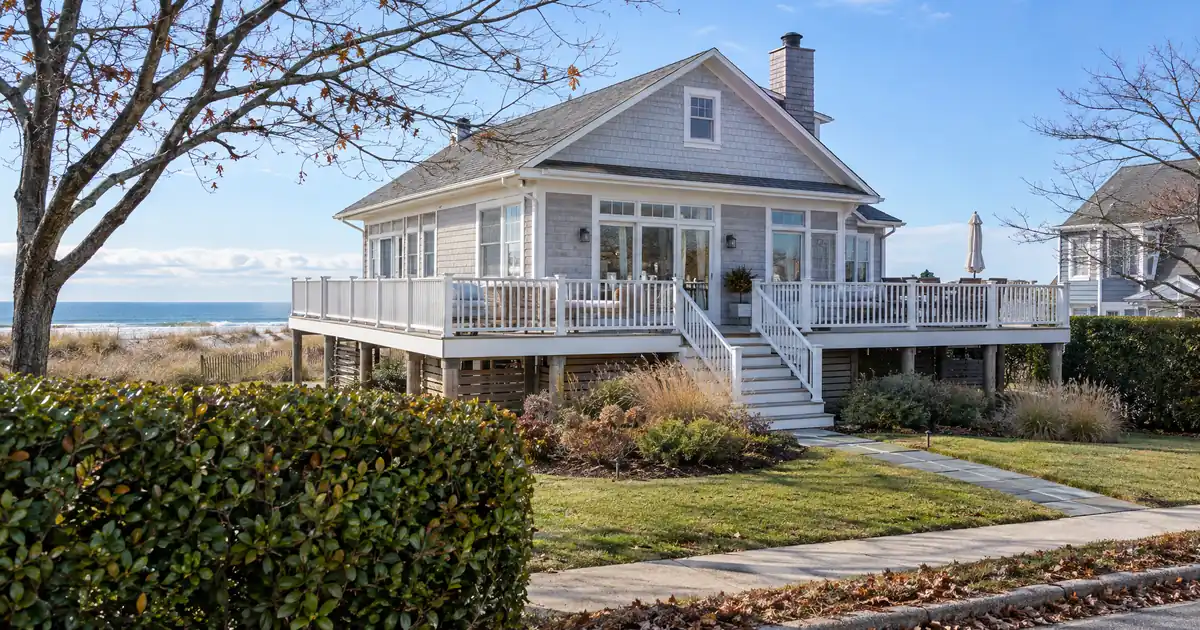
The Quick Read: A second-home loan can’t simply be refinanced into an Airbnb loan under the same label, because once you rent the property as a business the occupancy category changes to investment property and the loan product changes with it. For most hosts that means a DSCR refinance, where the property’s rental income covering its full payment drives the file, subject to lender guidelines.
- Short-term-rental refinances through select lenders in Lendmire’s wholesale network typically run up to about 70% LTV on STR collateral, with a 640 minimum score on most files.
- Coverage is usually tested at a 1.00 floor on the refinance, a floor for specific programs rather than a universal standard.
- Expect lenders to ask for roughly 12 months of hosting history, so a property with little or no rental record is the main obstacle.
- Rent is compared to PITIA only. Clearing 1.00 is not the same as positive cash flow.
- Local permits, HOA rules, and condo rules decide whether the use is allowed at all.
Why the Second-Home Label Stops Working
A second-home loan assumes you live in the property for part of the year and keep exclusive control of it. Fannie Mae’s occupancy rules for second homes say the property must not be a rental or timeshare, and that a management agreement can’t hand a firm control over occupancy. The same page allows some identified rental income, but that income can’t be used to qualify.
DSCR Cash-Out Calculator
Run the cash-out numbers in your market
Rate source: Freddie Mac 30-yr average via FRED® — Federal Reserve Bank of St. Louis · effective Oct 15, 2026
Prefilled with starting assumptions — enter your property’s value, balance, taxes, and insurance for a more accurate picture.
Program parameters update from Lendmire’s centralized guideline source. Taxes and insurance are editable estimates.
As of Oct 15, 2026 · General Freddie Mac market benchmark, not a Lendmire loan offer. Property value, balance, taxes, and insurance are editable estimates. Maximum loan-to-value varies by lender, program, property type, and seasoning. Not a Loan Estimate, approval, or commitment to lend. Program availability and eligibility are subject to lender guidelines, credit approval, property review, and underwriting.
That is the contrast, and it’s the only place agency rules matter here. DSCR loans aren’t governed by them. They just explain why a full-time Airbnb doesn’t fit the box.
Once rent is what carries the property, you want an investment-occupancy loan. Keeping the cheaper second-home label while running a rental business is a misstatement, and lenders and insurers look for it.
What Does Underwriting Actually Do With an Airbnb Refinance?
Underwriting treats it as an investor file. The lender looks at the property’s income against the new payment, then at credit, assets, and the property itself. Qualification runs primarily on property-level rental income covering the payment, subject to lender guidelines. Personal income documents drop out. Everything else stays.
DSCR loans are designed for non-owner-occupied investment properties. Because they are business-purpose investor loans, they are reviewed differently from a standard owner-occupied mortgage.
Here is how a typical file moves:
1. Confirm the true use. If you’ll rent it as a business and not occupy it, it’s an investment refinance. Decide that first.
2. Confirm the use is legal. Short-term rental rules can vary by city, county, HOA, and property type, so investors should confirm local rules before relying on projected rental income. Lenders treat permitted use as a precondition.
3. Build the income evidence. On a refinance, the usual proof is a trailing 12-month Airbnb or VRBO earnings export, matched against bank deposits. Some programs accept a third-party manager statement.
4. Order the appraisal. The appraiser completes a comparable rent schedule on Form 1007 for a single-family home, or Form 1025 for two to four units. On an STR, an STR income analysis may come with it.
5. Run the ratio. DSCR is monthly rental income divided by PITIA: principal, interest, taxes, insurance, and any HOA dues. Lenders may discount STR income before dividing.
6. Assemble the file. ID, credit authorization, asset and reserve statements, appraisal access, entity documents if vesting in an LLC (subject to lender program eligibility), and details on other financed properties.
7. Pay off the old loan. The second-home mortgage is paid off at settlement. Check it for a prepayment penalty and for any second lien that must be paid off or subordinated.
The Lendmire team sees the same pattern on these files: the documentation gap, not the ratio, is what stalls them. A host who exports the platform history early and matches it to deposits gives the lender fewer preventable questions.
How Does the Hosting-History Gap Work?
The gap is the biggest practical problem. Most STR refinance programs in the network expect about 12 months of host experience on the property or on the investor’s record. If the home sat as a true second home with little or no hosting, there’s nothing to show.
Don’t annualize one strong season either. Lenders discount a peak-season snapshot and want the full year, and Overline IQ’s STR financing guide makes the same point. A ski or beach home with lopsided months looks better as a 12-month average than as a summer run-rate, and slow months count against you.
Without a track record you have three paths:
- Wait and build the history, then refinance.
- Look at a purchase-style structure that uses a market projection or appraiser STR analysis. Those are more typical on purchases than on refinances, which usually ask for actual history.
- Leave the second-home loan in place until the record exists.
The third path is often the right one. Refinancing early can cost you more in closing costs than it saves.
The Two Paths Side by Side
| Factor | Keep second-home loan | Refinance as investment (DSCR) |
|---|---|---|
| Occupancy label | Second home | Investment property |
| Rent counts to qualify | No | Yes |
| Review basis | Your income and DTI | Property rental income vs. PITIA |
| Hosting allowed | Limited, identified only | Yes, if permitted locally |
| Fit | Occasional use | Full-time hosting |
Structures and Variations
DSCR refinances for STR collateral in the network typically look like this, subject to lender guidelines:
- Refinance leverage: up to about 70% LTV on short-term-rental collateral, on the strongest files.
- Cash-out: also around 70% LTV on short-term-rental collateral. Standard long-term rentals reach around 75% on a cash-out.
- Credit: a 640 minimum on STR files. Higher scores open better terms.
- Coverage: 1.00 is where many select programs start on an STR refinance. A separate select-lender path takes coverage below 1.00 with leverage and terms adjusted.
- Loan size: up to $3,000,000 on standard programs, with smaller balances routed through select lenders.
- Reserves: commonly around 6 months of PITIA, though they vary by lender, leverage, loan size, and transaction type.
- Terms: the 30-year fixed is the spine. Interest-only periods and 40-year terms are available through select lenders, and ARM structures exist.
For a purchase rather than a refinance, STR leverage tops out at 75%. Property types not offered in the network include manufactured homes, log homes, and barndominiums.
A bigger down payment or lower balance helps the ratio, but it never erases a leverage cap, credit floor, or reserve rule. The strongest files clear both tests: enough equity and enough rental coverage. For the full structure, read Lendmire’s complete DSCR loans guide.
Where the General Rule Breaks
Light hosting on a true second home. You can host a little and keep the second-home label, as long as the rent isn’t used to qualify. Once the rent has to carry the loan, it’s an investment file.
Multi-unit properties. Second homes are one-unit only, so a duplex or triplex is always investment occupancy. The appraiser uses Form 1025.
Personal-use days. Staying 14 days or fewer is a tax idea, not a lending test. IRS Publication 527 says a dwelling counts as a home if personal use exceeds the greater of 14 days or 10% of days rented, and the University of Illinois Tax School restates the same threshold. Lenders don’t use that figure to set occupancy. Tax treatment varies; consult a qualified professional.
Management companies. A management agreement that controls occupancy conflicts with second-home status. It doesn’t hurt a DSCR file.
Prepayment penalties. These sit on the old loan, so check yours before you plan the payoff. Most DSCR loans carry their own prepayment terms, so read the new ones too.
Restricted markets. If the property can’t legally host, the income claim is worth nothing.
Misstated occupancy. Labeling the loan a second home and renting full-time can put the loan in breach of its occupancy terms. Fixing the label before the refinance is cleaner than defending it after.
What Does the Decision Look Like in Practice?
Picture an owner with a lake house financed as a second home. They’ve hosted two summers and now want to go full-time. The trailing 12-month export shows steady bookings, deposits match, and the permit is in place. That file points to an investment refinance.
Now picture the same owner who started hosting last month. Same property, no history. Waiting a year before the refinance is the cleaner move.
Run three checks before choosing:
1. Does the 12-month history exist, and does it match deposits?
2. Does the rent cover the new, larger payment at or above 1.00?
3. Do closing costs make sense against what you save or pull out?
Coverage often binds before equity does, because the new payment tends to be larger than the old one. And clearing 1.00 is not positive cash flow. Repairs, vacancy, management, utilities, and capex sit outside the ratio.
If you’re weighing a cash-out on top, Lendmire’s piece Cash-Out Refinance for Second Home Owners: When It Makes Sense covers when pulling equity makes sense, and the DSCR Airbnb cash-out question gets its own breakdown.
Key Terms Defined
DSCR: Debt service coverage ratio, meaning monthly rental income divided by the full monthly housing payment.
PITIA: Principal, interest, taxes, insurance, and association dues, the payment the ratio is tested against.
Occupancy type: The lender’s label for how the property is used: primary, second home, or investment.
Trailing 12-month history: A year of actual booking and deposit records used to prove STR income.
Form 1007 / Form 1025: Appraisal rent schedules for single-family homes and for two to four units.
Seasoning: The ownership or hosting period lenders expect before a refinance or cash-out.
Frequently Asked Questions
Can I keep a second-home loan and run Airbnb on the property full-time?
Not safely. Full-time renting changes the occupancy to investment, and the second-home terms assume you keep control and don’t rely on rent. Moving to an investment-occupancy refinance puts the loan label in line with the actual use.
Do I need 12 months of Airbnb history to refinance?
Most STR refinance programs in the network expect about 12 months of hosting experience. Purchases can sometimes lean on a projection or appraiser analysis, but refinances usually ask for actual records, so building the history first is the practical route.
Does the 14-day personal-use rule decide how a lender sees my home?
No. That threshold is a tax rule from the IRS, not a lending test. A lender looks at how the property is used and who controls occupancy, so staying 14 days or fewer doesn’t keep a full-time rental in second-home status.
What leverage can I expect on an Airbnb refinance?
On the strongest files, short-term-rental refinances run up to about 70% LTV, and cash-out on STR collateral is also around 70%. Standard rentals reach about 75% on a cash-out. All of it is subject to credit, reserves, and property review. Terms depend on the lender’s guidelines, the property type, the leverage, and a full review of the credit profile.
Is a good DSCR the same as positive cash flow?
No. The ratio compares rent to PITIA only. Repairs, vacancy, management fees, utilities, and capex aren’t in it, so a property can clear 1.00 and still run thin.
If you are buying or refinancing a rental property and want to see how the numbers work, Lendmire can help you compare DSCR loan options based on the property income, credit profile, leverage, and investor goals. Reach the team at 828-256-2183 or request a quote.
About Lendmire
Lendmire (NMLS# 2371349) is a DSCR-focused mortgage broker that helps arrange investor financing across 41 markets, including Washington, D.C., through wholesale and investor-lending channels. DSCR eligibility is generally reviewed by the lender around the property’s rental income rather than personal income documentation, subject to lender guidelines — which works for self-employed investors, LLC operators, and portfolios above four financed properties. Scotsman Guide named Lendmire a Top Mortgage Workplace in both 2025 and 2026.
Get Started
Ready to find the right loan for you?
In about 30 seconds you can review financing options available for your investment property. No commitment required.
Informational only. Not a Loan Estimate, approval, or commitment to lend. Program availability and eligibility are subject to lender guidelines, credit approval, property review, and underwriting.
References
1. Fannie Mae Selling Guide B2-1.1-01
2. Overline IQ
4. University of Illinois Tax School
This article is part of Lendmire’s short-term rental loan program — full qualification details, guidelines, and scenarios live on the program page.
Related reading: Can You Get a DSCR Loan on a Condo? · Buying an Airbnb With Cash vs. a DSCR Loan · How Much Down Payment Does an Airbnb Loan Require?
Brandon Miller
Founder & CEO, Mortgage Loan Originator, Lendmire LLC
- Mortgage Loan Originator · NMLS# 1129696 · Verify on NMLS Consumer Access
- North Carolina Real Estate Broker · License# 343312 · Verify on NCREC
- North Carolina Insurance Producer · License# 19053198 · Property, Casualty, Life, Health · Verify on NAIC SBS
- Lendmire LLC · Firm NMLS# 2371349 · Verify firm licensure
Legal disclosures. Lendmire (NMLS# 2371349) is a state-licensed mortgage brokerage that arranges financing through wholesale lender relationships. Lendmire is not a direct lender, depository institution, or registered financial advisor. The discussion above is general informational content about real estate financing — it is not financial, legal, or tax advice, and readers should consult licensed professionals for guidance on their individual circumstances. Loan inquiries are subject to lender underwriting; this article does not represent a commitment to lend. Loan terms, rates, and qualification standards vary by borrower, property, and state, and are subject to change at any time. Equal Housing Opportunity. NMLS Consumer Access: nmlsconsumeraccess.org.