
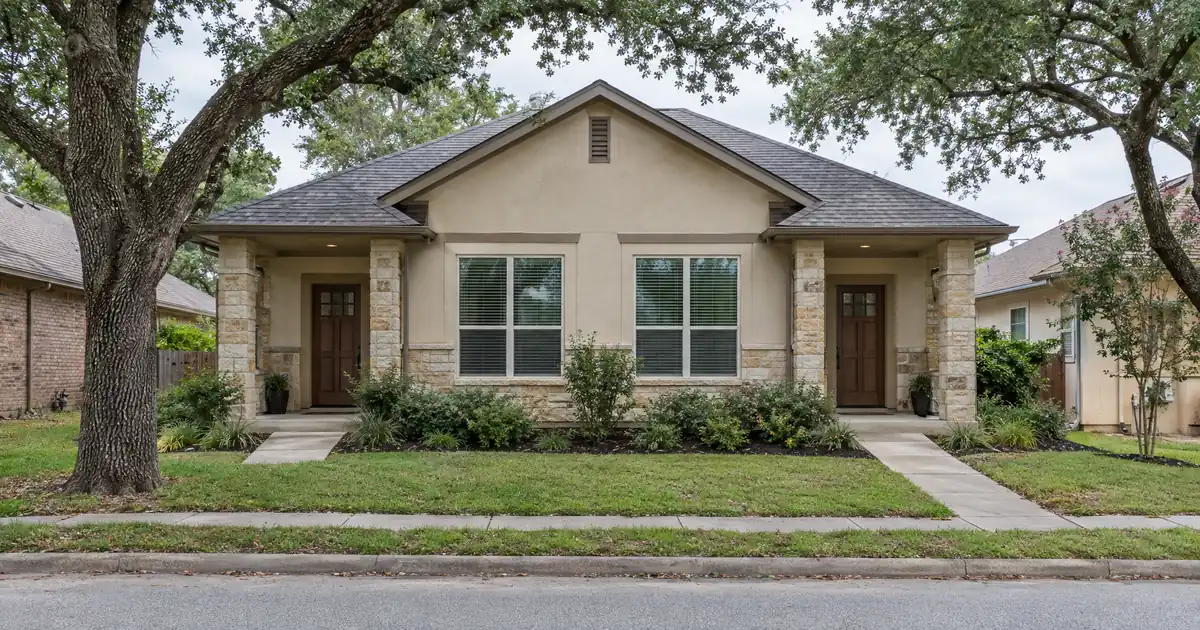
The Quick Read: Yes, a Texas investor can usually open a home equity line on a rental they own while the first mortgage stays untouched, because Texas homestead equity rules attach to the home you live in, though the line still depends on lender appetite, personal title, and your own credit. The line sits behind your existing loan as a second lien, or in first position if the property is free and clear. Everything below is subject to lender guidelines and full file review.
- Leverage: on an investment property, the line tops out at 70% combined loan-to-value, up to $500,000, through select lenders in Lendmire’s wholesale network.
- Credit: 700 is the floor for an investment line. A score above 700 does not buy more leverage.
- Title: you or your revocable living trust must hold title. An LLC cannot.
- Texas rules: the 80% cap and the 12-day wait govern your own home, not the rental.
- The catch: the line qualifies you, not the property. If the rental sits in an LLC, a DSCR cash-out is usually the cleaner path, though it replaces the first mortgage.
What Does “Without Refinancing” Actually Mean?
It means the loan you already have stays exactly as it is. A home equity line of credit (HELOC) is a separate loan, secured by the same property, that you can borrow against as you need it.
How large a line the equity supports in Texas.
An equity line is sized by combined loan-to-value, occupancy, and credit — not by rental coverage. Switch the occupancy or the credit band and the ceiling moves with it.
Investment-property lines require a 700 minimum credit score; second-home lines start at a 640 minimum and primary-residence lines at 600, and the combined-LTV ceiling steps down as the credit band drops on primary-residence and second-home lines and holds on investment-property lines; the line cap steps down on primary-residence lines and holds at every tier on investment-property and second-home lines.
A debt-to-income ratio above 45% requires 680+ credit. Profiles under 640 are limited to single-family homes. At least 75% of the approved line is drawn at closing. Ceilings, floors, and caps update from Lendmire’s centralized guideline source.
Line estimate
Illustrative estimate only — not a quote, Loan Estimate, approval, or commitment to lend. The rate is an editable assumption; equity-line pricing is variable through both the draw and repayment periods and never converts to fixed. Occupancy and credit drive the ceiling together: an investment property tops out at 70% combined LTV (minimum credit 700, line cap $500,000); a second home tops out at 90% combined LTV (minimum credit 640, line cap $500,000), with the ceiling stepping down as the credit band drops (the cap holds at every tier); a primary residence tops out at 80% combined LTV (minimum credit 600), and its $750,000 maximum line is available only at 75% combined LTV or below with a 700-or-better credit profile (720 on the longer-runway program) and a full appraisal. Lines above $500,000 require a full appraisal. Credit, debt-to-income, property type, and full underwriting review all affect the final line.
The new line sits in second position behind your existing first mortgage. If the rental has no mortgage, the line can sit in first position by itself.
That structure is why investors like it. Say you bought a rental several years ago with a loan you would never want to give up. A cash-out refinance would swap that loan for a new one. A line leaves it alone and adds a second lien on top.
The lender looks at the combined balance. Your first mortgage plus the new line cannot pass the lender’s cap on combined loan-to-value (CLTV), which is total debt on the property divided by its value. That ceiling is where most rental HELOC files get tight.
Why Texas Feels Harder Than It Is
Texas has the strictest home equity rules in the country on one kind of property: the home you live in. Borrow against your own residence here and you face a cap of 80% combined loan-to-value, a mandatory waiting period, one equity loan at a time, and a spacing rule between loans.
Those rules were written to protect families from losing their homes. They have a long reputation, and that reputation spills onto every property in the state. Investors hear “Texas equity loans are heavily restricted” and assume the rule covers rentals too.
It does not. The limits track the homestead, which is the property you occupy as your residence. A rental you own and do not live in is a different animal.
The result is a strange split in what people say online. One camp tells you Texas blocks rental lines. Another says it is simple. Both are half right. The first group describes what happens when you borrow against your own home. The second describes a rental secured only by itself. Keep the two transactions separate and the contradiction disappears.
Which Texas Rules Apply to a Rental?
None of the homestead equity limits govern a line secured by a rental you do not live in. Texas homestead equity lending is covered by Section 50 of the state constitution. The Texas Real Estate Research Center at Texas A&M explains that this section protects the homestead and contains the home equity lending provisions for cash-out refinances, home equity loans, and HELOCs.
The state’s administrative code makes the scope plain. 7 TAC §153.8 says a homestead equity loan cannot be secured by any real or personal property other than the homestead. It also bans cross-collateralization. A rental is not your homestead, so those restrictions do not describe a line secured by the rental itself. Whether they apply to a given property is a title question, and your title company will answer it.
The waiting period is the clearest example. The Texas Office of Consumer Credit Commissioner explains that the 12-day wait starts only after the borrower has applied and received the required disclosure. That is a homestead rule. Here is how the two situations compare.
| Factor | Line on your homestead | Line on a rental |
|---|---|---|
| Combined LTV cap | 80% in Texas | 70% on our network |
| Waiting period | 12 days after disclosure | Not a homestead rule |
| One equity loan at a time | Yes | Not applicable |
| Spacing between loans | One year | Not applicable |
| Who sets the limits | State rules | Lender guidelines |
Notice the last row. On a rental, the limits come from the lender, not the state. That is both the good news and the hard part, because lenders set tighter limits than you might expect.
For a deeper look at how the two sets of rules interact, see Lendmire’s piece Texas Rental HELOC vs Homestead Equity Rules That Apply.
What the Real Limits Are
If state law is not the barrier, what is? Three things: whether a lender will do it at all, how the property is titled, and your own profile.
Lender appetite. Many HELOC lenders only lend against a primary residence. Experian notes that rental lines come with stricter requirements, partly because lenders assume a stressed borrower pays the primary home first. Investors often shop more widely than they expect.
Title and vesting. Vesting is how your name sits on the deed. Across the network, the line requires the individual borrower or an inter vivos revocable living trust. LLCs, corporations, partnerships, and irrevocable, blind, or land trusts cannot hold title. This is the sharpest structural difference from a DSCR loan, which can generally close in an LLC, subject to lender program eligibility.
Your profile. The line reads you. Credit, debts, and equity drive the file. DTI, your debt-to-income ratio, can run up to 50% on these lines, and it is qualified on the interest-only payment at the maximum draw.
What a Rental Line Looks Like on Our Network
Here is the picture for an investment property, drawn from the select lenders Lendmire works with. Lendmire is a broker and arranges these loans through its wholesale network. It is not the lender, and every figure is subject to lender guidelines and file review.
- Leverage: 70% CLTV, with no tier above it on an investment line.
- Line size: up to $500,000 on an investment property. Lines up to $750,000 exist, but only on a primary residence.
- Credit: 700 minimum. Both 700 and 720 reach the same 70% CLTV, so a higher score buys eligibility rather than leverage.
- Structure: a five-year interest-only draw period, then a 25-year fully amortizing repayment. Pricing floats during both stages and never converts to fixed.
- Draw at closing: at least 75% of the line is drawn when you close.
- Valuation: because the line is capped at $500,000, it ordinarily runs on automated valuation without a traditional appraisal. A borrower can still ask for a full appraisal.
- Property types: single-family, 2-4 units, PUD, townhome, and condominium, including non-warrantable condos. Manufactured homes, co-ops, condotels, log homes, commercial, mixed-use, and agricultural zoning are not offered.
- Texas specifics: properties are limited to 10 acres. A property listed for sale, or listed within the past 60 days, is ineligible.
- Exposure: a borrower is limited to three lines, and an owner of more than 15 financed properties is not eligible.
Availability is narrower than the DSCR footprint. Lendmire arranges DSCR loans in 41 markets including Washington, D.C., but these lines are offered only in the 16 states where it is a full-service broker. Texas is one of them.
The 75% draw requirement matters more than it looks. You cannot open a line, leave it idle, and treat it as a standby reserve. Most of it is drawn and accruing interest from day one.
How Much Room Do You Actually Have?
Less than most owners think. Run the sizing in percentages of the property’s value.
The 70% combined cap is the ceiling. Subtract your first mortgage balance, expressed as a share of value, and what remains is the maximum for the line.
Picture a rental where the first mortgage sits at 50% of value. The line could reach up to 20% of value, subject to lender review. Now picture a recent purchase financed at 75% of value. There is no room, because you are already above the cap.
That second case catches many investors. Purchase leverage on most DSCR files runs 75% to 80% LTV. An investor who bought recently with a high-leverage loan has little or no room until the balance drops or the property value rises. Property value also comes from automated valuation on these lines, so the number you assume may not be the number the lender uses.
Remember too that the line cannot exceed $500,000, whatever the math allows. On a high-value rental, the dollar cap can bind before the 70% cap does.
What About an LLC-Owned Rental?
This is the biggest break from the general yes. A line is typically unavailable when the entity holds title.
You have two realistic options. The first is to deed the property to yourself or your revocable trust. That is workable, but it has consequences. Your title insurance, your lender, and your liability picture can all change, so involve your attorney and title company before moving anything.
The second is to skip the line and use a DSCR cash-out refinance, which qualifies the property and can close in an entity, subject to program terms. The tradeoff is that it replaces your first mortgage.
Can You Fund a Rental With a Line on Your Own Home?
Yes, but it is a different transaction, and the full homestead rules come with it.
A line on your primary residence is a homestead equity loan. It is capped at 80% combined loan-to-value in Texas, carries a 12-day wait, allows one such loan at a time, and requires 12 months of seasoning. The state code on loan spacing adds a one-year bar between equity loans on the same homestead, even if the earlier loan has been paid off. It also bars advancing extra funds through a modification.
Your own home also cannot be pledged alongside the rental. The homestead must be the only collateral. And you are putting your residence at risk to buy a rental.
A property that used to be your home is a gray area. Once a homestead, the property can carry title questions even after you move out. Get a title review and your attorney’s opinion before you rely on a line.
Tax treatment can depend on how the funds are used and how the property is held; investors should keep clear records and speak with a qualified tax professional before relying on any deduction.
HELOC or DSCR Cash-Out: Which Fits?
The two loans answer different questions. A HELOC asks whether you can carry the debt. A DSCR cash-out asks whether the property can.
DSCR stands for debt service coverage ratio. It compares the property’s rent to its full monthly obligation (principal, interest, taxes, insurance, and any association dues). Clearing 1.00 means rent covers that payment. It does not mean the property cash flows, because repairs, vacancy, management, and utilities sit outside the calculation. For the full mechanics, see Lendmire’s complete DSCR loans guide.
| Factor | Rental HELOC | DSCR cash-out |
|---|---|---|
| First mortgage | Stays in place | Replaced |
| What is underwritten | You: credit, DTI, equity | The property’s rent vs payment |
| Title | Individual or revocable trust | LLC possible, per program terms |
| Max leverage | 70% CLTV | Around 75% LTV on standard rentals |
| Credit | 700 minimum | Often around 660; 620 floor in parts |
| Size | Up to $500,000 | Up to $3,000,000 on standard programs |
On a standard rental, DSCR cash-out tops out around 75% LTV across most of the network, and about six months of seasoning is the common expectation. For short-term rental collateral, a cash-out tops out at 70% LTV instead. Short-term rental rules can vary by city, county, HOA, and property type, so investors should confirm local rules before relying on projected rental income. These specifics are subject to lender guidelines and a full review of property, leverage, and credit.
On coverage, 1.00 is where many select programs start. A separate select-lender path takes coverage below 1.00, with leverage and terms adjusted. A stronger ratio generally opens better leverage.
So which to choose? The HELOC wins when you hold a first mortgage worth protecting, your personal profile is strong, and the property sits in your name. The DSCR cash-out wins when title is in an LLC, your traditional personal-income documentation shows heavy depreciation, you carry many mortgages, or your income is hard to document. It is a genuine toss-up for some owners, and the first mortgage is often the deciding factor.
The Risks Worth Sizing
A line is not free money. Weigh these before you open one.
- Floating pricing. Pricing floats through the draw and repayment stages. A payment that works today may strain the rental later.
- Stacked leverage. More debt on the same property thins your cushion against a vacancy or a market dip.
- Payment shock. The interest-only draw ends after five years, and the 25-year amortizing repayment begins. The payment can step up meaningfully.
- Rental cash flow. A larger balance can wipe out the margin a rental needs.
- Lender discretion. Some lines can be frozen or reduced. Do not count on one as your only source of capital for a closing.
In practice, a line rarely funds a whole deal. Investors typically use it for repairs, a down payment on the next rental, or short bridging needs. Lendmire’s article on whether a rental HELOC can fund the next deal without refinancing the first covers that use in more detail.
How the Process Works, Step by Step
1. Confirm the property is not your homestead. Files often carry an occupancy certification or affidavit confirming you do not live there.
2. Check lender appetite. Confirm the lender writes lines on non-owner-occupied property at all.
3. Verify title. Make sure it sits with you or a revocable trust.
4. Pull your numbers. Credit report, debts, and the first mortgage balance.
5. Run the CLTV math. Add the existing balance and the requested line, then compare against the 70% ceiling.
6. Valuation. Automated valuation is typical at this size.
7. Underwriting and closing. The lender reviews the full file.
Several things stall files. The most common are LLC title, a credit score under 700, a recent high-leverage purchase, a property listed for sale in the past 60 days, and acreage above 10.
Key Terms Defined
HELOC: a revolving line of credit secured by a property, which you draw on as needed.
Homestead: the property you occupy as your primary residence, which Texas protects with its own equity-lending rules.
CLTV (combined loan-to-value): all loans on the property added together and divided by its value.
Vesting: the way your name or entity appears on the property’s deed.
Lien position: whether a loan is paid first or second if the property is sold or foreclosed.
DSCR: a ratio comparing a rental’s income to its monthly debt payment.
Cross-collateralization: using one property to secure a loan on another.
Frequently Asked Questions
Does Texas law ban a HELOC on a rental property?
No. The constitutional limits cover homestead equity loans, meaning loans secured by the home you live in. A rental secured only by itself falls outside those rules, so the limits come from the lender instead.
Is there a waiting period on a rental line?
The 12-day waiting period is a homestead rule. A line secured only by a rental is not governed by it. Your own lender may still have its own timing steps.
Can I open a rental line if the property is in my LLC?
Generally not. Lines on this network require the individual borrower or a revocable living trust to hold title. You can deed the property to yourself, with attorney and title input, or use a DSCR cash-out refinance instead, which replaces the first mortgage.
How much can I borrow against a Texas rental?
On an investment property, the ceiling is 70% combined loan-to-value, up to $500,000, with a 700 minimum credit score. Your existing first mortgage counts toward that 70%, so a recently financed rental may leave little or no room.
Is a rental HELOC or a DSCR cash-out better?
It depends on what you want to protect. A HELOC keeps your first mortgage but qualifies you personally. A DSCR cash-out qualifies the property but replaces the first mortgage.
If you are weighing a home equity line against a cash-out refinance and want to see how the numbers work, Lendmire can help you compare HELOC options based on the property, the equity available, credit profile, combined leverage, and your goals. Use the site’s illustrative calculator for a rough sense of the sizing before you talk to a loan officer.
About Lendmire
Lendmire (NMLS# 2371349) is a mortgage broker. Home equity lines of credit — on a primary residence, a second home or an investment property — are arranged through wholesale lenders in Lendmire’s 16 full-service states, and every line is underwritten by the lender under its program guidelines. Scotsman Guide named Lendmire a Top Mortgage Workplace in both 2025 and 2026.
Get Started
Ready to find the right loan for you?
In about 30 seconds you can review financing options available for your home or investment property. No commitment required.
Informational only. Not a Loan Estimate, approval, or commitment to lend. Program availability and eligibility are subject to lender guidelines, credit approval, property review, and underwriting.
References
1. Texas Real Estate Research Center, Texas A&M: What to Know About Home Equity Loans in Texas
2. 7 TAC §153.8
3. Texas Office of Consumer Credit Commissioner: Advisory Bulletins and Disclosures
4. Experian: Can You Get a HELOC on an Investment Property?
This article is part of Lendmire’s investment property HELOC program — full qualification details, guidelines, and scenarios live on the program page.
Related reading: How to Refinance Out of Hard Money at Cost and Cash Out Later · How to Cash Out One Short-Term Rental to Buy in Another Market · Rental Cash-Out Refinance Closing and Entity Rules in Several States
Guides: Investment Property HELOC in Texas
Brandon Miller
Founder & CEO, Mortgage Loan Originator, Lendmire LLC
- Mortgage Loan Originator · NMLS# 1129696 · Verify on NMLS Consumer Access
- North Carolina Real Estate Broker · License# 343312 · Verify on NCREC
- North Carolina Insurance Producer · License# 19053198 · Property, Casualty, Life, Health · Verify on NAIC SBS
- Lendmire LLC · Firm NMLS# 2371349 · Verify firm licensure
Legal disclosures. Lendmire (NMLS# 2371349) is a state-licensed mortgage brokerage that arranges financing through wholesale lender relationships. Lendmire is not a direct lender, depository institution, or registered financial advisor. The discussion above is general informational content about real estate financing — it is not financial, legal, or tax advice, and readers should consult licensed professionals for guidance on their individual circumstances. Loan inquiries are subject to lender underwriting; this article does not represent a commitment to lend. Loan terms, rates, and qualification standards vary by borrower, property, and state, and are subject to change at any time. Equal Housing Opportunity. NMLS Consumer Access: nmlsconsumeraccess.org.