
The Quick Read: Yes, but only on conditions: you must live in one unit, VA counts just 75% of documented rent, and you need verified cash reserves and a believable record as a landlord before any rent is added to your qualifying income on a VA cash-out refinance. Rent supports the loan. It never replaces living in the home.
- You must live in the home you are refinancing, so a fully rented property fails before income is even reviewed.
- Under VA’s underwriting rules, the rent that counts is 75% of the lease or rental agreement, unless you document a higher share.
- You also need verified cash to carry the full housing payment for at least 6 months without any rent.
- Rent is an add-on. You can still qualify on personal income alone.
- Once you move out, the property becomes an investment property. A DSCR cash-out refinance then qualifies primarily on property-level rental income covering the payment, subject to lender guidelines.
Does the Occupancy Rule Come Before the Rent?
Yes. A VA cash-out refinance is a primary-residence loan, and rent only matters after you pass the occupancy test. If you do not live in one of the units, the rent never enters the conversation.
DSCR Cash-Out Calculator
Run the cash-out numbers in your market
Rate source: Freddie Mac 30-yr average via FRED® — Federal Reserve Bank of St. Louis · effective Oct 15, 2026
Prefilled with starting assumptions — enter your property’s value, balance, taxes, and insurance for a more accurate picture.
Program parameters update from Lendmire’s centralized guideline source. Taxes and insurance are editable estimates.
As of Oct 15, 2026 · General Freddie Mac market benchmark, not a Lendmire loan offer. Property value, balance, taxes, and insurance are editable estimates. Maximum loan-to-value varies by lender, program, property type, and seasoning. Not a Loan Estimate, approval, or commitment to lend. Program availability and eligibility are subject to lender guidelines, credit approval, property review, and underwriting.
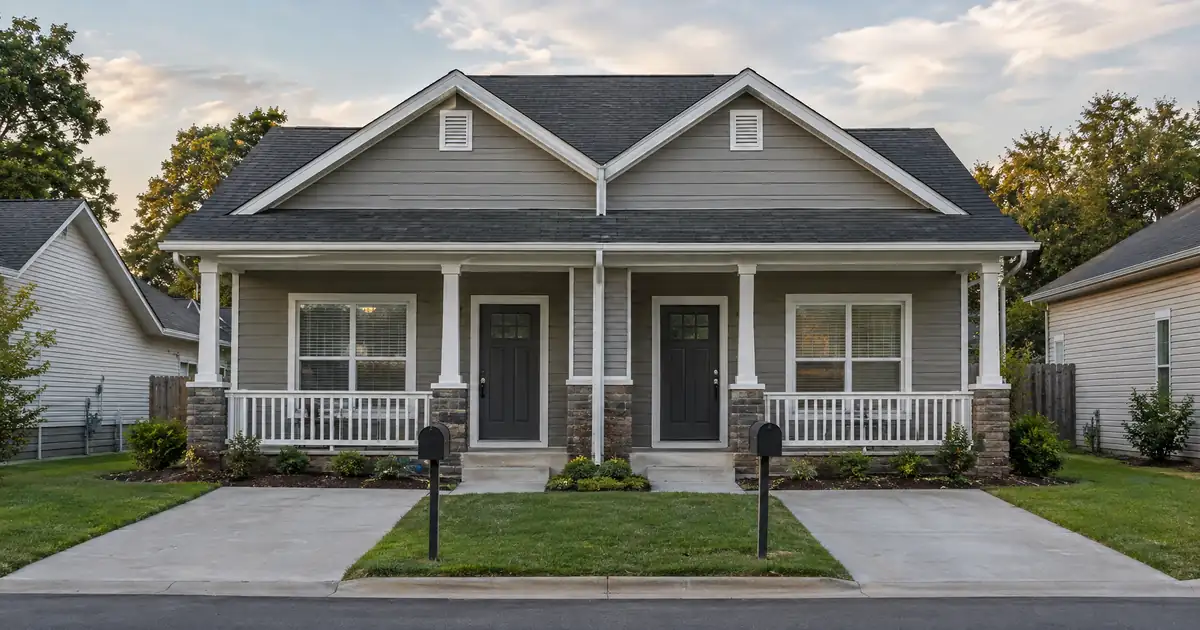
The Congressional Research Service explains that the veteran must occupy the property as a home after the refinance. It also notes that a cash-out, unlike a streamlined refinance, requires an appraisal, a credit check, and full underwriting. VA-guaranteed loans cover dwellings of up to four units, so a duplex, triplex, or fourplex fits. Five units or more does not.
Two other points trip people up:
- The loan being refinanced does not have to be a VA loan. A conventional or FHA mortgage can be paid off with a VA cash-out.
- Past occupancy does not count. “I lived there once” does not satisfy a cash-out. The rule looks at current or intended occupancy.
That second point matters most for investors. The moment you move out and rent every unit, this loan is the wrong tool. Lendmire’s piece Can a Veteran Do a VA Cash-Out on a 2-4 Unit Primary Home? covers the eligibility side in more detail.
Key Terms Defined
Certificate of Eligibility (COE): the VA document that proves you have the service history to use the benefit.
Reserves: verified liquid cash, left over after closing, that could carry your housing payment if income stopped.
PITIA: principal, interest, taxes, insurance, and any association dues. It is the full monthly housing obligation.
DSCR (debt service coverage ratio): the property’s monthly rent divided by its PITIA. It measures whether the rent covers the payment.
Residual income: what is left of your monthly income after the mortgage, debts, and living costs. VA reviews it alongside debt-to-income.
Debt-to-income (DTI): your monthly debts as a share of your monthly income.
Seasoning: the waiting period between buying a property and cashing out on it.
LTV (loan-to-value): the loan balance as a percentage of the property’s value.
How Does Rent on a 2-4 Unit Count in VA Underwriting?
It counts as a discounted add-on to your income, and only after you pass three tests. The rule sits in VA’s underwriting regulation, and Cornell’s Legal Information Institute carries the same text.
For a structure with more than one dwelling unit, here is how it works:
1. Landlord test. Prospective rent is not considered unless you show a reasonable likelihood of success as a landlord. The usual basis is documented experience managing rental units or doing similar collections work.
2. Reserve test. You need verified cash reserves to cover principal, interest, taxes, and insurance for at least 6 months, with no help from the rent.
3. Rent factor. The rent used in the analysis is 75% of the amount on the lease or rental agreement, unless you can document a greater percentage.
That 25% haircut works like a built-in allowance for vacancy and upkeep. The regulation’s standard debt-to-income benchmark is 41% or less, per the same text. VA also checks residual income. Failing one measure does not automatically sink a file, and passing both does not promise approval.
A few things to know about the gap between the rule and the real world:
- Lenders can add overlays. Some count less than 75%, ask for more reserves, or want two years of landlord history. Overlays vary by lender.
- Landlord experience is a real friction point. The regulation ties rent credit to a reasonable likelihood of landlord success, and documented experience is how most lenders measure it. A first-time house hacker should expect questions.
- Refinances follow the same standard. Nothing in VA’s text carves out a separate rent rule for a cash-out, so the refinance application follows the same underwriting logic as a purchase.
Which Rent Number Drives a Cash-Out File?
The lease is the starting point, and the appraiser’s rent opinion is the cross-check. On a 2-4 unit, the appraisal typically includes a small-income-property report with a market-rent schedule. Underwriters compare that schedule to your leases.
When the two agree, the file reads cleanly. When they do not, expect questions. A lease far below market may get used as written. A lease far above market invites doubt about whether the tenant will stay at that figure.
Here is how different unit situations usually play out:
| Unit status | How lenders typically treat it |
|---|---|
| Leased, current lease | Lease amount, discounted to 75% |
| Month-to-month | Often needs support from the rent schedule |
| Vacant | Usually not counted without strong documentation |
| Lease expiring mid-file | Expect a request for a renewal or an updated lease |
| Your own unit | Not rental income, because you live there |
Lender practice differs here, so treat the table as the common pattern rather than a rule. A clean rent roll, meaning a simple list of each unit, tenant, lease end date, and rent, saves a lot of back-and-forth.
What Does Rent Do to the Numbers? Two Quick Scenarios
Rent is added to your effective income, and the new housing payment, which now includes the cash-out balance, is tested against that total. Run the arithmetic in ratios rather than dollars.
A duplex with one unit leased. Say the second unit’s lease amounts to 100 units of rent. Only 75 of those units count toward income. The 6-month reserve test must be passed first, or the 75 counts for nothing.
A triplex with one unit vacant. Both rented units count at 75% of their leases. The vacant unit adds nothing to income. If your personal income already carries the new payment, the file may work without any rent credit at all.
The pattern holds in both cases. Rent helps at the margin. It rarely rescues a file with weak income, thin cash, or no landlord history.
Can Cash-Out Proceeds Count as Reserves?
Generally not. Reserves need to be verified in an account before closing, and lenders typically do not treat home equity as reserves. Proceeds from the loan you are applying for do not exist yet when the file is reviewed.
Treat equity and reserves as two separate tests. A homeowner with large equity but little cash can fail the reserve test outright. How a given lender treats mid-file account movements varies, so ask before you shuffle funds around.
What Rental Income Can’t Do
Rent cannot change the occupancy rule. It cannot turn a primary-residence loan into an investor product. It cannot qualify a fully rented property for a VA cash-out. And it cannot cure missing reserves.
Three common misreadings are worth clearing up:
- “VA counts rent automatically.” It does not. It is conditioned on the landlord test and the reserves.
- “All the rent counts.” Only 75% does, unless more is documented.
- “Equity counts as reserves.” In practice, lenders want verified cash.
When the Home Becomes a True Rental
Once you move out and every unit is rented, a business-purpose loan is the standard fit. DSCR loans are designed for non-owner-occupied investment properties. Because they are business-purpose investor loans, they are reviewed differently from a standard owner-occupied mortgage.
The qualifying basis shifts from your paycheck to the property. A DSCR cash-out qualifies primarily on property-level rental income covering the payment, subject to lender guidelines. Here is what that looks like across the select lenders in Lendmire’s wholesale network:
- Leverage: cash-out refinances on investment properties top out around 75% LTV.
- Seasoning: about 6 months of ownership, measured from title recording, is the common expectation.
- Coverage: 1.00 is where many select programs start. A separate select-lender path goes below 1.00, with leverage and terms adjusted. Stronger ratios open better pricing and leverage.
- Credit: a 620 floor exists in parts of the network. Most programs want around 660, and 700 and above unlocks the strongest leverage tiers.
- Reserves: commonly about 6 months of PITIA, stepping up to about 9 months on loans above $1,500,000. This varies by lender, leverage, and loan size.
- Loan size: up to $3,000,000 on standard programs.
One warning about the ratio. Clearing 1.00 is not the same as positive cash flow. DSCR compares rent to PITIA only. Repairs, vacancy, management, utilities, and capital expenses sit outside the calculation. Treat the number as an eligibility test, not a profit forecast.
Not every property is eligible. Manufactured homes, log homes, and barndominiums are not offered through the network’s DSCR programs. For a full walkthrough of how these loans work, see the complete DSCR loans guide.
Tax treatment can depend on how the funds are used and how the property is held; investors should keep clear records and speak with a qualified tax professional before relying on any deduction.
The Practical Sequence for an Investor
For most house hackers, the smart path is a sequence rather than a single choice:
1. Live in one unit and use the VA loan while you occupy the property.
2. Weigh the VA cash-out against the 6-month cash requirement, the 75% haircut, and the occupancy commitment.
3. Convert to a full rental when you move out.
4. Compare a DSCR cash-out that is reviewed on the property’s rent rather than your personal income.
Frequently Asked Questions
Does the rent from my own unit count?
No. You live there, so it produces no rent. Only the other units’ documented rent can be credited.
Can I qualify for a VA cash-out without counting any rent?
Yes. Rent is an add-on, not a requirement. If your personal income carries the new payment on its own, you can skip the rent credit and the related reserve and landlord tests.
What if I have never been a landlord?
Expect extra scrutiny. The regulation conditions rent credit on a reasonable likelihood of success as a landlord, and documented management or collections experience is the usual proof. Some lenders are flexible and others add overlays, so ask early. Skipping the rent credit is the cleanest workaround.
Can a VA cash-out work on a property that is fully rented?
No. The occupancy requirement applies to the home you refinance. If you have moved out and rented every unit, a business-purpose DSCR cash-out refinance is the more natural fit, with leverage around 75% LTV on a cash-out of a standard investment rental, subject to lender guidelines.
Does clearing 1.00 coverage mean the property makes money?
No. DSCR compares rent to the full monthly housing obligation and nothing else. Vacancy, repairs, management, and utilities all fall outside the ratio, so budget for them separately.
Next Step
If you are buying or refinancing a rental property and want to see how the numbers work, Lendmire can help you compare DSCR loan options based on the property income, credit profile, leverage, and investor goals. Lendmire is a mortgage broker arranging DSCR financing through select lenders in its wholesale network, across 41 markets including Washington, D.C. Approval is not a commitment to lend, and every file is underwritten individually.
Once you have moved out, Lendmire’s guide to a DSCR cash-out refinance on an investment property explains how pulling equity from a rental works.
About Lendmire
Lendmire (NMLS# 2371349) is a mortgage brokerage built around DSCR investor lending, with programs available in 41 markets, including Washington, D.C. DSCR lenders commonly evaluate rental-income coverage instead of personal income paperwork, a practical fit for LLC-owned and multi-property investors. Terms vary by lender, property, leverage, and program. Scotsman Guide named Lendmire a Top Mortgage Workplace in both 2025 and 2026.
Get Started
Ready to find the right loan for you?
In about 30 seconds you can review financing options available for your investment property. No commitment required.
Informational only. Not a Loan Estimate, approval, or commitment to lend. Program availability and eligibility are subject to lender guidelines, credit approval, property review, and underwriting.
References
1. eCFR mirror, 38 CFR 36.4340 (75% rent factor, 41% DTI standard)
2. Congressional Research Service, VA Home Loan Programs
3. eCFR, 38 CFR 36.4340 (VA underwriting standards)
4. Cornell Legal Information Institute, 38 CFR 36.4340
This article is part of Lendmire’s investment property cash-out refinance program — full qualification details, guidelines, and scenarios live on the program page.
Related reading: Cash-Out Refi vs Blanket Loan on 2–4 Unit Rentals · Los Angeles Rental Cash-Out Refinance When Rent Control Caps Income · Should You Refinance a $3 Million Rental With DSCR Cash Out?
Brandon Miller
Founder & CEO, Mortgage Loan Originator, Lendmire LLC
- Mortgage Loan Originator · NMLS# 1129696 · Verify on NMLS Consumer Access
- North Carolina Real Estate Broker · License# 343312 · Verify on NCREC
- North Carolina Insurance Producer · License# 19053198 · Property, Casualty, Life, Health · Verify on NAIC SBS
- Lendmire LLC · Firm NMLS# 2371349 · Verify firm licensure
Legal disclosures. Lendmire (NMLS# 2371349) is a state-licensed mortgage brokerage that arranges financing through wholesale lender relationships. Lendmire is not a direct lender, depository institution, or registered financial advisor. The discussion above is general informational content about real estate financing — it is not financial, legal, or tax advice, and readers should consult licensed professionals for guidance on their individual circumstances. Loan inquiries are subject to lender underwriting; this article does not represent a commitment to lend. Loan terms, rates, and qualification standards vary by borrower, property, and state, and are subject to change at any time. Equal Housing Opportunity. NMLS Consumer Access: nmlsconsumeraccess.org.