
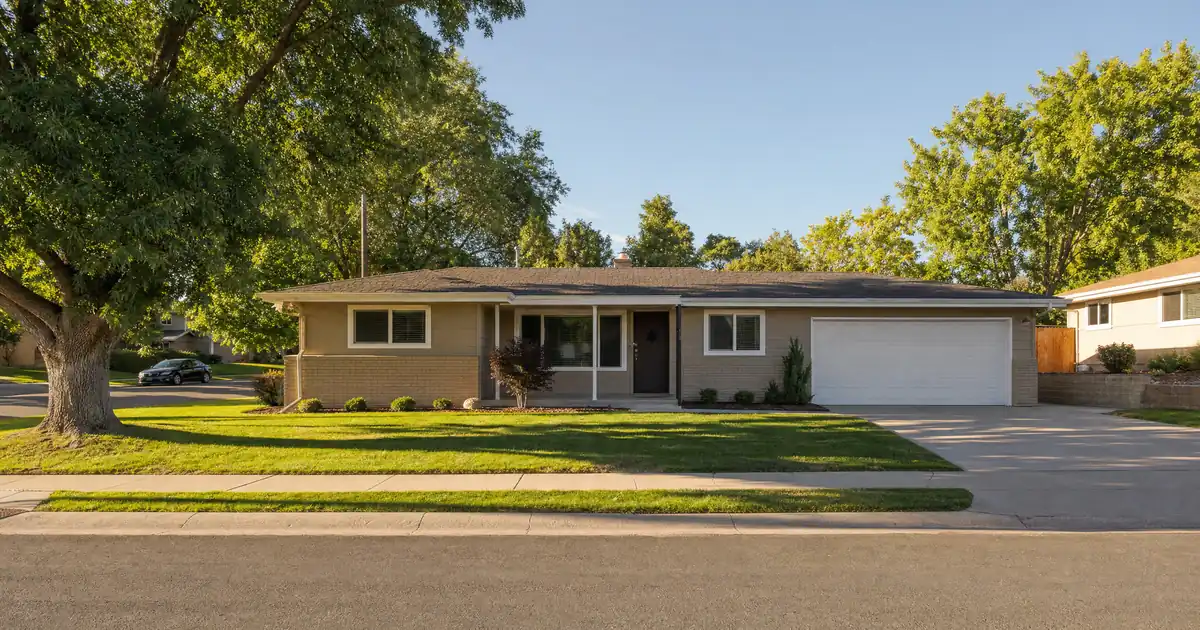
The Quick Read: A short-term rental in West Virginia can be financed with a DSCR loan, but the lender qualifies the property on its short-term rental income, not on your paycheck. That means the underwriting math runs differently than it does for a long-term rental — different income sources, different documentation, and a permitting check most conventional buyers never think about. Most programs want a 640+ credit score and roughly 12 months of hosting or landlord experience on short-term rental files, and the property still has to legally operate as a short-term rental before any of that income counts.
The Short Version
- DSCR loans qualify on the property’s rental income divided by its monthly obligation — not on traditional personal-income documentation or W-2s.
- Short-term rental income gets calculated from AirDNA projections, documented platform earnings, or an appraiser’s STR-specific analysis — never a nightly rate multiplied by 30.
- Purchase leverage on STR files typically tops out around 75% loan-to-value on the strongest files; cash-out refinancing tops out closer to 70%.
- West Virginia has no single statewide short-term rental law — permitting and zoning happen at the city and county level, and that’s a closing risk, not paperwork.
- Manufactured homes, log homes, and barndominiums are not offered under these DSCR programs, which matters in a state where mountain-cabin inventory is common.
Key Terms Defined
DSCR (debt service coverage ratio) — a number that compares a property’s monthly rental income to its monthly obligation; above 1.00 means the rent covers the payment.
Short-Term Rental Calculator
Run the STR numbers in West Virginia
Rate is an editable market assumption — the live benchmark loads when available.
Prefilled with starting assumptions — enter your nightly rate, occupancy, taxes, and insurance for a more accurate picture.
Short-term rental income is documented with a 12-month history or a market data report. Program parameters update from Lendmire’s centralized guideline source.
Fallback assumption · General Freddie Mac market benchmark, not a Lendmire loan offer. Nightly rate, occupancy, taxes, and insurance are editable estimates. Qualifying income for short-term rentals varies by program — some use appraisal market rent, others use documented STR history or projections — and is confirmed in underwriting. Not a Loan Estimate, approval, or commitment to lend. Program availability and eligibility are subject to lender guidelines, credit approval, property review, and underwriting.
PITIA — principal, interest, taxes, insurance, and association dues, the full monthly obligation on the bottom half of the DSCR equation.
LTV (loan-to-value) — the loan amount expressed as a percentage of the property’s value or purchase price; a lower LTV means more equity down.
Non-QM (non-qualified mortgage) — a loan type outside the federal Qualified Mortgage rules, which is why DSCR programs can qualify a borrower on property income instead of personal income.
AirDNA haircut — the practice of discounting a short-term rental’s projected gross revenue, commonly to somewhere around 70-80% of the raw projection, to account for vacancy, cleaning fees, and seasonality before it counts as qualifying income.
Business-purpose loan — a loan made for an investment property rather than a primary residence. DSCR loans are business-purpose loans, and that classification is what lets them skip the consumer-mortgage income rules built for owner-occupied homes.
Want the fuller mechanics before applying any of this to a short-term rental specifically? Lendmire’s complete DSCR loans guide walks through the base program end to end.
How Lenders Actually Underwrite Short-Term Rental Income
Short-term rental underwriting runs on a different income source than a long-term lease, and getting that source right decides whether the file clears. Here’s the order it actually happens in, deal after deal:
1. Pick the income source. The file leans on one of three inputs — 12 months of documented platform earnings from Airbnb or VRBO, an AirDNA market projection, or an appraiser’s short-term rental income analysis. A property with an established booking history usually gets the strongest number, because actual deposits beat a projection every time.
2. Apply the haircut. If the income source is a market projection rather than documented history, most programs discount it. A property projecting a strong annual gross on AirDNA typically gets qualified on somewhere around 70-80% of that figure once platform commissions, cleaning turnover, and seasonal vacancy get priced in — and it’s also where two lenders can land 20-30% apart on the identical property (the haircut is the single biggest variable in STR underwriting).
3. Run the ratio. Whatever monthly income survives the haircut gets divided by PITIA. That’s the DSCR. The formula never changes between a long-term rental and a short-term one — only the income number going into the top of the equation changes.
4. Check it against the floor. Select programs in the wholesale network start their purchase floor around 1.00 on short-term rental files. Refinance files see a similar starting floor, also around 1.00. That’s a starting point for specific programs, not a universal rule — stronger coverage opens better leverage, and weaker coverage narrows the options.
5. Confirm legality before any of it counts. None of the income math matters if the property can’t legally operate as a short-term rental in its location. This is a gatekeeping step, not a formality. A lender that discovers a local permit cap or an HOA short-term rental ban mid-file will pull the STR income off the table and requalify on long-term rent instead.
6. Reserves. Because short-term rental income swings by season more than a signed 12-month lease does, reserves act as the cushion against a slow month. Requirements vary by lender, leverage, and loan size — commonly around six months of PITIA on mid-size loans, sometimes waived on conservative rate-term refinances at modest leverage, and stepping up toward nine months on larger loan amounts.
7. Closing. Most DSCR files close in the name of an LLC or similar entity rather than an individual borrower, subject to lender program eligibility — one reason DSCR structures fit investors who want rental property kept separate from personal assets.
Is Your West Virginia Property Even Eligible?
Eligibility comes down to two separate checks: what the property is, and where it sits. Get either one wrong and the file stalls no matter how strong the projected income looks.
On property type, single-family homes and condos are the bread and butter of STR-DSCR programs. Manufactured homes — both single- and double-wide — along with log homes and barndominiums are not offered under these DSCR programs. That exclusion matters more in West Virginia than in most states, given how common log-construction cabins are in the mountain and lake markets that draw short-term rental demand in the first place. An investor eyeing a rustic-style cabin near a ski or whitewater corridor should confirm construction type before falling for the listing photos.
On location, West Virginia takes a hands-off approach at the state level and leaves short-term rental regulation almost entirely to cities and counties. RedAwning notes there’s no single, comprehensive statewide short-term rental law — instead, a patchwork of local ordinances and permit requirements governs whether a given address can legally operate as a nightly rental. The exact same property type, financed the exact same way, can be a clean approval in one county and a dead file in the next, purely because of local permitting. Short-term rental rules can vary by city, county, HOA, and property type, so investors should confirm local rules before relying on projected rental income to qualify.
Condo purchases add a second layer. A condo project review looks at whether the HOA’s governing documents actually permit short-term or transient rentals — many buildings cap minimum lease terms or ban nightly rentals outright, regardless of what local zoning allows. A condo that’s non-warrantable because of pending litigation or mandatory rental pooling doesn’t clear under any rental strategy, short-term or long-term. That’s a collateral problem, not a rental-strategy problem.
The DSCR Formula — And What the Math Looks Like
The formula is simple even when the inputs aren’t: monthly rental income divided by PITIA equals the coverage ratio. Above 1.00 means the rent, as underwritten, covers the full monthly obligation; below 1.00 means it doesn’t, at least not on paper.
Consider an investor evaluating a three-bedroom cabin in one of West Virginia’s tourism corridors. A published report pulls comparable nightly rentals matched by bedroom count and amenities and produces a projected gross annual revenue figure. The underwriter applies a haircut — call it the middle of the typical 70-80% range — to land on a monthly qualifying income figure. That number gets divided by PITIA. If the result lands somewhere in the 1.15x-1.25x range, the file clears comfortably above the 1.00 floor select STR programs use as a starting point on purchases. If the haircut-adjusted number lands closer to 0.90x, the file still has paths — sub-1.00 coverage is available through select lenders in the network, typically with adjusted leverage and terms, rather than an automatic decline.
Worth being blunt about one thing: clearing 1.00 on this ratio is not the same as positive cash flow. DSCR only compares rent to PITIA. Repairs, vacancy beyond what the haircut already assumes, property management fees, utilities, and furnishing costs all sit outside the equation entirely. A property that clears 1.20x on paper can still run thin once those real operating costs get layered in (insurance and turnover costs alone can erase that cushion in a slow season) — which is exactly why the haircut exists in the first place, as a buffer, not a guarantee.
STR-DSCR vs. Long-Term Rental DSCR: The Real Differences
The core formula never changes between a short-term rental file and a long-term rental file — only the income source and the leverage ceiling shift.
| Factor | STR-DSCR | LTR-DSCR |
|---|---|---|
| Income source | AirDNA projection, platform history, or STR appraisal | Signed lease or Form 1007 market rent |
| Landlord/host history | Typically around 12 months expected | Not usually required |
| Purchase LTV | Up to 75% on the strongest files | 75-80% typical, up to 85% on select high-leverage programs |
| Cash-out/refinance LTV | Up to 70% | Up to 75% |
| Credit score | 640+ typical | 660+ on most files, with a 620 floor in parts of the network |
A quick note on the appraisal side, because it trips people up. Fannie Mae’s Form 1007 rent schedule is built to estimate long-term monthly lease value, not nightly rental income. It would be wrong for an appraiser to just multiply a nightly rate by 30 — that ignores furnishings, vacancy, and the operating expenses baked into a short-term rental business. On a short-term rental file, the 1007 often shows up as a conservative backstop number, while AirDNA or documented platform earnings carry the actual qualifying weight.
For a broader look at where DSCR and conventional investment loans diverge, Lendmire’s DSCR vs. conventional comparison covers that ground in more depth.
Where the General Rule Breaks: Edge Cases Worth Knowing
A handful of scenarios don’t follow the standard playbook above, and knowing them ahead of time saves wasted contract time.
Seasonal markets get annualized, not peak-season, treatment. A cabin near a ski slope or whitewater corridor might book heavily for a few months and sit mostly empty the rest of the year. Underwriting looks at the annualized average, not the best month. An investor pitching peak-season numbers alone will be disappointed by the qualifying figure.
Not every lender in a network even offers STR underwriting. Roughly half of the DSCR lender universe will quote a short-term rental with some form of projected income; the other half sticks to long-term rental underwriting only, regardless of the property’s actual use. Not universal. Worth shopping the file rather than assuming any single lender will touch it.
Personal use disqualifies the whole structure. A DSCR loan is built for a property the borrower doesn’t occupy. If the plan is a mountain cabin the family uses several weeks a year and rents the rest of the time, that property likely gets classified as a second home rather than an investment property, and a different loan product applies entirely.
Prepayment penalty treatment isn’t uniform. Because DSCR loans are non-QM business-purpose products, they aren’t bound by the consumer-mortgage rules that cap prepayment penalties on owner-occupied loans. Whether a penalty applies, and for how long, depends on the individual lender’s program terms — worth confirming loan-by-loan rather than assuming.
No-ratio structures exist, but narrowly. For borrowers who already own a primary residence, some lenders in the network offer no-ratio qualification paths that don’t hinge on a numeric DSCR floor at all. A select-lender option, not a broad program feature, and it comes with its own tradeoffs in leverage and terms. Terms vary by lender guidelines, property type, leverage, credit profile, and full file review.
DSCR vs. conventional financing
Two common ways to finance an investment property in this market. They qualify you differently — here’s how investors weigh them.
Why investors choose it
- Qualifies on the property’s rental income — no personal tax returns, W-2s, or pay stubs needed to document income.
- No personal debt-to-income ceiling to clear, so existing mortgages and obligations don’t cap your borrowing the same way.
- Can be closed in an LLC, keeping the property inside a business entity.
- Built for scaling — not held to the limit on number of financed properties that conventional financing applies.
- Underwriting centers on the deal: generally qualifies when the rent covers the payment, a 1.00x coverage ratio being a common baseline (confirmed in underwriting).
- Designed specifically for investment property, including long-term and, where the program allows, short-term rentals.
Where it’s strong
- Often the lowest ongoing financing cost for a buyer who fully qualifies on personal income — a fit for a first property or a cost-first purchase.
Trade-offs for investors
- Requires full personal income documentation and must fit within a debt-to-income limit — salary, existing debts, and other mortgages all count.
- Typically held in your personal name rather than a business entity.
- Caps how many financed properties you can carry, which can become a ceiling as a portfolio grows.
- Evaluates you as a borrower as much as the property, which usually means more paperwork.
How investors usually choose: a first or single property often optimizes for the lowest financing cost; portfolio builders often optimize for leverage, vesting in an LLC, and scaling past conventional caps. The right answer depends on your goals, the property, and current guidelines — both paths run through select lenders in Lendmire’s wholesale network, with eligibility and terms confirmed in underwriting.
Taxes, Tourism, and the West Virginia Backdrop
West Virginia’s biggest short-term rental demand driver is tourism, and the numbers back it up. New River Gorge National Park and Preserve pulled 1,811,937 visitors, a 6.31% increase over the prior year, according to WVVA News — a pace that outran national park visitation growth overall. The National Park Service counted New River Gorge among the parks that set new visitation records as part of a system-wide year of more than 323 million recreation visits. That’s the demand base an AirDNA report or a platform earnings history is ultimately reflecting when it prices a cabin or cottage near the Gorge.
On tax compliance, West Virginia applies a 6% state sales tax to short-term rentals, and West Virginia Tax Division guidance notes that a municipal sales tax stacks on top when the property sits inside a city that imposes one. None of that changes how a DSCR loan is reviewed around the property — the loan is reviewed on gross or haircut-adjusted income — but it directly affects the net cash flow an investor should model after closing. Tax treatment can depend on how the funds are used and how the property is held, so investors should keep clean records and talk to a qualified tax professional before relying on any deduction.
What the Decision Actually Looks Like for an Investor
The real question isn’t “can I get a DSCR loan on a West Virginia short-term rental.” It’s whether the property’s actual, permitted, seasonally-adjusted income clears the bar a lender will accept, and whether that leaves enough margin for the real costs DSCR math doesn’t count. Those are two different questions, and conflating them is the most common mistake this reader makes.
Start with legality, because it’s a more affordable thing to check and the most expensive thing to skip. Confirm the county or municipality permits short-term rental use, and confirm the HOA — if there is one — doesn’t cap lease terms below what a nightly rental needs. Only after that comes the income question: does documented history exist, or is the file leaning on a projection? A property with 12 months of actual platform deposits is a stronger file than an identical property backed only by an AirDNA estimate, because the underwriter isn’t guessing.
The stronger play for a first-time short-term rental buyer might be building three to six months of documented booking history on a smaller property before scaling into a bigger purchase-style file — though an investor with strong AirDNA comps in a proven corridor could reasonably argue for moving on the projection alone. Genuinely depends on how conservative the buyer wants the first file to be.
From there, it’s a leverage-and-credit conversation. Most STR files in the wholesale network want a 640+ score and land around 75% LTV on purchase, closer to 70% on a cash-out refinance. An investor already holding a short-term rental and looking to pull equity for the next purchase should look at how that math plays out specifically — Lendmire’s guide to refinancing a short-term rental walks through the seasoning and coverage considerations on that side of the transaction. For a broader look at how short-term rental financing works across different markets, the complete guide to short-term rental financing covers the mechanics that apply regardless of state — the same underwriting logic that governs a West Virginia cabin governs a short-term rental purchase in Texas or anywhere else in the network’s footprint. Exact terms depend on the lender’s guidelines, property type, leverage, and a full review of the borrower’s file.
Lendmire, NMLS# 2371349, arranges DSCR financing for short-term rental investors through select lenders across a wholesale network spanning 40 states plus Washington, D.C., West Virginia included. The firm doesn’t fund or approve loans directly; it structures files and places them with lenders whose guidelines fit the property and the borrower’s profile.
If you’re evaluating a short-term rental purchase or refinance in West Virginia and want to see how the numbers actually run, Lendmire can help compare DSCR loan options based on the property’s projected income, credit profile, target leverage, and investor goals. Reach the team at 828-256-2183 or start with a quote request to see what a specific property and credit profile support.
Loan approval is never guaranteed, and nothing here is a commitment to lend. Every scenario described here is subject to lender approval and to borrower, property, and program guidelines that vary by file. This article is general information, not financial, legal, or tax advice.
Frequently Asked Questions
Can a DSCR loan finance an Airbnb or VRBO property in West Virginia?
Yes, through select lenders that offer STR-specific underwriting — not every lender quotes short-term rental income, so the file needs to go to one that does. Qualification runs primarily on the property’s projected or documented rental income rather than personal income documentation, subject to lender guidelines, and the property still has to be legally permitted to operate as a short-term rental where it sits.
Do I need a year of Airbnb history before I can qualify?
Not necessarily, but it helps. Most STR-DSCR programs want around 12 months of hosting or landlord experience, and a property with documented platform earnings typically underwrites more favorably than one relying purely on an AirDNA projection, because actual deposits remove the guesswork from the income figure.
What credit score do I need for a short-term rental DSCR loan in West Virginia?
Most STR programs in the wholesale network look for a 640+ score, higher than the credit floor on a standard long-term rental DSCR file. Borrowers below that threshold may still find options, but they typically come with reduced leverage or different pricing, subject to lender guidelines.
Does West Virginia require a special license for short-term rentals?
There’s no single statewide license, but permitting requirements exist at the city and county level and vary widely across the state. Because those local rules affect whether a lender can even use short-term rental income to qualify the loan, confirming permit status before signing a purchase contract avoids a late-stage underwriting problem.
Can I use a DSCR loan on a mountain cabin built as a log home?
No — log homes, along with manufactured homes and barndominiums, are not offered under these DSCR programs. Worth checking early in West Virginia specifically, since log-construction cabins are common inventory in several of the state’s tourism corridors.
How do you qualify for a DSCR loan in West Virginia on a short-term rental?
Qualification centers on the property’s rental income relative to its monthly obligation rather than the borrower’s personal income. That means documenting platform earnings, an AirDNA projection, or an appraiser’s STR analysis, meeting the lender’s credit and reserve requirements, and confirming the property is legally permitted to operate as a short-term rental in its specific city or county.
What documentation do I need to close a short-term rental DSCR loan in West Virginia?
Expect to provide credit documentation, reserve statements, entity paperwork if closing in an LLC, and whatever supports the income source being used — platform earnings history, an AirDNA report, or an appraiser’s short-term rental income analysis. Local permit or licensing confirmation is often part of the file as well, given how West Virginia’s permitting patchwork works.
Investors focused on short-term rentals can review DSCR loans for Airbnb and short-term rentals.
About Lendmire
As a non-QM mortgage broker (NMLS# 2371349), Lendmire facilitates DSCR investor loans across 41 markets, including Washington, D.C. DSCR eligibility is generally reviewed around property-level rental income instead of personal income documentation, subject to lender guidelines, serving LLC-structured portfolios and self-employed borrowers who don’t fit conventional boxes. Lendmire is a two-time Scotsman Guide Top Mortgage Workplace (2025, 2026).
Scotsman Guide’s Top Mortgage Workplace lists for 2025 and 2026 document Lendmire’s recognition.
Get Started
Ready to find the right loan for you?
In about 30 seconds you can review financing options available for your investment property. No commitment required.
Informational only. Not a Loan Estimate, approval, or commitment to lend. Program availability and eligibility are subject to lender guidelines, credit approval, property review, and underwriting.
References
1. RedAwning
2. McKissock Learning — Form 1007’s Impact on Short-Term Rental Appraisals
3. WVVA News — Record Visitation, New River Gorge National Park and Preserve
5. West Virginia Tax Division — TSD-435 Short-Term Leases and Rentals
This article is part of Lendmire’s short-term rental loan program — full qualification details, guidelines, and scenarios live on the program page.
Related reading: DSCR Cash Out Refinance West Virginia · Super Jumbo DSCR Loans In West Virginia: Complete Guide · DSCR Loans in Charleston, West Virginia: Investor Financing for South Hills, Kanawha City, Elk City & Real Estate Investors
Guides: Short-Term Rental Loans in West Virginia
Brandon Miller
Founder & CEO, Mortgage Loan Originator, Lendmire LLC
- Mortgage Loan Originator · NMLS# 1129696 · Verify on NMLS Consumer Access
- North Carolina Real Estate Broker · License# 343312 · Verify on NCREC
- North Carolina Insurance Producer · License# 19053198 · Property, Casualty, Life, Health · Verify on NAIC SBS
- Lendmire LLC · Firm NMLS# 2371349 · Verify firm licensure
Compliance and disclosures. Lendmire (NMLS# 2371349) is a licensed mortgage broker and is not a direct lender, depository institution, financial advisor, or tax professional. Content in this article is general market analysis and educational information — not financial, legal, or tax advice for any specific situation. Lendmire does not guarantee loan approval; every transaction is subject to underwriting by the funding lender. Mortgage pricing and loan program guidelines are subject to change at any time without notice and vary by borrower characteristics, property type, and state regulations. Lendmire complies with Equal Housing Opportunity. Licensure verification: NMLS Consumer Access.