
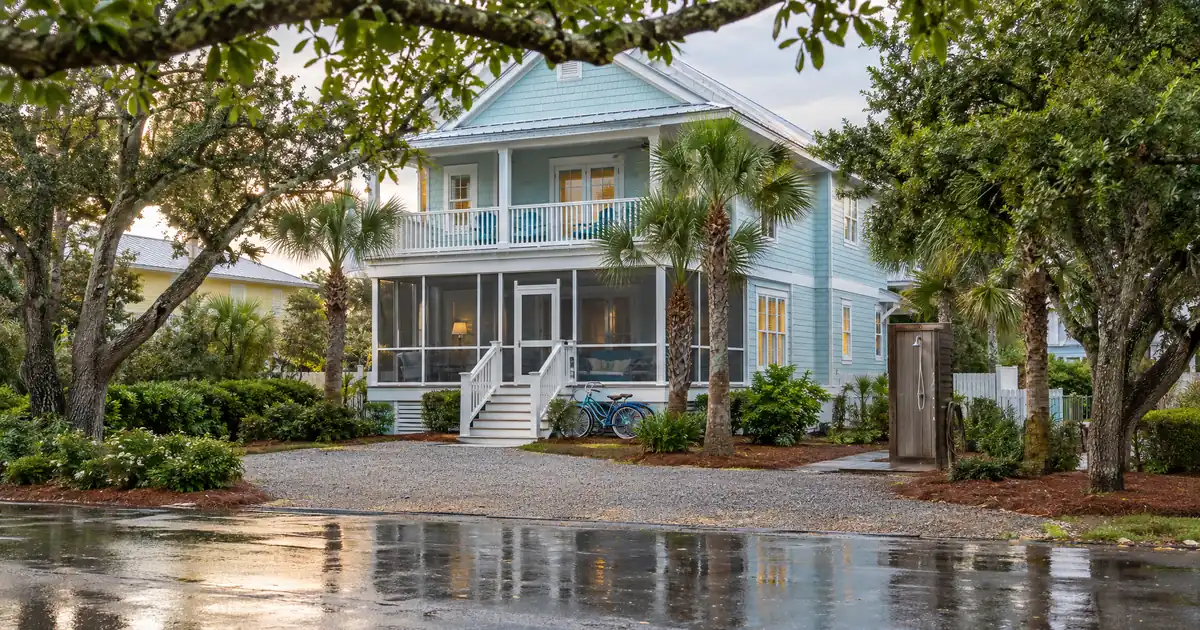
The Quick Read: Neither property wins on the loan side, because a DSCR lender treats both as short-term-rental collateral and qualifies them on rental income against the full housing payment. The real differences are income evidence and property type. An event-adjacent house offers spiky, calendar-driven revenue that lenders average across the full year. A resort property offers steadier seasonal demand but often carries building-level rules that narrow the lender pool.
- Both are underwritten on documented or projected rental income, subject to lender guidelines.
- Short-term-rental purchases typically reach up to 75% LTV on the strongest files; refinances and cash-outs top out around 70%.
- Expect a 640+ credit score and about 12 months of host or landlord experience.
- Clearing 1.00 coverage is not the same as positive cash flow.
- Resort condos face project-level screens that detached houses near a venue usually avoid.
Here is the honest answer on who each option is for. The house near a stadium or convention center suits an investor who wants a detached property, simple title, and no association, and who can live with income concentrated in a handful of event windows. The resort property suits an investor who wants broader demand that spreads across a season, and who will do the homework on building rules, rental pools, and association restrictions. You are choosing between two demand patterns and two sets of gatekeepers. You are not choosing between two loan products.
Short-Term Rental Calculator
Run the STR numbers in your market
Rate source: Freddie Mac 30-yr average via FRED® — Federal Reserve Bank of St. Louis · effective Oct 15, 2026
Prefilled with starting assumptions — enter your nightly rate, occupancy, taxes, and insurance for a more accurate picture.
Short-term rental income is documented with a 12-month history or a market data report. Program parameters update from Lendmire’s centralized guideline source.
As of Oct 15, 2026 · General Freddie Mac market benchmark, not a Lendmire loan offer. Nightly rate, occupancy, taxes, and insurance are editable estimates. Qualifying income for short-term rentals varies by program — some use appraisal market rent, others use documented STR history or projections — and is confirmed in underwriting. Not a Loan Estimate, approval, or commitment to lend. Program availability and eligibility are subject to lender guidelines, credit approval, property review, and underwriting.
A DSCR loan is a loan that qualifies primarily on property-level rental income covering the payment, subject to lender guidelines. DSCR stands for debt service coverage ratio. The lender divides qualifying monthly income by the full monthly obligation: principal, interest, taxes, insurance, and any HOA dues. The industry shorthand for that obligation is PITIA. Across the wholesale network Lendmire places files with, select programs start at 1.00 coverage, and stronger ratios open better leverage and terms.
Side-by-Side
| Factor | Event-Adjacent House | Resort STR |
|---|---|---|
| Review basis | Rental income vs. PITIA | Rental income vs. PITIA |
| Typical property type | Detached house, small multifamily | House, condo, condotel unit |
| Income pattern | Spiky, tied to event calendar | Seasonal, smoother curve |
| Documentation | Host history or STR projection | Host history or STR projection |
| Entity vesting | Usually simple for a detached house | Simple for a house; building rules for condos |
| Main gate | Local permit and zoning rules | HOA rules, building classification |
| Reserve expectations | Vary by lender, leverage, loan size | Vary by lender, leverage, loan size |
| Lender pool | Broad for detached houses | Narrower for rental-pool or condotel units |
The table shows published industry norms and how the network commonly treats each scenario. Programs vary and every file is underwritten individually.
How a Lender Sees Both Properties
Lenders ask four questions, in this order. Does the program accept short-term rentals on this property type? Is short-term use legal and allowed by the association or deed? What income source is used, and is it reduced? And does the result clear the ratio against the full payment?
Most programs we place files with accept one of three income sources:
- Operating history. Platform reports, bank statements, or a management statement, usually covering about 12 months. This is generally the most favorable evidence, because a full year smooths seasonality.
- A third-party projection or appraiser analysis. This applies when you are buying with no history, or converting a long-term rental. Market-data tools and a labeled appraiser short-term analysis are the usual forms.
- Long-term market rent. This is the conservative fallback, and it often lands well below what a good short-term rental earns.
Many lenders also apply a haircut to gross short-term revenue before dividing. The haircut is not uniform, and it can differ between a projection and documented history.
The appraisal form matters here. Fannie Mae’s appraiser guidance describes the 1007 rent schedule as a monthly-rent estimate that was not designed for single-family homes used as short-term rentals, because those are typically booked nightly like a hotel. DSCR loans are not agency products, so this is contrast only. But it explains why a file that leans on a plain long-term rent schedule can understate a property that would clear 1.00 on real short-term income. HousingWire makes the same point, noting that nightly pricing, seasonality, event spikes, and cleaning and management costs are variables a monthly-rent form can’t capture.
When the Stadium or Convention Center House Is the Better Fit
An event-adjacent house is the better fit when you want a detached property and fewer gatekeepers. There is no condo project to screen, no rental pool, and usually no association dues in the payment. Entity vesting is generally simpler on a detached house, subject to program eligibility.
The demand is real but lumpy. Apartments.com’s landlord guide, citing AirDNA data, reports Louisville’s average daily rate rose about 144% to $714 around the Kentucky Derby. Rove Travel says homes near venues can earn two to three times typical nightly rates during major sports events, with stays concentrated in windows of two to five nights.
Those numbers are exciting, and underwriters know it. Peak weekends do not carry a file. A lender averages the full cycle, and a trailing peak-season window is unlikely to be accepted as representative. Picture an investor with a house near an arena who shows three strong months and nine thin ones. The coverage figure is the year, not the best quarter.
Projections can also overshoot. KCUR reported that visitor inflow for a major Kansas City event might not match early projections, with demand strongest near the stadium and for lower-priced listings. A projection built on a one-time mega-event is weaker evidence than multi-year history. It may be discounted if demand doesn’t repeat.
An event house fits you if:
- You can document a full year of bookings, or your projection rests on recurring events rather than a one-off.
- The permit and zoning picture is clear. Event-adjacent neighborhoods are often residential, so this is the first gate to check.
- You have reserves to carry slow stretches. Reserves vary by lender, leverage, and loan size, and are commonly around six months of PITIA on many files.
- You are comfortable with concentration risk. If the venue’s calendar thins, a team relocates, or a convention cycle slows, coverage moves with it.
A practical stress test: rerun the file with the strongest event windows removed, then with only the base-demand months. If the ratio only clears 1.00 when every event hits, the file is thin. In that case, a larger down payment can lift coverage by lowering the payment. It will not erase leverage caps, credit floors, or reserve rules. The strongest files clear both tests: enough equity and enough rental coverage.
When the Resort Short-Term Rental Is the Better Fit
A resort rental is the better fit when you want demand that spreads across a season instead of spiking on a calendar. Summer beach or winter ski demand is still seasonal, but it is handled the same way: full-cycle averaging. A resort house with a year of history often produces a more defensible average than an event house, because there are more bookable weeks.
The catch is the building. A resort house is straightforward. A resort condo is a different animal. Buildings that allow short-term rentals often fall outside the agency “warrantable” rules. Non-warrantable is a financing label tied to the project, not a defect in the unit. Common triggers include high investor concentration, commercial space, one owner holding many units, HOA delinquency, and developer control. Many of these can still work with a DSCR lender, but the lender pool narrows.
Condotels and rental pools go a step further. In a mandatory rental pool, an operator splits revenue with owners. You don’t control occupancy, and only your share counts as income. Treat that as a “which lenders will look” question, not an automatic no. Then check the association’s governing documents: if they ban rentals at your planned stay length, that is a hard stop.
A narrow lender pool also narrows your pool of future buyers, so think about your exit before you buy. One thing is not in doubt: manufactured homes, log homes, and barndominiums are not offered in the network’s DSCR programs, and some resort-area cabins fall into those categories.
A resort property fits you if:
- You want a detached house, or a condo in a building that clearly permits your stay length.
- You can document a year of hosting, or support a purchase projection with comparable resort listings.
- You value steadier demand and can accept more building-level paperwork.
Where Most Investors Get It Wrong
Three mistakes show up repeatedly in this comparison.
Treating peak pricing as qualifying income. A good year of events does not make a good ratio. Lenders average the cycle and may haircut a projection.
Equating a ratio above 1.00 with positive cash flow. DSCR compares rent to PITIA only. Vacancy, repairs, management, cleaning, utilities, furniture, and capex all sit outside it, and short-term rentals carry more of those costs than long-term ones. A property can clear 1.00 and still lose money.
Assuming any lender will do short-term rentals. Many lenders won’t touch them, and others only on conservative terms. This is exactly why a broker who sees many lenders’ guidelines matters. Network programs differ on seasoning of host history, haircuts, and property types, and the right match depends on the file.
Say a file comes in near the line. Coverage below 1.00 is available through select lenders in the network, with leverage and terms adjusted, while 1.00 is where many select programs start. Those are different paths, so a borderline event house may have options, but they cost something in leverage or terms. A first-time host with no history on either property type will lean on a projection or appraiser opinion, which is the weakest evidence of the three.
DSCR vs. conventional financing
There are two common ways to finance an investment property, and they qualify you differently — here’s how investors weigh them.
Why investors choose it
- Qualifies on the property’s rental income — no personal tax returns, W-2s, or pay stubs needed to document income.
- No personal debt-to-income ceiling to clear, so existing mortgages and obligations don’t cap your borrowing the same way.
- Can be closed in an LLC, keeping the property inside a business entity.
- Built for scaling — not held to the limit on number of financed properties that conventional financing applies.
- Underwriting centers on the deal: generally qualifies when the rent covers the payment, a 1.00x coverage ratio being a common baseline (confirmed in underwriting).
- Designed specifically for investment property, including long-term and, where the program allows, short-term rentals.
Where it’s strong
- Often the lowest ongoing financing cost for a buyer who fully qualifies on personal income — a fit for a first property or a cost-first purchase.
Trade-offs for investors
- Requires full personal income documentation and must fit within a debt-to-income limit — salary, existing debts, and other mortgages all count.
- Typically held in your personal name rather than a business entity.
- Caps how many financed properties you can carry, which can become a ceiling as a portfolio grows.
- Evaluates you as a borrower as much as the property, which usually means more paperwork.
How investors usually choose: a first or single property often optimizes for the lowest financing cost; portfolio builders often optimize for leverage, vesting in an LLC, and scaling past conventional caps. The right answer depends on your goals, the property, and current guidelines — both paths run through select lenders in Lendmire’s wholesale network, with eligibility and terms confirmed in underwriting.
Program Parameters for Short-Term Rentals
For short-term-rental collateral, purchase leverage typically tops out at 75% LTV on the strongest files, and refinance and cash-out loans typically top out around 70%. LTV is loan-to-value: the loan balance divided by the property’s value. Expect a credit score of 640 or better, about 12 months of landlord or host experience, and a 1.00 coverage floor on both purchases and refinances in select programs. Loan sizes run up to $3,000,000 on standard programs. Terms are built around the 30-year fixed, with extended terms and interest-only periods available through select lenders. All of this is subject to lender guidelines, and every file is underwritten individually.
Both properties can be vested in an LLC, subject to lender program eligibility. For more on how the pieces fit, see Lendmire’s complete DSCR loans guide. If you are still deciding between a resort market and a suburban one, Lendmire’s piece Suburban vs Resort-Market Short-Term Rental on a DSCR Loan covers that choice directly.
A Balanced Verdict
Pick the event-adjacent house if you value a detached property with simple title and can prove or credibly project recurring event demand. Accept that your income is concentrated and your local permit risk is front and center. Pick the resort rental if you value broader seasonal demand and can clear the building and association screens. Accept that the lender pool may narrow if you buy a condo or condotel.
If neither clears 1.00 on short-term income alone, the long-term rental fallback is worth running. It is conservative, but it can win when event or seasonal revenue is too uncertain to underwrite. If you are buying or refinancing a rental property and want to see how the numbers work, Lendmire can help you compare DSCR loan options based on the property income, credit profile, leverage, and investor goals. Reach the team at 828-256-2183 or request a quote through the site.
Frequently Asked Questions
Can I qualify on a house near a stadium?
Yes, if the program accepts short-term rentals on that property type and the income evidence supports the ratio. Lenders typically look at about 12 months of hosting history or a market-data projection, averaged across the full year. Qualification is subject to lender guidelines, credit approval, and property review.
Does a resort location make approval easier?
Not automatically. A resort house faces the same income test as an event house. A resort condo adds project-level screens like rental pools, investor concentration, and association rules, which can narrow the lender pool.
What if the property has no short-term history?
Underwriting falls back on a third-party projection, an appraiser’s short-term analysis, or long-term market rent. A projection may be reduced before the ratio is calculated. History is generally stronger evidence than a forecast.
What if my coverage is below 1.00?
Programs below 1.00 are available through select lenders in the network, with leverage and terms adjusted. A larger down payment can lift coverage, but it does not remove credit, reserve, or property-eligibility rules.
Can I use the property personally?
DSCR loans are designed for non-owner-occupied investment properties, and because they are business-purpose investor loans, they are reviewed differently from a standard owner-occupied mortgage. Personal-use second-home loans are a different tool, and rent generally cannot help qualify for them.
Tax treatment varies; consult a qualified professional.
About Lendmire
Lendmire is a non-QM mortgage brokerage (NMLS# 2371349) arranging DSCR investor loans in 41 markets, including Washington, D.C., through wholesale and investor-lending channels. DSCR loans are evaluated by the lender on rental income rather than personal income, subject to lender guidelines — a fit for LLC-owned portfolios, self-employed investors, and operators scaling beyond conventional loan caps. Recognized as a Scotsman Guide Top Mortgage Workplace in 2025 and 2026.
Get Started
Ready to find the right loan for you?
In about 30 seconds you can review financing options available for your investment property. No commitment required.
Informational only. Not a Loan Estimate, approval, or commitment to lend. Program availability and eligibility are subject to lender guidelines, credit approval, property review, and underwriting.
References
1. Fannie Mae Appraiser Update
2. HousingWire: Short-Term Rentals Are Breaking the Appraisal Playbook
3. Apartments.com Landlord Guide to Event Rentals
4. Rove Travel: Renting a Home for Major Sports Events
5. KCUR: World Cup and Kansas City Short-Term Rentals
This article is part of Lendmire’s short-term rental loan program — full qualification details, guidelines, and scenarios live on the program page.
Related reading: Short Sale vs Lost Rental for a DSCR Loan Waiting Period · How to Refinance a Newly Leased Rental With a DSCR Loan · Can Lake House Short-Term Rentals Share One Portfolio DSCR Loan?
Brandon Miller
Founder & CEO, Mortgage Loan Originator, Lendmire LLC
- Mortgage Loan Originator · NMLS# 1129696 · Verify on NMLS Consumer Access
- North Carolina Real Estate Broker · License# 343312 · Verify on NCREC
- North Carolina Insurance Producer · License# 19053198 · Property, Casualty, Life, Health · Verify on NAIC SBS
- Lendmire LLC · Firm NMLS# 2371349 · Verify firm licensure
Compliance and disclosures. Lendmire (NMLS# 2371349) is a licensed mortgage broker and is not a direct lender, depository institution, financial advisor, or tax professional. Content in this article is general market analysis and educational information — not financial, legal, or tax advice for any specific situation. Lendmire does not guarantee loan approval; every transaction is subject to underwriting by the funding lender. Mortgage pricing and loan program guidelines are subject to change at any time without notice and vary by borrower characteristics, property type, and state regulations. Lendmire complies with Equal Housing Opportunity. Licensure verification: NMLS Consumer Access.