
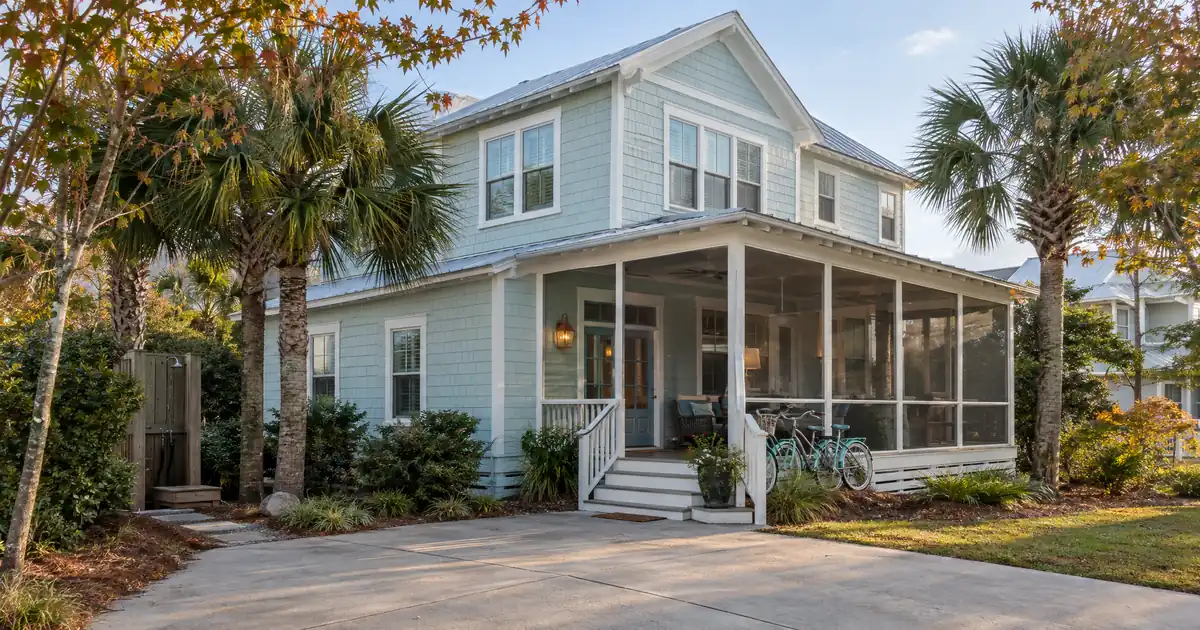
The Quick Read: The requirement, on most files, comes down to a policy built for nightly rental, with dwelling, guest liability and lost-rent coverage, plus proof of it on every property you finance, because the premium sits inside the payment your rent has to cover. A standard landlord or homeowners policy often fails that test. Each new property adds its own policy, its own proof and its own effect on your coverage ratio.
- Get a policy written for short-term rental use, not a landlord policy with a label on it.
- Expect lenders to look for dwelling, guest liability and loss-of-rent coverage.
- Quote the real premium before you make an offer, because it lowers your DSCR.
- Platform host protection supplements insurance and does not replace it.
- Plan renewals, named insureds and flood coverage property by property as you grow.
Why Does the Insurance Premium Matter to a DSCR Lender?
Insurance matters because it is part of the payment your rent must cover. A DSCR, or debt service coverage ratio, divides monthly rent by the full monthly obligation: principal, interest, taxes, insurance and any association dues. That total is called PITIA. A higher premium makes the denominator larger and the ratio smaller.
Short-Term Rental Calculator
Run the STR numbers in your market
Rate source: Freddie Mac 30-yr average via FRED® — Federal Reserve Bank of St. Louis · effective Oct 15, 2026
Prefilled with starting assumptions — enter your nightly rate, occupancy, taxes, and insurance for a more accurate picture.
Short-term rental income is documented with a 12-month history or a market data report. Program parameters update from Lendmire’s centralized guideline source.
As of Oct 15, 2026 · General Freddie Mac market benchmark, not a Lendmire loan offer. Nightly rate, occupancy, taxes, and insurance are editable estimates. Qualifying income for short-term rentals varies by program — some use appraisal market rent, others use documented STR history or projections — and is confirmed in underwriting. Not a Loan Estimate, approval, or commitment to lend. Program availability and eligibility are subject to lender guidelines, credit approval, property review, and underwriting.
The loan is reviewed primarily on property-level rental income covering the payment, subject to lender guidelines. That is why insurance gets scrutiny that surprises new investors. The lender is not only checking that a policy exists. It is checking that the policy fits how the property actually operates and that the premium is in the math.
One caution before going further. Clearing a coverage ratio is not the same as positive cash flow. DSCR compares rent to PITIA only. Repairs, vacancy, management, utilities and capital spending sit outside the calculation. Our complete DSCR loans guide walks through the full ratio if you want the basics first.
Key Terms Defined
PITIA: Principal, interest, taxes, insurance and association dues, which together make up the monthly obligation in the coverage ratio.
Mortgagee: The lender named on your policy, so it is notified of claims and cancellations and has a claim on proceeds.
Declarations page: The summary page of a policy showing the insured, property, coverages, limits, deductibles and policy dates.
Loss of rents: Coverage that replaces rental income when a covered loss makes the property unrentable.
Named insured: The person or entity the policy actually protects, which should match how the property is titled.
Blanket policy: One policy that covers several properties under a shared limit.
Umbrella policy: Extra liability coverage that sits above your underlying per-property policies.
What Coverages Do DSCR Lenders Look For?
Lenders look for three core coverages on a short-term rental: dwelling, guest liability and lost rental income. The short-term twist is that each one has to be written for nightly guests. The details vary by lender, so treat this table as the common shape rather than a universal rule.
| Coverage | What it protects | STR twist |
|---|---|---|
| Dwelling | Rebuilding the structure | Limit should track rebuild cost |
| Guest liability | Injury or damage claims | Higher guest traffic raises exposure |
| Loss of rents | Income after a covered loss | Must fit nightly-booking income |
| Flood (if applicable) | Water damage from flooding | Separate policy, not in standard forms |
Dwelling coverage deserves one extra note. If the limit sits well below rebuild cost, a coinsurance clause can shrink partial claims, so a low limit that saves premium can cost real money later.
Which Policy Type Fits a Short-Term Rental?
A policy that explicitly covers nightly rental fits best. Business-activity exclusions are the problem. Ramsey Solutions notes that most homeowners policies and many landlord policies exclude business activity such as Airbnb or Vrbo hosting. BiggerPockets adds that a landlord policy with short-term rental written on it does not change what the policy covers.
| Option | Typical fit | Watch for |
|---|---|---|
| Standard landlord policy | Long-term leases | Nightly-rental exclusions |
| Landlord plus STR endorsement | Light or occasional hosting | Endorsement scope and limits |
| Dedicated STR or commercial policy | Full-time hosting | Higher premium, broader terms |
| Platform host protection | Supplement only | Not a policy you control |
Across our wholesale network, the pattern is consistent. Lenders want evidence that the policy type matches the use. Which of the middle two options is acceptable varies by lender, so confirm before you bind coverage, not after.
Frequency does not change the analysis. Renting a few weekends a year is still renting to paying guests. Frequency can change which product fits, but not whether a business exposure exists.
Does Airbnb Coverage Count as Insurance?
No. Platform protection supplements insurance and does not replace it. Guesty reports that Airbnb’s AirCover includes $3 million in damage protection and $1 million in liability. It covers only bookings made through that platform, not direct, Vrbo or Booking.com stays.
The deeper problem is control. A host does not hold policy rights, because the platform runs the claim process. A lender wants a policy with the lender named on it. A platform program cannot offer that, so it never substitutes for the declarations page in your file.
Where Does Flood Coverage Fit?
Flood is a separate policy with its own limits. Per FEMA, standard homeowners policies do not cover flood damage. FEMA also publishes National Flood Insurance Program coverage limits for a one-to-four-family residence, with separate limits for the building and its contents.
The federal minimum for loans that trigger a flood requirement is the lesser of the loan balance, the program maximum or the insurable value, according to HelpWithMyBank.gov. DSCR loans are usually not federally backed, so flood is often a lender condition rather than a statutory one. Many lenders still ask for it when the property sits in a mapped flood zone.
Here is the practical catch. If rebuild cost exceeds the federal cap, a private excess flood policy may be needed. Ask the lender up front whether a private policy meets its requirements. Then price flood into your PITIA before you commit to a property, not afterward.
What Proof Does the Lender Want in the File?
The file needs documents that prove the right policy is in force. The exact list is lender-specific, but the usual set is consistent:
- The declarations page, showing the insured, property address, coverages and limits.
- Evidence of insurance listing the lender as mortgagee.
- The policy type, whether landlord, commercial or vacation-rental endorsement.
- Effective and expiration dates that cover the closing.
- A flood policy where the property needs one.
Mismatches cause most of the friction here. A named insured that differs from the borrower, a property address typed slightly wrong, or a policy form that excludes nightly rental will each draw a condition. Fixing any of them means a call to your agent, so catching them early saves rework.
How Does a Premium Change Move Your Coverage Ratio?
A premium increase lowers your ratio directly, because insurance is a line in the payment. Run the numbers on a modeled short-term rental that clears roughly 1.15x on the original insurance quote. Now suppose the real STR policy quote comes back materially higher than the landlord policy you assumed. The ratio can slide toward 1.05x with no change in rent.
Push that further and the coverage sits near the floor. Many files hold up at that level. But a file near 1.00 leaves little room for a renewal increase, a higher flood quote or a lower income estimate.
Those inputs are modeled assumptions, not market data. The lesson is the direction of travel. Premiums tend to move up at renewal, and the ratio moves down with them. Build cushion at purchase, because the cushion is what absorbs the next renewal.
On the program side, coverage ratios work differently by path. For short-term rentals, 1.00 is where select programs start on purchases and also on refinances. A separate select-lender path takes coverage below 1.00, with leverage and terms adjusted. Stronger ratios open better pricing and leverage.
How Do You Scale Without Losing Control of the Paperwork?
Scaling works when you turn insurance into a repeatable process rather than a one-off errand. Each stage adds a different pressure.
First property. Learn the policy form before you buy. Get a quote on the actual property with STR use disclosed. Ask the agent to confirm the declarations page will show the policy as nightly-rental eligible.
Properties two through four. Keep a master tracker of insurer, policy type, named insured, mortgagee, renewal date and flood status. This is when mismatches start, because you are now buying while earlier policies renew. Stagger renewals on purpose so they do not all hit one month.
Five properties and beyond. Consider a broker who places STR risk regularly. Some investors use a blanket policy that covers several properties under one limit. One caution is that blanket coverage may lack per-property flexibility, and flood may not be included. Lenders also typically want property-level evidence of coverage, so confirm that a blanket form is acceptable before you rely on it. Lendmire’s piece How to Get DSCR-Accepted STR Insurance When Scaling a Portfolio goes deeper on that placement side.
Umbrella coverage. An umbrella adds liability limits across the portfolio. It does not replace underlying per-property policies, which are still required beneath it.
Deductibles. A single storm can damage several properties at once, which means several deductibles at once. Size your reserves for that scenario, not for one claim.
Entity titling. If you hold properties in LLCs, the named insured should match the title. Eligibility of LLC-held loans depends on program terms, so confirm how the lender wants the insured entity shown.
Here is a pattern we see across many files. Investors who scale smoothly quote insurance before the offer, not after. Those who struggle usually found the premium problem only when the lender asked for the declarations page. At that point the ratio is already set and the options narrow.
One more pattern worth naming. A lapse or cancellation on one property rarely stays contained. Lenders can place coverage themselves when a policy lapses, and that coverage is typically narrower and costlier than what you chose. Treat renewals as a deadline you manage, not a bill you eventually pay.
Where Does the General Rule Break?
Several edge cases change the usual answer.
Condos and HOAs. A master policy and the association’s own short-term rental rules can add to or override what you need. Underwriters handle this case by case, so ask early.
Five or more units. Multifamily buildings with five or more units have a higher federal flood building limit of $500,000, according to Cullen and Dykman LLP, and that change generally does not apply to condominiums. It matters for larger mixed-use or small-apartment STR deals.
Mid-term rentals. If the property is really a mid-term rental, the policy has to match that operation too. What matters is the actual use, not the label.
Ineligible property types. Manufactured homes, log homes and barndominiums are not offered in the network’s DSCR programs, so insurance is never the deciding issue there.
Below-1.00 files. Coverage below 1.00 is available through select lenders in the network, with leverage and terms adjusted. Insurance cost often decides which side of the line a coastal or flood-zone property lands on.
DSCR vs. conventional financing
There are two common ways to finance an investment property, and they qualify you differently — here’s how investors weigh them.
Why investors choose it
- Qualifies on the property’s rental income — no personal tax returns, W-2s, or pay stubs needed to document income.
- No personal debt-to-income ceiling to clear, so existing mortgages and obligations don’t cap your borrowing the same way.
- Can be closed in an LLC, keeping the property inside a business entity.
- Built for scaling — not held to the limit on number of financed properties that conventional financing applies.
- Underwriting centers on the deal: generally qualifies when the rent covers the payment, a 1.00x coverage ratio being a common baseline (confirmed in underwriting).
- Designed specifically for investment property, including long-term and, where the program allows, short-term rentals.
Where it’s strong
- Often the lowest ongoing financing cost for a buyer who fully qualifies on personal income — a fit for a first property or a cost-first purchase.
Trade-offs for investors
- Requires full personal income documentation and must fit within a debt-to-income limit — salary, existing debts, and other mortgages all count.
- Typically held in your personal name rather than a business entity.
- Caps how many financed properties you can carry, which can become a ceiling as a portfolio grows.
- Evaluates you as a borrower as much as the property, which usually means more paperwork.
How investors usually choose: a first or single property often optimizes for the lowest financing cost; portfolio builders often optimize for leverage, vesting in an LLC, and scaling past conventional caps. The right answer depends on your goals, the property, and current guidelines — both paths run through select lenders in Lendmire’s wholesale network, with eligibility and terms confirmed in underwriting.
What Does the Investor Decision Look Like in Practice?
The decision is whether the property clears two tests together: enough equity and enough rental coverage. On short-term rental files across the network, purchase leverage typically tops out at 75% LTV on the strongest files. Refinance and cash-out on short-term rental collateral typically top out at 70% LTV. A score of 640 or higher is the usual expectation, along with roughly 12 months of hosting history.
A bigger down payment can lift the ratio by lowering the payment. It does not erase credit floors, reserve rules or property eligibility. Reserves vary by lender, leverage, loan size and transaction type, and they commonly sit around six months of PITIA. Insurance cost touches every one of those tests, which is why it belongs at the start of your analysis.
Tax treatment can depend on how the funds are used and how the property is held; investors should keep clear records and speak with a qualified tax professional before relying on any deduction.
Questions to Ask Your Insurance Agent
Bring this list to every quote conversation:
- Does this policy explicitly allow nightly rental, and is the exclusion language in writing?
- What are the guest liability limits, and do they apply to every booking source?
- How does loss of rents trigger, and is there a waiting period?
- What are the deductibles for wind, hail and water?
- Does the dwelling limit track rebuild cost, and is coinsurance in play?
- Is flood included, or do I need a separate policy?
- Can the lender be named as mortgagee on each property?
- Will the named insured match my title or LLC?
Pre-Application Insurance Checklist
Run this before every acquisition:
1. Confirm the use: short-term, mid-term or long-term.
2. Quote a policy written for that use on the actual property.
3. Check the flood zone and price flood coverage if needed.
4. Add the real premium to PITIA and recheck the coverage ratio.
5. Confirm the named insured matches the title.
6. Line up the mortgagee wording and declarations page.
7. Log the renewal date in your tracker.
If you are buying or refinancing a rental property and want to see how the numbers work, Lendmire can help you compare DSCR loan options based on the property income, credit profile, leverage, and investor goals. You can reach the team at 828-256-2183.
Frequently Asked Questions
Will my homeowners policy satisfy a DSCR lender on a short-term rental?
Usually not. Most homeowners policies exclude business activity such as nightly hosting, so the lender wants a policy that explicitly covers it. Confirm the exclusion language in writing with your agent before you bind.
Can one policy cover several properties?
Sometimes. A blanket policy can cover multiple properties under one limit, but the number allowed varies by carrier. Blanket forms may lack per-property flexibility, and lenders typically want property-level evidence of coverage. Ask the lender whether it accepts a blanket form.
Does a premium increase at renewal hurt my DSCR?
Yes, because insurance is part of the payment the rent has to cover. A higher premium lowers the ratio even when rent holds steady. Building cushion at purchase helps absorb future increases.
Does an umbrella policy replace per-property insurance?
No. An umbrella sits above your underlying policies and adds liability limits. Each property still needs its own underlying policy.
Do requirements differ between lenders?
Yes. The core coverages are consistent, but policy form, liability limits and flood expectations vary by lender and program. Every file is underwritten individually, and nothing here is a commitment to lend.
Insurance quotes tend to move before rents do, which is why the investors who scale cleanly price the policy first and the property second.
About Lendmire
A DSCR-focused mortgage broker, Lendmire (NMLS# 2371349) places investor financing across 41 markets — 40 states plus Washington, D.C. — with DSCR eligibility generally reviewed by the lender on property cash flow instead of traditional personal-income documentation, subject to lender guidelines. Scotsman Guide named Lendmire a Top Mortgage Workplace in 2025 and 2026.
Investors focused on short-term rentals can review DSCR loans for Airbnb and short-term rentals.
Get Started
Ready to find the right loan for you?
In about 30 seconds you can review financing options available for your investment property. No commitment required.
Informational only. Not a Loan Estimate, approval, or commitment to lend. Program availability and eligibility are subject to lender guidelines, credit approval, property review, and underwriting.
References
3. Guesty
4. FEMA, Flood Insurance chapter
This article is part of Lendmire’s short-term rental loan program — full qualification details, guidelines, and scenarios live on the program page.
Related reading: How Interest-Only DSCR Loans Work on High-Value Rentals · How a 5-to-50 Door LLC Portfolio Graduates to Non-Recourse DSCR Loans · Can a Luxury STR Operator Get a DSCR Loan Below a 1.0 Ratio?
Brandon Miller
Founder & CEO, Mortgage Loan Originator, Lendmire LLC
- Mortgage Loan Originator · NMLS# 1129696 · Verify on NMLS Consumer Access
- North Carolina Real Estate Broker · License# 343312 · Verify on NCREC
- North Carolina Insurance Producer · License# 19053198 · Property, Casualty, Life, Health · Verify on NAIC SBS
- Lendmire LLC · Firm NMLS# 2371349 · Verify firm licensure
Disclosure information. Lendmire is a state-licensed mortgage brokerage under NMLS# 2371349. Lendmire is not a depository institution, direct lender, or financial advisor — all loans referenced are placed through wholesale lender partners and are subject to each lender's underwriting standards. This article is provided for general informational purposes and is not a commitment to lend, nor does it constitute financial, legal, or tax advice. Loan programs, terms, rates, and qualification standards change without notice and depend on borrower profile, property type, and the state in which the subject property is located. Equal Housing Opportunity provider. NMLS Consumer Access: nmlsconsumeraccess.org.