
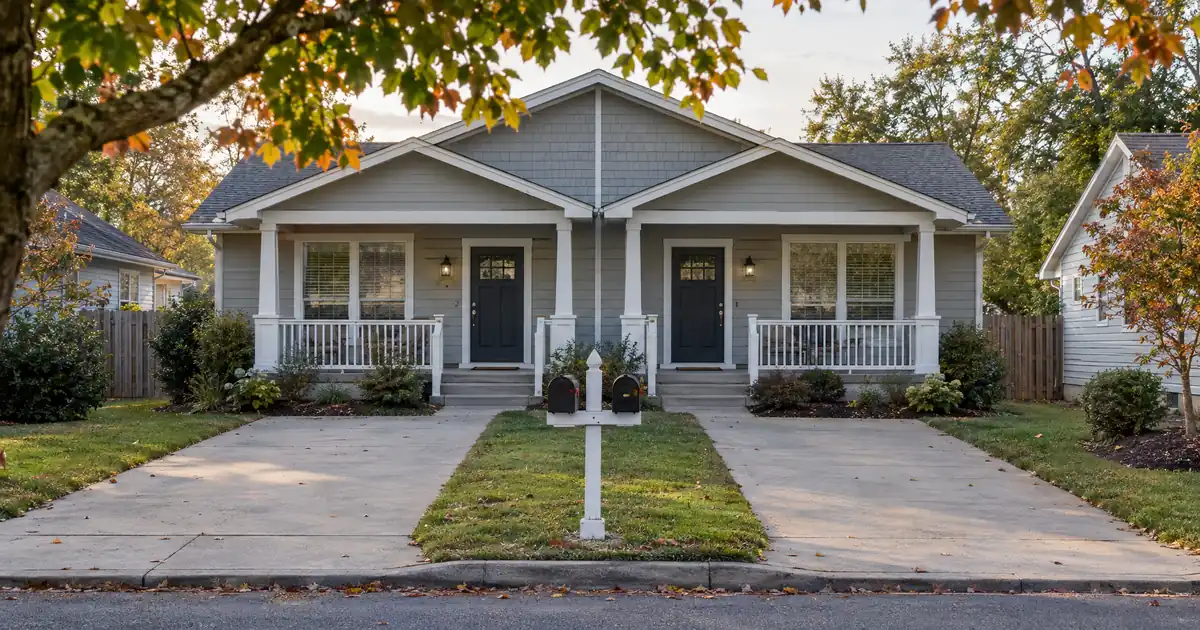
The Quick Read: There is no property-count wall on DSCR loans, so owning more than 10 doors does not shut you out of financing. The limits that bind are loan size, leverage that steps down as the balance rises, extra appraisal triggers at high balances, and how much exposure a lender will take on one sponsor. Through select wholesale programs, loans run from $150,000 to $10,000,000, subject to underwriting.
- Door count is an agency rule. Balance, leverage tier, and credit decide large DSCR files.
- Leverage falls as the loan grows, and cash-out stops above $3,000,000.
- Above $4,000,000, every request is reviewed case by case before submission.
- Two appraisals apply above $2,000,000, and reserves are measured on the subject property.
- LLC vesting is welcome, but one guarantor still ties every file together.
Plenty of investors hear “you can only finance 10 properties” and assume it follows them into investor lending. It does not. Here is where the 10 comes from, what replaces it, and how to plan a large-balance portfolio around the limits that do exist. For the full background, see the complete DSCR loans guide.
DSCR Calculator
Run the numbers in your market
Rate source: Freddie Mac 30-yr average via FRED® — Federal Reserve Bank of St. Louis · effective Oct 15, 2026
Prefilled with starting assumptions — enter your own rent or nightly figures, taxes, insurance, and HOA for a more accurate picture.
Program parameters update from Lendmire’s centralized guideline source. Taxes and insurance are editable estimates.
As of Oct 15, 2026 · General Freddie Mac market benchmark, not a Lendmire loan offer. Rent, nightly rate, occupancy, taxes, and insurance are editable estimates. Short-term rental figures are estimates only and vary significantly by season, property type, management approach, and local short-term-rental rules — confirm local regulations before relying on them. Qualifying income for short-term rentals varies by program — some use appraisal market rent, others use documented STR history or projections — and is confirmed in underwriting. Not a Loan Estimate, approval, or commitment to lend. Program availability and eligibility are subject to lender guidelines, credit approval, property review, and underwriting.
Where Does the 10-Door Number Come From?
The 10-door number is an agency count, not a DSCR rule. Fannie Mae’s Selling Guide B2-2-03 counts one- to four-unit properties where you are personally obligated on the mortgage. It counts properties, not mortgages, and includes a financed principal residence.
A secondary summary of that guideline puts the cap at 10 financed properties for second homes and investment properties. That is the end of the contrast. DSCR loans are business-purpose, non-QM investor loans. They sit outside the agency system, so that count does not apply to them.
What replaces it? Lenders set their own limits. In our wholesale network, a single program can go up to 20 financed properties, and the real ceilings are dollars and leverage.
What Does “Super Jumbo” Actually Mean Here?
“Super jumbo” is shorthand, not a regulated category. In this context it means a DSCR loan above the size where a standard program stops. DSCR stands for debt service coverage ratio: the property’s rent divided by its monthly obligation (principal, interest, taxes, insurance, and any HOA dues). The loan is reviewed primarily on property-level rental income covering the payment, subject to lender guidelines.
Lendmire’s standard DSCR program stops at $3,000,000. The portfolio investor program carries qualified investors past that line, up to $10,000,000, through select wholesale programs. “Portfolio limits” then means the combined effect of four things:
1. The per-loan size ceiling.
2. Leverage that steps down as the balance rises.
3. Extra triggers at higher balances, such as a second appraisal.
4. The lender’s total exposure to one sponsor or entity.
Lenders rarely publish that last one. Ask about it before you apply.
How Does Loan Size Change Which Limit Binds First?
Leverage drops in steps as the balance rises, and credit expectations climb with it. Below $1,000,000 you get the most leverage. Above $4,000,000, each request is reviewed on a case-by-case basis. The figures below are ceilings through select wholesale programs at coverage of 1.00 or higher, subject to underwriting.
| Loan size | Purchase / rate-term | Cash-out | Credit |
|---|---|---|---|
| $150K–$1M | 80% | 75% | 660+ |
| $1M–$1.5M | 75% | 70% | 700+ |
| $1.5M–$3M | 75% | 60% | 720+ |
| $3M–$4M | 65% | — | 700+ |
| $4M–$10M | 60% on review | — | 700+ |
Two things stand out. First, no loan above $1,000,000 reaches 80%. Second, cash-out disappears above $3,000,000. Cash-out proceeds are unlimited at or below 60% LTV and capped at $1,500,000 above 60%, and borrowers with credit of 680 or below get none above $1,500,000. Leverage, reserves, and pricing vary by lender and program; the final terms follow the full file review.
Above $3,000,000, the program also wants 700 credit, a clean housing history (0x30x24), 48-month seasoning after any credit event, and U.S. citizen or permanent resident status. Rural property is out, and acreage is capped at ten acres.
On the equity side, this means a bigger balance asks for more of your own capital. Plan for that before you pick a target.
What Do Appraisals, Reserves, and Interest-Only Look Like at Size?
Above $2,000,000, expect two appraisals. The trigger is size, not door count. A two-property pool at a high balance can trip it, while a larger pool of modest loans may not.
Reserves are six months of PITIA on the subject property, or twelve for first-time investors. PITIA means principal, interest, taxes, insurance, and association dues. On interest-only loans, reserves run on interest, taxes, and insurance. Most programs we place files with do not stack extra reserves for your other financed properties. Cash-out proceeds cannot satisfy reserves on the large files.
Interest-only is a real tool here. The program offers a 120-month interest-only period on 30- and 40-year terms, up to 75% leverage, with coverage of 0.75 or better, qualified on interest, taxes, and insurance. That extra runway lifts coverage on large balances. Terms vary by lender guidelines, property type, leverage, credit profile, and full file review.
What Counts as Coverage?
At 1.00, rent covers the full monthly obligation, and that earns full leverage. Coverage from 0.75 to 0.99 is a real path through select wholesale programs, up to $2,000,000, but LTV and terms adjust, subject to underwriting.
No-ratio files also exist through a handful of lenders in the network, up to $2,000,000, with a seven-year clean housing history and 0x30x24, subject to underwriting. They are not the default path, and the qualification still depends on the borrower profile.
Short-term rentals run on a different clock. They need coverage of 1.00 or higher, a $2,000,000 loan ceiling, and an experienced investor (twelve months owning income property in the last thirty-six). Income is twelve months of operating history on a refinance, or the appraisal’s short-term-rent analysis on a purchase, counted at 80% of gross. Short-term rental rules vary by city, county, HOA, and property type, so confirm local rules before relying on projected rental income. Permission is documented per property. For that niche, see Lendmire’s piece How to Qualify for a Super Jumbo DSCR Portfolio Loan for Luxury STR Operators.
Separate Loans or One Blanket Pool?
You have a real structural choice past 10 doors. DSCR describes how a file qualifies. A blanket describes how many properties secure one note. They are separate decisions.
| Factor | Separate loans | Blanket pool |
|---|---|---|
| Qualification | Each property on its own rent | Blended: total rent over total payment |
| Appraisals | One per property | One per property, still |
| Weak property | Stands alone | Offset by strong ones |
| Default risk | Contained per loan | Cross-default across the pool |
| Selling one door | Simple payoff | Needs a release clause |
| Adding a door | New loan | Usually restructures the note |
A blanket gives you one closing, one payment, and one servicer. In exchange, you give up the independence of separate loans. Cross-collateralization means every property backs the full note, not a slice of it. A problem at one door can reach the whole pool.
Release terms matter most. An allocation schedule assigns debt to each property, and a release clause governs how one exits. Release prices usually run above the property’s allocated share, and the terms are not standardized from lender to lender. Negotiate them before closing, not when you want to sell. A release clause is common but never automatic.
If you plan to spread draws across the portfolio, Lendmire’s piece How to Stagger Super Jumbo DSCR Cash-Outs Across Your LLC Portfolio covers sequencing.
Do Multiple LLCs Reset the Count?
Not in any way that helps with exposure. Entity vesting is welcome, with no layered entities, subject to program terms. But the LLCs share one guarantor. That person’s credit, liquidity, and total obligations sit behind every file.
Splitting loans across several entities does not create fresh capacity if the same guarantor backs all of them. Spreading across lenders has the same limit: your reserves and credit are shared across every file. Many lenders aggregate exposure at the guarantor level, so ask how each one measures it.
Inside a blanket, separate LLCs get bound by cross-default terms, and the liability wall between them thins for the life of the loan. A property in an LLC that is not a borrower on the note generally cannot join the pool without changes. The personal guaranty also typically stays in place after a property leaves the lien. An LLC does not remove the guaranty.
The Three Ways Lenders Measure Exposure
Lenders do not publish exposure policy, so you need to ask. Across the programs we see, exposure shows up in three forms:
| Measure | What it counts | What to ask |
|---|---|---|
| Loan count | Number of notes with that lender | Is there a per-sponsor note limit? |
| Total balance | Dollars outstanding to one lender | What is the cap per borrower? |
| Guarantor or entity | Everything tied to one guarantor | Do all my LLCs aggregate? |
Balance-based limits hit large-balance borrowers long before count-based limits do. A refinance that replaces a loan changes exposure differently from a new loan that adds to the balance. Ask which one applies.
DSCR vs. conventional financing
There are two common ways to finance an investment property, and they qualify you differently — here’s how investors weigh them.
Why investors choose it
- Qualifies on the property’s rental income — no personal tax returns, W-2s, or pay stubs needed to document income.
- No personal debt-to-income ceiling to clear, so existing mortgages and obligations don’t cap your borrowing the same way.
- Can be closed in an LLC, keeping the property inside a business entity.
- Built for scaling — not held to the limit on number of financed properties that conventional financing applies.
- Underwriting centers on the deal: generally qualifies when the rent covers the payment, a 1.00x coverage ratio being a common baseline (confirmed in underwriting).
- Designed specifically for investment property, including long-term and, where the program allows, short-term rentals.
Where it’s strong
- Often the lowest ongoing financing cost for a buyer who fully qualifies on personal income — a fit for a first property or a cost-first purchase.
Trade-offs for investors
- Requires full personal income documentation and must fit within a debt-to-income limit — salary, existing debts, and other mortgages all count.
- Typically held in your personal name rather than a business entity.
- Caps how many financed properties you can carry, which can become a ceiling as a portfolio grows.
- Evaluates you as a borrower as much as the property, which usually means more paperwork.
How investors usually choose: a first or single property often optimizes for the lowest financing cost; portfolio builders often optimize for leverage, vesting in an LLC, and scaling past conventional caps. The right answer depends on your goals, the property, and current guidelines — both paths run through select lenders in Lendmire’s wholesale network, with eligibility and terms confirmed in underwriting.
A Worked Example for an LLC Operator Past 10 Doors
Picture an investor holding twelve rentals across three LLCs, all with one guarantor. She wants to acquire a high-balance property in the $3M–$4M range and pull equity from a stabilized one.
On purchase, leverage in that band tops out at 65%, with credit of 700 or higher. She needs the equity for that down payment, so she sizes the deal on cash, not on the 80% she is used to at smaller balances. Cash-out on the target is off the table above $3,000,000. The equity comes from an older, smaller property instead.
That older property sits under $1,500,000, so a cash-out at 60% LTV or below carries unlimited proceeds. Above 60%, proceeds are capped at $1,500,000. She does the cash-out first, seasons the proceeds, and keeps reserves in place, because cash-out cannot satisfy reserves on a large file. Exact terms depend on the lender’s guidelines, property type, leverage, and a full review of the borrower’s file.
The sequencing is the point. Run the smaller, more flexible loan first, and use the large-balance purchase last. The large files are the most constrained, so they should not be your first move.
Questions to Ask a Lender Before You Apply
- How do you measure exposure: by note count, balance, or guarantor?
- Do my separate LLCs aggregate under one guarantor?
- What is the release price on a blanket, and is it negotiated up front?
- Does a second appraisal apply at my balance?
- Which reserve rules apply, and can cash-out count toward them?
- What changes if I add or remove a property later?
Common Mistakes
Assuming no limit means unlimited approvals. No regulatory cap does not mean no lender cap. Each lender sets its own.
Concentrating everything with one lender. That drives up exposure fast. But spreading out has its own limit, because the guarantor is shared.
Running a blanket without a release plan. The exit is a refinance of the whole pool if the terms are silent.
Assuming DSCR means blanket. It does not. They are separate choices.
Planning for 80% leverage on a large balance. The ladder steps down, and bigger loans need more equity. Every figure here varies by lender and program — guidelines, property type, leverage, and credit profile all apply.
Key Terms Defined
DSCR: The property’s rent divided by its monthly obligation, used to test whether it carries the loan.
PITIA: Principal, interest, taxes, insurance, and association dues, the full monthly obligation.
Blanket loan: One note secured by more than one property.
Cross-collateralization: Every property in the pool backs the full note, not a slice of it.
Exposure limit: The total a lender will carry on one borrower, guarantor, or entity.
Guarantor: The person who personally backs the loan, even when an LLC holds title.
Release clause: The loan term that sets how a property can leave a blanket pool.
Tax treatment can depend on how the funds are used and how the property is held; investors should keep clear records and speak with a qualified tax professional before relying on any deduction. Nothing here is legal or tax advice. Consult a qualified attorney or CPA about your own situation.
Frequently Asked Questions
Is there a legal cap on how many DSCR loans I can have?
No. The cap people cite belongs to agency loans. DSCR lenders set their own limits, and in our network a single program allows up to 20 financed properties, subject to underwriting.
Does owning more than 10 properties disqualify me?
No. Door count is not the test. Loan size, leverage tier, credit, reserves, and the property’s rental income decide the file, subject to lender guidelines.
Can I get 80% leverage on a super jumbo loan?
No. Eighty percent applies only up to $1,000,000. It steps down from there, and above $4,000,000 every request is reviewed case by case, purchase or rate-and-term only. Final terms depend on lender guidelines, property type, leverage, and the borrower’s complete credit picture.
Do separate LLCs reduce my exposure?
Rarely. One guarantor stands behind every entity, so lenders often aggregate exposure at the guarantor level. Ask each lender how it counts.
Can I cash out on a loan above $3,000,000?
No. Cash-out is not available above $3,000,000. Plan to pull equity from smaller properties instead.
If you are buying or refinancing a high-balance rental property and want to see how the numbers work, Lendmire can help you compare super jumbo DSCR loan options based on the property income, the loan balance, credit profile, leverage, and investor goals. Lendmire is a broker arranging business-purpose financing through select lenders in its wholesale network, across 41 markets including Washington, D.C. Every figure above is subject to underwriting and is not a commitment to lend.
Lendmire’s self-employed mortgages page presents both super jumbo programs, bank statement and DSCR, side by side.
About Lendmire
As a DSCR and non-QM mortgage broker, Lendmire — NMLS# 2371349 — connects investors with wholesale lending channels across 41 markets, including Washington, D.C. The property’s rental income, not the borrower’s tax returns, is central to lender review, which works for self-employed operators and portfolios beyond four financed properties. Scotsman Guide named Lendmire a Top Mortgage Workplace in both 2025 and 2026.
Get Started
Ready to find the right loan for you?
In about 30 seconds you can review financing options available for your investment property. No commitment required.
Informational only. Not a Loan Estimate, approval, or commitment to lend. Program availability and eligibility are subject to lender guidelines, credit approval, property review, and underwriting.
References
1. Fannie Mae Selling Guide B2-2-03
2. Homebuyer.com Fannie Mae B2-2-03 summary
This article is part of Lendmire’s super jumbo DSCR loan program — full qualification details, guidelines, and scenarios live on the program page.
Related reading: How to Stack a 40-Year Term and IO ARM on a Super Jumbo DSCR · How to Document a Super Jumbo DSCR Loan · How High a DSCR Ratio Does a Super Jumbo DSCR Loan Need?
Brandon Miller
Founder & CEO, Mortgage Loan Originator, Lendmire LLC
- Mortgage Loan Originator · NMLS# 1129696 · Verify on NMLS Consumer Access
- North Carolina Real Estate Broker · License# 343312 · Verify on NCREC
- North Carolina Insurance Producer · License# 19053198 · Property, Casualty, Life, Health · Verify on NAIC SBS
- Lendmire LLC · Firm NMLS# 2371349 · Verify firm licensure
Legal disclosures. Lendmire (NMLS# 2371349) is a state-licensed mortgage brokerage that arranges financing through wholesale lender relationships. Lendmire is not a direct lender, depository institution, or registered financial advisor. The discussion above is general informational content about real estate financing — it is not financial, legal, or tax advice, and readers should consult licensed professionals for guidance on their individual circumstances. Loan inquiries are subject to lender underwriting; this article does not represent a commitment to lend. Loan terms, rates, and qualification standards vary by borrower, property, and state, and are subject to change at any time. Equal Housing Opportunity. NMLS Consumer Access: nmlsconsumeraccess.org.