
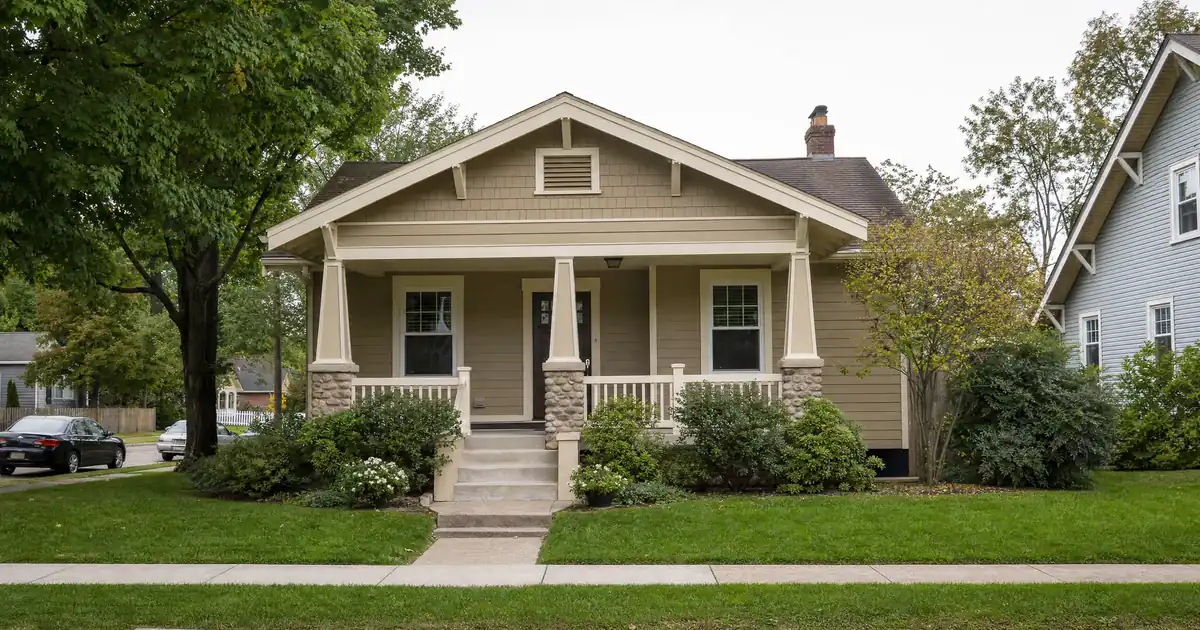
The Quick Read: On a rental property, “high LTV” tops out lower than most investors expect. Purchases typically run 75%-80% loan-to-value. A handful of stronger-credit programs reach 85%. Cash-out refinances cap closer to 75% across most of the DSCR network. That ceiling moves based on credit score, coverage ratio, property type, loan size, and state. There’s no single published number. There’s a grid, and this article walks through exactly how it’s built.
DSCR Calculator
Run the numbers in your market
Rate source: Freddie Mac 30-yr average via FRED® — Federal Reserve Bank of St. Louis · effective Jul 30, 2026
Prefilled with starting assumptions — enter your own rent or nightly figures, taxes, insurance, and HOA for a more accurate picture.
Program parameters update from Lendmire’s centralized guideline source. Taxes and insurance are editable estimates.
As of Jul 30, 2026 · General Freddie Mac market benchmark, not a Lendmire loan offer. Rent, nightly rate, occupancy, taxes, and insurance are editable estimates. Short-term rental figures are estimates only and vary significantly by season, property type, management approach, and local short-term-rental rules — confirm local regulations before relying on them. Qualifying income for short-term rentals varies by program — some use appraisal market rent, others use documented STR history or projections — and is confirmed in underwriting. Not a Loan Estimate, approval, or commitment to lend. Program availability and eligibility are subject to lender guidelines, credit approval, property review, and underwriting.
Here’s what matters most before you dig in:
- Purchase leverage on most DSCR files lands at 75%-80%; a smaller slice of high-leverage programs reach 85% with a roughly 700+ credit score.
- Cash-out refinances top out around 75% LTV across most of the network, with about six months of ownership seasoning expected first.
- Rent has to clear the payment, not just the down payment math — a 1.00 coverage ratio is where select programs start, not a universal industry standard.
- Property type, state, and loan size can override a strong credit score entirely — a 750 FICO doesn’t fix a state overlay or an ineligible property type.
- Manufactured homes, log homes, and barndominiums aren’t offered through DSCR programs in Lendmire’s network, regardless of leverage or credit.
What “High LTV” Actually Means on a Rental Property
High LTV on an investment property refinance means pulling loan proceeds close to the property’s appraised value. That leaves thin equity behind. On non-owner-occupied real estate, this ceiling sits meaningfully lower than what a homeowner sees on a primary residence.
There’s a reason for that gap. Loan-to-value, or LTV, is simply the loan amount divided by the appraised value. The higher the percentage, the less equity cushion the lender has if the deal goes sideways. Investment properties carry more risk than owner-occupied homes. A struggling investor is statistically more likely to walk away from a rental than from the house they live in. That risk gap explains why a primary-residence refinance can sometimes clear 90%+ LTV through certain programs. A comparable investor deal on the same property type rarely clears 80% on a purchase and 75% on a cash-out.
For most DSCR loans, “high” effectively means:
- Purchase: 75%-80% LTV is standard on most files; a smaller group of high-leverage programs stretch to 85% for borrowers around 700+ credit.
- Cash-out refinance: roughly 75% LTV is the practical ceiling across most of the network.
- Rate-and-term refinance (no cash pulled out): often follows a similar grid to cash-out, though a no-cash-out file is lower risk and occasionally clears at a slightly friendlier ceiling depending on the lender.
Key Terms Defined
DSCR (debt-service coverage ratio): the property’s monthly rental income divided by its full monthly housing payment. A DSCR of 1.00 means rent exactly matches that payment; above 1.00 means rent exceeds it.
LTV (loan-to-value): the loan amount as a percentage of the property’s appraised value. Lower LTV means more equity behind the loan.
PITIA: principal, interest, taxes, insurance, and any association dues — the full monthly obligation used on the debt side of the DSCR calculation.
Non-QM (non-qualified mortgage): a loan that doesn’t fit the standard consumer-mortgage rulebook, because it’s underwritten on different criteria — in DSCR’s case, the property’s income rather than the borrower’s pay stubs.
Business-purpose loan: a loan made to an entity or individual for an investment, not for a home they’ll live in. DSCR loans are business-purpose loans by design.
Seasoning: the minimum ownership period a lender wants between buying a property and refinancing it — usually measured from the title recording date.
Cash-out refinance: a refinance where the new loan amount exceeds the payoff of the existing mortgage, and the investor pockets the difference as cash.
How Underwriting Actually Sets Your Maximum LTV
There’s no single “your max LTV is X” answer. Underwriting builds it from four moving pieces that work together as one grid: credit score, coverage ratio, property type, and loan size.
Step one: credit score sets the tier. Across most of the network, a 620 floor exists on some programs. But the more common expectation is closer to 660. Clearing 700 typically opens the strongest leverage tiers, including the higher-leverage purchase programs that reach 85%. Underwriters pull a tri-merge credit report and use the middle of the three scores. With two borrowers on the loan, it’s usually the lower of the two middle scores that sets the tier.
Step two: the appraisal drives both value and rent. The appraiser doesn’t just opine on value. On a DSCR file, the appraisal typically also produces a market-rent opinion. This uses appraisal-supported rent forms — the same comparable rent schedule and related rental income conventions borrowed from conventional lending as a documentation practice (the loan itself isn’t a conventional product). If the property is already leased, most programs use the lower of the appraised market rent or the actual signed lease. That means a below-market lease can drag the coverage ratio down, even if the investor thought the numbers worked.
Step three: the DSCR gets calculated. Rent divided by PITIA produces the ratio. Loan structure changes that math directly. An interest-only period shrinks the payment side, which mechanically lifts the ratio for the same rent. That’s a structural improvement, not a fundamental one. It doesn’t change what the property actually generates once vacancy, repairs, and management costs are factored in.
Step four: leverage, credit, and reserves interact as one file, not three separate checkboxes. Reserves are the liquid funds a borrower needs after closing. They commonly run around six months of PITIA across the network, stepping up toward nine months on loans above roughly $1,500,000. A conservative rate-and-term refinance at modest leverage under that threshold can sometimes see reserves waived entirely. On a cash-out refinance specifically, some lenders in the network let the proceeds pulled at closing satisfy that same reserve requirement. That means the equity coming out the door can double as the reserve fund the file needs to show, cutting down on separately held liquid capital.
The Leverage Ladder: Purchase, Cash-Out, and Rate-and-Term
Not every transaction type gets the same ceiling. The differences are bigger than most investors assume walking in.
| Transaction Type | Typical Max LTV | Credit Tier | Seasoning |
|---|---|---|---|
| Standard purchase | 75%-80% | 660-700+ | N/A |
| High-leverage purchase | up to 85% | ~700+ | N/A |
| Cash-out refinance | up to 75% | 660-700+ | ~6 months |
| Rate-and-term refinance | similar to cash-out grid | 660-700+ | Varies by lender |
| Short-term rental purchase | up to 75% | 700+ | 12-month hosting history |
| State-overlay purchase | ~75% | 660-700+ | N/A |
Notice the gap between purchase and cash-out. Say an investor bought near the top of the purchase-leverage range and has seen only modest appreciation since closing. That investor may not have enough equity yet to hit a 75% cash-out ceiling. In that case, a rate-and-term refinance at a similar LTV, without pulling cash, can sometimes be the more realistic move while equity builds. Lendmire’s investment property refinance playbook walks through that timing decision in more depth. Terms vary by lender guidelines, property type, leverage, credit profile, and full file review.
Where the Standard Grid Breaks
The 75%-80% range is a starting point, not a guarantee. Six specific situations move the number meaningfully, and none of them get fixed by a better credit score alone.
Short-term rentals run their own ladder. STR properties typically need a 640+ score, roughly 12 months of documented hosting history, and a 1.00 coverage floor calculated off that trailing income. Purchase leverage on STR deals usually tops out near 75% LTV, with refinance and cash-out both running closer to 70%. Appraised or projected short-term income carries more uncertainty than a signed 12-month lease, so credit does more of the work offsetting that. Short-term rental rules also vary by city, county, HOA, and property type. Investors should confirm local rules before leaning on projected nightly income for qualification.
State overlays cap leverage regardless of credit. Connecticut, Florida, Illinois, and New Jersey commonly see purchase leverage capped closer to 75% LTV, with loan size held near $2,000,000 in those markets. A 750 FICO doesn’t move that ceiling. It’s a state-level guideline, not a borrower-level one.
Some property types simply aren’t offered. Manufactured homes — single- or double-wide — along with log homes and barndominiums, fall outside DSCR programs in Lendmire’s wholesale network entirely. That’s a property-eligibility question, not a credit or LTV question. No amount of down payment changes it.
Loan size shifts the term structure. Standard programs typically run from smaller balances up through roughly $3,000,000. But above about $2,500,000, the network generally holds to 30-year fixed structures rather than interest-only or adjustable options. Bigger balances get less structural flexibility, not more.
Sub-1.00 coverage exists, but leverage and terms adjust for it. A handful of lenders in the network will review a file where rent doesn’t fully cover the payment on a long-term lease basis. They typically do this by pulling leverage down or leaning on stronger reserves and credit to compensate. That’s a real path for a thin-coverage deal. A no-ratio option is available for DSCR below 1.00 with stronger credit or higher down payment; qualification on that path rests on credit and equity rather than a rent-coverage calculation.
Entity ownership doesn’t remove the person from the file. Closing in an LLC is common on DSCR deals, but the managing member still signs as a personal guarantor. Underwriting still evaluates that individual’s credit. The entity structures ownership; it doesn’t anonymize the borrower.
DSCR loans are business-purpose loans made to investors, not owner-occupants. Because of that, they’re reviewed differently than a standard consumer mortgage. They generally sit outside the disclosure timelines and repayment protections built for owner-occupied lending. Even so, business-purpose loans aren’t unregulated. Under the CFPB’s ability-to-repay framework, loans exempt from ability-to-repay rules still face restrictions on prepayment penalties. That’s part of why DSCR loans commonly carry them, where conventional consumer mortgages today mostly don’t.
How Soon Can You Pull Cash Out After Buying?
Most DSCR programs across the network expect roughly six months of ownership before a cash-out refinance, measured from the purchase closing date. That’s a shorter window than the roughly 12-month standard on conventional cash-out loans. That six-month clock is the norm, not an outlier waivable by a strong file. A true zero-seasoning cash-out doesn’t really exist in this space.
The one structured exception is delayed financing, built for investors who bought a property with cash and want to refinance based on the current appraised value without waiting out that window. It still requires documenting the source and use of the original purchase funds. It removes the waiting period, not the paperwork. Investors converting a former primary residence into a rental and then refinancing it later run into a related timing question, which Lendmire’s primary-to-investment refinance guide covers directly.
The Decision: When Reaching for High Leverage Makes Sense
Higher leverage isn’t automatically the right call just because a program allows it. The honest question is whether the extra leverage serves the strategy or just thins the cushion for no real gain.
It tends to make sense when:
- The pulled equity funds a specific next move — another acquisition, a value-add renovation, paying off higher-cost debt — rather than sitting idle.
- The property’s coverage ratio holds up comfortably above 1.00 even after the higher payment that comes with less equity down.
- Reserves are already in place or the cash-out proceeds can help satisfy that requirement on the same transaction.
It’s a tougher case when coverage is already sitting right at the 1.00 floor rather than comfortably above it. Stacking thin coverage with thin equity on top of a marginal credit score is a much harder file to place than the same coverage paired with stronger credit or a lower leverage ask. Condo-specific overlays deserve their own look before assuming standard leverage applies. Lendmire’s investment property condo refinance guide breaks down where condo association and reserve rules pull the ceiling down further. Investors weighing a cash-out specifically to fund a second acquisition should also compare it against financing that purchase directly, which Lendmire’s guide to a cash-out-to-buy strategy walks through.
Non-QM production — the category DSCR sits inside — has grown into a meaningful share of total mortgage volume rather than a niche corner of it. DSCR and investor products reportedly make up roughly half of all non-QM collateral, according to HousingWire. That growth tracks with investor purchase activity broadly. Cotality reported investors accounted for roughly 30% of single-family home purchases nationally in the most recent full year measured.
Lendmire (NMLS# 2371349) arranges DSCR investment-property financing through select lenders across a wholesale network spanning 40 states plus Washington, D.C. — 41 markets total. Qualification runs primarily on the property’s rental income covering the payment, subject to lender guidelines, not on the borrower’s personal pay stubs. Investors weighing a purchase or refinance can review Lendmire’s complete DSCR loans guide for the full underwriting picture, or reach the team at 828-256-2183 to compare how a specific property’s coverage, credit profile, and leverage goal fit against current program guidelines. Every parameter discussed here is subject to lender overlays and can change by program, so review details should be confirmed before a file is submitted.
No loan approval is guaranteed by anything here, and nothing here is a commitment to lend. Every scenario described is subject to lender approval and to borrower, property, and program guidelines that can change. This article is general information only, not financial, legal, or tax advice — investors should confirm current program terms directly and speak with a qualified tax professional about how any refinance affects their specific situation, since tax treatment can depend on how funds are used and how the property is held.
Frequently Asked Questions
Can you refinance an investment property loan?
Yes — investment property loans, including DSCR loans, can be refinanced through both cash-out and rate-and-term structures. The maximum leverage available depends on credit score, the property’s coverage ratio, property type, loan size, and how long the property has been owned.
How to refinance investment property?
The process starts with an appraisal that establishes both the property’s value and its market rent, since that rent figure drives the DSCR calculation used to size the loan. From there, credit, reserves, and ownership seasoning all factor into what leverage tier the file lands in.
How soon can you refinance an investment property?
Most DSCR cash-out refinances expect roughly six months of ownership before closing, measured from the original purchase date. Rate-and-term refinances sometimes see more flexibility on timing, and delayed financing offers a structured exception for investors who purchased with cash.
What credit score do you need for a high LTV investment property refinance?
Most programs across the network want at least 660, with a 620 floor available on parts of the network for some scenarios. Reaching roughly 700 typically unlocks the stronger leverage tiers, including the higher-leverage purchase programs.
Is there a maximum loan amount for a high LTV DSCR refinance?
Standard programs generally run up to about $3,000,000, though smaller balances route through select lenders in the network rather than being treated as a hard minimum. Loans above roughly $2,500,000 typically settle into 30-year fixed structures rather than interest-only or adjustable options.
About Lendmire
Lendmire (NMLS# 2371349), a non-QM mortgage broker serving investors in 41 markets including Washington, D.C., helps structure DSCR scenarios commonly evaluated around a property’s rental income rather than personal income paperwork, subject to lender guidelines. A Scotsman Guide Top Mortgage Workplace in 2025 and 2026, Lendmire places loans through wholesale investor lenders and is not a direct lender.
Get Started
Ready to find the right loan for you?
In about 30 seconds you can review financing options available for your investment property. No commitment required.
Informational only. Not a Loan Estimate, approval, or commitment to lend. Program availability and eligibility are subject to lender guidelines, credit approval, property review, and underwriting.
References
1. Fannie Mae — Comparable rent schedule
2. HousingWire
3. Cotality
This article is part of Lendmire’s DSCR loan program — full qualification details, guidelines, and scenarios live on the program page.
Related reading: What Is The Maximum LTV For A Conventional Cash Out Refinance? · Max LTV For A DSCR Cash Out Refinance · Why 90% LTV DSCR Loans Don’t Exist
Brandon Miller
Founder & CEO, Mortgage Loan Originator, Lendmire LLC
- Mortgage Loan Originator · NMLS# 1129696 · Verify on NMLS Consumer Access
- North Carolina Real Estate Broker · License# 343312 · Verify on NCREC
- North Carolina Insurance Producer · License# 19053198 · Property, Casualty, Life, Health · Verify on NAIC SBS
- Lendmire LLC · Firm NMLS# 2371349 · Verify firm licensure
Disclosure information. Lendmire is a state-licensed mortgage brokerage under NMLS# 2371349. Lendmire is not a depository institution, direct lender, or financial advisor — all loans referenced are placed through wholesale lender partners and are subject to each lender's underwriting standards. This article is provided for general informational purposes and is not a commitment to lend, nor does it constitute financial, legal, or tax advice. Loan programs, terms, rates, and qualification standards change without notice and depend on borrower profile, property type, and the state in which the subject property is located. Equal Housing Opportunity provider. NMLS Consumer Access: nmlsconsumeraccess.org.