
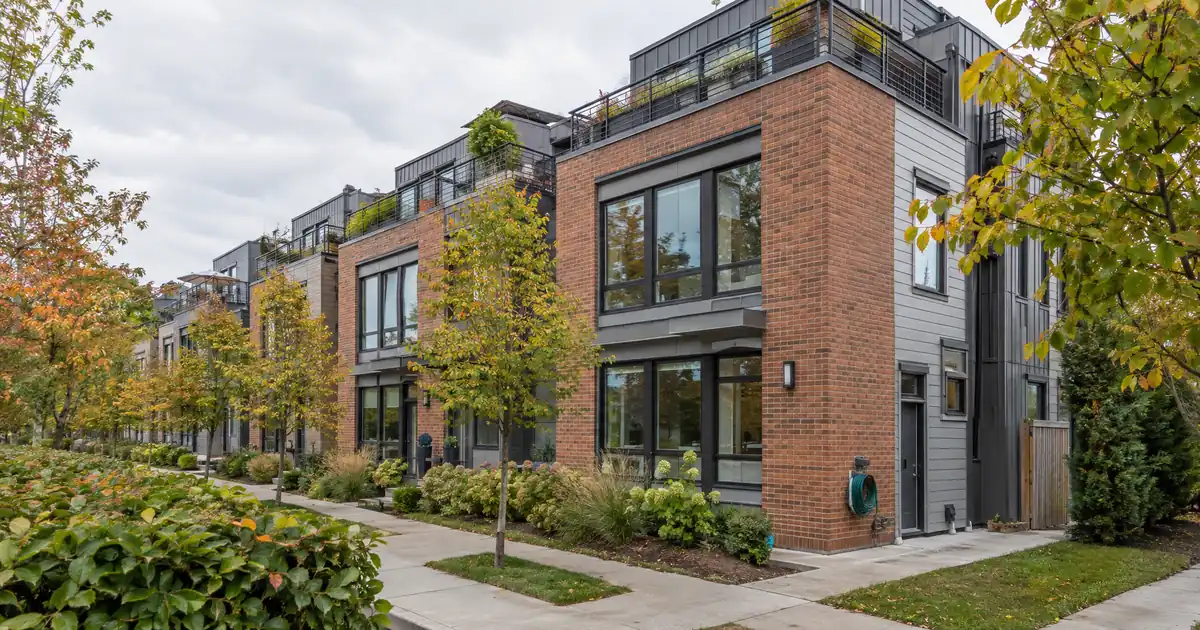
The Quick Read: It depends on the exact limit: if the HOA’s governing documents bar rentals at your term length, a DSCR lender generally cannot finance the condo as a nightly Airbnb, but if the HOA allows your term, a DSCR loan is a workable path even when the building is non-warrantable. The lender still reviews the project, the rental permission, and whether documented rent covers the full payment, HOA dues included.
- An HOA minimum lease term, rental cap, or ban is a hard stop when it conflicts with your planned rental term.
- City permission and HOA permission are separate gates. Both must say yes.
- Non-warrantable is a financing label, not a defect, and DSCR files can still work.
- On short-term rental files, purchase leverage typically tops out at 75% LTV, with refinance around 70% on the strongest files, subject to lender guidelines.
- Read the declaration before you pay for an appraisal.
Short-term rental rules can vary by city, county, HOA, and property type, so investors should confirm local rules before relying on projected rental income.
Short-Term Rental Calculator
Run the STR numbers in your market
Rate source: Freddie Mac 30-yr average via FRED® — Federal Reserve Bank of St. Louis · effective Oct 15, 2026
Prefilled with starting assumptions — enter your nightly rate, occupancy, taxes, and insurance for a more accurate picture.
Short-term rental income is documented with a 12-month history or a market data report. Program parameters update from Lendmire’s centralized guideline source.
As of Oct 15, 2026 · General Freddie Mac market benchmark, not a Lendmire loan offer. Nightly rate, occupancy, taxes, and insurance are editable estimates. Qualifying income for short-term rentals varies by program — some use appraisal market rent, others use documented STR history or projections — and is confirmed in underwriting. Not a Loan Estimate, approval, or commitment to lend. Program availability and eligibility are subject to lender guidelines, credit approval, property review, and underwriting.
Why the HOA Is the Real Gatekeeper
Condo documents are private contracts, and they sit on top of whatever the city allows. There are two gatekeepers, the city and the association, and both have to permit the use. Common HOA limits include minimum lease terms of 30 days, 6 months, or 12 months; board approval of tenants; a cap on leases per year; and outright bans. Minimum lease terms are the most common way associations shut out nightly stays.
A Florida condo-law firm, Hamilton Miller & Birthisel, makes the same point from the legal side. Private declarations can impose minimum lease terms, and a state’s preemption of local vacation-rental ordinances does not reach private covenants. A listing already live on Airbnb proves nothing about what the declaration allows.
Lenders do not run agency warrantability tests, but they do check that the rental use is permitted. If the HOA bars rentals at your term length, the file stops there. No coverage ratio fixes a prohibited use.
What Does a DSCR Lender Actually Review on a Condo?
A DSCR lender reviews the property’s rent against its full monthly obligation, then reviews the building. DSCR loans qualify primarily on property-level rental income covering the payment, subject to lender guidelines. That is not the same as ignoring the project. The borrower’s personal income is not the focus; the condo project still gets underwritten.
The review usually covers:
- Rental permission. Zoning, permits, HOA and condo rules, and appraisal comments may all be checked for evidence the use is allowed.
- The condo questionnaire. An HOA representative completes it. It covers investor concentration, delinquencies, reserves, insurance, commercial space, and any rental-program structure. Pending litigation must be disclosed on it.
- The coverage ratio. Rent used for lender review divided by PITIA. On a condo, PITIA includes HOA dues.
- Borrower profile. Credit, reserves, and for short-term rentals, hosting history.
Clearing 1.00 on coverage is not the same as positive cash flow. Repairs, vacancy, management, utilities, and capex sit outside the calculation.
Key Terms Defined
DSCR: Debt service coverage ratio, the property’s rent used for lender review divided by its monthly PITIA.
PITIA: Principal, interest, taxes, insurance, and association dues, the full monthly obligation on the property.
Warrantable condo: A project that meets the agency secondary-market standards; the label comes from Enact’s explanation of non-warrantable condominiums, which covers what pushes a building outside those standards.
Non-warrantable condo: A project outside those standards, often because of investor concentration, commercial space, thin reserves, or litigation.
Condotel: A hotel-style building where units may sit in a rental pool or front-desk program.
Minimum lease term: An HOA rule setting the shortest allowed rental stay.
Which HOA Limits Block Financing, and Which Don’t?
Match the limit to your rental plan. This table shows how each one typically plays out on a file.
| HOA limit | Effect on a nightly STR | Typical file impact |
|---|---|---|
| Outright rental ban | Blocks it | Hard stop |
| 6- or 12-month minimum | Blocks nightly and mid-term | Hard stop for STR |
| 30-day minimum | Blocks nightly, may allow mid-term | Conditional |
| Cap on rented units | Depends on waitlist position | Conditional |
| Board approval of tenants | Adds friction | Manageable if documented |
| Owner-occupancy waiting period | Delays rental start | Conditional |
A 30-day minimum kills nightly stays but may leave a mid-term rental open. A 6- or 12-month minimum blocks both. Investors sometimes ask about workarounds. There is no clean one short of changing the HOA rules, and lease language written to dodge a minimum invites cease-and-desist letters. Skip it.
If the only thing the HOA permits is long-term leasing, you can still underwrite the file on long-term rent. What you cannot do is plan to operate it as a nightly rental. Misrepresenting the intended use on a loan file is a serious problem, not a technicality.
How to Read the HOA Rules Before You Offer
Reading the governing documents before you offer is a low-cost piece of due diligence on the file. Governingdocs.dev notes that the CC&Rs are the most binding layer, and board-adopted rules and regulations are a second layer that can change more easily.
1. Request the declaration, bylaws, rules, and all amendments in writing. Do not rely on the listing or the agent’s summary.
2. Search for lease minimums, rental caps, STR bans, owner-occupancy waiting periods, and board-approval clauses.
3. Ask about pending votes or proposed amendments. A board can amend rental rules after closing.
4. Ask whether the building has a rental program, and whether it is optional or mandatory.
5. Confirm the city’s separate permission. Local rules are a different system from the HOA.
6. Confirm project status: litigation, reserves, delinquencies, investor concentration.
Do this before paying for an appraisal. An appraisal fee spent on a building that bars your use is money gone.
Warrantable, Non-Warrantable, and Condotel Buildings
A standard condo has the widest pool of lenders. A non-warrantable building has a narrower pool, and a condotel or rental-pool unit is reviewed case by case. Non-warrantable is an agency label rather than a defect, and many of its causes still work under DSCR programs. Active structural litigation or weak reserves can stop the file, though. Investor concentration is a project issue separate from the HOA’s rental rules, and it is often fixable or program-specific.
Heavy short-term-rental activity or a public booking footprint can pull even a warrantable building into hotel-style underwriting. The usual objection to a condotel is that the investor does not control the asset. An optional rental program is more reviewable than a mandatory pool. If the building runs a front desk, handles bookings centrally, or requires you to join a pool, expect that to be the central question on the file.
Some property types are simply outside these programs. Manufactured homes, log homes, and barndominiums are not offered, and that applies to condos only in the sense that the building must be a standard residential condo project.
How Short-Term Income Gets Counted on a Condo
On a refinance, short-term income usually comes from about 12 months of platform history. Typical documents are platform statements, bank deposits, and manager statements. On a purchase, income typically comes from an appraiser’s short-term-rental analysis or market data from a rental analytics provider.
The appraisal form matters. Fannie Mae’s Appraiser Update says its Selling Guide is silent on whether a short-term rental counts as rental income, and the Form 1007 rent schedule is required only for one-unit rental-income qualifying. That is a contrast, not a rule for DSCR files. The 1007 is built around monthly leases. McKissock calls the monthly-versus-nightly gap the biggest challenge in using it for short-term rentals, and HousingWire reports that the form can produce artificially low coverage ratios for them. Lenders therefore often use a short-term-rental-specific analysis instead.
The program figures, as typical ranges from select lenders in the wholesale network and subject to lender guidelines:
- Short-term rental purchase: up to 75% LTV on the strongest files.
- Short-term rental refinance or cash-out: up to 70% LTV.
- Credit score: about 640 or higher.
- Coverage: 1.00 is where select programs start on both purchases and refinances. A separate select-lender path takes coverage below 1.00 with leverage and terms adjusted.
- Hosting history: about 12 months of landlord or host experience is usually expected.
- Loan size: up to $3,000,000 on standard programs.
- Reserves: they vary by lender, leverage, loan size, and transaction type.
DSCR vs. conventional financing
There are two common ways to finance an investment property, and they qualify you differently — here’s how investors weigh them.
Why investors choose it
- Qualifies on the property’s rental income — no personal tax returns, W-2s, or pay stubs needed to document income.
- No personal debt-to-income ceiling to clear, so existing mortgages and obligations don’t cap your borrowing the same way.
- Can be closed in an LLC, keeping the property inside a business entity.
- Built for scaling — not held to the limit on number of financed properties that conventional financing applies.
- Underwriting centers on the deal: generally qualifies when the rent covers the payment, a 1.00x coverage ratio being a common baseline (confirmed in underwriting).
- Designed specifically for investment property, including long-term and, where the program allows, short-term rentals.
Where it’s strong
- Often the lowest ongoing financing cost for a buyer who fully qualifies on personal income — a fit for a first property or a cost-first purchase.
Trade-offs for investors
- Requires full personal income documentation and must fit within a debt-to-income limit — salary, existing debts, and other mortgages all count.
- Typically held in your personal name rather than a business entity.
- Caps how many financed properties you can carry, which can become a ceiling as a portfolio grows.
- Evaluates you as a borrower as much as the property, which usually means more paperwork.
How investors usually choose: a first or single property often optimizes for the lowest financing cost; portfolio builders often optimize for leverage, vesting in an LLC, and scaling past conventional caps. The right answer depends on your goals, the property, and current guidelines — both paths run through select lenders in Lendmire’s wholesale network, with eligibility and terms confirmed in underwriting.
How Do HOA Dues Change the Coverage Ratio?
HOA dues are part of PITIA, so a high-dues building needs more rent to clear the same ratio. Run the numbers on three properties with identical rent. A house with no dues covers its payment with the most room. A condo with low dues scores somewhat lower. A condo with high dues can fall a full tier below the house, even though the rent is the same.
That is why a condo with the same income as a house often scores lower. If the HOA also limits you to a longer lease term, projected nightly income collapses toward long-term rent levels, and the file may no longer clear. Governingdocs.dev warns that discovering a 6-month minimum after buying forfeits much of the projected income. Underwrite the HOA first, then the loan.
A larger down payment lowers the monthly obligation and can lift the ratio. It never erases leverage caps, credit floors, reserve rules, or property eligibility. The strongest files clear both tests: enough equity and enough rental coverage. For the full mechanics, see the complete DSCR loans guide.
When State Law and Grandfathering Matter
Rules differ by state, and this is a place for counsel, not guesswork. Per Hamilton Miller & Birthisel, Florida condo amendments restricting rentals bind only consenting owners and later buyers, with exceptions that let an association regulate rentals under 6 months, or more than 3 per year, for all owners. Practitioner summaries also describe protections for owners against bans adopted after purchase in some states, and court decisions that a general residential-use clause does not automatically ban nightly rentals in others. Those are legal-practitioner summaries. Have an attorney verify before relying on any of them.
If the HOA Says No
If the declaration bars your term, you have three honest options. Buy a different building. Change the plan to a rental term the HOA allows, and underwrite the property on that income. Or work to amend the rules, which is slow and rarely certain. Do not buy first and hope.
Risks After Closing
Rules can change. A board can amend the rental rules after you close, and grandfathering depends on state law and the exact amendment language. Fines are the other trap. Unpaid HOA fines can become liens, and a lien can block a later refinance. The title or HOA estoppel and the questionnaire need to come back clean, with no unpaid fines or liens, at closing and again when you refinance. Many second-lien programs also accept only long-term rentals or only warrantable condos, so a cash-out plan needs the same building review.
Tax treatment can depend on how the funds are used and how the property is held; investors should keep clear records and speak with a qualified tax professional before relying on any deduction.
Common Misconceptions
“DSCR ignores the building.” The borrower’s personal income is not the focus, but the project is still underwritten through the questionnaire, litigation review, and reserves.
“Non-warrantable means no financing.” It is an agency label, and many causes still work under DSCR.
“If the city permits short-term rentals, I’m fine.” The HOA is a separate gatekeeper.
“It’s already on Airbnb, so it’s legal.” A listing proves nothing about the declaration.
“A 1.00 coverage ratio means it makes money.” The ratio excludes repairs, vacancy, and management.
“The 1007 works for Airbnb.” It is built for monthly rent.
Pre-Offer Checklist
Before you write an offer, confirm in order: the HOA allows your term; the city allows the use; the project has no litigation or reserve problems; your income can be documented; and the ratio clears with dues included. Lendmire’s guide How to Vet HOA Rental Rules Before Your First DSCR Condo STR Appraisal walks through the same sequence in more detail.
Frequently Asked Questions
Can I finance a condo in a building with a rental cap?
Sometimes. A cap on the number of rented units is conditional rather than an automatic stop. It depends on whether a rental slot is available to you and whether the cap allows your term length. The lender will want the association’s written confirmation, and approval remains subject to lender guidelines.
Does the city’s short-term rental permit override the HOA?
No. The city and the HOA are separate gatekeepers. A city permit does not override a declaration that bans or limits your rental term, and a state preemption of local ordinances does not reach private covenants.
Can a non-warrantable condo still get a DSCR loan?
Often, yes. Non-warrantable is a financing label from agency standards, not a defect. Investor concentration, commercial space, and rental-program structure are reviewed project by project. Active structural litigation or weak reserves can still stop the file.
What leverage can I expect on a short-term rental condo?
On most files, purchase leverage reaches up to 75% LTV and refinance or cash-out reaches up to 70%, with a score around 640 or higher and about 12 months of hosting history. Coverage of 1.00 is where select programs start. Select lenders in the network also offer a path below 1.00 with leverage and terms adjusted.
What happens if the HOA only allows long-term leases?
You can underwrite the property on long-term rent, but you cannot operate it as a nightly rental. Treating the two as interchangeable on a loan file creates real misrepresentation risk.
If you are buying or refinancing a rental property and want to see how the numbers work, Lendmire can help you compare DSCR loan options based on the property income, credit profile, leverage, and investor goals. Reach the team at 828-256-2183 or request a quote.
About Lendmire
A DSCR-focused mortgage broker, Lendmire (NMLS# 2371349) places investor financing across 41 markets — 40 states plus Washington, D.C. — with DSCR eligibility generally reviewed by the lender on property cash flow instead of tax returns, subject to lender guidelines. Scotsman Guide named Lendmire a Top Mortgage Workplace in 2025 and 2026.
Get Started
Ready to find the right loan for you?
In about 30 seconds you can review financing options available for your investment property. No commitment required.
Informational only. Not a Loan Estimate, approval, or commitment to lend. Program availability and eligibility are subject to lender guidelines, credit approval, property review, and underwriting.
References
1. Hamilton Miller & Birthisel: Condominium Leasing Restrictions
2. Enact: What Makes a Condominium Non-Warrantable
3. Governingdocs.dev: HOA Rental Restrictions Guide
4. Fannie Mae Appraiser Update
5. McKissock: Form 1007 and Short-Term Rental Appraisals
6. HousingWire: Short-Term Rentals Are Breaking the Appraisal Playbook
This article is part of Lendmire’s short-term rental loan program — full qualification details, guidelines, and scenarios live on the program page.
Related reading: How a Short-Term Rental Lender Calculates DSCR After the Expense Haircut · How to Vest a Partnership-Owned Airbnb in an LLC With DSCR · How to Get an STR Insurance Declaration a DSCR Lender Accepts on a Condotel
Brandon Miller
Founder & CEO, Mortgage Loan Originator, Lendmire LLC
- Mortgage Loan Originator · NMLS# 1129696 · Verify on NMLS Consumer Access
- North Carolina Real Estate Broker · License# 343312 · Verify on NCREC
- North Carolina Insurance Producer · License# 19053198 · Property, Casualty, Life, Health · Verify on NAIC SBS
- Lendmire LLC · Firm NMLS# 2371349 · Verify firm licensure
Disclosure information. Lendmire is a state-licensed mortgage brokerage under NMLS# 2371349. Lendmire is not a depository institution, direct lender, or financial advisor — all loans referenced are placed through wholesale lender partners and are subject to each lender's underwriting standards. This article is provided for general informational purposes and is not a commitment to lend, nor does it constitute financial, legal, or tax advice. Loan programs, terms, rates, and qualification standards change without notice and depend on borrower profile, property type, and the state in which the subject property is located. Equal Housing Opportunity provider. NMLS Consumer Access: nmlsconsumeraccess.org.