
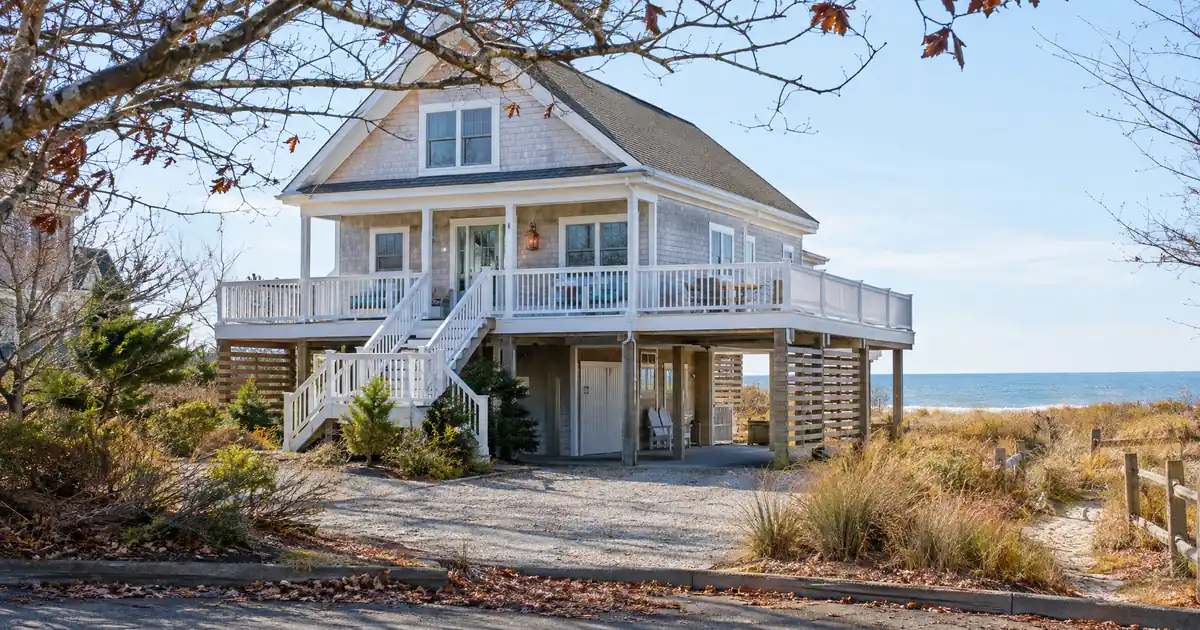
The Quick Read: Often yes, on the right program: on a DSCR purchase, a first-time buyer with no hosting history can usually qualify using a projected short-term income figure that the lender reviews, discounts, and tests against the full monthly payment, rather than the buyer’s traditional personal-income documentation. DSCR stands for debt service coverage ratio, which compares a property’s income to its monthly payment. The catch is that the projection is never whatever a calculator says. The lender picks the method and trims the number.
- Qualification runs primarily on property-level rental income covering the payment, subject to lender guidelines.
- On the strongest STR purchase files, leverage tops out at 75% LTV, with a 640 minimum credit score and a 1.00 coverage floor.
- Many programs expect about 12 months of landlord or host experience, so first-timers should ask how each lender handles that.
- Projections can miss by a wide margin, so underwrite with a cushion.
- Local short-term rental rules decide whether the projection is usable at all.
Why Do Conventional Loans Usually Say No?
Conventional underwriting looks at you: your income, your debts, your traditional personal-income documentation. A property with no booking history has no income on any return yet, so there is nothing to count. A DSCR loan looks at the property instead. Here is the side-by-side.
Short-Term Rental Calculator
Run the STR numbers in your market
Rate source: Freddie Mac 30-yr average via FRED® — Federal Reserve Bank of St. Louis · effective Oct 15, 2026
Prefilled with starting assumptions — enter your nightly rate, occupancy, taxes, and insurance for a more accurate picture.
Short-term rental income is documented with a 12-month history or a market data report. Program parameters update from Lendmire’s centralized guideline source.
As of Oct 15, 2026 · General Freddie Mac market benchmark, not a Lendmire loan offer. Nightly rate, occupancy, taxes, and insurance are editable estimates. Qualifying income for short-term rentals varies by program — some use appraisal market rent, others use documented STR history or projections — and is confirmed in underwriting. Not a Loan Estimate, approval, or commitment to lend. Program availability and eligibility are subject to lender guidelines, credit approval, property review, and underwriting.
| Factor | Conventional | DSCR |
|---|---|---|
| Income used | Your personal income | The property’s income |
| Documentation | W-2s, traditional personal-income documentation | Rent basis, appraisal |
| No-history STR | Usually nothing to count | Projection can fill the gap |
That is why many first-time STR buyers end up on DSCR. The property is the borrower’s argument, and the projection is the evidence. Lendmire’s complete DSCR loans guide covers the full program picture if you are new to the product.
Where Does the Projected Number Come From?
Lenders usually pick from four income bases, and which one a program uses matters more than any other detail. Across the wholesale network Lendmire places files with, the same property can look strong under one basis and thin under another.
| Income basis | Who produces it | What can go wrong |
|---|---|---|
| Appraiser’s STR analysis | Appraiser | Thin local data |
| Market-data projection | AirDNA, Rabbu | Runs optimistic |
| Trailing 12-month history | Manager or bank deposits | Only if already operating |
| Long-term rent schedule | Appraiser | Can sit well below STR income |
The last row deserves attention. The appraiser’s rent schedule is Form 1007 for a one-unit property and Form 1025 for a two- to four-unit property. Both measure long-term rent. Class Valuation points out that the 1007 cannot be used to support short-term rental income, and HousingWire makes the same case. McKissock adds that appraisers value real property, while the lender makes the final call on income.
Some programs default to the long-term schedule. A property that clears 1.00 on Airbnb income can then fall short on paper. Ask which basis applies before you write an offer.
How Does a Projection Become a Coverage Figure?
The lender takes the projected income, applies its own discount, and divides by PITIA. PITIA is principal, interest, taxes, insurance, and any HOA dues. The result is the coverage number. The discount varies by lender, and Lendmire does not treat any single factor as universal.
Where does the raw projection come from? AirDNA’s Rentalizer takes an address and returns projected annual revenue, average daily rate, and occupancy. VaultSTR explains that it builds those figures from the trailing performance of nearby comparable listings, matched on bedrooms, guest capacity, and property type. The comps drive everything, so a bad comp set produces a bad number.
Run the numbers on a modeled property. Assume the long-term rent schedule covers the payment at about 0.90x. That is short of 1.00. Same house, same loan, two different answers. That gap is the whole reason first-time buyers ask this question.
Lendmire’s piece How a First-Time STR Buyer’s Airbnb Income Is Sized for DSCR goes deeper on the sizing step.
How Far Off Can a Projection Be?
Far enough to matter. 10xBnB reports projections can drift 15 to 30% in either direction in markets with few listings. VaultSTR puts single-address estimates in the same 15 to 30% range, with misses clustering on the high side.
Vendors advertise high accuracy, and that figure is real but narrow. RentalRecon notes that aggregate market-level accuracy is not accuracy for one property. Amenities, management quality, and photos move a single listing in ways an average cannot capture.
Underwriters know this, which is why the number a lender adopts is generally more conservative than the raw projection, as OneMoreDoor observes. A deal that only works at the full projection may not survive its own loan file.
Here is a stress test. Take any file that qualifies on projected income and suppose real income comes in 20% under the projection. Coverage can fall toward the 1.00x floor that only select programs accept. Suppose the miss is 30%. Coverage can slip below that floor. Now you are asking whether you can carry the gap yourself.
Qualifying Is Not the Same as Cash Flowing
DSCR compares rent to PITIA and nothing else. Clearing 1.00 does not mean the property makes money. Repairs, vacancy, management, utilities, furnishing, and capital expenses all sit outside the calculation.
A short-term rental has more of those costs than a long-term one. Cleaning, supplies, and platform fees are real. The loan can work on paper in a slow season while your own cash covers the shortfall. Also check what sits inside a projection’s headline revenue, since some figures include cleaning fees that you pass through rather than keep.
Tax treatment can depend on how the funds are used and how the property is held; investors should keep clear records and speak with a qualified tax professional before relying on any deduction.
Is the Projection Even Usable Where You’re Buying?
Short-term rental rules can vary by city, county, HOA, and property type, so investors should confirm local rules before relying on projected rental income. A lender will want the property to be legal to operate as a short-term rental. If it is not, the projection is worthless. Check this before you pay for an appraisal.
What Friction Should a First-Timer Expect?
Expect friction on four fronts.
- Experience. STR programs usually expect about 12 months of landlord or host experience. How a lender treats a buyer with none varies, so ask directly.
- Credit. STR files typically want a 640 minimum score, and stronger scores open better terms.
- Leverage. STR purchases reach up to 75% LTV on the strongest files, and select lenders can adjust terms on thinner ones.
- Reserves. These vary by lender, leverage, loan size, and transaction type, and are commonly around 6 months of PITIA.
Loan sizes on standard programs run up to $3,000,000. A bigger down payment lowers the payment and can lift coverage. It never erases leverage caps, credit floors, reserve rules, or property eligibility. The strongest files clear both tests: enough equity and enough rental coverage.
One more wrinkle: appraisers often lack STR data, especially on higher-value homes. The appraisal can come back thin even when the projection looks strong.
What If the Projection Comes Up Short?
Work down this ladder in order.
1. Check the basis. Ask whether an appraiser’s STR analysis or a data report would show the property more accurately.
2. Add equity. A larger down payment lowers the payment and can lift coverage.
3. Adjust the structure. Select lenders in the network offer interest-only periods and extended terms, which can change the payment side of the ratio.
4. Consider a sub-1.00 path. Coverage below 1.00 is available through select lenders in the network, with leverage and terms adjusted. Note that this is a separate path, not a looser version of the standard floor.
5. Use the long-term fallback. If the property clears on long-term rent, that is a different and often steadier basis.
6. Walk away. Sometimes the honest answer is that the price is too high.
Lendmire’s piece STR income vs long-term rent fallback for a first-time Airbnb DSCR buyer shows how the two bases play out for a first-timer.
If you want cash out later, the realistic route is usually a refinance after about 6 months of seasoning. That is the waiting period before a lender will refinance a newly bought property. STR refinances run up to 70% LTV, and a cash-out on short-term-rental collateral tops out at 70% as well, against 75% on standard rentals.
Who Gets Burned?
- Assuming only long-term rent counts, then passing on a deal that works on an STR basis.
- Assuming the full projection counts, then over-offering.
- Treating a 1.00 coverage ratio as proof of profit.
- Skipping a manual check of the comps behind the projection.
- Contracting before asking which income basis the lender uses.
What Should You Ask Before You Make an Offer?
- Which income basis does this program use for a purchase?
- How is the projection discounted?
- How does the program treat a buyer with no hosting history?
- What are the minimum score, maximum leverage, and reserve expectations for my file?
- What happens if the appraisal comes in light?
Lendmire arranges DSCR financing through select lenders across 41 markets, including Washington, D.C., so these answers can differ lender to lender. Every file is underwritten individually, and nothing here is a commitment to lend.
Key Terms Defined
- DSCR: The property’s qualifying monthly income divided by its monthly payment.
- PITIA: Principal, interest, taxes, insurance, and any HOA dues.
- ADR: Average daily rate, the typical nightly price a rental earns.
- Haircut: The discount a lender applies to projected income before testing coverage.
- Form 1007 / Form 1025: Appraiser rent schedules for one-unit and two- to four-unit properties.
- Seasoning: The waiting period a lender wants before refinancing a purchased property.
Frequently Asked Questions
Do I need a hosting history to buy my first Airbnb with a DSCR loan?
Not always. A first-time purchase can often use an appraiser’s analysis or a market-data projection in place of history. Program rules differ, though, and many STR programs expect about 12 months of landlord or host experience. Ask each lender how it treats a buyer with none.
Does the property have to be listed on Airbnb already?
No. A projection exists precisely because a new purchase has no listing yet. A trailing 12-month statement or bank deposit history only applies if the property already operates as a rental.
Can I use projected Airbnb income on a home I will live in?
Generally not through DSCR. These loans are built for non-owner-occupied investment properties. A home you occupy runs through a different loan type with different income rules.
Who produces the projection?
Either an appraiser, through a short-term rental analysis, or a data service such as AirDNA or Rabbu. The lender decides which one it relies on and may use both.
What if the appraiser’s number and the data report disagree?
The lender’s chosen basis controls. Some programs lean on the appraiser, some on the report, some on whichever is lower. Find out which before you contract, because the gap can decide whether the file clears 1.00.
Next Step
If you are buying or refinancing a rental property and want to see how the numbers work, Lendmire can help you compare DSCR loan options based on the property income, credit profile, leverage, and investor goals. Reach the team at 828-256-2183.
About Lendmire
Lendmire (NMLS# 2371349), a non-QM mortgage broker serving investors in 41 markets including Washington, D.C., helps structure DSCR scenarios commonly evaluated around a property’s rental income rather than personal income paperwork, subject to lender guidelines. A Scotsman Guide Top Mortgage Workplace in 2025 and 2026, Lendmire places loans through wholesale investor lenders and is not a direct lender.
Get Started
Ready to find the right loan for you?
In about 30 seconds you can review financing options available for your investment property. No commitment required.
Informational only. Not a Loan Estimate, approval, or commitment to lend. Program availability and eligibility are subject to lender guidelines, credit approval, property review, and underwriting.
References
1. Class Valuation: Form 1007 and short-term rentals
2. HousingWire: Short-term rentals and the appraisal playbook
3. McKissock: Form 1007 and STR appraisals
4. VaultSTR: AirDNA Rentalizer accuracy
This article is part of Lendmire’s short-term rental loan program — full qualification details, guidelines, and scenarios live on the program page.
Related reading: How to Get a DSCR Takeout on a New Airbnb With Projected Income · How Airbnb DSCR Income Haircut Rules Work for STR Portfolio Operators · How to Document Airbnb Income so a DSCR Lender Uses Actual Bookings
Brandon Miller
Founder & CEO, Mortgage Loan Originator, Lendmire LLC
- Mortgage Loan Originator · NMLS# 1129696 · Verify on NMLS Consumer Access
- North Carolina Real Estate Broker · License# 343312 · Verify on NCREC
- North Carolina Insurance Producer · License# 19053198 · Property, Casualty, Life, Health · Verify on NAIC SBS
- Lendmire LLC · Firm NMLS# 2371349 · Verify firm licensure
Disclosure information. Lendmire is a state-licensed mortgage brokerage under NMLS# 2371349. Lendmire is not a depository institution, direct lender, or financial advisor — all loans referenced are placed through wholesale lender partners and are subject to each lender's underwriting standards. This article is provided for general informational purposes and is not a commitment to lend, nor does it constitute financial, legal, or tax advice. Loan programs, terms, rates, and qualification standards change without notice and depend on borrower profile, property type, and the state in which the subject property is located. Equal Housing Opportunity provider. NMLS Consumer Access: nmlsconsumeraccess.org.