
The Quick Read: The waiting period before a DSCR lender sizes a refinance on appraised value is lender policy, not law. After a duplex split it is usually counted from the recorded deed, so you should settle with the lender how it treats the new deeds before you break ground. Inside the window, many lenders size the loan on your cost. Past it, they size on the appraisal.
- Seasoning is a lender or program rule. Each program sets its own, and no agency sets one for DSCR loans.
- Across most of the wholesale network, about 6 months of seasoning is the common expectation on a cash-out refinance of an investment property.
- On a new build, the clock usually runs from a recorded deed, not from the day construction ends.
- Recording a split does not divide the mortgage. The refinance does that.
- Each half is tested on its own rent against its own payment, and the lowest of three tests sets your loan: seasoning, coverage, and the leverage cap.
Key Terms Defined
Seasoning is the waiting period a lender wants between two events, usually between taking title and refinancing.
Title seasoning is seasoning counted from the date the deed recorded in your name.
Cost basis is what you have put into the property. On a ground-up build, that means land plus documented construction spend.
Appraised value is the value an appraiser assigns to the finished property, based on comparable sales.
DSCR (debt service coverage ratio) is monthly rent divided by the monthly PITIA. A result of 1.00 means rent equals the payment.
PITIA is principal, interest, taxes, insurance, and any association dues. It is the full monthly housing obligation.
Rate-and-term refinance replaces your existing loan without pulling equity out. Cash-out refinance replaces it with a larger loan and pays you the difference.
Delayed financing is a narrow exception that lets a cash buyer borrow against the property soon after purchase.
DSCR Cash-Out Calculator
Run the cash-out numbers in your market
Rate source: Freddie Mac 30-yr average via FRED® — Federal Reserve Bank of St. Louis · effective Oct 15, 2026
Prefilled with starting assumptions — enter your property’s value, balance, taxes, and insurance for a more accurate picture.
Program parameters update from Lendmire’s centralized guideline source. Taxes and insurance are editable estimates.
As of Oct 15, 2026 · General Freddie Mac market benchmark, not a Lendmire loan offer. Property value, balance, taxes, and insurance are editable estimates. Maximum loan-to-value varies by lender, program, property type, and seasoning. Not a Loan Estimate, approval, or commitment to lend. Program availability and eligibility are subject to lender guidelines, credit approval, property review, and underwriting.
What Seasoning Actually Is (and the Two Clocks Inside It)
Seasoning is not one clock. It is two, and investors mix them up constantly.
The first clock is ownership time. How long has your name been on the recorded deed? The second is value basis. Which number does the lender multiply by the leverage cap: what you paid, or what the property appraises for?
Here is how the two fit together. Inside the seasoning window, a lender typically sizes the loan on the lower of appraisal or cost. After the window, it sizes on appraised value. The leverage cap stays the same. The number it applies to changes.
That is why seasoning matters more to a builder than to a buyer. A builder usually creates the most value between land purchase and finished unit. The value basis decides whether you get paid for that.
Conventional agency cash-out rules do not govern DSCR files. DSCR loans are designed for non-owner-occupied investment properties. Because they are business-purpose investor loans, they are reviewed differently from a standard owner-occupied mortgage. Each program writes its own seasoning rule, which is why two lenders can answer the same question differently.
One more point, because it trips people up. A strong coverage ratio or a bigger down payment does not shorten the clock. Coverage and equity are separate tests from time.
Why a New-Construction Duplex Is Different
A purchase has a price and a closing date. A ground-up build has neither in the usual sense.
You bought land on one date. You pulled permits, funded construction, and finished the building on later dates. A certificate of occupancy arrived somewhere in there. Each of those dates looks like a plausible starting point for the clock, and only one of them usually counts.
Across the programs we place files with, the common measure is the date the deed recorded. Finishing construction does not start a clock. It does not stop one either.
That leaves the question new builders actually need answered: does the clock start when you recorded the land deed, or when a new deed recorded after the split? Lender policy varies here. Some count from original land acquisition. Others look at the date the new parcel or unit title recorded. If you hold title in your own entity throughout, some lenders still treat the transfer as a new title event. Treat it as a file-specific question and get the answer in writing before you commit.
The second difference is cost. With no purchase price, cost basis becomes land plus the construction spend you can document: contracts, draw records, invoices, and proof of payment. Sloppy records shrink your cost basis, and inside the window that shrinks your loan.
What the Split Does to the Clock
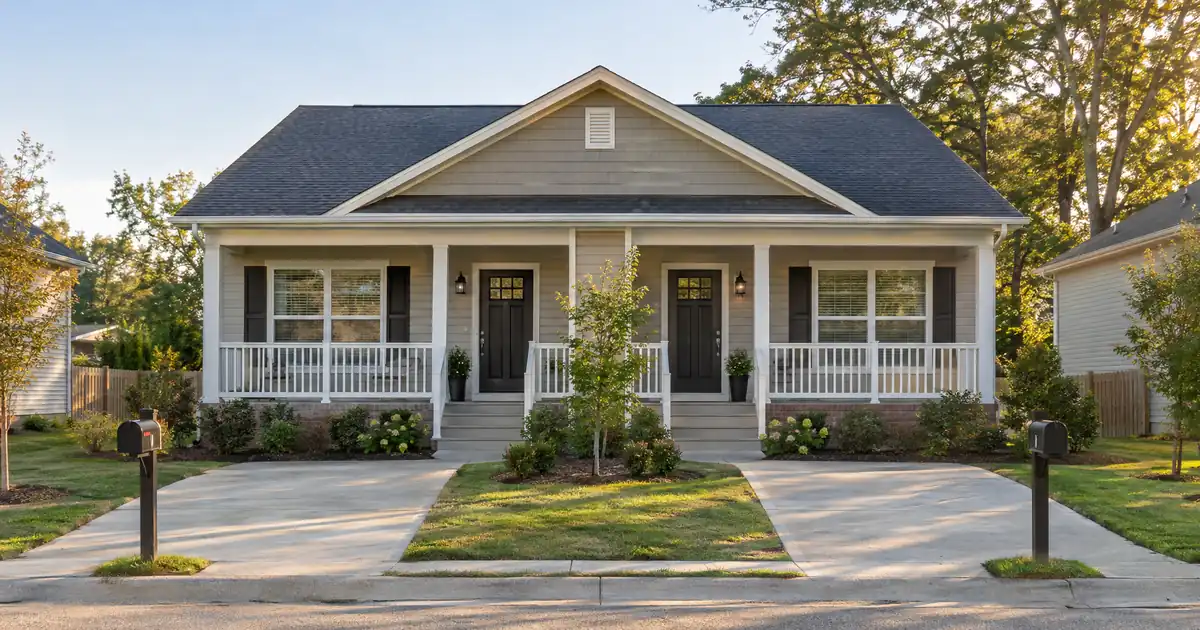
A duplex normally sits on one parcel, with one deed and one tax parcel number. The split is a legal and title event first and a financing event second. There are two routes.
A lot subdivision divides the land into two legal parcels. LegalClarity notes that this works only for side-by-side layouts with a clear physical separation, and that each lot must still meet minimum size, frontage, and setback rules. Stacked duplexes cannot be lot-split at all. A municipal example is the City of San Diego’s information bulletin, which defines an urban lot split as a division into no more than two separately conveyable lots.
A condominium conversion divides the airspace inside the building. The land and structure stay under shared ownership, so you get two titled units without two lots.
Either way, PropertyZoned explains that recording creates separate parcel numbers, and utility separation may be required before or after recordation depending on local policy. Some local lot-split programs also attach owner-occupancy conditions, which can conflict with a DSCR loan’s non-owner-occupied requirement. Check that before you file.
Now the clock. New deeds mean new recorded title dates. Some lenders treat that as ownership continuity, since the same borrower holds the same building. Others count from the new deed. If you move one half into a separate entity, the second reading becomes more likely, subject to program terms.
Recording the split also does not divide your loan. If a construction or bridge loan sits on the whole duplex, it stays on the whole duplex until a refinance pays it off. For the legal and lending sequence in detail, see Lendmire’s piece How to Split a New-Construction Duplex and Refinance on DSCR.
Cost Basis Versus Appraised Value on a Ground-Up Build
Here is the difference in an illustrative index, not a dollar figure. Say your documented cost is 100, and the finished unit appraises at 125. At a 75% cap, a loan sized on cost is about 75. A loan sized on appraisal is about 94.
That gap is the reason seasoning matters. Inside the window, you get the first number. After it, the second.
Two cautions. The appraisal sets value for the leverage test and market rent for the coverage test, so a low appraisal hurts both. And a lender may pass you on title age while still holding you to cost on the value side. Those are separate questions, so ask both.
A split property is also appraised as what it now is, a condo or a single-family-style lot, not as a duplex. Comparable sales shift accordingly, which can move value in either direction.
Per-Unit Coverage: Each Half Stands Alone
After the split, each unit is tested on its own rent against its own PITIA. The appraiser estimates market rent using a rent schedule form (a 1007 for single-family-style units, or a 1025 for small income properties). The lender uses that rent to calculate coverage. The property generally does not have to be leased at closing, though lenders differ on whether a signed lease or a market-rent opinion is enough.
Splitting usually lowers each unit’s coverage compared with the old whole-building test. Each unit now carries its own association dues and its own insurance policy. Cash-out also grows the balance, which tightens coverage again. On many files, coverage caps the loan before equity does.
On coverage floors: 1.00 is where many select programs start. A separate select-lender path takes coverage below 1.00, with leverage and terms adjusted. Stronger ratios open better pricing and higher leverage. Clearing 1.00 is not the same as positive cash flow, because repairs, vacancy, management, utilities, and capital expenses sit outside the calculation.
Credit also matters. A 620 floor exists in parts of the network, most programs want around 660, and 700 or higher unlocks the strongest leverage tiers. Reserves vary by lender, leverage, and loan size. About 6 months of PITIA is common, and loans above $1,500,000 typically step up to about 9 months. All of this is subject to lender guidelines.
DSCR vs. conventional financing
There are two common ways to finance an investment property, and they qualify you differently — here’s how investors weigh them.
Why investors choose it
- Qualifies on the property’s rental income — no personal tax returns, W-2s, or pay stubs needed to document income.
- No personal debt-to-income ceiling to clear, so existing mortgages and obligations don’t cap your borrowing the same way.
- Can be closed in an LLC, keeping the property inside a business entity.
- Built for scaling — not held to the limit on number of financed properties that conventional financing applies.
- Underwriting centers on the deal: generally qualifies when the rent covers the payment, a 1.00x coverage ratio being a common baseline (confirmed in underwriting).
- Designed specifically for investment property, including long-term and, where the program allows, short-term rentals.
Where it’s strong
- Often the lowest ongoing financing cost for a buyer who fully qualifies on personal income — a fit for a first property or a cost-first purchase.
Trade-offs for investors
- Requires full personal income documentation and must fit within a debt-to-income limit — salary, existing debts, and other mortgages all count.
- Typically held in your personal name rather than a business entity.
- Caps how many financed properties you can carry, which can become a ceiling as a portfolio grows.
- Evaluates you as a borrower as much as the property, which usually means more paperwork.
How investors usually choose: a first or single property often optimizes for the lowest financing cost; portfolio builders often optimize for leverage, vesting in an LLC, and scaling past conventional caps. The right answer depends on your goals, the property, and current guidelines — both paths run through select lenders in Lendmire’s wholesale network, with eligibility and terms confirmed in underwriting.
Clock Scenarios at a Glance
The table below shows how the clock and the value basis usually line up. Cells are qualitative on purpose, because lender policy decides the edges.
| Scenario | What usually starts the clock | Value basis inside the window | Proof to expect |
|---|---|---|---|
| Purchase and hold | Recorded deed | Lower of cost or appraisal | Deed, settlement statement |
| Ground-up build, no split | Land deed, per most programs | Land plus documented construction cost | Land deed, draws, invoices |
| Split, same entity | Varies: land deed or new deed | Documented cost | New deeds, plat, cost records |
| Split, separate entities | Often the new deed | Documented cost, per unit | Entity records, new deeds |
| Cash-funded build | Land deed, delayed-financing review | Documented cost | Proof of funds, no secured debt |
For how entity structure changes the file, Lendmire’s piece How to Split a Duplex in an LLC Portfolio and Refinance on DSCR covers it, subject to program terms.
Choosing Your Exit Lane
Once the units are titled and rented, you generally have three ways out of construction or bridge debt.
Cash-out on appraised value, after seasoning. On a cash-out refinance of an investment property, the ceiling across most of the network is about 75% LTV. Short-term rental collateral tops out lower, around 70% on cash-out. Terms depend on the lender’s guidelines, the property type, the leverage, and a full review of the credit profile.
Payoff-only, rate-and-term. This takes out the construction or bridge loan without pulling cash. It often sidesteps the cash-out clock, because you are not taking equity. Many investors miss this lane, and it is often the cleanest first step.
Delayed financing. This is a seasoning exception borrowed from conventional lending, and it is not a DSCR product by itself. It is available only if the build was cash-funded. A construction or bridge loan secured by the property generally breaks it, as does seller financing. It waives only the waiting period. It does not waive coverage, reserves, the appraisal, or the leverage cap.
It also sizes on documented cost. At a 75% cap, the cost cap starts to bind once appraised value passes roughly 133% of cost. For a new build, whether land plus construction spend counts as cost is lender-specific.
Where the General Rule Breaks
- An existing mortgage on the duplex. A conversion generally cannot proceed with an outstanding mortgage unless the lender handles it. Settle that before you record.
- Lease and deposit evidence. A missing lease or deposit record is a common stall at refinance.
- Prepayment penalties. Many DSCR loans carry one. If you plan to refinance again in under a year, a short-term bridge loan may suit better than a long-term DSCR loan.
- Owner-occupancy during the build. If you lived in one half, the file may fail the non-owner-occupied test for that unit. Disclose it early.
- Individual waivers. Shorter seasoning sometimes comes with tighter conditions or a case-by-case waiver on strong compensating factors. Treat that as a conversation to have, not something to count on.
- Ineligible property types. Manufactured homes, log homes, and barndominiums fall outside these programs, so a build of that kind will not move through this path.
A broker’s observation from comparable files: seasoning misalignment is a common reason a build-and-refinance plan stalls. The date on the land deed, the date on the new deeds, and the date on the lease rarely line up the way the investor assumed.
An Illustrative Timeline
This is a planning sequence with round numbers, not a quote or a promise of any outcome.
1. Before land closing. Ask the lender how it measures seasoning and value on new construction.
2. During construction. Keep every contract, draw, and invoice in one folder.
3. Completion. Obtain the certificate of occupancy and order the split paperwork.
4. Split recorded. Confirm separate deeds, parcel numbers, and utilities.
5. Lease-up. Sign leases, or order the market-rent appraisal if the lender accepts it.
6. Month 1 to 5 after the relevant recording. A rate-and-term payoff is typically the only practical option.
7. Around month 6 or later. A cash-out on appraised value becomes realistic on most programs, if coverage, credit, and reserves line up.
Run the real numbers early. If a unit clears 1.00 by a thin margin, a low appraisal or a higher insurance quote can pull it under. Under 1.00 is not a dead end, since a select-lender path exists with leverage and terms adjusted, but it changes the file.
Documents to Gather
- Recorded deeds for the land and for each new parcel or unit.
- The recorded plat, party-wall agreement, and maintenance agreement, where they apply.
- Construction contracts, draw schedules, invoices, and proof of payment.
- The certificate of occupancy.
- Leases and deposit records, or the market-rent appraisal.
- Entity records, if each half sits in its own LLC.
- Proof of funds, for a delayed-financing request.
For the broader program picture, Lendmire’s complete DSCR loans guide covers qualification, leverage, and documents across the network.
Frequently Asked Questions
Does the seasoning clock restart when I split a duplex?
It depends on the lender. Many count from the recorded deed, so new deeds can restart the clock. Others treat the same borrower holding the same building as continuous ownership. Ask before you record. If you move a half into a separate entity, the restart reading becomes more likely.
Does seasoning start when construction finishes?
Usually not. The common measure is the recorded deed, so land purchase or a new recorded title is the likelier starting point. Completion matters for the certificate of occupancy and the rent evidence, not for the clock.
Can I refinance before the seasoning window ends?
Often, yes. Many lenders allow it but size the loan on cost instead of the new appraisal. A payoff-only refinance of construction debt can also avoid the cash-out clock. Either way, coverage, credit, and reserves still apply, subject to lender guidelines.
Do I need a signed lease before the refinance?
Not always. The appraiser estimates market rent, and the lender uses it to calculate coverage. Some lenders still want lease and deposit evidence, so ask which they accept for a brand-new unit.
Does a bigger down payment or stronger coverage shorten the wait?
No. More equity lowers the payment and can lift coverage, but it does not erase seasoning, credit floors, reserve rules, or property eligibility. The strongest files clear both tests: enough equity and enough rental coverage.
Next Step
If you are buying or refinancing a rental property and want to see how the numbers work, Lendmire can help you compare DSCR loan options based on the property income, credit profile, leverage, and investor goals. Lendmire is a mortgage broker that arranges financing through select lenders in its wholesale network, covering 41 markets, including Washington, D.C. Qualification is subject to lender guidelines and is not a commitment to lend.
About Lendmire
A DSCR-focused mortgage broker, Lendmire (NMLS# 2371349) places investor financing across 41 markets — 40 states plus Washington, D.C. — with DSCR eligibility generally reviewed by the lender on property cash flow instead of tax returns, subject to lender guidelines. Scotsman Guide named Lendmire a Top Mortgage Workplace in 2025 and 2026.
Get Started
Ready to find the right loan for you?
In about 30 seconds you can review financing options available for your investment property. No commitment required.
Informational only. Not a Loan Estimate, approval, or commitment to lend. Program availability and eligibility are subject to lender guidelines, credit approval, property review, and underwriting.
References
1. LegalClarity – Can You Split a Duplex Into Two Separate Properties
2. City of San Diego – Information Bulletin 409
3. PropertyZoned – Lot Splitting Laws
This article is part of Lendmire’s DSCR loan program — full qualification details, guidelines, and scenarios live on the program page.
Related reading: Delayed Financing vs Seasoning on a Rental Cash-Out Refinance · How to Use an LOMA on a DSCR Purchase in a Flood Zone · How to Refinance a Hard Money Flip Into a DSCR Loan Early
Brandon Miller
Founder & CEO, Mortgage Loan Originator, Lendmire LLC
- Mortgage Loan Originator · NMLS# 1129696 · Verify on NMLS Consumer Access
- North Carolina Real Estate Broker · License# 343312 · Verify on NCREC
- North Carolina Insurance Producer · License# 19053198 · Property, Casualty, Life, Health · Verify on NAIC SBS
- Lendmire LLC · Firm NMLS# 2371349 · Verify firm licensure
Legal disclosures. Lendmire (NMLS# 2371349) is a state-licensed mortgage brokerage that arranges financing through wholesale lender relationships. Lendmire is not a direct lender, depository institution, or registered financial advisor. The discussion above is general informational content about real estate financing — it is not financial, legal, or tax advice, and readers should consult licensed professionals for guidance on their individual circumstances. Loan inquiries are subject to lender underwriting; this article does not represent a commitment to lend. Loan terms, rates, and qualification standards vary by borrower, property, and state, and are subject to change at any time. Equal Housing Opportunity. NMLS Consumer Access: nmlsconsumeraccess.org.