
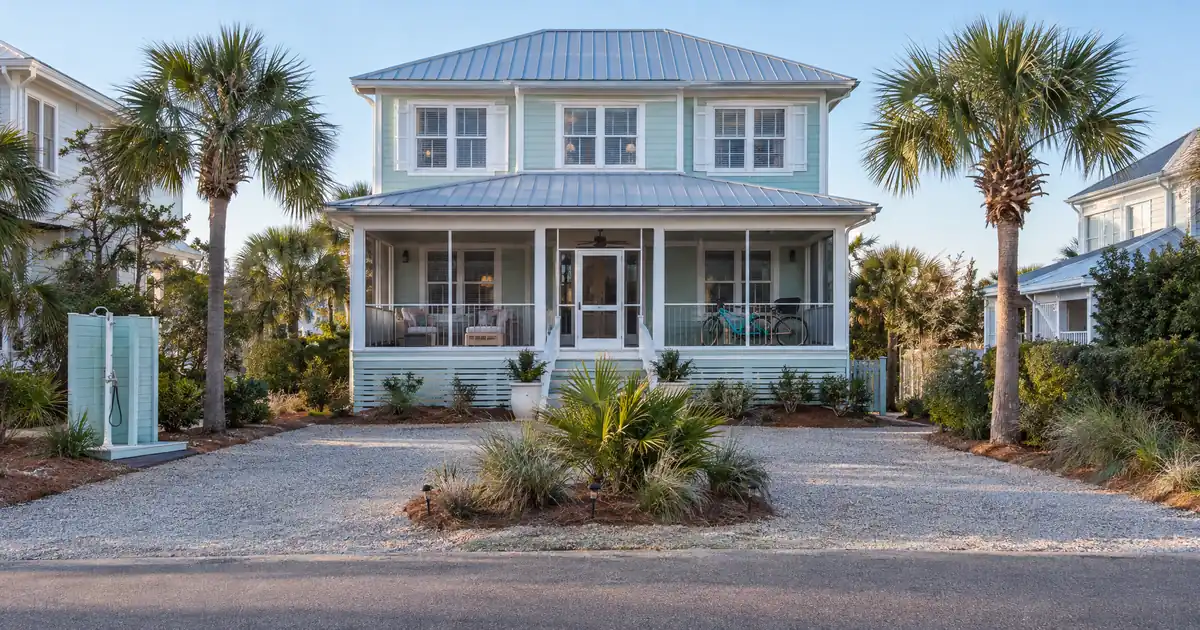
The Quick Read: Permit-cap risk is the chance that a short-term rental you finance can never legally operate as one under your ownership, because the city’s limited pool of permits is full, closed, or tied to the seller. Confirm in writing that a permit is available to your buyer and entity before you remove contingencies, because a listing’s revenue history belongs to the seller’s permit, not to you. Short-term rental rules can vary by city, county, HOA, and property type, so investors should confirm local rules before relying on projected rental income.
- Legal is not the same as available. A city can allow short-term rentals and still have no open slot for you.
- Permits usually do not ride with the deed. The buyer typically applies fresh, under the rules in force on the application date.
- Underwriting follows the income you can legally earn. If the permit fails, the long-term rent is the natural fallback case.
- Out-of-state buyers carry the most risk. You cannot easily test local practice, so the verification has to be written and documented.
An out-of-state buyer is often shopping from a listing page that shows a strong trailing revenue number. That number is the most seductive and least transferable fact in the file. This guide walks through what a cap is, how a DSCR file treats it, the structures that exist, where the general rule breaks, and what the decision looks like in practice.
Short-Term Rental Calculator
Run the STR numbers in your market
Rate source: Freddie Mac 30-yr average via FRED® — Federal Reserve Bank of St. Louis · effective Oct 15, 2026
Prefilled with starting assumptions — enter your nightly rate, occupancy, taxes, and insurance for a more accurate picture.
Short-term rental income is documented with a 12-month history or a market data report. Program parameters update from Lendmire’s centralized guideline source.
As of Oct 15, 2026 · General Freddie Mac market benchmark, not a Lendmire loan offer. Nightly rate, occupancy, taxes, and insurance are editable estimates. Qualifying income for short-term rentals varies by program — some use appraisal market rent, others use documented STR history or projections — and is confirmed in underwriting. Not a Loan Estimate, approval, or commitment to lend. Program availability and eligibility are subject to lender guidelines, credit approval, property review, and underwriting.
What Does Permit-Cap Risk Actually Mean?
Permit-cap risk is the gap between “short-term rentals are legal here” and “a permit is available to me for this address.” Two conditions must both be true: the law must allow the use, and a slot must be open to your buyer and entity.
Regulation is local. One source notes there is no federal short-term rental law, and legality is decided city by city, sometimes state by state. A cap is only one tool among many. BiggerPockets lists the usual restriction types as limits on rental nights, zones that limit the number of STRs, license requirements, and bans in residential areas. Some cities also require the rental to be a primary residence, which shuts out most investor buyers entirely.
Caps take several shapes:
| Cap type | How it works | Buyer consequence |
|---|---|---|
| Percentage of housing stock | Permits limited to a share of homes | Slot may be full on your date |
| Hard numeric cap | Fixed permit count | Wait for a lapse |
| Per-block or distance rule | Spacing between permitted homes | Address-specific answer |
| Lottery | Random draw if applicants exceed permits | No control over timing |
| Waitlist | Queue until a permit lapses | Open-ended delay |
| Per-person or per-entity limit | Caps holdings by owner | Can block portfolio buyers |
Why Does This Hit Out-of-State Buyers Hardest?
Out-of-state buyers face the highest exposure because they cannot easily judge local practice, and the listing’s revenue figure reflects the seller’s permit rather than a permit the buyer holds.
A local investor can walk into the planning office, hear how the staff talk about enforcement, and notice that three neighbors just lost their permits. A remote buyer gets a listing agent’s summary. That agent is paid when the sale happens. The compounding problem is that a “turnkey, income included” price can bake in revenue that existed only under someone else’s registration.
One more habit hurts remote buyers: avoiding the question. BiggerPockets Rookie guests note that investors steer clear of places with no STR policies at all, because it is hard to know what happens if the city later adds permits. The opposite mistake is just as common, which is trusting a market because it looks settled today.
How Do Real Caps Work in Practice?
Real caps vary widely, and the examples show the range: lotteries, percentage limits, distance buffers, and per-person limits. Treat each as an illustration of a mechanism, then check the current code for your own address.
- Lottery. In Fair Haven, New York, a draft law uses a random selection process, essentially a lottery, if more people apply than permits are available. A lottery does not care whether the applicant is a single host or an operator with many properties.
- Density and per-block limits. BiggerPockets reports San Diego caps whole-home licenses at 1% of the housing stock, and that New Orleans allows one permit per block and bars corporate operators. That second rule matters for LLC borrowers.
- Hard numeric cap and per-person limit. An investor on the BiggerPockets Rookie podcast described a desert town that capped permits at 500, with a plan to limit permits per person to two.
- Distance rules and litigation. Clark County, Nevada’s ordinance used a 1% cap, 1,000-foot separation, a 2,500-foot resort buffer, and a lottery, and the application window has not reopened since the August 2023 deadline. The same local brokerage blog describes a court injunction and an appeal, so treat that market as unsettled and re-verify it before relying on it.
Caps can also be legally durable. A vendor blog reports that courts have generally upheld permit caps, while state preemption laws in some states may limit what a city can do. That is a general pattern, not a prediction for your address.
Does the Permit Transfer When You Buy?
Usually not. Municipal and broker sources point the same way: the permit belongs to an owner, not to the deed, and the buyer starts over.
Steamboat Springs’ own FAQ says short-term rental licenses do not transfer with the sale of property and that new owners must apply in their own name before operating. The same city says that if an interest in an owning entity moves to someone who held no interest, the entity must apply for a new license. For an LLC borrower, that means a vesting change after closing can reopen the permit question.
Local agent blogs describe the same pattern in other places. Some towns impose a waiting period after sale before a new owner may apply. Others let the permit expire automatically on transfer, or limit permits to a primary residence. Treat those as pointers to check against the town code, not as the rule for your market.
Grandfathering is the sharpest trap. An existing operator may keep a permit until the property sells. A grandfathered property is not a permitted property for the next buyer.
Key Terms Defined
Permit cap: A limit on how many short-term rental permits a city issues, by count, percentage, block, or district.
Grandfathering: Letting an existing operator keep operating under old rules until the property changes hands.
Trailing twelve-month revenue: The income a property earned over the last year, which reflects the seller’s permit and operating history.
Debt service coverage ratio (DSCR): Rent divided by the full monthly obligation of principal, interest, taxes, insurance, and any HOA dues.
Long-term rental fallback: The market-rent case used if short-term operation turns out to be unavailable.
Contingency: A contract condition that lets you exit, ideally without losing your earnest money, if a stated event fails.
How Does a DSCR File Treat Permit Status?
The lender wants the income used to qualify to match the income you can legally earn. If the permit is uncertain, the safer basis is long-term market rent, and the short-term case is something the file has to earn.
Across the wholesale network Lendmire works with, programs treat short-term rental income differently, and permit documentation expectations vary by lender. The common thread is simple. A DSCR loan qualifies primarily on property-level rental income covering the payment, subject to lender guidelines. If a permit is denied after closing, the property may have to run as a long-term rental, which changes the cash flow the loan was sized on. Where an appraisal uses a market-rent schedule (Form 1007) or an operating income statement (Form 1025), long-term rent is the natural fallback.
The short-term rental parameters in the network are tighter than standard rentals:
- Purchase leverage: up to 75% LTV on the strongest files.
- Cash-out or refinance leverage: up to 70% LTV on short-term-rental collateral.
- Credit: a 640 minimum score.
- Coverage: purchase 1.00 and refinance 1.00 are where select programs start.
- Experience: about 12 months of hosting history is usually expected.
- Loan size: up to $3,000,000 on standard programs.
All of these are typical ranges from select lenders, subject to lender guidelines, and every file is reviewed individually. Not a commitment to lend. Reserves vary by lender, leverage, and loan size, and are commonly around six months of PITIA.
Two clarifications help. First, clearing 1.00 is not the same as positive cash flow. DSCR compares rent to the payment only, so repairs, vacancy, management, utilities, and capex sit outside it. Second, a bigger down payment can lift the ratio but never erases a permit problem. The strongest files clear both tests: enough equity and enough rental coverage.
For the wider mechanics, see the complete DSCR loans guide.
A Practitioner’s Read on Dual-Case Underwriting
On out-of-state short-term rental files, the stronger deals are usually the ones where the buyer ran both cases before making an offer: the short-term case and the long-term fallback. A property that only works on short-term revenue, and only if a contested permit arrives, is a bet on a government decision rather than an investment in a rental.
Picture an investor buying a capped-market property where the short-term case clears roughly 1.3x. If the fallback long-term rent lands near 0.95x, that purchase carries a real downside. A sub-1.00 structure is available through select lenders in the network, with leverage and terms adjusted, but the question worth asking first is whether the fallback should be the plan at all. Consider the opposite property, where the fallback still clears around 1.1x. There, a denied permit is a disappointment, not a crisis.
Run both numbers before the offer. If the fallback case only works at lower leverage, the price should reflect that.
How Do You Verify a Cap Remotely?
Use a written, documented sequence that never relies on a seller’s or agent’s word. The first “no” ends the analysis, so run the cheap checks first.
1. Pull the ordinance and zoning map for the exact address. Prioritize government sources; BiggerPockets’ guide advises using government websites for accurate, updated information.
2. Call or email the planning or zoning office if nothing is online. BiggerPockets suggests a call to the zoning and planning department in that case.
3. Ask whether a cap exists and whether it is currently full. Ask about any waitlist, lottery, or application window.
4. Confirm the permit does not transfer and learn the buyer’s application timing.
5. Ask who may hold it. Investor, non-owner-occupant, and LLC eligibility differ by city.
6. Check HOA covenants and any lease layers, which can override a city permit.
7. Get the answer in writing and keep it in the file.
Questions to put to the city, copy-ready: Is a permit available for this address to a non-resident buyer? Is it available to an LLC? Is the cap currently full? Is there a lottery, waitlist, or waiting period after sale? Is any ordinance change pending?
An anecdote worth keeping in perspective: one BiggerPockets forum poster reported that a resident-agent rule was met by hiring a cleaning company as the local agent, and the city confirmed it. That is a single account, and rules vary. Ask, don’t assume.
DSCR vs. conventional financing
There are two common ways to finance an investment property, and they qualify you differently — here’s how investors weigh them.
Why investors choose it
- Qualifies on the property’s rental income — no personal tax returns, W-2s, or pay stubs needed to document income.
- No personal debt-to-income ceiling to clear, so existing mortgages and obligations don’t cap your borrowing the same way.
- Can be closed in an LLC, keeping the property inside a business entity.
- Built for scaling — not held to the limit on number of financed properties that conventional financing applies.
- Underwriting centers on the deal: generally qualifies when the rent covers the payment, a 1.00x coverage ratio being a common baseline (confirmed in underwriting).
- Designed specifically for investment property, including long-term and, where the program allows, short-term rentals.
Where it’s strong
- Often the lowest ongoing financing cost for a buyer who fully qualifies on personal income — a fit for a first property or a cost-first purchase.
Trade-offs for investors
- Requires full personal income documentation and must fit within a debt-to-income limit — salary, existing debts, and other mortgages all count.
- Typically held in your personal name rather than a business entity.
- Caps how many financed properties you can carry, which can become a ceiling as a portfolio grows.
- Evaluates you as a borrower as much as the property, which usually means more paperwork.
How investors usually choose: a first or single property often optimizes for the lowest financing cost; portfolio builders often optimize for leverage, vesting in an LLC, and scaling past conventional caps. The right answer depends on your goals, the property, and current guidelines — both paths run through select lenders in Lendmire’s wholesale network, with eligibility and terms confirmed in underwriting.
What Should the Contract Say?
Tie the purchase to the permit, not to the listing. A due diligence period lets you pull out without sacrificing your earnest money, per BiggerPockets’ guide, so the aim is to time that window to the city’s process.
Where a lottery or application cycle runs longer than your due diligence period, you have three choices: negotiate a longer window, structure the offer around the long-term fallback, or pass. Buying first and applying later is the sequence that has cost hosts the deal.
Cap Status Triage: Walk, Reprice, or Proceed
| Cap status | Typical action | Contingency |
|---|---|---|
| Open, buyer-eligible | Proceed with written confirmation | Permit approval |
| Waitlist | Reprice to long-term fallback | Fallback must clear on its own |
| Lottery | Treat revenue as an option, not a base | Time window to the draw |
| Closed or moratorium | Underwrite long-term only, or walk | None for STR income |
| Grandfathered, seller-held | Assume no permit for you | Price as long-term rental |
This is a general framework. A scarce permit can support pricing for existing holders, as an operator on the Rookie episode argued, but that helps permit holders, not buyers who cannot get one.
Where the General Rule Breaks
Several edge cases bend the picture.
- Entity limits. Per-entity or corporate bans, like New Orleans’ rule against corporate operators, can block an LLC borrower. If your structure uses an LLC, confirm eligibility before you title the property, subject to lender program eligibility.
- Renewal clocks. A local agent blog reports certificates in one Montana town that are not renewed by September 1 are automatically terminated. Put renewals on a calendar the day you close.
- Rules in flux. Litigation, like the Clark County case above, and state preemption can change enforcement after you buy.
- Revenue history. One agent blog notes a seller’s rental history does not transfer and effectively resets under a new owner. Treat trailing revenue as evidence about the property’s appeal, not proof of your income.
- Ineligible property types. Manufactured homes, log homes, and barndominiums are not offered in the network’s DSCR programs, regardless of permit status.
- Budget the cost of compliance. BiggerPockets recommends accounting for permits, licensing, and occupancy taxes in the expense category. Tax treatment varies; consult a qualified professional.
What Does the Decision Look Like?
The decision is a sequence: legal use, then open slot, then entity eligibility, then fallback coverage, then price. If the permit is available and the fallback clears comfortably, proceed. If the fallback is thin, reprice or reduce leverage. If neither works, the property is not a short-term rental investment for you, and the right move is to look at another submarket, not to reach for a different loan.
If you are buying or refinancing a rental property and want to see how the numbers work, Lendmire can help you compare DSCR loan options based on the property income, credit profile, leverage, and investor goals. Lendmire is a broker that arranges financing through select lenders in its wholesale network across 41 markets, including Washington, D.C. For a look at the leverage differences once an Airbnb is in play, Lendmire’s piece DSCR Cash-Out Rules for a Rental Used Long-Term and as an Airbnb covers the cash-out side.
Frequently Asked Questions
Does a short-term rental permit transfer when I buy the property?
Usually not. Steamboat Springs’ municipal FAQ states that licenses do not transfer with the sale and that the new owner must apply in their own name. Some places also add a waiting period or let the permit expire on sale. Confirm the rule for your address with the city.
Can an LLC hold a permit in a capped market?
Sometimes, but not always. Some cities bar corporate operators, and others require a new license when entity ownership changes. Check eligibility before choosing how to title the property, and make sure the vesting entity matches the permit applicant, subject to lender program eligibility.
What happens to my DSCR loan if the permit is denied after closing?
The property may have to operate as a long-term rental, which can change the cash flow the loan was based on. That is why dual-case underwriting matters. Short-term rental purchases on the strongest files go up to 75% LTV, so a thin fallback leaves little cushion. Terms depend on the lender’s guidelines, the property type, the leverage, and a full review of the credit profile.
Can I trust the seller’s trailing twelve months as proof of income?
No. It shows what the house earned under the seller’s registration. Under your ownership the history effectively starts over, and the permit must be obtained fresh. Use it as a clue, then verify availability with the city.
Is a grandfathered short-term rental safe to buy?
Not for the next buyer. Grandfathering usually protects the existing operator only until the property sells. Price the property as a long-term rental unless the city confirms in writing that a permit is available to you.
Investors focused on short-term rentals can review DSCR loans for Airbnb and short-term rentals.
About Lendmire
Lendmire is a non-QM mortgage brokerage (NMLS# 2371349) arranging DSCR investor loans in 41 markets, including Washington, D.C., through wholesale and investor-lending channels. DSCR loans are evaluated by the lender on rental income rather than personal income, subject to lender guidelines, which suits LLC-owned portfolios, self-employed investors, and operators scaling beyond conventional loan caps. Recognized as a Scotsman Guide Top Mortgage Workplace in 2025 and 2026.
Get Started
Ready to find the right loan for you?
In about 30 seconds you can review financing options available for your investment property. No commitment required.
Informational only. Not a Loan Estimate, approval, or commitment to lend. Program availability and eligibility are subject to lender guidelines, credit approval, property review, and underwriting.
References
2. BiggerPockets – How to Analyze a Market for STRs
3. BiggerPockets – Do New STR Regulations Make Investing Risky? (Rookie 204)
4. CNY Central – Fair Haven lottery hearing
5. BiggerPockets – STR Markets to Think Twice About
6. Nevada Real Estate Group – Las Vegas STR rules
7. Staystra – Permit caps and ownership limits
8. City of Steamboat Springs – STR FAQ
9. BiggerPockets – Ultimate Guide to STR Properties
10. BiggerPockets – What You Need to Know Before Buying an STR
11. BiggerPockets Forum – Short Term Rental Regulations
This article is part of Lendmire’s short-term rental loan program — full qualification details, guidelines, and scenarios live on the program page.
Related reading: How to Get an STR-Experienced Appraiser for Your Airbnb DSCR Loan · How to Vet an Out-of-State STR Market for a DSCR Loan · How to Finance an Out-of-State Condotel With a Short-Term Rental DSCR Loan
Brandon Miller
Founder & CEO, Mortgage Loan Originator, Lendmire LLC
- Mortgage Loan Originator · NMLS# 1129696 · Verify on NMLS Consumer Access
- North Carolina Real Estate Broker · License# 343312 · Verify on NCREC
- North Carolina Insurance Producer · License# 19053198 · Property, Casualty, Life, Health · Verify on NAIC SBS
- Lendmire LLC · Firm NMLS# 2371349 · Verify firm licensure
Disclosure information. Lendmire is a state-licensed mortgage brokerage under NMLS# 2371349. Lendmire is not a depository institution, direct lender, or financial advisor — all loans referenced are placed through wholesale lender partners and are subject to each lender's underwriting standards. This article is provided for general informational purposes and is not a commitment to lend, nor does it constitute financial, legal, or tax advice. Loan programs, terms, rates, and qualification standards change without notice and depend on borrower profile, property type, and the state in which the subject property is located. Equal Housing Opportunity provider. NMLS Consumer Access: nmlsconsumeraccess.org.