
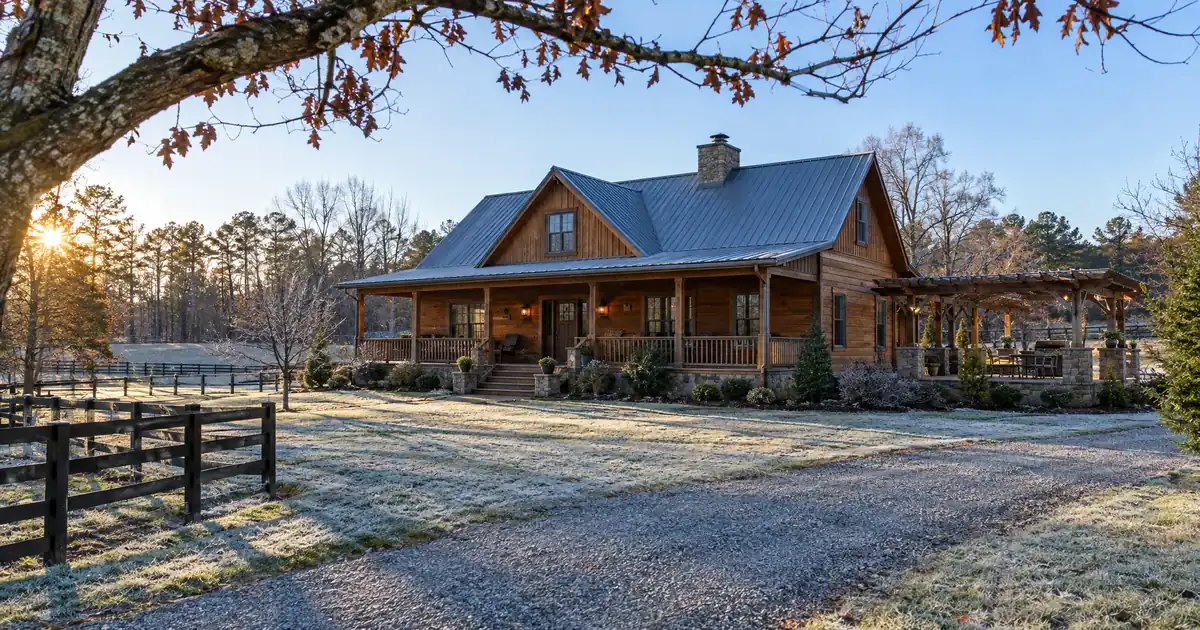
The Quick Read: Run the coverage ratio three ways: on long-term rent alone, on discounted Airbnb income, and on a combined downside. Then see which version the lender will actually use and whether the cabin still clears the program floor. A cabin that only works on the Airbnb projection is a hospitality business carrying a mortgage, and the long-term version shows how much cushion it really has.
- Long-term rent is the downside case, because some lenders use the appraiser’s market rent instead of Airbnb income.
- Coverage divides rent by the full monthly obligation: principal, interest, taxes, insurance, and association dues.
- Rural cabins add thin comps, strong seasonality, and insurance surprises.
- Clearing the ratio is not the same as positive cash flow.
- Select programs in the network start at 1.00 coverage; a separate select-lender path goes below 1.00 with leverage and terms adjusted.
Why Is Long-Term Rent the Downside Case?
Long-term rent is the downside case because it is the income figure a lender can fall back on when Airbnb numbers are hard to support. On a rural cabin, the gap between the two figures is often wide.
Short-Term Rental Calculator
Run the STR numbers in your market
Rate source: Freddie Mac 30-yr average via FRED® — Federal Reserve Bank of St. Louis · effective Oct 15, 2026
Prefilled with starting assumptions — enter your nightly rate, occupancy, taxes, and insurance for a more accurate picture.
Short-term rental income is documented with a 12-month history or a market data report. Program parameters update from Lendmire’s centralized guideline source.
As of Oct 15, 2026 · General Freddie Mac market benchmark, not a Lendmire loan offer. Nightly rate, occupancy, taxes, and insurance are editable estimates. Qualifying income for short-term rentals varies by program — some use appraisal market rent, others use documented STR history or projections — and is confirmed in underwriting. Not a Loan Estimate, approval, or commitment to lend. Program availability and eligibility are subject to lender guidelines, credit approval, property review, and underwriting.
Across the wholesale network Lendmire places files with, programs treat short-term-rental income in different ways. Some accept a trailing twelve-month platform or property-manager history. Some accept a third-party market projection with a discount applied. Some default to the appraiser’s long-term market rent, which usually produces a lower coverage figure on a vacation property. The investor rarely gets to pick, so the stress test assumes the weakest figure and measures the distance to the stronger ones.
The appraisal side makes this worse. The appraiser’s rent schedule was designed around ordinary leases. Class Valuation notes that the form was built only for long-term market rent, so Airbnb income belongs in a separate narrative addendum. A HousingWire contributor goes further and says the form can produce artificially low coverage ratios on short-term rentals. The same piece recommends stress-testing income for seasonality and occupancy swings.
That is the setup for a denial when the appraiser’s rent comes in low. This article is the preventive version: run the test before the file goes in.
Key Terms Defined
DSCR (debt service coverage ratio): monthly rent divided by the full monthly housing obligation on the property.
PITIA: principal, interest, taxes, insurance, and any association dues, which together form the denominator in the ratio.
Long-term rent: the market rent an appraiser estimates for a standard lease on the property, usually reported on the rent schedule form.
Haircut: the discount a lender applies to projected or historical Airbnb income before using it to qualify.
Narrative addendum: a written appraisal attachment that explains short-term-rental income when the standard rent form cannot.
Stacked stress: several downside assumptions applied together, such as softer occupancy, a lower nightly rate, and a higher insurance quote.
Break-even loan size: the largest loan balance at which the stressed income still clears the program’s coverage floor.
How Do You Run the Stress Test, Step by Step?
Run six steps in order: gather three income views, build the full PITIA, divide each income view by it, shock the numbers one at a time, stack the shocks, and solve for the loan size that clears the floor. Each step takes a few minutes in a spreadsheet.
1. Gather three income views. Collect the trailing twelve-month platform or property-manager history if the cabin has one. Add a third-party projection built from comparable listings. Then get a realistic long-term rent estimate for the area.
2. Build the full PITIA. Include the tax bill after any reassessment, a fresh insurance quote for a remote or wooded property, and any association dues. Insurance is the line that moves most on cabins.
3. Divide each income view by PITIA. The long-term version is your floor case. The Airbnb versions show the upside.
4. Shock one variable at a time. Lower occupancy. Lower the nightly rate. Raise insurance, taxes, or dues. This shows which assumption the deal depends on most.
5. Stack the shocks. Combine a soft season, a lower nightly rate, and a higher insurance quote. A deal that survives the stack has real margin.
6. Solve for the lever. Find the loan size at which the stressed number clears the floor. Debt service scales with the loan, so loan size is the lever you can actually control.
Occupancy itself is simple arithmetic: booked nights divided by available nights, as AirDNA’s explainer lays out. The hard part is deciding which occupancy number to trust in a market with few comparables.
What Does the Ladder Look Like on One Cabin?
On a modeled cabin, coverage can run 1.30x on discounted Airbnb income, fall to about 0.78x on long-term rent, and drop under 1.00x after a stacked downside. These are illustrative assumptions for a hypothetical cabin, not market data, and every input is expressed as a multiple of the full monthly obligation. The editable calculator on this page uses its own default inputs, so its income and coverage readouts will differ from this ladder.
| Rung | Income basis | Coverage | Read |
|---|---|---|---|
| 1 | Long-term rent only | 0.78x | Below 1.00 |
| 2 | Airbnb, base case after discount | 1.30x | Clears |
| 3 | Airbnb, occupancy down 15% | about 1.11x | Clears, thinner |
| 4 | Rung 3 plus nightly rate down 10% | about 0.99x | At the line |
| 5 | Rung 4 plus insurance lifting PITIA about 4% | about 0.96x | Fails |
The pattern matters more than the numbers. This cabin looks strong at rung 2 and quietly fails by rung 5, with no dramatic event, just three ordinary misses together. As a rule of thumb, a 1.25x ratio means income can fall about 20% before coverage reaches 1.00x. A 1.30x cabin has only a bit more room than that.
Rung 1 deserves the most attention. If long-term rent alone sits well below 1.00x, the loan depends entirely on the lender accepting Airbnb income. Select lenders in the network will review coverage below 1.00 with leverage and terms adjusted, so the file may not be dead. Still, an investor who needs that path should be choosing it deliberately.
Does the Ratio Hold in Winter?
Not always. An annual ratio can hide quarters that sit far below 1.00x, which matters for reserves and for how comfortable the owner is carrying the cabin through slow months.
| Quarter | Modeled coverage | Read |
|---|---|---|
| Winter | 0.70x | Short of the monthly obligation |
| Spring | 1.05x | Barely covering |
| Summer | 1.85x | Strong |
| Fall | 1.60x | Strong |
The four quarters average 1.30x, the same figure as rung 2 above, so a lender looking at the annual number sees a comfortable file. The owner lives through the winter quarter, though. Guesty makes the point that seasonal markets create cash-flow gaps because fixed costs do not pause when bookings do, and a property busy for three months and empty for nine rarely works as a pure investment.
Build revenue month by month when you can. Reserves are the buffer for those weak months, and they commonly run around six months of PITIA across the network, though the figure varies by lender, leverage, loan size, and transaction type.
What Is the Break-Even Loan Size?
The break-even loan is the balance at which the stressed income just clears the floor. It is often lower than the most the equity would allow, so the stress test sets the real ceiling on the purchase.
Take the modeled cabin at rung 1, with coverage at 0.78x. To reach 1.00x on long-term rent alone, the full monthly obligation must fall about 22%. Taxes and insurance do not shrink when the loan shrinks. That means the principal-and-interest portion has to fall by more than 22%, which usually means a meaningfully lower balance or a larger down payment.
A larger down payment can lift the ratio. It does not erase leverage caps, credit floors, reserve rules, or property eligibility. The strongest files clear both tests: enough equity and enough rental coverage.
Here is a genuine toss-up for some buyers. Putting in more equity to rescue a long-term-rent shortfall can work mathematically. But it ties up cash in a property whose income depends on a single assumption. Walking away or buying a different cabin may be the better decision.
Where Does the Rural Cabin Case Break?
The standard approach breaks in six places: thin comparables, softening cabin markets, single-season demand, ineligible construction, local rules, and personal-use plans. Each one can change the answer without changing the math.
Thin comparables. Airbnb projections rely on comparable listings matched by bedrooms, baths, and guest capacity. In sparse rural areas there may be too few listings to match. Long-term rent comps can be just as scarce, so an appraiser may reach farther afield. Treat the projection as a range, not a point estimate.
Softening cabin markets. MMCG Invest, a feasibility consultancy citing AirDNA public data, describes flat-to-softening occupancy and some falling nightly rates in well-known cabin markets. It also points to supply growth concentrated in small-city and rural markets. That is a secondary citation, so check current figures against AirDNA directly before relying on any number. The direction is the useful signal: new supply can erode a projection built on yesterday’s comps.
Single-season demand. A cabin that earns most of its income in one quarter needs both reserves and a long-term fallback that holds up.
Construction type. Many cabins are log-built. Log homes are not offered under the network’s DSCR programs, and neither are manufactured homes or barndominiums. Check the construction type before spending money on an appraisal.
Local rules. Short-term rental rules can vary by city, county, HOA, and property type, so investors should confirm local rules before relying on projected rental income. If Airbnb use is restricted, long-term rent becomes the only income basis, and rung 1 is the whole file.
Personal use. DSCR loans are designed for non-owner-occupied investment properties. Because they are business-purpose investor loans, they are reviewed differently from a standard owner-occupied mortgage. A cabin you plan to use as a family getaway needs honest disclosure at the start.
DSCR vs. conventional financing
There are two common ways to finance an investment property, and they qualify you differently — here’s how investors weigh them.
Why investors choose it
- Qualifies on the property’s rental income — no personal tax returns, W-2s, or pay stubs needed to document income.
- No personal debt-to-income ceiling to clear, so existing mortgages and obligations don’t cap your borrowing the same way.
- Can be closed in an LLC, keeping the property inside a business entity.
- Built for scaling — not held to the limit on number of financed properties that conventional financing applies.
- Underwriting centers on the deal: generally qualifies when the rent covers the payment, a 1.00x coverage ratio being a common baseline (confirmed in underwriting).
- Designed specifically for investment property, including long-term and, where the program allows, short-term rentals.
Where it’s strong
- Often the lowest ongoing financing cost for a buyer who fully qualifies on personal income — a fit for a first property or a cost-first purchase.
Trade-offs for investors
- Requires full personal income documentation and must fit within a debt-to-income limit — salary, existing debts, and other mortgages all count.
- Typically held in your personal name rather than a business entity.
- Caps how many financed properties you can carry, which can become a ceiling as a portfolio grows.
- Evaluates you as a borrower as much as the property, which usually means more paperwork.
How investors usually choose: a first or single property often optimizes for the lowest financing cost; portfolio builders often optimize for leverage, vesting in an LLC, and scaling past conventional caps. The right answer depends on your goals, the property, and current guidelines — both paths run through select lenders in Lendmire’s wholesale network, with eligibility and terms confirmed in underwriting.
Why Does an Agency Form Show Up in This?
One appraisal form drives the long-term number, and knowing its name helps you read the appraisal. Fannie Mae’s appraiser guidance describes the Single-Family Comparable Rent Schedule, known as Form 1007, as the document recording estimated monthly market rent on a one-unit investment property. DSCR files borrow that form as a convention. The agency’s own loan rules do not govern them.
The HousingWire piece mentioned earlier also reports that a coming data standard will retire this form, while narrative addenda for short-term-rental income will stay essential. Either way, multiplying a nightly rate by thirty and calling it monthly rent is not what the form is for.
What Does the Ratio Leave Out?
The ratio leaves out nearly every operating cost, so a cabin can pass the test and still lose money. Coverage compares rent to PITIA only. Clearing 1.00x is not positive cash flow.
| Cost outside the ratio | Why rural cabins feel it |
|---|---|
| Utilities | Heating and power run high in cold or remote areas |
| Well and septic | Repairs and testing fall on the owner |
| Road and snow access | Plowing and maintenance add cost |
| Cleaning and management | Travel distance raises per-turnover cost |
| Repairs and capex | Weather and wear hit hard |
| Vacancy | Slow seasons fall outside the lender view |
Build an owner view next to the lender view. The lender view answers whether the file qualifies. The owner view answers whether you want to hold the property. Tax treatment can depend on how the funds are used and how the property is held; investors should keep clear records and speak with a qualified tax professional before relying on any deduction.
What Does the Network Expect on a Short-Term-Rental Cabin?
Most files fall inside a narrow band: up to 75% LTV on a short-term-rental purchase, up to about 70% on a short-term-rental refinance or cash-out, and a credit score of 640 or higher. Programs typically expect about 12 months of landlord or host experience, and coverage starts at 1.00 on both purchases and refinances. All of this is subject to lender guidelines, and every file is underwritten individually.
Loan sizes run up to $3,000,000 on standard programs, and smaller balances route through select lenders in the network. Reserves commonly run around six months of PITIA. Coverage below 1.00 is available through select lenders, with leverage and terms adjusted. Investors who want the complete picture can read Lendmire’s complete DSCR loans guide.
What If the Long-Term Test Fails?
A failed long-term test is information, not a verdict. Choose the option whose trade-off you can live with.
| Option | What it does | Trade-off |
|---|---|---|
| Smaller loan | Lifts the ratio directly | More cash tied up |
| Document supportable rent | Strengthens the income case | Needs real evidence |
| Select-lender sub-1.00 path | Lets a thin file be reviewed | Leverage and terms adjust |
| Different cabin | Resets the math | Back to searching |
| Wait and build history | Adds hosting record | Delays the purchase |
The most common mistake is reaching for the sub-1.00 path when the market is the real problem. If no cabin in the target area clears long-term coverage at normal leverage, that says something about the price level or the demand. An investor with a strong Airbnb track record in a proven market is in a different position, and a lower-leverage structure may fit well there.
Frequently Asked Questions
Can a rural cabin qualify on long-term rent alone?
It can when the appraiser’s market rent covers the full monthly obligation at the program’s coverage floor. Many rural cabins fall short on that basis, because long-term rents in remote areas are modest compared with vacation income. Select programs start at 1.00 coverage, and a separate select-lender path goes below 1.00 with leverage and terms adjusted. Qualification stays subject to lender guidelines and property review.
Why is the appraiser’s rent usually lower than Airbnb income?
The rent schedule estimates what a standard lease would earn, not what a nightly-stay business can earn. It carries no premium for furnishings, hosting, or peak-season pricing. As Class Valuation explains, short-term income belongs in a separate addendum.
What if there are no Airbnb comps near the cabin?
Then a projection will be thin, and the lender may lean on long-term rent or on the borrower’s hosting history. Expand the comp radius carefully and test several occupancy levels. If the file only works at the optimistic end, treat that as a warning.
Does passing the coverage test mean the cabin cash flows?
No. The ratio ignores repairs, vacancy, management, utilities, and capital expenses. A cabin can clear 1.00x and still lose money once those costs are counted.
How much cushion is sensible?
A 1.25x ratio can absorb about a 20% income drop before reaching 1.00x. For a seasonal cabin, a stacked stress that stays at or above the program floor is a reasonable target, because three ordinary misses together are more likely than one large one.
Next Step
If you are buying or refinancing a rental property and want to see how the numbers work, Lendmire can help you compare DSCR loan options based on the property income, credit profile, leverage, and investor goals. Lendmire is a mortgage broker arranging DSCR financing through select lenders in its wholesale network across 41 markets, including Washington, D.C. Investors can request a quote or call 828-256-2183.
About Lendmire
Lendmire (NMLS# 2371349), a non-QM mortgage broker serving investors in 41 markets including Washington, D.C., helps structure DSCR scenarios commonly evaluated around a property’s rental income rather than personal income paperwork, subject to lender guidelines. A Scotsman Guide Top Mortgage Workplace in 2025 and 2026, Lendmire places loans through wholesale investor lenders and is not a direct lender.
Investors focused on short-term rentals can review DSCR loans for Airbnb and short-term rentals.
Get Started
Ready to find the right loan for you?
In about 30 seconds you can review financing options available for your investment property. No commitment required.
Informational only. Not a Loan Estimate, approval, or commitment to lend. Program availability and eligibility are subject to lender guidelines, credit approval, property review, and underwriting.
References
1. Class Valuation — Appraisal Form 1007 and short-term rentals
2. HousingWire — Short-term rentals are breaking the appraisal playbook
3. AirDNA — How to use occupancy rates for rental market valuation
4. Guesty — Evaluate your market for short-term rental potential
5. MMCG Invest — Glamping and short-term-rental feasibility
6. Fannie Mae — Appraiser Update
This article is part of Lendmire’s short-term rental loan program — full qualification details, guidelines, and scenarios live on the program page.
Related reading: STR Underwriting vs Long-Term Rent Fallback for a Portfolio Operator · Airbnb Income vs Long-Term Rent Fallback on a DSCR Short-Term Rental Loan · How to Check 2026 STR Rules Before Financing a Rural Cabin on DSCR
Brandon Miller
Founder & CEO, Mortgage Loan Originator, Lendmire LLC
- Mortgage Loan Originator · NMLS# 1129696 · Verify on NMLS Consumer Access
- North Carolina Real Estate Broker · License# 343312 · Verify on NCREC
- North Carolina Insurance Producer · License# 19053198 · Property, Casualty, Life, Health · Verify on NAIC SBS
- Lendmire LLC · Firm NMLS# 2371349 · Verify firm licensure
Disclosure information. Lendmire is a state-licensed mortgage brokerage under NMLS# 2371349. Lendmire is not a depository institution, direct lender, or financial advisor — all loans referenced are placed through wholesale lender partners and are subject to each lender's underwriting standards. This article is provided for general informational purposes and is not a commitment to lend, nor does it constitute financial, legal, or tax advice. Loan programs, terms, rates, and qualification standards change without notice and depend on borrower profile, property type, and the state in which the subject property is located. Equal Housing Opportunity provider. NMLS Consumer Access: nmlsconsumeraccess.org.