
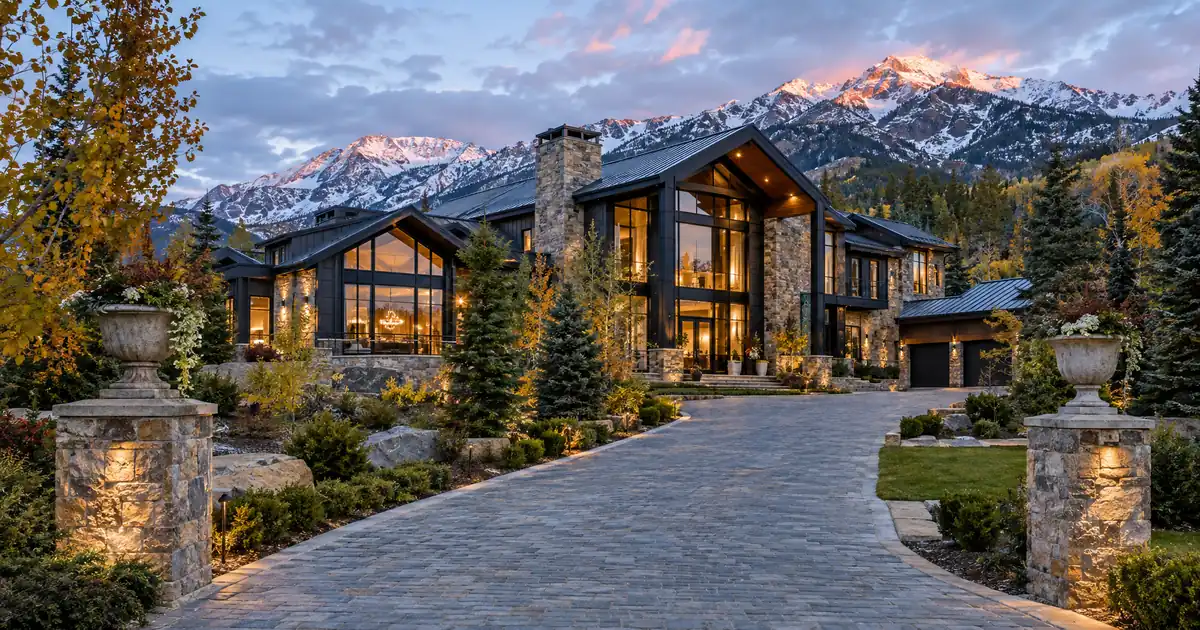
The Quick Read: Typically six months of PITIA on the subject property, and twelve months for a first-time investor, subject to underwriting. Most programs in Lendmire’s wholesale network count reserves the same way at every loan size, so a larger loan raises the dollar amount but not the month count. Interest-only files are counted on ITIA instead, and cash-out proceeds never satisfy the requirement.
- Reserves are counted on the subject property only. Other financed properties typically add no extra reserve requirement.
- Reserves are separate from the down payment and closing costs. They are what remains after both are paid.
- The tiers key off the loan amount, not the purchase price, so a $3M cabin is usually not a $3M loan.
- Rural designation, acreage and cabin construction decide whether the property is eligible at all, which comes before any reserve math.
- Every figure here is a typical range from select wholesale programs, subject to underwriting and not a commitment to lend.
What Does “Reserves” Mean on a DSCR File?
Reserves are documented liquid assets you still hold after closing. They are not the down payment and they are not closing costs. The lender wants to see that you can carry the property through a vacancy or a repair bill without missing a payment.
DSCR Calculator
Run the numbers in your market
Rate source: Freddie Mac 30-yr average via FRED® — Federal Reserve Bank of St. Louis · effective Oct 15, 2026
Prefilled with starting assumptions — enter your own rent or nightly figures, taxes, insurance, and HOA for a more accurate picture.
Program parameters update from Lendmire’s centralized guideline source. Taxes and insurance are editable estimates.
As of Oct 15, 2026 · General Freddie Mac market benchmark, not a Lendmire loan offer. Rent, nightly rate, occupancy, taxes, and insurance are editable estimates. Short-term rental figures are estimates only and vary significantly by season, property type, management approach, and local short-term-rental rules — confirm local regulations before relying on them. Qualifying income for short-term rentals varies by program — some use appraisal market rent, others use documented STR history or projections — and is confirmed in underwriting. Not a Loan Estimate, approval, or commitment to lend. Program availability and eligibility are subject to lender guidelines, credit approval, property review, and underwriting.
DSCR loans are business-purpose investor loans, reviewed differently from a standard owner-occupied mortgage. The loan is reviewed primarily on property-level rental income covering the payment, subject to lender guidelines. Credit, assets and reserves are still reviewed. Reserves are how the file shows staying power when personal income is not the focus.
The monthly figure reserves are counted against is PITIA: principal, interest, taxes, insurance and association dues on the subject property. On interest-only loans, the figure is ITIA instead, since there is no principal in the payment.
How Many Months Does a $3M Cabin Need?
Across the programs the brokerage places files with, the typical answer is six months of PITIA on the subject property. First-time investors typically need twelve months. Both are subject to underwriting and vary by borrower, property and lender.
The month count does not step up as the balance grows. What moves with size is leverage, credit and appraisal count. A bigger loan means a bigger payment, so the same six months asks for more cash. That is the whole difference.
A few lenders in the network will ask for more on very large balances or thinner coverage, and a short-term rental file may draw a closer look at liquidity. Treat anything above the typical six or twelve months as a conversation with underwriting, not a published rule. Some market surveys report wider ranges across lenders, which is why the file-level answer comes from the specific program, not from a generic chart.
Is a $3M Cabin Actually a $3M Loan?
Almost never. Super jumbo is a lender-set label, not a regulatory category. The FHFA conforming limit only decides where the “jumbo” label starts, and it does not cap DSCR loans. The baseline conforming limit was raised to $832,750 for 2026, per Orrick’s summary of the FHFA announcement and NAHB. That is agency context only. DSCR programs run on their own ladder.
On that ladder, the bands are loan amounts. Compute price times leverage first, then read the band.
A $3M cabin on a purchase at 75% leverage lands in the $2M–$3M band. At 65% leverage it lands in the $1.5M–$2M band. Both are below the $3M line. The table below shows the top leverage available through select wholesale programs, subject to underwriting. Terms vary by lender guidelines, property type, leverage, credit profile, and full file review.
| Loan band | Purchase | Rate-term | Cash-out |
|---|---|---|---|
| $150K–$1M | 80% | 80% | 75% |
| $1M–$1.5M | 75% | 75% | 70% |
| $1.5M–$2M | 75% | 75% | 60% |
| $2M–$3M | 75% | 75% | 60% |
| $3M–$4M | 65% | 65% | — |
| $4M–$6M | 60% (on review) | 60% (on review) | — |
The top cell in each band needs stronger credit, roughly 660 or higher to $1M, 700 or higher from $1M to $1.5M, and 720 or higher from $1.5M to $3M. A lower score drops you to a lower leverage cell inside the same band. Above $4M, everything is reviewed case by case before submission, reserves included.
The planning point: a loan above $2M triggers two appraisals. A loan above $3M brings the super jumbo overlay, which includes a 700 credit floor, no rural property and no cash-out. Putting more down so the loan stays at or under $3M can keep a cabin inside the rural-eligible, cash-out-eligible band. That is a planning idea, not a promise, and it is subject to underwriting.
How the Reserve Number Gets Built
The mechanics are short.
1. Define the monthly figure. Add principal, interest, taxes, insurance and association dues on the subject property. On interest-only, use ITIA.
2. Multiply by the months required. Six months is typical. Twelve for a first-time investor.
3. Pay the cash to close first. Down payment and closing costs come out of your liquid assets before reserves are counted. Reserves are whatever remains.
4. Source the funds. Reserves must come from existing liquid assets. Funds generally need to be documented and seasoned in the account. Cash-out proceeds from the subject loan never count.
5. Run the rest of the file. Rent must cover the full payment, credit must clear the band, and two appraisals apply above $2M.
Think of the total cash need as three stacked pools: down payment, closing costs, and reserves. Investors who plan only for the first two are the ones who stall at the end. The site’s illustrative calculator can turn your price, leverage and coverage inputs into dollars. This article stays in months and ratios on purpose.
On the structure of the ask, keep one detail straight. Reserves are tested on the subject property. Other financed properties, up to twenty in total on these programs, typically add no extra reserve requirement. People often assume reserves multiply with each property owned. In this network they typically do not.
What Moves the Number Up or Down?
The month count is stable. The pressure points are around it.
| Driver | Typical effect | Check with lender |
|---|---|---|
| Loan size | Same months, more dollars | Overlay above $3M |
| First-time investor | 12 months instead of 6 | Definition of experience |
| Interest-only | Counted on ITIA | Interest-only period and cap |
| Cash-out | Proceeds never count | Cash-out unavailable above $3M |
| Other financed properties | No added reserves | Count and limits |
Two nuances. First, some pages say nine to twelve months is not unusual past roughly $1.5M. Individual programs can step up on large balances or lower coverage, which is why the answer is “typically six, subject to underwriting” and not a single universal number. Second, a coverage ratio at 1.00 earns full leverage. Coverage from 0.75 to 0.99 is a real path through select programs to $2M, but LTV and terms adjust, subject to underwriting. Lower coverage and higher leverage together are the combination most likely to draw a bigger liquidity ask.
Cabin and Rural Rules Come Before Reserves
The reserve answer only matters if the cabin is eligible. This is where a lot of $3M cabin files fail, long before reserves come up.
Rural and acreage. Rural collateral of five acres or less can reach 75% leverage, and only on loans at or below $3M. Up to twenty acres is possible on loans to $3M. Above $3M: no rural property, and no more than ten acres on a non-rural one. The rural label on an appraisal can mean lower leverage, different terms or a decline, so the designation matters as much as the acreage. Exact terms depend on the lender’s guidelines, property type, leverage, and a full review of the borrower’s file.
Construction. The programs the brokerage works with do not offer log homes, manufactured homes or barndominiums. Frame-built cabins, A-frames and lake houses are reviewed one at a time. A true log cabin is generally off the table, and a log-styled frame home is a grey area. Settle this before you spend on an appraisal.
Short-term rental. Short-term-rental files run to $2M, so a cabin financed above that does not qualify on short-term income. The cabin would need to qualify on long-term rent, or the loan comes under $2M. Where short-term income is used, coverage must be 1.00 or higher, and the borrower must be an experienced investor (twelve months owning income property in the last thirty-six). Income is twelve months of operating history on a refinance, or the appraisal’s short-term-rent analysis on a purchase, at 80% of gross. Municipal permission is documented per property.
Personal use. A cabin you use yourself does not fit a business-purpose DSCR loan. A second-home loan is a different product.
DSCR vs. conventional financing
There are two common ways to finance an investment property, and they qualify you differently — here’s how investors weigh them.
Why investors choose it
- Qualifies on the property’s rental income — no personal tax returns, W-2s, or pay stubs needed to document income.
- No personal debt-to-income ceiling to clear, so existing mortgages and obligations don’t cap your borrowing the same way.
- Can be closed in an LLC, keeping the property inside a business entity.
- Built for scaling — not held to the limit on number of financed properties that conventional financing applies.
- Underwriting centers on the deal: generally qualifies when the rent covers the payment, a 1.00x coverage ratio being a common baseline (confirmed in underwriting).
- Designed specifically for investment property, including long-term and, where the program allows, short-term rentals.
Where it’s strong
- Often the lowest ongoing financing cost for a buyer who fully qualifies on personal income — a fit for a first property or a cost-first purchase.
Trade-offs for investors
- Requires full personal income documentation and must fit within a debt-to-income limit — salary, existing debts, and other mortgages all count.
- Typically held in your personal name rather than a business entity.
- Caps how many financed properties you can carry, which can become a ceiling as a portfolio grows.
- Evaluates you as a borrower as much as the property, which usually means more paperwork.
How investors usually choose: a first or single property often optimizes for the lowest financing cost; portfolio builders often optimize for leverage, vesting in an LLC, and scaling past conventional caps. The right answer depends on your goals, the property, and current guidelines — both paths run through select lenders in Lendmire’s wholesale network, with eligibility and terms confirmed in underwriting.
Why Seasonal Cabins Make Reserves Matter More
A cabin earns in bursts. Lenders average a full twelve months of income, so peak-season revenue alone does not carry the file. Reserves cover the slow months, and they are what protects you if a winter, a road closure or a repair stretches a vacancy.
Clearing 1.00x means rent covers PITIA. It does not mean positive cash flow. Cleaning, management, utilities, repairs and vacancy all sit outside the ratio. A coverage number of 1.0x with a thin cash cushion is a file that passes underwriting and still hurts the owner in February. Size your own cushion above the lender’s minimum.
In file after file across this kind of property, the pattern is the same. The appraisal comes in, the coverage clears, and the reserve line is where the investor realizes the cash-out they were counting on does not count. The fix is to plan the liquid cushion before choosing the property, not after the contract is signed.
What Counts as Reserves, and What Does Not
Liquid, documented, seasoned funds count. Cash-out proceeds from the subject loan do not. A refinance borrower who plans to use the proceeds as the cushion has built the file on money that does not count.
Retirement and investment accounts are a question to put to the specific program. Bank-statement products sometimes treat them at a haircut, but that is a different product, and it should not be assumed to carry over to a DSCR file. Ask before relying on them. Nobody regulates this; lenders set the rules.
If You Are Short on Reserves
Shortfalls are fixable if you see them early.
| Option | Trade-off |
|---|---|
| Reduce the loan with a bigger down payment | Less leverage, but may keep the loan in a friendlier band |
| Add liquid assets before applying | Needs seasoning in the account |
| Lower the loan under $2M | Avoids two appraisals and opens short-term-rental treatment |
| Move below the $3M line | Keeps rural and cash-out eligibility in play |
| Choose a different property type | Frame-built, non-rural collateral clears more screens |
Each option changes the file and is subject to underwriting.
Pre-Application Checklist
- Confirm construction type before anything else. Log, manufactured and barndominium are out.
- Confirm the rural designation and acreage against the loan band.
- Compute price times leverage, then read the band.
- Total down payment, closing costs and six or twelve months of PITIA (ITIA if interest-only).
- Document the source and seasoning of every reserve dollar.
- If short-term income is the plan, check the loan stays at or under $2M and gather twelve months of history or the appraisal analysis.
- Document local permission for the specific property.
Tax treatment varies; consult a qualified professional.
For the full picture of how these programs work, see the complete DSCR loans guide. For a companion read on liquidity at this size, Lendmire’s piece on how much liquidity a $3M super jumbo loan requires on a rural property covers the rural side in more depth.
If you are buying or refinancing a high-balance rental property and want to see how the numbers work, Lendmire can help you compare super jumbo DSCR loan options based on the property income, the loan balance, credit profile, leverage, and investor goals. Lendmire is a broker arranging business-purpose financing through select lenders in its wholesale network, across 41 markets including Washington, D.C.
Frequently Asked Questions
Do reserves go up as the loan gets bigger?
The dollars go up, not the months. Typical programs count six months of PITIA on the subject property whatever the size. A larger loan carries a larger payment, so the same six months asks for more cash. Some programs may ask for more on very large balances, subject to underwriting.
Can my cash-out proceeds count as reserves?
No. In this network the planning assumption is that proceeds from the subject loan never satisfy reserves. Cash-out is also unavailable above a $3M loan. Reserves need to come from existing liquid assets.
Does owning other rentals increase my reserve requirement?
Typically no. Reserves are counted on the subject property, and other financed properties generally add no extra requirement. Programs allow up to twenty financed properties, subject to underwriting.
Does a short-term rental cabin need more reserves?
It can draw closer attention to liquidity, but the published typical count is still six months, or twelve for a first-time investor. Short-term-rental files stop at $2M, require coverage of 1.00 or higher, and require an experienced investor. Higher reserve expectations on those files are decided file by file.
Is a $3M cabin a super jumbo loan?
Usually not. Tiers key off the loan, not the price. At 65% to 75% leverage on a purchase, the loan lands below $3M, though it can sit above the $2M two-appraisal line. Rural and cash-out eligibility are friendlier at or under $3M.
Lendmire’s self-employed mortgages page presents both super jumbo programs, bank statement and DSCR, side by side.
About Lendmire
Lendmire, NMLS# 2371349, is a mortgage brokerage focused on investor financing, arranging DSCR loans in 40 states plus Washington, D.C. — 41 markets total. Qualification is based on the property’s income rather than personal income documentation, subject to lender guidelines, making it a fit for LLC-held rentals and scaling portfolios. Scotsman Guide named Lendmire a Top Mortgage Workplace in both 2025 and 2026.
Get Started
Ready to find the right loan for you?
In about 30 seconds you can review financing options available for your investment property. No commitment required.
Informational only. Not a Loan Estimate, approval, or commitment to lend. Program availability and eligibility are subject to lender guidelines, credit approval, property review, and underwriting.
References
1. Orrick: FHFA announces 2026 increases to conforming loan limits
2. NAHB: 2026 conforming loan limits
This article is part of Lendmire’s super jumbo DSCR loan program — full qualification details, guidelines, and scenarios live on the program page.
Related reading: Fixed vs ARM IO Structures on a Super Jumbo DSCR Loan · How to Qualify for a Super Jumbo DSCR Loan in Washington · How to Qualify for a Super Jumbo DSCR Loan in New Hampshire
Brandon Miller
Founder & CEO, Mortgage Loan Originator, Lendmire LLC
- Mortgage Loan Originator · NMLS# 1129696 · Verify on NMLS Consumer Access
- North Carolina Real Estate Broker · License# 343312 · Verify on NCREC
- North Carolina Insurance Producer · License# 19053198 · Property, Casualty, Life, Health · Verify on NAIC SBS
- Lendmire LLC · Firm NMLS# 2371349 · Verify firm licensure
Legal disclosures. Lendmire (NMLS# 2371349) is a state-licensed mortgage brokerage that arranges financing through wholesale lender relationships. Lendmire is not a direct lender, depository institution, or registered financial advisor. The discussion above is general informational content about real estate financing — it is not financial, legal, or tax advice, and readers should consult licensed professionals for guidance on their individual circumstances. Loan inquiries are subject to lender underwriting; this article does not represent a commitment to lend. Loan terms, rates, and qualification standards vary by borrower, property, and state, and are subject to change at any time. Equal Housing Opportunity. NMLS Consumer Access: nmlsconsumeraccess.org.