
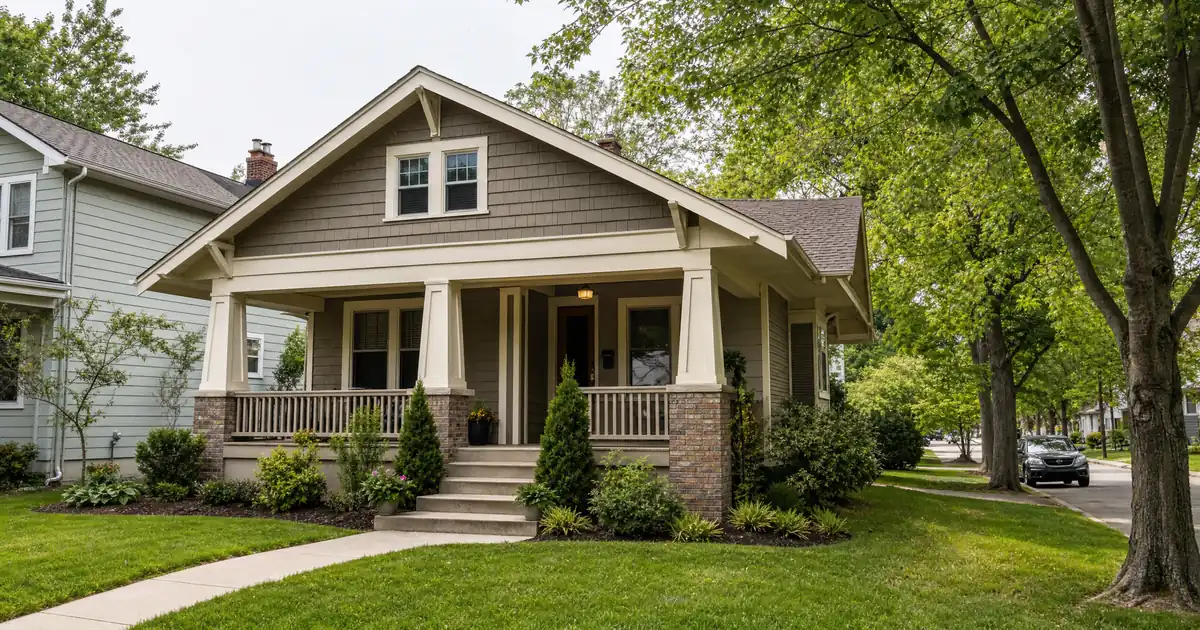
The Quick Read: No. You can’t just check a different box on the loan application. Occupancy is a fact you certify to a lender. It’s not a label you pick for pricing reasons. But if you genuinely move into a property you’ve been renting out, you can refinance it as a primary residence. The loan, the insurance, and often the whole product have to change to match your new reality.
That’s the honest answer. It’s worth sitting with before you get into the mechanics. Lenders don’t care what you call the property in casual conversation. They care about what you signed. They care about what the appraisal says. And they care whether your actual living situation matches the file. Get that alignment right, and the conversion is routine. Get it wrong, and you’ve turned a financing decision into a legal problem.
DSCR Calculator
Run the numbers in your market
Rate source: Freddie Mac 30-yr average via FRED® — Federal Reserve Bank of St. Louis · effective Aug 20, 2026
Prefilled with starting assumptions — enter your own rent or nightly figures, taxes, insurance, and HOA for a more accurate picture.
Program parameters update from Lendmire’s centralized guideline source. Taxes and insurance are editable estimates.
As of Aug 20, 2026 · General Freddie Mac market benchmark, not a Lendmire loan offer. Rent, nightly rate, occupancy, taxes, and insurance are editable estimates. Short-term rental figures are estimates only and vary significantly by season, property type, management approach, and local short-term-rental rules — confirm local regulations before relying on them. Qualifying income for short-term rentals varies by program — some use appraisal market rent, others use documented STR history or projections — and is confirmed in underwriting. Not a Loan Estimate, approval, or commitment to lend. Program availability and eligibility are subject to lender guidelines, credit approval, property review, and underwriting.
Key Terms Defined
A few terms come up constantly in this conversation. Here’s the plain-English version of each.
Occupancy certification — a signed statement in the loan documents. It declares whether you plan to live in the property, use it as a second home, or hold it purely as a rental.
Business-purpose loan — a loan made to finance a property held for income or investment, not personal use. DSCR loans fall in this category.
DSCR (debt-service coverage ratio) — a comparison of a property’s rental income against its monthly housing obligation (principal, interest, taxes, insurance, and any HOA dues). Lenders use it to qualify investment-property loans without personal income documents.
LTV (loan-to-value) — the loan amount shown as a percentage of the property’s value. A lower LTV means you have more equity in the deal.
Seasoning — how long a lender wants you to have owned or held a property before certain transactions, like a cash-out refinance, are allowed.
PITIA — principal, interest, taxes, insurance, and association dues. This is the full monthly housing obligation a DSCR ratio measures against rent.
What “Primary Residence” Actually Means to a Lender
A primary residence is the home you actually live in most of the year. It’s not the home you own, not the home you might list for convenience, and not the home with the smallest balance. Lenders anchor this to a real occupancy timeline, not what you say you intend to do on paper.
For FHA-backed loans, HUD’s Single Family Housing Policy Handbook requires you to move in within 60 days of signing the security instrument. You then need to keep living there for at least a year. That 60-day, one-year rule is a useful guide even outside FHA loans. It’s roughly what most lenders expect when someone claims a home as their primary residence.
An investment property loan runs the opposite direction. DSCR loans qualify mainly on rental income covering the payment, subject to lender guidelines. And they require the property to sit empty of owners — non-owner-occupied. These two occupancy declarations sit on opposite ends of the same spectrum. A property can’t legitimately carry both labels at once.
Why You Can’t Just Relabel a Rental
Here’s the short version: DSCR loans are built for non-owner-occupied investment properties. They’re business-purpose investor loans, so lenders review them differently than a standard owner-occupied mortgage.
That difference isn’t just paperwork. A business-purpose classification changes which consumer-protection rules apply to the loan. Lenders generally treat a property financed to buy, improve, or maintain a rental as business-purpose credit. But this only holds if you don’t plan to occupy it for more than 14 days in the coming year, according to commentary on the business-purpose exemption. Cross that 14-day line with real, planned occupancy, and the property no longer fits the definition the loan was built around.
That’s why relabeling doesn’t work as a shortcut. The loan product — its pricing, its paperwork, its underwriting logic — was built around one specific occupancy fact. Change that fact without changing the loan, and the file no longer makes sense. That mismatch is exactly what shows up later when a lender reviews the file.
The One Legitimate Path: Actually Moving In
If you genuinely relocate into a property you’ve been renting out, you can refinance it as a primary residence. The key word is “genuinely.” The file needs to show a real change in use, not a paperwork change dressed up as one.
A few things typically have to happen together:
- The existing lease ends. You can’t certify owner-occupancy while a tenant still lives under lease in the unit.
- Insurance converts. A landlord dwelling policy has to become an owner-occupant homeowners policy. Coverage and underwriting both change.
- The loan itself usually changes. A rental-property loan, especially a DSCR loan, usually can’t just get re-certified as owner-occupied. It typically needs to be refinanced into a standard consumer mortgage.
- Documentation shifts. Your mail, ID, and other proof-of-residency records need to match the new address. These are exactly what get checked later.
This is where a lot of borrowers underestimate the process. Moving in is a lifestyle decision. Refinancing the loan to match that decision is a separate, mechanical step. It doesn’t happen automatically just because you changed your address.
What Happens to the Loan You Already Have
This is usually the part investors haven’t thought through. If the rental is financed with a DSCR loan, that loan was built on a non-owner-occupied certification. Moving in yourself breaks that certification going forward — not retroactively, but from that point on.
Files like this tend to follow a familiar pattern. An investor decides to move into a property they’ve held as a rental. The first question is never “can I do this.” It’s “what happens to my existing loan.” The honest answer: it typically needs to be refinanced into an owner-occupied product. Why? Because keeping a certified non-owner-occupied loan on a home you now live in creates the exact mismatch a post-closing file review is built to catch. Some rental-property notes also carry a prepayment structure that affects the payoff math. Read the note before assuming a clean, penalty-free exit.
Some investors weigh whether to keep the rental loan, refinance it, or exit the property entirely. Comparing exit paths side by side can save time and money — Lendmire’s breakdown on refinancing versus selling a rental property walks through that decision directly.
Why DSCR Programs Assume You Already Have a Primary Residence
Here’s a detail most articles on this topic miss entirely: some DSCR structures assume you already have a primary residence somewhere else. No-ratio DSCR lender review — where the lender doesn’t require the property’s rent to clear a specific coverage number — is available only through select lenders in the network. It’s generally reserved for borrowers who already own a primary residence elsewhere.
That’s not a coincidence. The entire DSCR product family is built around a borrower who has a home to live in and a separate portfolio of rental properties generating income. Sub-1.00 coverage — where a property’s rent falls short of fully covering the payment — is also available through select lenders, with leverage and terms adjusted accordingly. Both structures assume the property in question is not, and won’t become, where you live. Trying to fold your own occupancy into that structure doesn’t just create a paperwork problem. It contradicts the whole design of the loan.
Occupancy Misrepresentation: What Actually Gets Checked
Lenders and data providers check occupancy claims against ownership records, tax mailing addresses, and listing activity. That matching has gotten sharper. Cotality’s 2025 Annual Fraud Report tracks occupancy-related fraud alerts as its own category. Non-owner-occupied and DSCR loan activity shows up as a growing share of overall mortgage fraud risk. In plain terms: the gap between “what you told the lender” and “what the public record shows” is exactly what data-matching tools are built to find.
The consequences don’t stop at loan denial. Federal law treats a knowing false statement made to influence a federally insured lender’s decision as a serious matter. 18 U.S.C. § 1014 covers false statements on loan applications broadly. That legal backdrop makes “just call it a primary residence” a genuinely bad trade. A fully compliant investment-property loan, even if slightly more expensive, is the smarter move.
None of this applies to a legitimate move-in. If you actually relocate, document it, and refinance the loan to match, there’s no misrepresentation to worry about. It’s just a normal occupancy change, handled correctly.
Going the Other Direction
Some investors approach this question from the opposite angle. They want to pull equity out of a rental to pay down or pay off a primary residence loan, instead of moving into the rental itself. That’s a different transaction with its own set of rules. Lendmire’s guide on cash-out refinancing a rental to pay off a primary residence covers that path directly. It also covers how self-employed borrowers approach a cash-out refinance, and how it stacks up against simply selling the rental outright.
For a full walkthrough of how DSCR loans are structured, priced, and qualified from the ground up, check Lendmire’s complete DSCR loans guide.
Occupancy Paths at a Glance
| Loan Type | Occupancy Requirement | Converting Later |
|---|---|---|
| Conventional | Owner-occupied, typically within ~60 days | Usually fine after the occupancy period; no refinance required |
| FHA | Bona fide occupancy within 60 days, one year continued | Rental use generally waits out that year; moving a rental into FHA financing needs a new FHA loan |
| DSCR / Non-QM | Non-owner-occupied only, business-purpose certification | Moving in typically requires refinancing into an owner-occupied product |
Tax treatment can depend on how you use the funds and how you hold the property. Keep clear records and talk with a qualified tax professional before you rely on any deduction.
Where This Leaves an Investor
If you’re weighing a rental-to-primary conversion, the real question isn’t whether it’s allowed. It clearly is, when it’s genuine. The real question is whether the timing makes sense. Are you ready to end the lease, swap the insurance, and refinance out of a business-purpose loan into a consumer mortgage? Most DSCR files land at 75%-80% LTV on purchase. Cash-out refinances generally cap near 75% LTV after about six months of seasoning. Credit floors run around 620 in parts of the network, though 660 is more typical, and 700-plus unlocks the strongest leverage tiers. These numbers matter on the way out of a DSCR loan just as much as the way in, since the replacement loan gets priced and structured on its own terms.
Lendmire (NMLS# 2371349) arranges DSCR and conventional investment-property financing through a wholesale network spanning 40 states plus Washington, D.C. Lendmire can help walk through whether a conversion, a straight refinance, or an exit makes more sense for a specific property. Request a quote through Lendmire’s mortgage quote page or call 828-256-2183 to talk through your file directly.
Loan approval is never guaranteed, and nothing here is a commitment to lend. Every scenario described here is subject to lender approval and to borrower, property, and program guidelines that can change. This article is general information, not financial, legal, or tax advice.
Frequently Asked Questions
Can I refinance a rental property as a primary residence if I don’t actually plan to live there?
No. Occupancy has to match your real intent and real behavior. It can’t just be a certification you sign to get better terms or looser paperwork. Lenders and data-matching tools compare occupancy claims against tax mailing addresses and ownership records. A mismatch is exactly what surfaces in a post-closing review.
What if I already own the rental outright and just want to move in?
Owning it free and clear doesn’t change the occupancy question. Refinancing to draw equity, or just to switch loan type, still requires the file to show you now live there. Expect to swap the insurance policy, update your mailing address and ID, and go through underwriting for a standard owner-occupied loan instead of a business-purpose one.
Does converting a rental to a primary residence trigger a new appraisal?
Typically, yes. A rental-property refinance is often underwritten with rental-income analysis built into the appraisal. An owner-occupied refinance uses a standard residential appraisal without that rental piece. Since the loan product is changing, a fresh appraisal is usually part of the process.
I refinanced claiming primary residence but circumstances changed and I never moved in — is that a problem?
It can be, depending on the details and the paper trail. If a lender’s post-closing review shows a pattern that doesn’t match the occupancy you certified, that mismatch can trigger a deeper file review. False statements on a federally insured loan application carry real legal exposure. If your plans change, talk to the lender rather than letting the file sit inconsistent.
What loan do I use once I’ve actually moved into a former rental?
Once the move is genuine and documented, you’re generally looking at a standard owner-occupied product — conventional or FHA, depending on credit and down payment. You won’t use a DSCR or other business-purpose loan, since those programs are built specifically for non-owner-occupied property.
About Lendmire
Lendmire (NMLS# 2371349) is a mortgage brokerage built around DSCR investor lending, with programs available in 41 markets, including Washington, D.C. DSCR lenders commonly look at rental-income coverage instead of personal income paperwork. That’s a practical fit for LLC-owned and multi-property investors. Terms vary by lender, property, leverage, and program. Scotsman Guide named Lendmire a Top Mortgage Workplace in both 2025 and 2026.
Get Started
Ready to find the right loan for you?
In about 30 seconds you can review financing options available for your investment property. No commitment required.
Informational only. Not a Loan Estimate, approval, or commitment to lend. Program availability and eligibility are subject to lender guidelines, credit approval, property review, and underwriting.
References
1. HUD Handbook 4155.1, Chapter 4 — Bona Fide Occupancy Requirements
2. Doss Law — Business Purpose Exemption Simplified
3. Cotality 2025 Annual Fraud Report
4. 18 U.S.C. § 1014 — U.S. Code, False Statements to Federally Insured Institutions
This article is part of Lendmire’s DSCR loan program — full qualification details, guidelines, and scenarios live on the program page.
Related reading: Can I Buy An Investment Property If I Rent? · Can You Refinance A Primary Mortgage Into An Investment Property? · Airbnb Cash Out Refinance While Renting Your Residence
Brandon Miller
Founder & CEO, Mortgage Loan Originator, Lendmire LLC
- Mortgage Loan Originator · NMLS# 1129696 · Verify on NMLS Consumer Access
- North Carolina Real Estate Broker · License# 343312 · Verify on NCREC
- North Carolina Insurance Producer · License# 19053198 · Property, Casualty, Life, Health · Verify on NAIC SBS
- Lendmire LLC · Firm NMLS# 2371349 · Verify firm licensure
Required disclosures. Lendmire (NMLS# 2371349) operates as a licensed mortgage broker, not a direct lender or depository. The discussion in this article is general in nature and should not be relied upon as financial, legal, or tax advice — every investment scenario is unique and should be reviewed by a qualified professional. Any loan inquiry is subject to lender underwriting, and this article is not a commitment to lend or a guarantee of approval. Mortgage rates, loan terms, and program guidelines vary by borrower, property, and state, and may change without notice. Equal Housing Opportunity. Verify licensure at NMLS Consumer Access.