
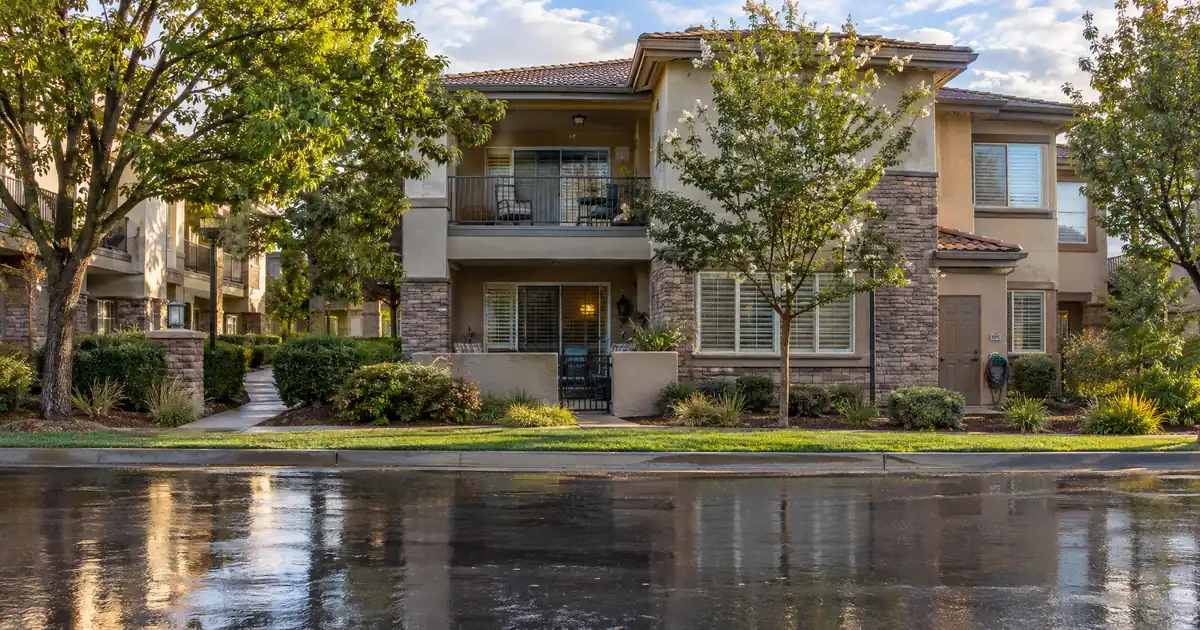
The Quick Read: A retiree finances a beach condo short-term rental on DSCR by qualifying the property’s rental income against the full monthly obligation, not by documenting a paycheck. The file still needs credit, reserves, a condo appraisal, entity documents, and a building that allows nightly stays. Programs qualify primarily on property-level rental income covering the payment, subject to lender guidelines.
- On short-term rental purchases, leverage tops out at 75% LTV on the strongest files, and 70% on refinances and cash-out of short-term-rental collateral.
- Expect a 640 minimum credit score and about 12 months of hosting experience.
- The coverage floor is 1.00 on both purchases and refinances for short-term rentals.
- HOA dues sit in the payment, so a high-dues beach building lowers the ratio.
- The condo’s governing documents can end the deal before the loan matters. Terms vary by lender guidelines, property type, leverage, credit profile, and full file review.
Retirement income is not what qualifies the file. Social Security, pensions, and portfolio distributions are not counted as the qualifying income on this product. The property carries the file, and the portfolio supports credit strength, reserves, and source of funds.
Short-Term Rental Calculator
Run the STR numbers in your market
Rate source: Freddie Mac 30-yr average via FRED® — Federal Reserve Bank of St. Louis · effective Oct 15, 2026
Prefilled with starting assumptions — enter your nightly rate, occupancy, taxes, and insurance for a more accurate picture.
Short-term rental income is documented with a 12-month history or a market data report. Program parameters update from Lendmire’s centralized guideline source.
As of Oct 15, 2026 · General Freddie Mac market benchmark, not a Lendmire loan offer. Nightly rate, occupancy, taxes, and insurance are editable estimates. Qualifying income for short-term rentals varies by program — some use appraisal market rent, others use documented STR history or projections — and is confirmed in underwriting. Not a Loan Estimate, approval, or commitment to lend. Program availability and eligibility are subject to lender guidelines, credit approval, property review, and underwriting.
This article follows the loan from definition to underwriting to the edge cases where beach condos break. For the full program overview, see the complete DSCR loans guide.
Key Terms Defined
DSCR (debt service coverage ratio): Monthly rental income divided by the full monthly housing obligation.
PITIA: Principal, interest, taxes, insurance, and association dues. All five sit in the denominator.
Reserves: Liquid assets the borrower holds after closing, usually measured in months of PITIA.
Warrantable: A project label from the agency world. A DSCR lender sets its own project standards.
Rental pool: An arrangement where unit owners share rental income through a central operator. It narrows the lender pool sharply.
HO-6: The unit owner’s own insurance policy, which sits on top of the association’s master policy.
Why Do Retirees Hit a Wall With Traditional Underwriting?
Traditional underwriting wants documented, recurring earned income. Retirees often have plenty of assets but no employer, no paystubs, and taxable income that looks small once depreciation produces paper losses. A retiree with a large portfolio can look thin on a debt-to-income test.
DSCR changes the question. The lender asks whether the condo’s rent covers the payment. The retiree’s own income stays out of the ratio. Credit, reserves, and source of funds are still verified, so this is not a no-documentation product. The property’s income is the documented item.
That is also why retirees with a portfolio often fit the product. The assets do not count as income. They count as reserves and as proof the borrower can carry the property through a slow season.
How Does Underwriting Treat a Beach Condo Short-Term Rental, Step by Step?
Underwriting follows a fixed order, and the condo-specific step comes before the offer, not after it.
1. Classify the property. A beach condo bought to rent nightly is financed as an investment property. DSCR loans are designed for non-owner-occupied investment properties. Because they are business-purpose investor loans, they are reviewed differently from a standard owner-occupied mortgage.
2. Choose the income evidence. Three routes are common, and which one applies is program-specific. The first is documented history: platform payouts, property-manager statements, or bank deposits. The second is a market-based projection from a short-term-rental data report, used when there is no history. The third is the appraiser’s market rent.
3. Understand the appraisal rent form. The appraiser’s rent opinion usually comes from a comparable rent schedule. That form, Form 1000 at Freddie Mac and Form 1007 at Fannie Mae, is built to estimate the market rent of a single-family investment property, with fields for lease dates and monthly rent. Fannie Mae also lists the small residential income property report, Form 1025, on its selling guide forms page. These are lease-based instruments. Nightly performance usually needs separate short-term-rental evidence.
4. Read the building’s documents. The declaration, rules, budget, reserve study, insurance certificates, litigation disclosures, and any rental-pool agreement all get reviewed.
5. Verify the borrower. Credit score, reserves, source of funds, and entity documents if the loan is vested in an LLC, subject to lender program eligibility.
6. Confirm insurance. Beach condos usually carry three layers: the association’s master policy, the owner’s HO-6, and flood coverage.
The ratio itself is simple. Divide the rent used for lender review by the full PITIA. A result of 1.00 means rent equals the payment. Clearing it is not the same as positive cash flow. Repairs, vacancy, management, utilities, and capital costs sit outside the calculation.
What Do the Program Numbers Look Like for a Retiree?
For short-term-rental collateral, most programs in the wholesale network allow up to 75% LTV on a purchase, and up to 70% on a refinance or cash-out. Those are ceilings on the strongest files, not starting points.
Other typical expectations on these files:
| Factor | Short-term rental file |
|---|---|
| Purchase LTV | Up to 75% |
| Refinance / cash-out LTV | Up to 70% |
| Minimum credit score | 640 |
| Coverage floor | 1.00 purchase, 1.00 refinance |
| Hosting history | About 12 months |
| Loan size | Up to $3,000,000 on standard programs |
Reserves vary by lender, leverage, loan size, and transaction type. About 6 months of PITIA is common. Larger loans typically step up.
Coverage below 1.00 is a separate path, available through select lenders in the network with leverage and terms adjusted. A no-ratio structure also exists, available only through select lenders, generally for borrowers who already own a primary residence. Both are exceptions, so confirm the path before building a plan around either.
Term structures run from the 30-year fixed spine. Extended terms and interest-only periods are available through select lenders. ARM structures exist for investors who want them. All of this is subject to lender guidelines, and every file is underwritten individually.
A larger down payment lowers the payment and can lift the ratio. It does not erase the leverage caps, credit floors, reserve rules, or property eligibility. The strongest files clear both tests: enough equity and enough rental coverage.
How Does a Seasonal Beach Condo Move the Ratio?
A beach unit earns unevenly and pays evenly. The payment is the same in January and July. Income swings with the season.
Run it as a stress case. Say a condo clears roughly 1.25x on a trailing-twelve-month basis. That figure averages a strong summer against a thin winter. A lender reviewing the file looks at the annual picture, but the borrower lives month by month. A retiree should model the weakest quarter and ask whether reserves cover a stretch where rent falls short of the full payment.
HOA dues matter here. They sit in the denominator, so a building with high dues, or a pending special assessment, can drop a ratio that looked fine on gross rent. The same unit can also show different ratios depending on the evidence used: appraiser rent, documented hosting history, or a market projection. Pick the documentation path before the appraisal is ordered, not after.
Short-term rental rules can vary by city, county, HOA, and property type, so investors should confirm local rules before relying on projected rental income.
Where Does the General Rule Break on Beach Condos?
The loan rule breaks wherever the building’s own rules say no. These are the named edge cases.
The HOA can override everything. DSCR measures rent against the payment. It cannot override a rental ban or a minimum-term rule written into the building’s documents. Many associations restrict short stays, and some move toward longer minimums over time. A shorter minimum can leave a mid-term strategy open. A six-month minimum puts the unit back in long-term-rental territory, and the nightly income evidence goes with it. Read the declaration before making an offer.
Rules can change after purchase. Older documents get amended to specify minimum months. A Florida law firm, Hamilton Mikes, explains that condo amendments limiting rentals generally bind only consenting and later-buying owners, while HOA amendments restricting terms under six months can bind everyone. That is one state’s commentary and is not general law. The takeaway is that the type of association matters.
Condo project health. Florida’s regulator, the Department of Business and Professional Regulation, requires condos of three or more stories to complete a structural integrity reserve study at least every 10 years, with milestone inspections for buildings of a certain age. Other states differ. The diligence point travels anywhere. Ask for the reserve study, the inspection report, and any assessment plans, because those drive dues in the denominator and the reserves the lender reviews.
Project eligibility. A DSCR lender sets its own project standards, so an agency label does not automatically end a file. Litigation, mandatory rental pools, and condo-hotel structures often do. Lendmire’s article How to Finance a Condotel With a DSCR Short-Term Rental Loan covers the hotel-style cases. A building that runs a mandatory rental pool narrows the lender pool sharply.
Insurance gaps. The master policy generally covers the structure and common areas, not the owner’s contents, and standard master policies typically exclude flood. Unit owners often need their own HO-6 and a flood policy for contents, improvements, and assessments. Collect the full set of quotes before the file goes in. Stale or incomplete quotes are a common source of rework.
Ineligible property types. Manufactured homes, log homes, and barndominiums are not offered in these DSCR programs. That rarely touches a beach condo, but it matters for retirees eyeing a coastal cottage alternative.
DSCR vs. conventional financing
There are two common ways to finance an investment property, and they qualify you differently — here’s how investors weigh them.
Why investors choose it
- Qualifies on the property’s rental income — no personal tax returns, W-2s, or pay stubs needed to document income.
- No personal debt-to-income ceiling to clear, so existing mortgages and obligations don’t cap your borrowing the same way.
- Can be closed in an LLC, keeping the property inside a business entity.
- Built for scaling — not held to the limit on number of financed properties that conventional financing applies.
- Underwriting centers on the deal: generally qualifies when the rent covers the payment, a 1.00x coverage ratio being a common baseline (confirmed in underwriting).
- Designed specifically for investment property, including long-term and, where the program allows, short-term rentals.
Where it’s strong
- Often the lowest ongoing financing cost for a buyer who fully qualifies on personal income — a fit for a first property or a cost-first purchase.
Trade-offs for investors
- Requires full personal income documentation and must fit within a debt-to-income limit — salary, existing debts, and other mortgages all count.
- Typically held in your personal name rather than a business entity.
- Caps how many financed properties you can carry, which can become a ceiling as a portfolio grows.
- Evaluates you as a borrower as much as the property, which usually means more paperwork.
How investors usually choose: a first or single property often optimizes for the lowest financing cost; portfolio builders often optimize for leverage, vesting in an LLC, and scaling past conventional caps. The right answer depends on your goals, the property, and current guidelines — both paths run through select lenders in Lendmire’s wholesale network, with eligibility and terms confirmed in underwriting.
Can a Retiree Use the Condo Personally?
Personal use is the retiree’s real planning problem. A property financed on DSCR is a business-purpose investment property. Heavy personal use fits poorly with that classification, and the file is reviewed on the premise that the unit is rented.
Here is the practical decision rule:
| Use pattern | Loan family it points to |
|---|---|
| Rented nearly full-time | DSCR investment loan |
| Occasional owner stays | Usually still DSCR; confirm program terms |
| Heavy personal use | Likely a second-home loan, which needs personal income |
A retiree who wants to live in the condo most of the year is in a different lane. That lane is reviewed on personal income, which is the very thing DSCR sidesteps. Be honest at the start about which one fits. Lendmire’s article How to Add a Short-Term Rental Beach Condo to a DSCR Loan on Houses covers the portfolio side of the same decision.
Also plan the exit. Converting later to a personal residence, refinancing, or selling each interact with a business-purpose loan. Vesting in an LLC adds liability separation and simplifies planning for heirs, subject to lender program eligibility. An estate attorney should handle what happens to the loan and the title if the owner dies or becomes incapacitated.
Where Should Retirement Assets Go?
Assets support reserves and source of funds. They do not count as qualifying income.
Think in two buckets. One bucket is the down payment, which on a short-term-rental purchase means at least 25% down given the 75% LTV ceiling. The other is reserves. Draining one to fund the other leaves the file weaker. Pulling from retirement accounts can also trigger taxable events and reduce the cushion a retiree needs for medical costs and slow seasons. Exact terms depend on the lender’s guidelines, property type, leverage, and a full review of the borrower’s file.
The tax side deserves one separate note. Tax treatment varies; consult a qualified professional. The University of Illinois Tax School notes that short-term rentals generally involve stays averaging under seven days. That is a tax-classification matter, and it does not change how a lender qualifies the property.
What Do Retirees Get Wrong Most Often?
Most mistakes come from assuming the loan answers questions the building controls.
- Assuming local permission equals condo permission. A city can allow nightly rentals while the declaration forbids them.
- Treating 1.00 as profit. Coverage at the floor says nothing about repairs, vacancy, or management.
- Using one income number. Appraiser rent, hosting history, and projections produce different ratios on the same unit.
- Skipping the reserve study. Assessments hit both dues and reserves.
- Counting the portfolio as income. It supports reserves, not qualification.
- Reading a mid-term plan into a long minimum. Six-month minimums defeat it.
DSCR is the wrong tool when personal use is heavy, when rent coverage is thin even at generous assumptions, or when the building bans rentals outright.
Frequently Asked Questions
Can a retiree qualify for a beach condo short-term rental with no earned income?
Yes, on the right file. The loan is reviewed primarily on property-level rental income covering the payment, subject to lender guidelines. Credit, reserves, source of funds, and the appraisal are still reviewed. Retirement income is not the qualifying income.
Do I need rental history to buy?
Programs usually expect about 12 months of hosting experience on short-term-rental files, though the exact evidence varies by lender. When a unit has no operating history, a market-based projection is often the substitute. Confirm which route the program accepts before the appraisal is ordered.
What if the building has a 30-day minimum?
A 30-day minimum can leave a mid-term-rental strategy open, but it removes true nightly stays. The income evidence has to match the rule actually allowed in the building. A six-month or longer minimum effectively makes the unit a long-term rental.
Can retirement or brokerage assets count toward the file?
They support reserves and source of funds. They do not count as qualifying income. Reserve requirements vary by lender, leverage, loan size, and transaction type.
Can I use the condo myself?
Occasional stays may fit, but the loan is business-purpose. Heavy personal use points toward a second-home loan, which relies on personal income. Decide the use pattern before choosing the loan.
Is a lower-than-1.00 file possible?
It is available through select lenders in the network, with leverage and terms adjusted. It is a separate path from the 1.00 floor on short-term-rental files.
If you are buying or refinancing a rental property and want to see how the numbers work, Lendmire can help you compare DSCR loan options based on the property income, credit profile, leverage, and investor goals. Lendmire is a broker that arranges financing through select lenders in its wholesale network, covering 41 markets including Washington, D.C. This is not a commitment to lend. The next step is reading the building’s documents before the offer goes in, because on a beach condo the association usually decides the deal before the lender does.
About Lendmire
Lendmire — NMLS# 2371349 — is a DSCR and non-QM mortgage brokerage with investor loan programs in 41 markets, including Washington, D.C. DSCR eligibility is commonly reviewed by the lender around property-level rent rather than personal income documentation, subject to lender guidelines, and the brokerage helps arrange financing for LLC-owned portfolios beyond conventional financed-property limits. Recognized by Scotsman Guide as a Top Mortgage Workplace in 2025 and 2026.
Get Started
Ready to find the right loan for you?
In about 30 seconds you can review financing options available for your investment property. No commitment required.
Informational only. Not a Loan Estimate, approval, or commitment to lend. Program availability and eligibility are subject to lender guidelines, credit approval, property review, and underwriting.
References
1. Freddie Mac Form 1000, Single-Family Comparable Rent Schedule
2. Fannie Mae Selling and Servicing Guide Forms
3. Hamilton Mikes: Condominium Leasing Restrictions
4. Florida DBPR Condominium FAQ
5. University of Illinois Tax School: Tax Rules for Rentals and Vacation Homes
This article is part of Lendmire’s short-term rental loan program — full qualification details, guidelines, and scenarios live on the program page.
Related reading: Can a Retiree Get a DSCR Loan on a Beach Condo Short-Term Rental? · How to Insure a Ski Cabin Short-Term Rental for a DSCR Loan · Can a Retiree Get a DSCR Loan for a Mountain Cabin Short-Term Rental?
Brandon Miller
Founder & CEO, Mortgage Loan Originator, Lendmire LLC
- Mortgage Loan Originator · NMLS# 1129696 · Verify on NMLS Consumer Access
- North Carolina Real Estate Broker · License# 343312 · Verify on NCREC
- North Carolina Insurance Producer · License# 19053198 · Property, Casualty, Life, Health · Verify on NAIC SBS
- Lendmire LLC · Firm NMLS# 2371349 · Verify firm licensure
Disclosures. The information presented in this article is general market commentary, not financial, legal, or tax advice. Lendmire is a mortgage brokerage (NMLS# 2371349) — not a direct lender or depository institution — and loan placement is subject to lender underwriting. Nothing in this content represents a commitment to lend. Loan terms, pricing, and program availability vary based on borrower qualifications, property characteristics, and state of subject property, and are subject to change at any time. Lendmire complies with Equal Housing Opportunity requirements. Consumer access: nmlsconsumeraccess.org.